 Semiahmoo Exterior
 Exteriors in Ferndale: What the Climate Actually Does to a House
Ferndale sits close enough to Semiahmoo Bay and the Strait of Georgia that salt-laden air is a real factor in how exteriors age here, not just a coastal-town cliché. Add Whatcom County's long wet season, persistent low cloud cover, and shaded lots along the Nooksack lowlands, and you get a climate that's tough on the outside of a house in three specific ways: moisture that doesn't dry out quickly, driving rain that gets pushed sideways into wall assemblies, and a moss and algae season that can run eight months or more depending on sun exposure.
None of this is dramatic. It's slow. A house in Ferndale rarely fails all at once — it fails a little every winter until a homeowner notices soft trim, a stained ceiling, or a roof that looks tired well before its rated lifespan is up. Understanding what's actually happening to your siding, roofing, windows, and decking is the first step to building (or fixing) an exterior that's built for this specific place, not a generic climate zone.
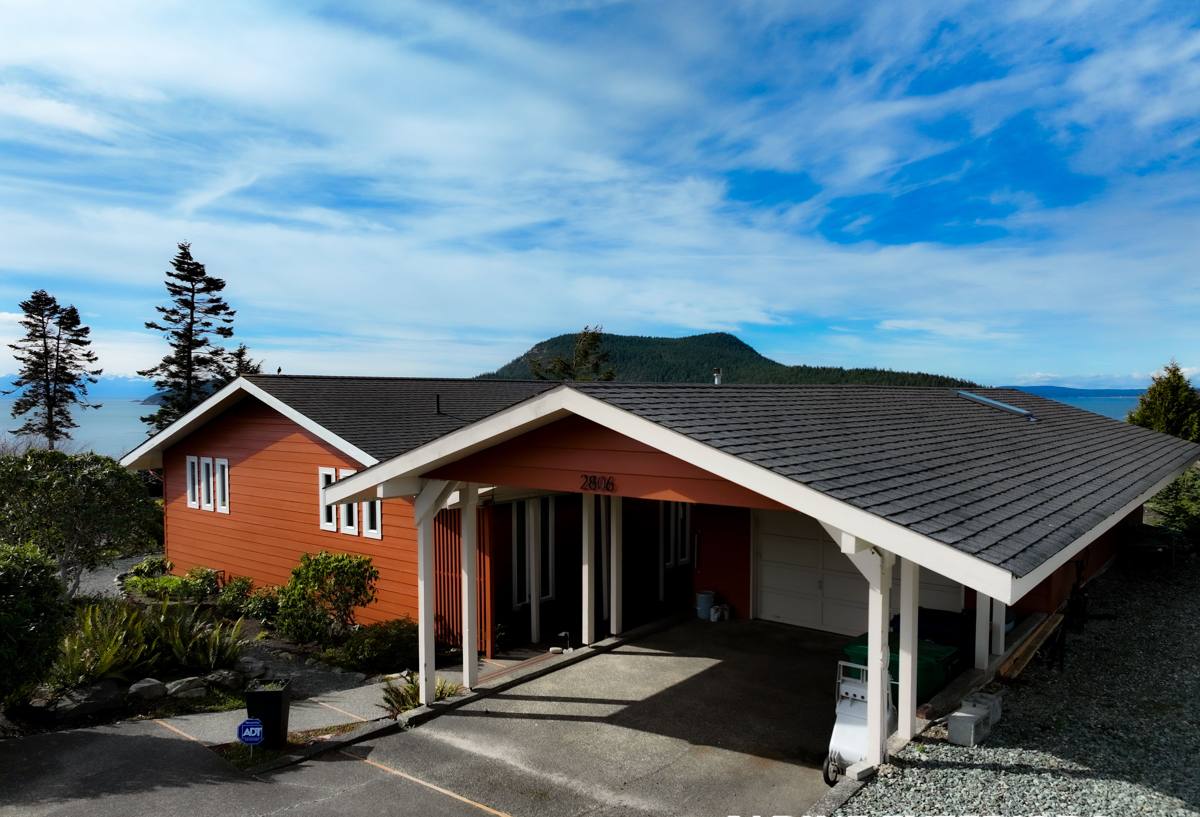
Siding: Why Material Choice Matters More Here Than in Drier Climates
Siding in Ferndale has two jobs: keep bulk water out of the wall assembly, and survive repeated wet-dry cycling without breaking down. Some common siding materials handle that combination worse than people expect.
Wood-based and engineered wood siding
Cedar and primed spruce lap siding look good on day one, but both are wood, and wood exposed to prolonged coastal moisture wants to swell, cup, and eventually rot — especially at butt joints, corners, and anywhere caulk has failed. Engineered wood products like LP SmartSide use a treated wood-strand core, which helps resist fungal decay, but the product still relies heavily on correct caulking, painting, and edge-sealing to keep water out over time. In a climate where it can rain steadily for weeks, any gap in that maintenance schedule shows up as swelling at the seams faster than it would in a drier region.
Vinyl siding
Vinyl sheds water reasonably well and needs little maintenance, but it isn't rigid, and in salt-air environments the fasteners and trim pieces can corrode faster than the panel itself. Vinyl also expands and contracts significantly with temperature swings, which over years can loosen panels and open gaps for wind-driven rain — a real concern on exposed lots near the water.
Other fiber cement brands
Products like Cemplank and Allura are also fiber cement, and fiber cement as a category is a sound choice for this climate — it doesn't rot, doesn't feed insects, and holds paint or factory finish far longer than wood. Where we've drawn the line is on the specific manufacturer. We install James Hardie exclusively, not because other fiber cement brands are unsound, but because we've standardized our crews, our install details, and our warranty conversations around one system we know inside and out, with a factory finish and a track record we're willing to stand behind on every job.
Why We Install Only James Hardie
James Hardie's fiber cement is non-combustible, engineered specifically for wet Pacific Northwest conditions through its HZ5 product line, and finished at the factory with ColorPlus technology — a baked-on finish that resists fading and chipping far better than field-applied paint, which matters in a place where repainting siding means scheduling around Ferndale's short dry-weather windows. It carries a strong transferable limited warranty, which adds real value if you ever sell the house. None of that replaces correct installation — flashing, clearances, and fastening still have to be done right — but starting with a material engineered for this exact climate gives every job a better foundation.
| Siding Material | Moisture Resistance | Maintenance in Coastal WA | Typical Lifespan Here |
|---|---|---|---|
| Cedar / primed spruce | Moderate (wood, needs sealing) | High — repaint/reseal every few years | 15-25 yrs with upkeep |
| LP SmartSide | Good if maintained | Moderate — seam caulking, repainting | 20-30 yrs with upkeep |
| Vinyl | Good, but seams/fasteners vulnerable | Low, but corrosion risk near salt air | 20-30 yrs |
| James Hardie fiber cement | Excellent, purpose-built for wet climates | Low — factory finish, no rot | 30-50+ yrs |
Roofing: The Moss and Algae Problem
Roofs in and around Ferndale deal with something drier climates rarely see at scale: sustained moss and algae growth. Shaded roof planes, especially those under fir or cedar trees, stay damp for days after a storm, and that moisture is exactly what moss needs to establish itself in shingle granules and along ridge lines. Left alone, moss holds water against the roof surface, lifts shingle edges, and accelerates granule loss — which shortens the life of an asphalt roof well below its rated years.
Good roofing work here isn't just about the shingle brand — it's about details that matter in this specific climate: proper ventilation to reduce trapped moisture in the attic, ice-and-water shield at valleys and eaves where wind-driven rain concentrates, and flashing that's sized and lapped correctly for sustained wet weather rather than occasional storms. We also talk with homeowners honestly about moss prevention — zinc or copper strips near the ridge, periodic gentle cleaning, and trimming back overhanging branches where practical — because a well-installed roof with good ventilation still needs some homeowner cooperation to hit its full lifespan out here.
Windows: Sealing Out Wind-Driven Rain
Window failures in this climate are almost never about the glass — they're about the flashing and sealing around the frame. Ferndale gets enough sideways rain during winter storms that a window installed without proper pan flashing or head flashing will eventually let water track behind the frame and into the wall cavity, often invisibly for years before it shows up as staining or soft drywall inside.
When we replace windows, we treat the flashing and integration with the surrounding siding as equally important as the window unit itself. That matters even more when we're re-siding with James Hardie, since window and door openings are one of the highest-risk water entry points on any home, and getting that transition right the first time avoids callbacks and hidden rot down the line.
Decks: Built for Wet-Dry Cycling, Not Just Looks
Decks in this area take a different kind of punishment — near-constant moisture from rain and fog, interrupted by short dry spells that dry the wood surface faster than the framing underneath. That mismatch is what causes cupping, checking, and eventually rot in ledger boards and joists that never fully get to dry out. Composite decking has become popular here for good reason: it doesn't absorb water the way wood does, and it holds up better against the moss and mildew that accumulate on shaded deck surfaces. Whether we're building with composite or traditional wood, the framing details — ledger flashing, joist protection, proper drainage gaps between boards — matter more in Whatcom County's climate than they would somewhere drier.
Why a Local Crew Matters for Ferndale Homes
A lot of exterior problems out here aren't caused by bad materials — they're caused by installation details that work fine in a dry climate but fail in a wet one. Flashing laps that are technically "close enough," caulking used as a substitute for proper drainage planes, or roofing installed without enough attention to ventilation — these shortcuts might not show symptoms for a year or two, which is exactly why they're common. A crew that works in Whatcom County regularly knows which details can't be skipped here, because we're the ones who get the callback when they are.
We also know the practical side of working in this area: which weeks tend to give a reliable dry-work window, how to sequence a siding or roofing job around Ferndale's weather patterns, and what local permitting and inspection expects for exterior work. That local familiarity shows up in fewer surprises and a tighter, better-sealed final product.
What to Check Before Hiring an Exterior Contractor
- Ask specifically how they flash windows, doors, and deck ledgers — not just what siding or roofing brand they use
- Confirm they're licensed and insured to work in Washington, and ask for proof rather than taking it on faith
- Ask how they handle moss and moisture-prone roof sections in their installation and maintenance recommendations
- Get a clear explanation of warranty coverage — both manufacturer and workmanship — in writing
- Ask whether they've worked on homes in your specific neighborhood or similar coastal-exposure conditions
- Be cautious of bids that are dramatically lower than others without a clear explanation of what's different
Signs Your Ferndale Home's Exterior Needs Attention
Certain warning signs show up consistently on homes in this area, and catching them early usually means a repair instead of a full replacement:
- Dark streaking or green/black growth on siding, especially on north-facing or shaded walls
- Soft or spongy trim around windows, doors, or where siding meets the foundation
- Visible moss buildup on roof valleys, ridges, or north-facing slopes
- Peeling or bubbling paint on wood siding or trim, particularly near seams and joints
- Deck boards that feel soft, cup noticeably, or show dark staining around fasteners
- Interior ceiling or wall stains that appear after heavy wind-driven rain events
Getting Started
If you're noticing any of these signs, planning ahead for a project, or just want an honest read on where your Ferndale home's exterior actually stands, we're happy to take a look. We offer free, no-pressure estimates and will tell you plainly what needs attention now versus what can wait — use the form below to get started.