 Semiahmoo Exterior
 Why Ferndale Roofs Wear Differently Than Roofs Inland
Ferndale sits close enough to the water that homes here deal with a different set of stresses than roofs twenty miles inland. Salt-laden air off the bay corrodes exposed metal faster than dry-climate air ever would. Driving rain, pushed sideways by wind off the water, finds weak points in flashing and underlayment that a straight-down rain would never reach. And the long, wet moss season here means organic growth gets a real foothold on any roof that doesn't shed water and dry out quickly. None of this means Ferndale roofs are doomed to fail early — it means they need to be built and replaced with these specific conditions in mind, not with a generic approach borrowed from a drier region.
When we replace a roof in Ferndale, we're thinking about all three of these factors together: corrosion resistance for fasteners and metal components, water-shedding detail work at every transition, and a roof surface and ventilation setup that discourages moss rather than feeding it.
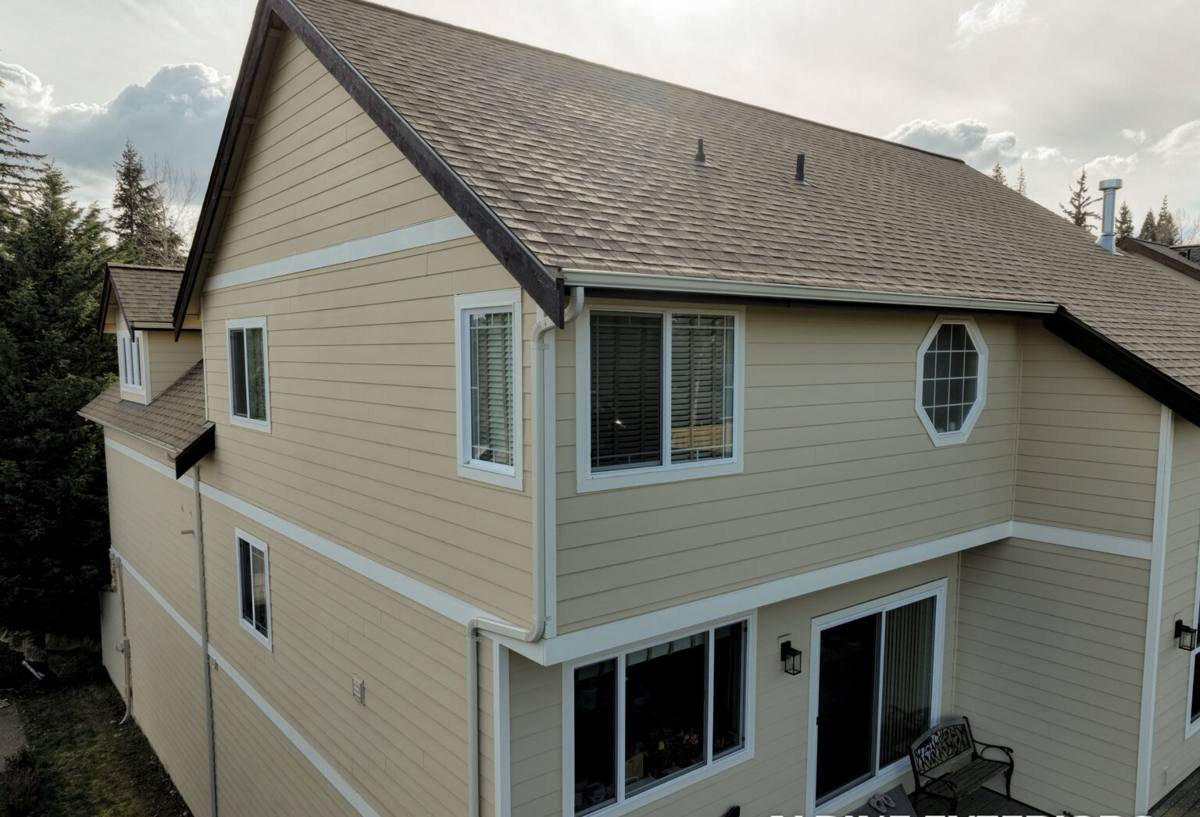
Signs a Ferndale Roof Needs Replacement, Not Another Repair
A lot of homeowners call us after a repair, or several repairs, haven't solved the underlying problem. There's a point where patching stops making financial sense and full replacement becomes the honest recommendation. Here's what usually tips that decision:
Age and Material Wear
Standard asphalt composition shingles in this climate typically show real wear — granule loss, curling edges, brittle texture — somewhere in the 18-25 year range, often on the earlier end if the roof has heavy moss history or poor ventilation. Cedar shake needs closer watching for splitting and moss intrusion as it ages. Metal roofing lasts considerably longer but isn't immune to fastener and flashing issues over time.
Water Intrusion Patterns
One isolated leak is usually a repair. Multiple leaks in different areas, staining that keeps reappearing after patching, or soft spots in the decking when walked on are signs the roofing system as a whole has reached the end of its service life, even if it doesn't look dramatic from the ground.
Widespread Moss and Granule Loss
Moss that's been present for multiple seasons doesn't just sit on top of shingles — it lifts edges and holds moisture against the roof surface, accelerating decay underneath. If moss removal keeps being a recurring maintenance item rather than a one-time cleanup, that's often a sign the roof's ability to shed water and dry out has already declined.
What a Correct Roof Replacement Actually Involves
A roof replacement is more than swapping old shingles for new ones. The work that happens underneath the visible surface is what determines whether the new roof performs well in Whatcom County's climate for its full expected life.
Full Tear-Off and Deck Inspection
We remove the old roofing down to the deck rather than layering over it. This lets us actually see the sheathing and catch rot, delamination, or soft spots caused by long-term moisture — issues that are invisible from above and that a layover would simply bury for the next owner to discover.
Underlayment Built for Wind-Driven Rain
Given how often rain here comes in at an angle rather than straight down, underlayment selection and installation matters more than in calmer inland climates. We pay particular attention to overlap, fastening pattern, and self-adhering membrane at vulnerable areas like eaves and valleys, where wind-driven water is most likely to work its way underneath a standard shingle course.
Flashing and Penetrations
Chimneys, vent stacks, skylights, and roof-to-wall transitions are where most leaks actually originate, not the open field of shingles. Correct flashing detail — proper step flashing, counterflashing, and sealant that's appropriate for the material rather than a generic caulk — is one of the areas where a rushed job shows up as a leak within a year or two.
Ventilation
Balanced intake and exhaust ventilation keeps the attic space closer to outdoor temperature and humidity, which reduces condensation buildup, extends shingle life, and — relevant here — helps the roof deck dry out faster after our wet stretches, which discourages moss and rot alike.
Choosing a Roofing Material for This Climate
There isn't one universally "best" material — the right choice depends on your budget, your home's structure, and how much long-term maintenance you're willing to take on. Here's an honest comparison of the main options we install and discuss with Ferndale homeowners.
| Material | Typical Lifespan | Moss & Salt-Air Behavior | Relative Upfront Cost |
|---|---|---|---|
| Architectural asphalt shingle | 20-30 years | Good with proper ventilation and periodic moss treatment; algae-resistant granule options help | Lowest |
| Standing seam metal | 40-60 years | Sheds moisture and moss very well; fasteners and coatings need to be corrosion-rated near salt air | Highest |
| Cedar shake | 25-30 years with upkeep | Attractive but needs the most active moss and moisture management of any option here | High |
| Synthetic/composite shingle | 30-50 years | Resists moisture absorption well; less organic material for moss to grip | Mid to high |
For most Ferndale homes, we lean toward architectural asphalt with algae-resistant granules or a synthetic composite as the practical middle ground — solid moss resistance and coastal durability without the cost jump of standing seam metal. We'll walk through the real trade-offs for your specific roof rather than pushing one product line.
Cost Factors Beyond the Material Itself
The material is only one line item. Roof pitch and complexity, the number of layers being torn off, deck repair needs discovered during tear-off, chimney and skylight count, and access for equipment and disposal all affect the final number. We give you a written estimate that breaks these out so you know what you're paying for, not a single bundled figure.
Our Replacement Process, Start to Finish
- On-site inspection and estimate — we walk the roof (not just look from the ground), check the attic for ventilation and moisture issues, and give you a clear, itemized estimate.
- Material selection — we go over the realistic options for your roof, budget, and how much moss and maintenance you want to manage long-term.
- Scheduling around weather — we plan the job for a realistic dry window and have contingency plans if Whatcom County weather doesn't cooperate mid-project.
- Full tear-off and deck inspection — old roofing removed completely, deck checked and repaired as needed before anything new goes down.
- Underlayment, flashing, and ventilation installed — the parts that don't show but determine whether the roof actually performs here.
- New roofing installed to manufacturer spec — correct nailing pattern, exposure, and fastening for the material and your roof's wind exposure.
- Cleanup and final walkthrough — magnetic sweep for stray fasteners, debris hauled off, and we walk the finished roof with you.
Moss, Algae, and Salt Air: Keeping a New Roof Healthy
A correctly installed roof with good ventilation resists moss far better than an older, poorly ventilated one — but no roof in this region is entirely moss-proof given how long our wet season runs. We talk with every homeowner about realistic upkeep: keeping gutters and valleys clear so water doesn't sit, trimming back overhanging branches that keep shingles shaded and damp, and scheduling a gentle moss treatment periodically rather than waiting for heavy growth to take hold. For homes closer to the water, we also pay attention to any exposed metal components — flashing, fasteners, vents — since salt air will corrode lower-grade metal noticeably faster than it would twenty or thirty miles inland.
Permits, Timeline, and What to Expect During the Job
Most full roof replacements in this area require a permit, and we handle that process as part of the job rather than leaving it on your plate. A typical single-family roof replacement takes one to a few days on-site depending on size, pitch, and material, though we always build in some flexibility for weather. During the job, expect noise, some vibration in the house during tear-off, and a work crew on-site for the duration — we keep the property protected and cleaned up daily, not just at the end.
Why Hiring a Crew That Already Works Ferndale Matters
A roofer who works Whatcom County regularly already knows which details matter here: how much wind-driven rain protection a given exposure actually needs, which flashing details tend to fail on local homes over time, and how aggressive moss growth gets left unmanaged for a season or two. That's different knowledge than a crew that mostly works drier, calmer climates and treats every roof the same way. It also means warranty support and any follow-up questions come from people who are actually still around and familiar with your property, not a crew that moved on to another region.
Checklist: What to Ask Before You Hire a Roof Replacement Contractor
- Do you carry current WA state contractor licensing and liability insurance, and can you provide proof?
- Will the estimate include a full tear-off and deck inspection, or is layering over the old roof an option being offered?
- What underlayment and flashing details are included, specifically at valleys, eaves, and penetrations?
- What ventilation assessment is part of the job, and will changes be made if the attic is under-ventilated?
- What's the manufacturer's warranty on materials, and what's your labor warranty separate from that?
- How do you handle a weather delay mid-project, and what's done to protect the home if that happens?
- Can you give references or examples of similar roofs you've completed in this area?
If your roof is showing its age, dealing with recurring moss, or you're just not sure whether a repair still makes sense, we're happy to take a look and give you a straightforward assessment. Use the form below to request a free, no-pressure estimate for your Ferndale home.