 Semiahmoo Exterior
 Exterior Work Built for the Peace Arch Area
The homes around Peace Arch sit in one of the more demanding exterior environments in Whatcom County. You're close enough to Semiahmoo Bay and Drayton Harbor to catch salt-laden air off the water, exposed to the long stretches of driving rain that roll in off the Strait of Georgia, and shaded enough by mature Pacific Northwest tree cover that moss and algae get a real foothold on roofs, siding, and decking for much of the year. None of that is unusual for this corner of Washington. It just means an exterior contractor working here needs to actually understand the conditions, not treat every job like it's happening somewhere dry and inland.
We work on siding, roofing, windows, and decks, and we treat all four as parts of one system rather than separate trades bolted together. Water doesn't care which contractor installed which component — it finds the weakest transition, whether that's a window flashing detail, a roof-to-wall junction, or a deck ledger board. Knowing how those pieces interact is most of what separates an exterior that holds up near Semiahmoo for decades from one that starts showing problems in five or six years.
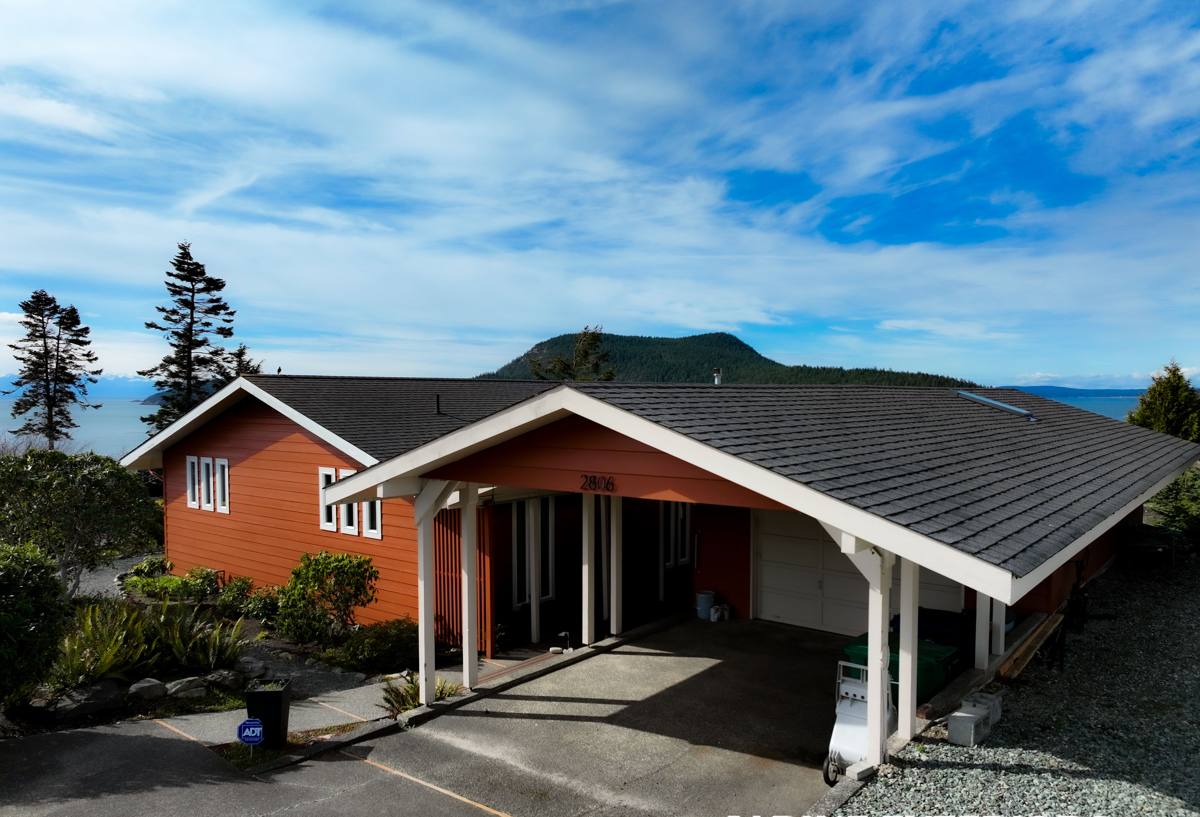
What the Local Climate Actually Does to a House
Salt Air and Corrosion
Proximity to Semiahmoo Bay and the broader Salish Sea means airborne salt is a real factor, even a mile or two inland. Salt accelerates corrosion on fasteners, flashing, and any exposed metal trim. It also degrades certain paints and coatings faster than a typical inland exposure would. This is one of the reasons material choice matters more here than in drier, saltier-free parts of the state — a product that performs fine sixty miles east can struggle closer to the water.
Driving Rain and Wind-Driven Moisture
Whatcom County gets a lot of rain, but it's the wind-driven variety off the water that causes the most damage. Rain that comes in at an angle finds its way behind poorly lapped siding, under-flashed window trim, and loose or aging roof shingles in a way that straight-down rain never would. Over years, that kind of intrusion rots sheathing and framing long before anything looks wrong from the curb.
Moss, Algae, and Extended Shade Season
Between the tree cover common in this area and the region's long stretches of overcast, damp weather, moss and algae growth is a near-constant maintenance issue on north-facing roof slopes and shaded siding runs. Left alone, moss holds moisture against roofing material and siding surfaces far longer than the material was designed to tolerate, which shortens its working life regardless of how well it was installed.
Siding: Why We Install James Hardie Fiber Cement Only
We install James Hardie fiber cement siding exclusively. We don't install vinyl, LP SmartSide, Cemplank, Allura, primed spruce, or cedar, and that's a deliberate professional standard, not a marketing line. Each of those alternatives has real strengths, but each also has a trade-off that we think matters more in a climate like this one than it might elsewhere.
- Vinyl is affordable and low-maintenance in dry climates, but it expands and contracts more with temperature swings, can become brittle over time, and its seams give wind-driven rain more opportunities to work behind the material.
- LP SmartSide is engineered wood — it holds paint well and is easy to install, but it's still wood-based, meaning sustained moisture exposure at cut edges and butt joints is a long-term vulnerability if caulking and paint maintenance ever lapse.
- Cemplank and Allura are also fiber cement and share many of Hardie's core strengths, but we've standardized on one manufacturer's system so our crews install to one spec, one warranty structure, and one factory finish process — consistency we think benefits the homeowner.
- Primed spruce and cedar are traditional, attractive options, but both are natural wood, which means ongoing repainting, sealing, and vigilance against rot — a heavier maintenance commitment in a climate that stays damp for much of the year.
James Hardie fiber cement is non-combustible, dimensionally stable, and resists moisture, insects, and rot far better than wood-based products. Its ColorPlus factory finish is baked on under controlled conditions rather than field-applied, which means better color consistency and a longer stretch before repainting is even a conversation. Hardie also builds specific product lines engineered for different climate zones, and the HZ10 line in particular is formulated for wetter, harsher weather patterns — relevant for a location this close to the water. The warranty is transferable, which matters to homeowners who may sell before they've had the siding installed for its full service life.
How a Hardie Installation Should Actually Go
Correct installation matters as much as the product itself. That means proper starter strips, correct nailing patterns and fastener spacing, factory-caulked or properly sealed joints, rain screen or drainage plane detailing where called for, and flashing integrated at every window, door, and roof intersection — not caulk used as a substitute for flashing. Hardie's warranty coverage assumes installation to their published specifications, so cutting corners at install doesn't just risk premature failure, it can also jeopardize warranty coverage.
Roofing in a Wet, Shaded Climate
Roofs around Peace Arch take a beating from the combination of sustained rain, wind, and moss pressure described above. We look at more than just shingle condition when we evaluate a roof — flashing at valleys, chimneys, and roof-to-wall transitions is usually where problems start, since those are the spots wind-driven rain targets first. Proper attic ventilation also matters more here than homeowners often expect: a roof deck that can't breathe traps moisture from below, which accelerates rot and shortens shingle life from the underside, independent of what's happening on top.
Moss removal and prevention are part of ongoing roof care in this area, not an optional extra. Left unaddressed, moss lifts shingle edges and holds water against the roofing material, which is one of the more common causes of premature roof failure we see on homes near the water and under tree cover.
Windows: Sealing Out Wind-Driven Rain
Window performance in this climate comes down to two things: the unit itself and how it's flashed into the wall. A quality window installed with poor flashing will leak; a modest window installed correctly with proper flashing, drainage, and sealant detailing usually won't. We pay particular attention to sill pan flashing and head flashing integration with the siding above, since that's the detail most likely to fail under sustained wind-driven rain rather than a light, straight-down shower.
Energy performance is a secondary but real consideration — older single-pane or poorly sealed windows lose heat fast during the region's long, damp winters, and condensation between panes is often a sign that seals have already failed.
Decks: Built to Handle Standing Moisture
Decks near Semiahmoo deal with the same moss, algae, and prolonged dampness that affects roofs and siding, plus the added stress of standing water on horizontal surfaces. Ledger board attachment and flashing where the deck meets the house is one of the most safety-critical details in deck construction — it's also one of the most common places we find water damage on older decks that were never properly flashed at that connection. Proper board spacing for drainage, adequate ventilation underneath, and hardware rated for coastal moisture exposure all matter more here than they would in a drier inland climate.
Comparing Siding Options for This Climate
| Material | Moisture Resistance in Coastal Climate | Maintenance Burden | Typical Lifespan |
|---|---|---|---|
| James Hardie Fiber Cement | Strong — non-combustible, engineered for climate zones | Low — factory finish, occasional wash | 30+ years with proper install |
| Vinyl | Moderate — seams vulnerable to wind-driven rain | Low, but limited repair options if damaged | 20-30 years |
| LP SmartSide (Engineered Wood) | Moderate — vulnerable at cut edges if maintenance lapses | Moderate — paint and caulk upkeep required | 20-30 years with maintenance |
| Cedar | Lower — natural wood, absorbs moisture | High — regular sealing and repainting | 15-25 years with diligent upkeep |
Why a Local Crew Matters Here
A contractor who mostly works drier, inland jobs can install a technically correct siding or roofing job that still underperforms near the water, simply because the details that matter most — flashing sequencing, drainage planes, fastener selection, moss-resistant detailing — are different when salt air and sustained wind-driven rain are part of the equation. Working regularly in Whatcom County's coastal communities means those details become standard practice rather than an afterthought. It also means being available for the follow-up conversation six months or two years later if something needs a look, rather than being a name from a one-time job far from home.
What a Free Estimate Covers
When we walk a property near Peace Arch, we're looking at more than the surface condition of siding, roofing, windows, or a deck. We're checking flashing details at every transition, looking for early moss and algae pressure on shaded elevations, checking for soft spots that suggest moisture has already gotten behind the exterior, and evaluating whether the existing materials are holding up to this specific climate or just delaying an inevitable, more expensive repair.
What to Have Ready Before an Estimate Visit
- Approximate age of the current siding, roofing, or deck
- Any known leak history or interior water stains
- Areas of visible moss, algae, or persistent dampness
- Whether you're planning a full replacement or targeted repair
- Any HOA or neighborhood exterior guidelines that might apply
If you're weighing a repair against a full replacement, or just want an honest read on how much life is left in your current siding, roof, windows, or deck, we're happy to come take a look. The estimate is free, there's no pressure, and you'll get a straight answer about what your home actually needs.