 Semiahmoo Exterior
 Why This Decision Trips Up So Many Homeowners
Every roof problem eventually forces the same question: patch it, or replace it? The answer isn't always obvious, and it isn't the same for every house. A roof on a home near Semiahmoo Bay lives a harder life than one twenty miles inland — salt-laden air off the water, driving rain that comes in sideways during winter storms, and a moss season that can stretch from October through April. Those conditions accelerate wear in ways that aren't always visible from the ground, which is exactly why so many homeowners either replace a roof years before they needed to, or keep patching one that's already past the point of no return.
This page walks through how to actually make that call — what to look at, what the numbers tend to look like, and where the line sits between "this is fixable" and "this needs to come off."
Start With the Age and the Layers
Before anything else, find out two things: how old the roof is, and how many layers of shingles are on it. Most asphalt shingle roofs in this region are rated for 20-30 years, but real-world lifespan in Whatcom County often runs shorter than the rating suggests because of the added moisture load and moss growth. If a roof is past 20 years old and showing any of the problems below, replacement usually makes more financial sense than another repair.
Layers matter too. Building code allows a maximum number of shingle layers before a full tear-off is required, and a roof that already has two layers on it can't simply be patched a third time — at some point a repair crew has to remove everything down to the deck anyway, which changes the math significantly.
Questions to Answer First
- How old is the current roofing material, and is there paperwork or a permit record showing the install date?
- How many layers of shingles are already on the roof?
- Is the damage isolated to one area, or spread across multiple slopes?
- Has water reached the interior — ceiling stains, attic moisture, or musty smells?
- Is the decking underneath still solid, or soft and spongy when walked on?
Signs a Repair Is Genuinely the Right Call
Not every roof problem means replacement. Plenty of legitimate issues can be fixed in place, especially when the roof is younger than 15 years and the rest of the material is in good shape.
Localized Damage
A handful of cracked, curled, or missing shingles from a wind event, a damaged section around a chimney or vent boot, or a single area where moss has lifted shingles — these are classic repair situations. The surrounding roof is doing its job; one section just needs attention.
Flashing and Penetration Failures
Leaks very often trace back to flashing — around chimneys, skylights, dormers, and where the roof meets a wall — rather than the shingle field itself. Flashing has a shorter service life than the shingles around it, and replacing it is a repair, not a re-roof.
Moss and Debris Buildup Without Structural Damage
In a climate where moss season runs half the year, moss growth on its own isn't a reason to replace a roof. If the moss is removed properly and the shingles underneath are still intact, a cleaning plus minor repair is often all that's needed. Moss becomes a replacement-driver only once it has lifted shingles and let water underneath for an extended period.
Signs the Roof Needs to Come Off
Some conditions are strong enough indicators that spending more money on repairs is just delaying — and often increasing the cost of — a replacement that's already necessary.
Widespread Granule Loss
Asphalt shingles are protected by a layer of granules. Once those granules wear away broadly across the roof (visible as bald patches or heavy granule buildup in gutters), the shingles below are exposed to UV and moisture directly. This tends to show up roof-wide, not in one spot, and repairing individual shingles doesn't fix the underlying material fatigue.
Soft or Sagging Decking
If the roof deck itself has absorbed water and gone soft, that's a structural issue, not a surface one. Driving rain that finds its way past aging flashing or worn shingles is the most common cause locally, and it usually means sections of decking need replacing along with the roofing material — something that's only practical during a full tear-off.
Repeated Leaks in Different Locations
One leak is a repair. Leaks that keep appearing in new spots each winter usually mean the underlayment — the water-resistant layer beneath the shingles — has failed broadly. Underlayment isn't something that gets replaced piecemeal; it's a full-roof job.
Persistent Moss Damage Under the Shingle Line
When moss has been established long enough to lift shingle edges and hold moisture against the deck across multiple sections, the damage is rarely contained to what's visible. This is one of the more common replacement triggers we see on homes near the water, where moss season simply lasts longer and dries out less between rain events.
Repair vs. Replace: A Side-by-Side Look
| Factor | Leans Toward Repair | Leans Toward Replace |
|---|---|---|
| Roof age | Under 15 years | Over 20 years, or unknown age with visible wear |
| Shingle layers | Single layer | Already at maximum layers allowed |
| Damage pattern | Isolated to one area or component | Spread across multiple slopes |
| Granule loss | Minor, localized | Widespread bald spots |
| Decking condition | Solid underfoot | Soft, spongy, or visibly sagging |
| Leak history | One leak, one cause | Recurring leaks in new locations |
| Moss condition | Surface growth, shingles intact | Shingles lifted, moisture trapped underneath |
What Roof Replacement Actually Costs You Over Time
Homeowners often compare the sticker price of a repair against the sticker price of a replacement and pick the smaller number. That's the wrong comparison when the roof is already past its practical lifespan. A roof that needs a repair every year or two adds up quickly, and each repair carries its own service call cost on top of the material. More importantly, a roof that's failing broadly is still letting some amount of moisture into the structure between repairs — and moisture damage to decking, framing, insulation, or interior finishes costs far more to fix than the roofing itself ever would have.
The other cost that's easy to miss: a roof nearing the end of its life is a weak point in the whole building envelope. Water that gets past a tired roof doesn't always stop at the attic — it can travel down into wall cavities and affect siding and trim from the inside out, which is a separate and more expensive repair altogether.
How Salt Air and Driving Rain Change the Calculation Here
Semiahmoo's location right on the water means roofing materials and fasteners face more airborne salt exposure than most inland areas of Whatcom County. Metal flashing, fasteners, and vents corrode faster in this environment, which is why flashing failure shows up as a repair trigger more often here than in drier regions. Driving rain — wind-driven rain that hits roof edges and wall-roof intersections at an angle rather than falling straight down — also finds weaknesses that a calmer climate wouldn't expose, particularly around valleys, dormers, and low-slope sections.
Taken together, these conditions mean roof inspections in this area should happen a little more often than the industry-standard once-a-year recommendation, especially after a hard winter storm season.
Getting a Straight Answer
The most reliable way to know which side of the repair/replace line a roof falls on is a physical inspection — from the exterior, the attic, and where possible, the interior finishes below any suspected leak points. A written estimate should explain what was found, not just what it costs, so the decision is based on the actual condition of the roof rather than guesswork.
- Ask for photos or a written description of what was found during the inspection, not just a price.
- Get clarity on whether decking replacement is included or would be an added cost if soft spots are found.
- Confirm how many shingle layers exist currently and whether a tear-off is required by code.
- Ask what the manufacturer's warranty covers versus what the installer's workmanship warranty covers — they are not the same thing.
- If moss is present, ask whether it will be professionally removed before any repair work, not just power-washed.
Where Siding Fits Into This Conversation
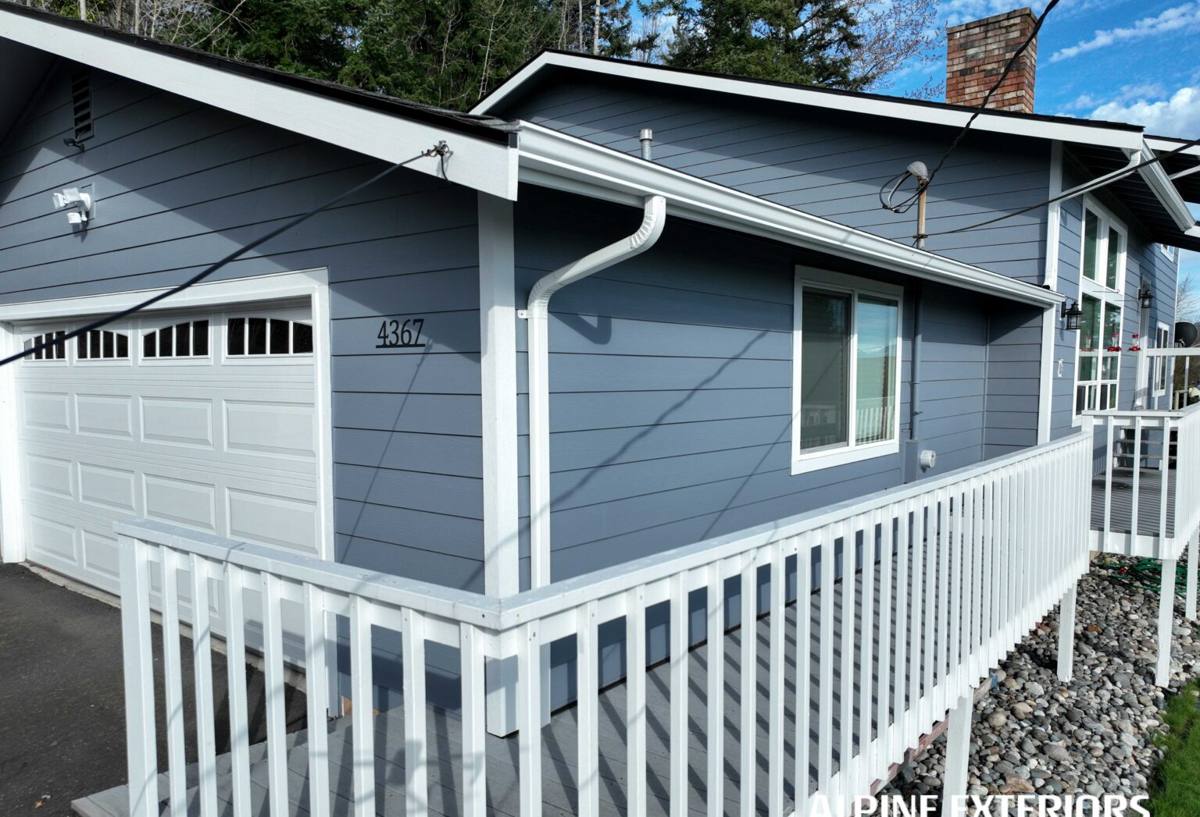
A roof inspection is also a good time to have someone look at the siding, especially where the roofline meets exterior walls — that's a common point where roof leaks turn into siding and trim damage. If a roof replacement uncovers moisture damage that's reached the siding, it's worth knowing that we install James Hardie fiber cement exclusively, specifically because of how it holds up in this exact climate: it doesn't absorb water the way wood-based products can, it carries a factory-baked finish that resists the fading salt air causes, and it's engineered for the Pacific Northwest's wet weather rather than a one-size-fits-all product. It's not part of every roofing conversation, but if a leak has been going on long enough to reach the walls, it's worth checking.
If you're not sure whether your roof needs a repair or a full replacement, we're happy to take a look and give you a straight answer — no pressure, no upsell, just an honest assessment and a free estimate.