 Semiahmoo Exterior
 Semiahmoo's Climate Is Harder on Siding Than People Expect
Semiahmoo sits on a narrow spit between Semiahmoo Bay and Drayton Harbor, which means most homes here are dealing with three things at once: constant marine humidity, wind-driven rain off the water, and salt air that never really lets up. Add in a Whatcom County shoulder season that stays damp and shaded for months at a time, and you get conditions that are genuinely tough on exterior building materials. Moss doesn't just grow on roofs here — it colonizes north-facing siding, deck boards, and fence lines wherever moisture sits and sunlight is scarce.
Most siding products were engineered for a national market, not a Pacific Northwest coastal peninsula. That mismatch shows up over time as paint failure, swelling, soft spots, and moss staining — problems that are cosmetic at first and structural later. This page explains why we standardized on James Hardie fiber cement siding as the only product we install, and what that means for a home in this specific climate.
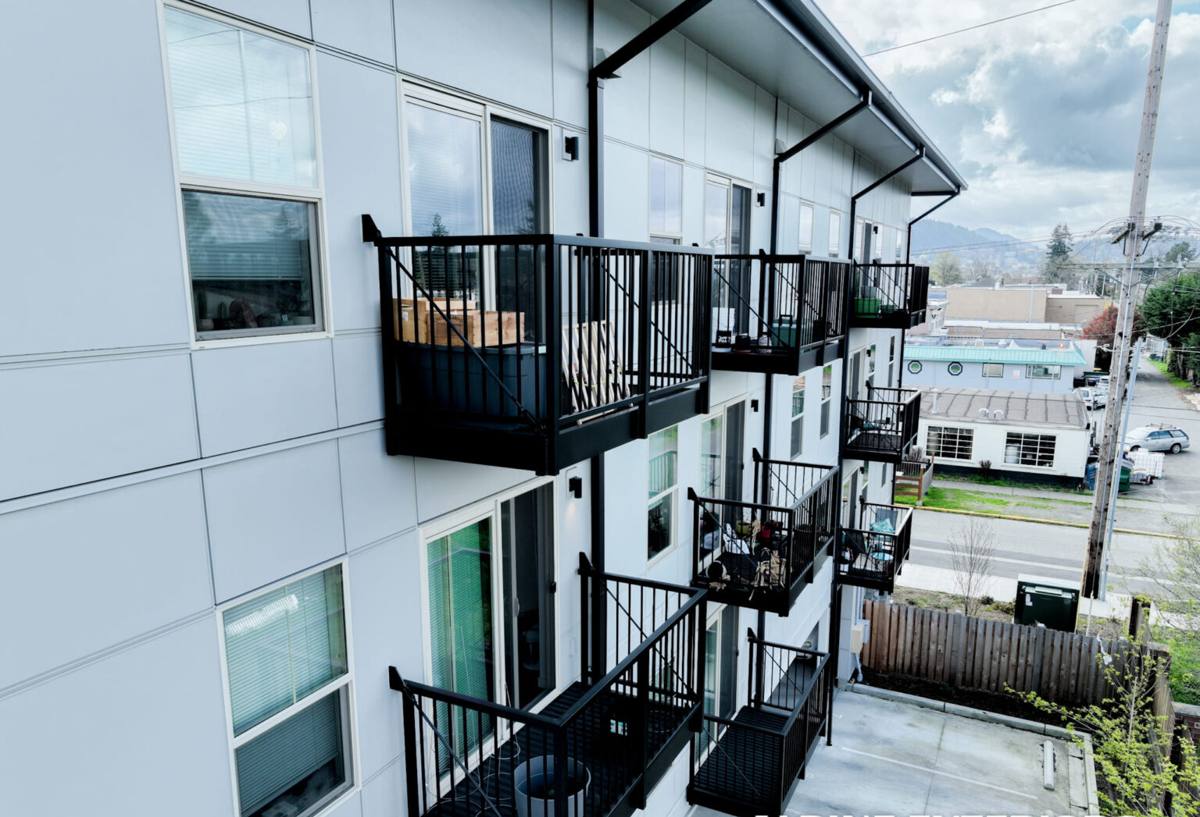
What James Hardie Fiber Cement Actually Is
James Hardie siding is made from a mix of Portland cement, sand, and cellulose fiber, cured into a dense, rigid board. It's not a coating or a composite in the way vinyl or engineered wood products are — it's closer in composition and behavior to fiber-reinforced masonry than to traditional siding. That matters because cement-based materials don't absorb and release moisture the way wood-based products do, and they don't soften, warp, or delaminate when they get wet repeatedly, which is the normal state of affairs for siding facing Semiahmoo Bay.
Non-Combustible by Composition
Because it's cement-based rather than wood-based, Hardie siding doesn't contribute fuel to a fire the way wood, wood-composite, or vinyl siding can. That's a genuine, material-level difference rather than a marketing claim — it's a function of what the board is made of, not a coating applied on top.
Engineered for Regional Climate: The HZ System
James Hardie makes different formulations of the same core product for different climate zones, sold as HZ5 and HZ10 designations. The Pacific Northwest falls under the HZ5 line, engineered specifically for regions with sustained moisture exposure, freeze-thaw cycling, and high humidity. This isn't a marketing label — the fiber-cement formulation and moisture-resistance profile are genuinely different from the versions sold in dry, low-humidity climates. For a home on the Semiahmoo peninsula, that's not a nice-to-have; it's the baseline we start from.
Why Salt Air and Driving Rain Are the Real Test
Salt air accelerates corrosion in fasteners, flashing, and any exposed metal trim, and it degrades certain paints and coatings faster than inland exposure would. Driving rain — rain pushed horizontally by wind off the water — finds every gap, lap joint, and unsealed penetration in a wall assembly that an inland home would never be tested on. Combine that with long stretches of low sun angle and shade from mature trees common on the peninsula, and you get siding that stays damp longer between rain events than siding on a drier lot even a few miles inland.
This combination is exactly why material choice matters more here than in most parts of the country. A siding product that's marginal in Spokane can be a real problem in Semiahmoo within a decade.
How Siding Materials Compare in This Climate
| Material | Moisture Behavior | Salt Air / Coastal Exposure | Moss & Algae Resistance | Typical Maintenance |
|---|---|---|---|---|
| James Hardie fiber cement (HZ5) | Dimensionally stable when wet; won't swell or rot | Cement composition doesn't corrode; factory finish resists salt-driven fading | Dense surface resists moss anchoring better than porous wood surfaces | Periodic washing; ColorPlus finish reduces repainting cycles |
| Vinyl siding | Doesn't absorb water but can warp/buckle with heat and impact | Can become brittle and discolor faster under UV plus salt exposure | Moss and algae can grow on surface texture and in seams | Washing; panels can crack and need full-section replacement |
| LP SmartSide (engineered wood) | Wood-based strand product; edges and cut ends are moisture-sensitive | Relies on factory treatment and correct field sealing at every cut | Wood-based surface is more hospitable to moss than cement | Field-sealing of cut edges and touch-up paint over time |
| Untreated cedar / primed spruce | Absorbs and releases moisture readily; prone to cupping and checking | No inherent salt resistance; relies entirely on finish maintenance | Naturally prone to moss and mildew in shaded, damp conditions | Frequent repainting/staining and moss treatment |
This isn't a claim that other products are defective — vinyl, engineered wood, and cedar are all legitimate materials used successfully elsewhere. It's that, weighed against Semiahmoo's specific combination of salt air, driving rain, and shaded moss season, the trade-offs consistently favor cement-based siding. That's the professional judgment call behind our decision to install only James Hardie.
ColorPlus Technology: Why the Factory Finish Matters
One of the more practical advantages of James Hardie siding is ColorPlus Technology — a finish baked onto the board at the factory in a controlled environment, rather than applied on-site after installation. Field-applied paint has to bond to a board that's already been through shipping, handling, and installation, and it's applied in whatever weather conditions happen to exist that day. A factory finish is applied and cured under consistent, monitored conditions before the board ever leaves the plant.
In a climate like Semiahmoo's, where UV exposure, salt air, and moisture cycling all work against paint adhesion, that difference compounds over the years. ColorPlus-finished siding also comes with touch-up paint matched to the specific color, which matters when trim gets scuffed during normal home maintenance.
Product Lines We Install
James Hardie makes several distinct product lines, and matching the right one to a home's architecture is part of getting the installation right:
- HardiePlank lap siding — the most common profile, available in multiple exposure widths and textures (smooth, cedarmill)
- HardiePanel vertical siding — used for board-and-batten looks and modern facades
- HardieShingle siding — staggered or straight-edge shingle profiles for craftsman and cottage styles
- HardieTrim boards — matching trim for corners, window and door surrounds, and fascia
- Artisan Collection — a premium lap siding line with deeper reveals and more refined detailing for higher-end architectural styles
Installation Is Where Performance Is Actually Won or Lost
Fiber cement siding is only as good as the installation behind it. James Hardie publishes detailed fastening, clearance, and flashing specifications, and deviating from them is the single biggest reason any siding product underperforms — not the material itself.
What Correct Installation Involves
- Proper ground clearance and clearance above roof lines, decks, and paved surfaces to prevent wicking moisture
- Correct fastener type, spacing, and depth — over-driven or corrosion-prone fasteners are a common failure point
- Flashing and weather barrier detailing at every window, door, and penetration, sized for wind-driven rain exposure
- Proper caulking and sealant at butt joints and trim intersections, using products rated for the exposure
- Correct nailing pattern and starter strip installation so panels sit flat and shed water as designed
On a peninsula home exposed to driving rain and salt air, sloppy flashing or clearance work will cause problems years before the siding material itself would ever be the limiting factor. This is the part of the job that separates a siding installation that lasts three decades from one that needs rework in five years.
Warranty: What a Transferable Warranty Actually Covers
James Hardie backs its products with a non-prorated limited warranty on the siding substrate, plus a separate warranty on the ColorPlus finish, and these warranties are transferable to a subsequent homeowner if the home is sold — a real factor in resale value for a coastal property. The specific terms and duration vary by product line and are spelled out in Hardie's published warranty documentation, which we walk through with homeowners before any installation. A warranty is only meaningful if the installation was done to the manufacturer's specifications, which is another reason correct installation matters as much as material selection.
A Practical Checklist for Evaluating Your Siding Situation
- Check for moss or algae staining concentrated on north-facing or shaded walls
- Look for paint that's chalking, peeling, or bubbling, especially near ground level or under windows
- Press gently on wood-based or composite siding near the bottom courses to check for softness
- Inspect caulking at trim joints and window surrounds for cracking or gaps
- Note any areas where siding sits close to grade, decking, or roof lines without a visible gap
- Ask any contractor bidding the job which specific fastening and flashing details they follow, not just which brand they install
Getting an Honest Look at Your Home
Every home on the Semiahmoo peninsula faces this climate a little differently depending on tree cover, sun exposure, and proximity to the water, so the right approach isn't one-size-fits-all even within a single neighborhood. If you're weighing a siding replacement or just want an honest read on what's happening with your current exterior, we're glad to take a look and walk you through what we see — no pressure, no obligation. Use the form below to request a free estimate.