 Semiahmoo Exterior
 Exterior Homes Around California Creek
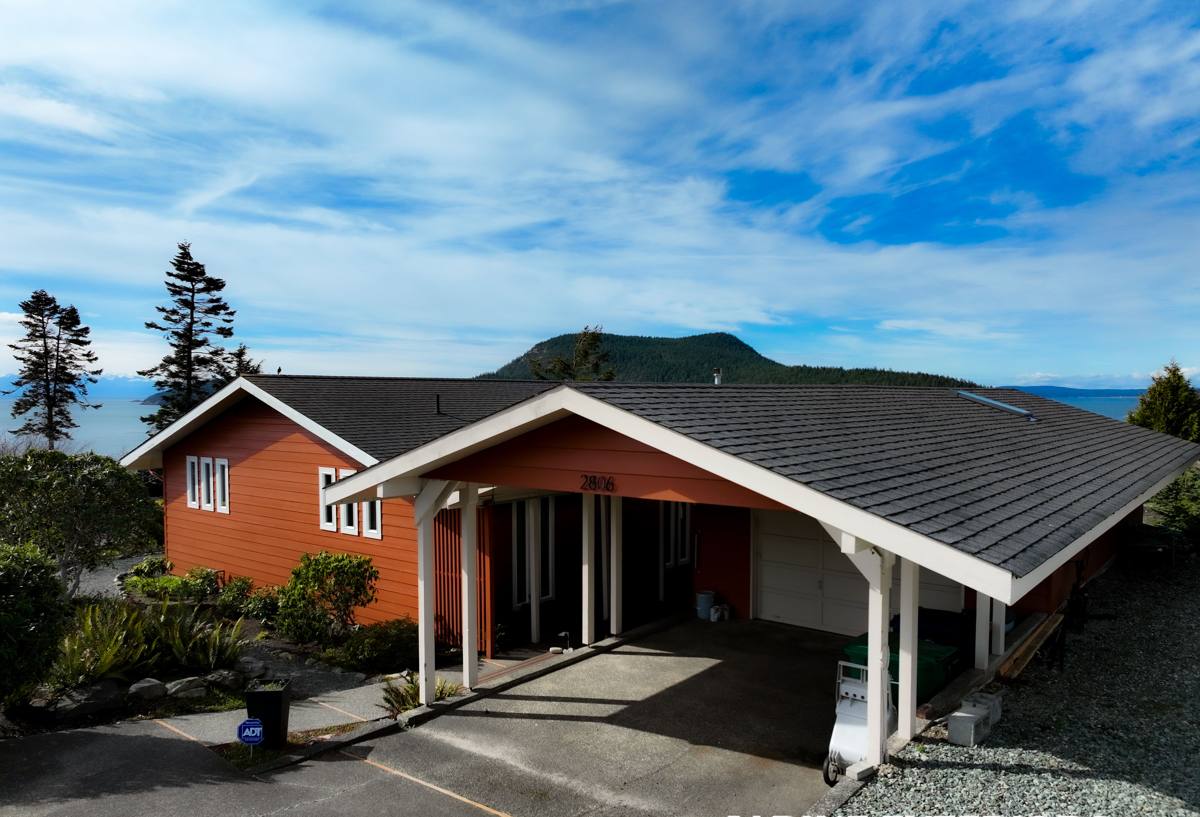
California Creek sits in that stretch of Whatcom County where the land eases toward Semiahmoo Bay and Drayton Harbor, close enough to the water that salt air, wind-driven rain, and shade-grown moss are simply part of owning a home here. Whether your place is a few decades old or newer construction, the exterior envelope is doing constant work against a marine climate that doesn't take a season off. We work on homes throughout this area and see the same patterns repeat: siding that's failed at the bottom courses, roofs holding moss longer than they should, and window frames that have taken on water nobody noticed until the trim started to soften.
This page is meant to be a straightforward reference — what the climate actually does to a house near California Creek, how our siding, roofing, window, and deck work addresses it, and why we standardized on one siding product instead of offering several.
What the Local Climate Does to a House
Salt Air and Corrosion
Proximity to Semiahmoo Bay means airborne salt settles on everything — fasteners, flashing, trim, and siding surfaces. Over years, unprotected or under-rated metal components corrode faster than they would further inland. This shows up as rust streaking below nail heads, corroded gutter hangers, and flashing that's thinned out well before the rest of the exterior looks worn.
Driving Rain
Storms off the Strait of Georgia and Puget Sound don't just fall straight down here — wind pushes rain sideways into wall assemblies, window frames, and any gap in the building envelope. Homes without properly lapped siding, correctly flashed windows, and a working drainage plane behind the cladding end up with hidden moisture intrusion long before a homeowner sees a stain indoors.
Moss and Shade
Between tree cover and the long stretches of overcast, damp weather typical of this part of Whatcom County, north-facing roof slopes and shaded siding sections stay wet far longer after a storm than they would in a drier climate. That extended dampness is exactly what moss, algae, and mildew need to take hold, and once established they hold moisture against the surface underneath — accelerating rot in wood-based products and degrading paint and caulking faster than normal weathering would.
Siding: Why We Only Install James Hardie
We get asked regularly why we don't offer vinyl, LP SmartSide, Cemplank, Allura, or bare cedar and primed spruce alongside Hardie. The honest answer is that after years of installing and repairing exteriors in this exact climate, we stopped installing products we couldn't stand behind for the long haul in a salt-air, high-moisture environment.
The Trade-Offs We Weighed
- Vinyl siding is affordable and low-maintenance in a general sense, but it's a thin plastic product that expands and contracts with temperature swings, can crack in impact, and fades unevenly over time in UV exposure — and it doesn't offer the same fire resistance as fiber cement.
- LP SmartSide, Cemplank, and Allura are engineered wood or fiber cement competitors with real strengths, but wood-based composites carry inherent moisture sensitivity at cut edges and fastener points, which matters a great deal in a climate where wall assemblies stay damp for extended stretches.
- Cedar and primed spruce are beautiful, traditional choices, but they demand a maintenance schedule — recoating, caulking, and inspection — that most homeowners underestimate, and any lapse in that schedule shows up fast as rot in a marine environment.
James Hardie fiber cement isn't immune to installation mistakes, but as a material it's non-combustible, dimensionally stable, and engineered specifically for wet, coastal-adjacent climates through its HZ10 product line — which is what the Pacific Northwest calls for. The ColorPlus factory finish also means the color coat is baked on and warrantied separately from the substrate, so you're not relying on field-applied paint to hold up against this area's rain and salt exposure. It's the one product we're willing to put our name behind here.
Hardie Product Lines We Install
| Product | Best Use | Notes |
|---|---|---|
| HardiePlank lap siding | Most homes, traditional lap look | Available in smooth or cedar-textured finish |
| HardiePanel vertical siding | Accent walls, modern or board-and-batten style | Often paired with trim battens |
| HardieShingle | Gable accents, Craftsman-style detailing | Staggered or straight-edge patterns |
| HardieTrim | Corner boards, window and door trim | Pairs with any of the above |
Roofing for a Wet, Mossy Climate
Roofs near California Creek work harder than roofs in drier parts of the state. We evaluate three things on every roof inspection: how much moss and organic buildup is present, whether the underlayment and flashing are still doing their job, and whether the ventilation is adequate to let the attic dry out between storms. A roof that looks fine from the ground can still be losing granules or holding trapped moisture at valleys and penetrations.
What We Look For
- Moss and algae growth, especially on shaded or north-facing slopes
- Flashing condition around chimneys, skylights, and roof-to-wall transitions
- Granule loss and shingle curling from repeated wet-dry cycling
- Gutter and downspout function — clogged gutters back water up under roof edges
- Attic ventilation, which affects both roof lifespan and moisture inside the home
Regular moss removal and gutter maintenance go a long way toward extending roof life here, but once shingles are compromised, patch repairs only buy so much time. We'll always tell you honestly whether a roof needs a repair or a replacement — we don't upsell full replacements when a targeted repair will hold.
Windows: Where Driving Rain Finds the Gaps
Older single-pane or early dual-pane windows in this area are frequently the source of both energy loss and hidden water intrusion. Wind-driven rain off the bay doesn't need much of a gap to work its way behind poorly flashed window frames, and once water gets into the wall cavity around a window, it can travel and cause rot well beyond the window itself before it's visible.
When we replace windows, we pay particular attention to flashing and integration with the siding — a window is only as good as the way it's tied into the wall assembly around it. That's true no matter what siding product a home has, but it matters even more when the goal is to keep water fully out of the wall in a climate like this one.
Decks in a Marine Climate
Decks near California Creek take a similar beating to roofs and siding — constant moisture cycling, shade-driven algae growth on boards, and fasteners exposed to salt air. Ledger board attachment and flashing where a deck meets the house are common failure points we check closely, since a poorly flashed ledger is one of the more serious hidden risks in deck construction. Composite decking has become popular here specifically because it resists the rot and splintering that wood decking is prone to in sustained damp conditions, though proper substructure and drainage still matter regardless of the decking material chosen.
What a Local Crew Actually Adds
A lot of exterior problems in this part of Whatcom County come down to installation details that generic, non-local crews get wrong — flashing sequences that don't account for wind-driven rain, fastener choices that corrode faster in salt air, or ventilation that doesn't match the moisture load of a marine climate. Working this area regularly means we see how materials and installation methods actually hold up here over years, not just what a spec sheet promises. That's the difference between an exterior that needs attention again in five years and one that's still doing its job in twenty.
A Quick Homeowner Checklist
- Walk your siding once a year and look for soft spots, especially near the bottom courses and around window trim
- Check north-facing roof slopes and siding sections for moss buildup after the wet season
- Make sure gutters are clear before the heavy fall and winter rains arrive
- Look at window sills and interior trim for any sign of staining or softness
- Inspect where your deck ledger meets the house for gaps, staining, or soft wood
Getting Started
Every home near California Creek carries its own combination of sun exposure, tree cover, and wind exposure, so there's no one-size answer to what your exterior needs. If you're noticing moss buildup, siding that feels soft in spots, or windows that seem to be letting in more than light, we're happy to take a look and give you a straightforward, no-pressure assessment of what's actually going on and what your options are. Reach out for a free estimate using the form below.