 Semiahmoo Exterior
 Exteriors Built for Custer's Coastal Climate
Custer sits inland from Semiahmoo Bay in Whatcom County, close enough to the water to catch salt-laden air on a windy day, but far enough out that homes here run the gamut from open farmland lots to wooded acreage tucked back from Custer School Road and the surrounding county roads. That mix matters for exterior work. A house sitting in an open field takes wind-driven rain straight on. A house shaded by fir and cedar deals with less wind but a lot more moss, algae, and standing damp on the north side of the roof and siding. We've worked both types of lots in this area, and the approach to siding, roofing, windows, and decks changes depending on which situation a home is in.
What doesn't change is the underlying problem: this part of Whatcom County gets a long, wet fall-through-spring stretch, salt-tinged air off the Strait of Georgia and Semiahmoo Bay, and enough shade and moisture in places to keep moss and algae actively growing for most of the year. Exterior materials and installation details that work fine in a drier climate don't hold up the same way out here.
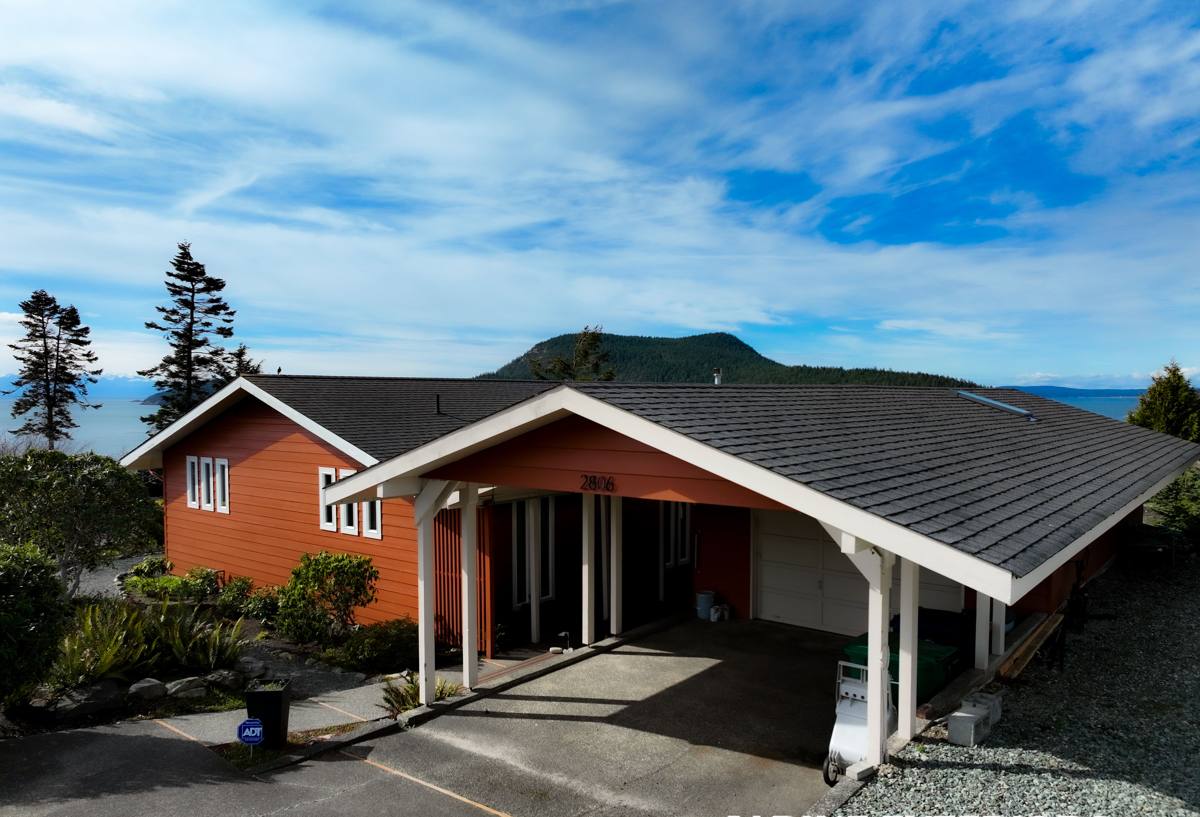
What Custer Homes Actually Face
Salt Air and Corrosion
Proximity to Semiahmoo Bay and Drayton Harbor means homes in and around Custer get some measure of salt in the air, especially on windier days. Salt air accelerates corrosion on fasteners, flashing, and any metal trim that isn't rated for a coastal environment. It also degrades certain siding finishes faster than manufacturers' inland warranty testing accounts for, which is part of why material choice and installation hardware matter more here than they would forty miles inland.
Driving Rain
Whatcom County's weather pattern brings rain that doesn't just fall straight down — it comes in sideways during fall and winter storms. Siding, window flashing, and roof-to-wall transitions need to be detailed for wind-driven rain, not just vertical rainfall. Gaps, poorly lapped house wrap, or short caulk joints that would be a non-issue in a dry climate become a slow leak source here.
Moss and Algae Season
Between the moisture and the tree cover common on many Custer lots, moss and algae growth is close to a year-round concern, not just a winter one. Roofs facing north or shaded by trees are the first to show it, and it works its way onto siding surfaces too, especially at ground level and under eaves with limited airflow. Left alone, moss holds moisture against roofing and siding materials far longer than open air would, which shortens the life of whatever's underneath it.
Siding: Why We Only Install James Hardie
We install James Hardie fiber cement siding exclusively. We don't install vinyl, LP SmartSide, Cemplank, Allura, primed spruce, or cedar — not because those products have no merit, but because after years of exterior work in this climate, we standardized on the one material system that consistently holds up to salt air, sustained moisture, and moss without the maintenance headaches the alternatives bring.
What That Means in Practice
- Hardie fiber cement is non-combustible — a genuine advantage as wildfire smoke and dry-season risk become more of a Pacific Northwest concern even in a generally wet county.
- ColorPlus factory-applied finish resists fading and holds up to moisture better than field-applied paint, which matters when a house is getting salt air exposure.
- Hardie's HZ5 product line is engineered for climate zones like ours, with moisture and freeze-thaw performance that generic fiber cement or wood-based siding doesn't match.
- Fiber cement doesn't feed moss and algae the way wood-based products can, and it doesn't swell, rot, or delaminate the way engineered wood siding can when a seam takes on water over time.
Vinyl is inexpensive and low-maintenance in a general sense, but it can warp in temperature swings, fades over time, and its seams and J-channels give wind-driven rain more places to work behind the surface. Wood siding — cedar or primed spruce — looks great new, but it demands a repainting and caulking schedule that most homeowners underestimate, and in a moss-prone, moisture-heavy climate like Custer's, that maintenance burden only grows. We'd rather put a product on a home that we know will still look and perform well a decade out, with a strong transferable warranty behind it, than sell something that looks good on day one and becomes a maintenance project by year five.
| Siding Option | Salt Air Resistance | Moss/Algae Resistance | Maintenance |
|---|---|---|---|
| James Hardie fiber cement | Strong | Strong | Low |
| Vinyl | Moderate | Moderate | Low, but warps/fades over time |
| Cedar | Weak without upkeep | Weak | High — repainting, caulking, sealing |
| Primed spruce / engineered wood | Moderate | Weak to moderate | Moderate to high |
Roofing for Moss Season
Roofing in this area has to account for a moss season that runs most of the year on shaded slopes. That starts with the roofing material itself, but it's just as much about ventilation and detailing — a roof with poor attic ventilation stays damper longer after a rain, which gives moss more of a foothold. We look at flashing condition, valley detailing, and ventilation as part of any roofing job here, not just the shingles or panels on top. A roof that sheds water fast and dries out between storms will outlast one that holds moisture, even with identical materials.
For homes on more open Custer lots exposed to wind, wind-rated shingle fastening and proper edge and ridge detailing matter more than they would on a sheltered, tree-shaded lot — but that same open exposure usually means less moss pressure. Every roof in this area should be evaluated for its specific site conditions rather than a one-size-fits-all spec.
Windows That Handle Wind-Driven Rain
Window failures in this climate are rarely about the glass — they're about flashing and installation. A window that's flashed correctly, with proper head flashing, side laps, and sill pan drainage, will keep wind-driven rain out even in an exposed Custer location. A window installed without those details, even a high-quality unit, will eventually leak at the frame. When we replace windows here, we treat the flashing and integration with the surrounding siding as just as important as the window unit itself — especially where new siding is going in around existing or new window openings, since that's the seam most likely to leak if it's rushed.
Signs a Home's Windows Need Attention
- Fogging or condensation between panes — a sign of failed seals
- Soft or discolored trim/casing around the window, suggesting water intrusion
- Drafts or noticeably higher heating bills in older single-pane or early double-pane units
- Visible gaps in caulk or flashing at the window perimeter
- Difficulty opening/closing from frame swelling or warping
Decks: Built to Handle Standing Moisture
Decks in shaded, moisture-heavy settings like many Custer properties need attention to drainage, ledger board flashing, and the gap spacing between boards to let water and debris pass through rather than pool. A deck built without a proper ledger flashing detail is one of the more common sources of hidden rot we find on older homes in this region, because the failure happens where the deck meets the house — out of sight until the damage is significant. Composite decking has become a popular option here specifically because it resists the moss and moisture issues that wood decking struggles with in constant shade, though wood remains a solid choice when it's built and maintained correctly.
Why a Local Crew Matters
Exterior work in Custer isn't generic exterior work. A crew that mainly works drier inland climates, or one that doesn't regularly deal with salt air and moss pressure, tends to under-detail the things that matter most here — flashing laps, ventilation, fastener selection, and drainage paths. We work throughout Whatcom County and see the specific ways homes near Semiahmoo Bay age differently than homes twenty miles inland. That local pattern recognition is part of what goes into every siding, roofing, window, and deck project we take on here — knowing where water and moss actually cause problems on a Custer-area home, not just where a generic spec sheet assumes they will.
What to Expect From an Estimate
When we walk a property in the Custer area, we're looking at more than just the material that needs replacing. We check ventilation, existing flashing condition, moisture staining, moss buildup patterns, and how exposed the home is to wind and salt air based on its specific location and tree cover. That assessment shapes the recommendation — not a standard package applied to every house regardless of site conditions.
What We Look at During a Site Visit
- Current siding material, condition, and any moisture staining or soft spots
- Roof condition, moss/algae presence, flashing, and attic ventilation
- Window flashing integrity and any signs of leaking at frames
- Deck ledger connection, board spacing, and structural condition
- Site exposure — wind, shade, tree cover, and proximity to open water
If your home in the Custer area is showing moss buildup, siding that's holding moisture, windows that leak or fog, or a deck that feels soft in places, we're happy to take a look. Reach out for a free, no-pressure estimate — we'll walk the property, tell you honestly what we see, and lay out options built for what this specific climate does to a home.