 Semiahmoo Exterior
 A Coastal Whatcom County Community With Its Own Exterior Demands
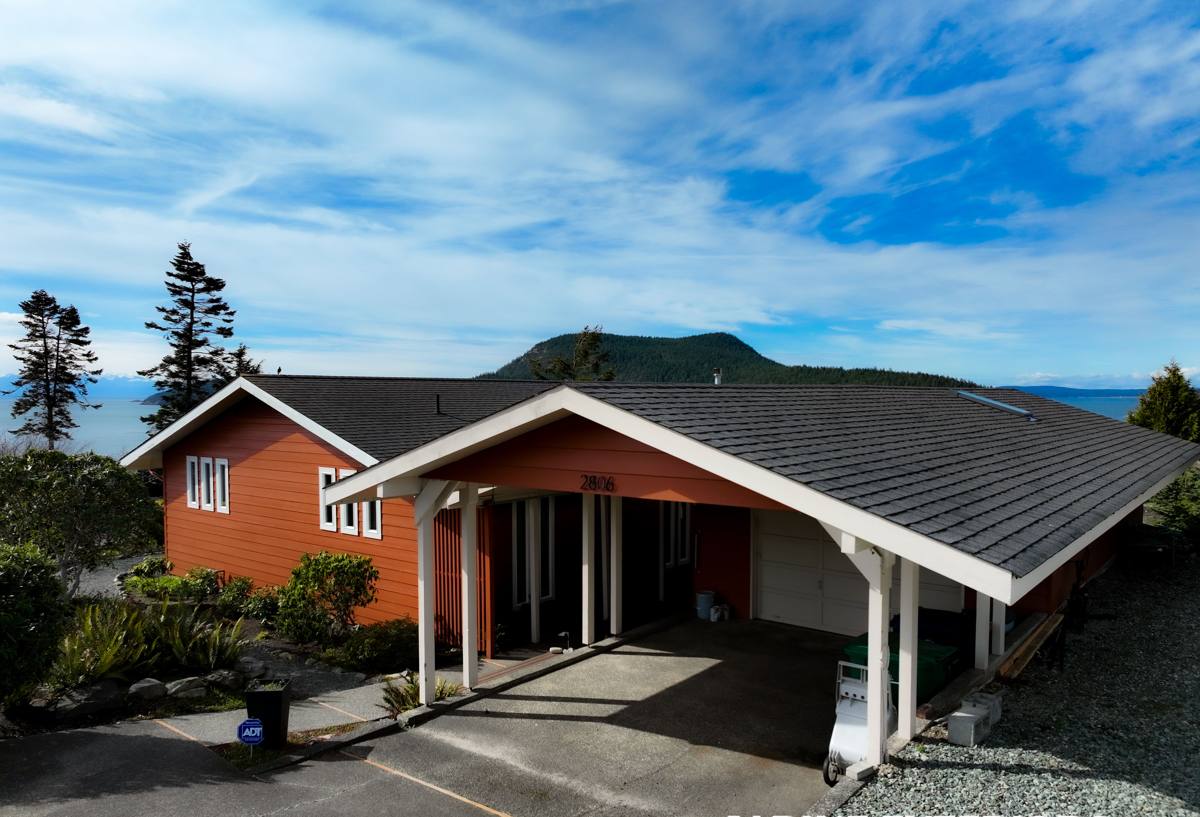
Birch Bay sits right on the water in Whatcom County, close enough to the Strait of Georgia and the Semiahmoo Peninsula that salt air is a daily fact of life, not an occasional visitor. Homes here range from waterfront cottages a few steps from the beach to newer builds set back on wooded lots, but almost all of them share the same exposure: salt-laden wind off the water, long stretches of driving rain through fall and winter, and short, mild summers that never quite dry things out for good. That combination is harder on a home's exterior than most inland Whatcom County neighborhoods, and it's why we treat Birch Bay as its own case rather than a generic siding-and-roofing job.
None of this means a home here is doomed to constant repairs. It means the materials and installation details matter more than they would somewhere drier and further from the water. We've built our approach around that reality.
What Salt Air, Rain, and Moss Actually Do to a Home
Salt air
Airborne salt is corrosive to exposed metal fasteners, flashing, and hardware, and it accelerates the breakdown of finishes that aren't built to handle it. Paint films chalk and fade faster near the water. Caulk joints dry out and crack sooner. It's a slow, cumulative process, but over a decade or two the difference between a coastal-rated exterior and a standard one becomes obvious.
Driving rain
Birch Bay doesn't just get rain, it gets wind-driven rain that comes in at an angle and finds every gap, lap joint, and penetration in a wall or roof. That's a water-management problem as much as a materials problem. Flashing details, siding laps, window flanges, and roof underlayment all have to be installed to shed water that's actively being pushed rather than just falling straight down.
Moss and sustained moisture
The long wet season here means roofs, north-facing siding, and shaded decks stay damp for extended stretches, which is exactly what moss and algae need to take hold. Left alone, moss holds moisture against roofing and siding surfaces, works into seams, and shortens the service life of whatever it's growing on.
Siding in Birch Bay: Why We Install Only James Hardie Fiber Cement
We install James Hardie fiber cement siding exclusively. We don't install vinyl, LP SmartSide, Cemplank, Allura, primed spruce, or cedar, and in a place like Birch Bay that's a deliberate choice, not a brand preference.
Vinyl
Vinyl is inexpensive and low-maintenance in mild climates, but it's a thin plastic product that expands and contracts with temperature swings and can warp or become brittle over time, especially with sustained UV and salt exposure. Its seams and J-channels are also common points where wind-driven rain can work its way behind the cladding.
LP SmartSide and other wood-based composites
Engineered wood siding uses real wood fiber, which means it's still fundamentally a wood product with a factory treatment protecting it. That treatment has to stay intact at every cut edge and seam for the life of the siding, and in a wet, salt-exposed environment like Birch Bay, any breach is an invitation for swelling and rot to start.
Primed spruce and cedar
Cedar looks great and has real fans, and we understand the appeal. But solid wood siding demands ongoing refinishing to keep water out, and in a marine climate that maintenance cycle comes around faster than most homeowners expect. Primed spruce carries similar exposure risk if the field-applied paint isn't kept up perfectly.
Why Hardie fits Birch Bay
James Hardie fiber cement is non-combustible and dimensionally stable, so it doesn't swell, warp, or rot the way wood-based products can. Its ColorPlus factory finish is baked on under controlled conditions and holds color and adhesion far better than field-applied paint exposed to salt air, and Hardie's HZ5 product line is engineered for the kind of freeze-thaw and moisture cycling this coastal region sees. Paired with a transferable warranty and installation to Hardie's published details, it's the product we're comfortable standing behind on a Birch Bay home.
Roofing for a Salt-Air, Moss-Prone Coastline
Roofing in Birch Bay has to do two jobs at once: shed wind-driven rain without leaking, and resist the moss and algae growth that the long wet season practically guarantees given the chance. That means getting the underlayment and flashing details right at every valley, penetration, and eave, since those are the points where blown-in rain actually gets past the field of the roofing material. It also means choosing roofing products and, where applicable, treatments that resist moss growth rather than just accepting that moss will show up and dealing with it later.
Roof edges and eaves in this climate deserve particular attention. Wind off the water can drive rain up under standard edge details, and a roof that's fine on a calm day can still leak during a real Birch Bay storm if the edge and flashing work wasn't done with that wind pattern in mind.
Windows: Keeping Wind-Driven Rain Out of the Wall
Window performance in Birch Bay is less about the glass and more about the installation. A well-built window can still leak if the flashing around it doesn't integrate properly with the wall's water-resistive barrier, and that integration is exactly where wind-driven rain finds its way in. We flash and seal window openings to shed water that's being pushed sideways by wind, not just falling straight down, and we pay attention to sill pans and head flashing details that are easy to shortcut but expensive to fix once they fail behind the siding.
Energy performance matters too, especially on waterfront lots exposed to steady wind, but in this climate keeping water out of the wall assembly is the more urgent job.
Decks in a Marine Environment
Decks in Birch Bay take a beating from the same combination of salt air and sustained moisture that affects siding and roofing, plus direct sun exposure on decks facing the water. Fasteners and hardware need to be rated for corrosion resistance, ledger and post connections need proper flashing to keep water from being trapped against the structure, and decking materials need to handle repeated wet-dry cycling without cupping or checking. A deck built without those details in mind tends to show problems, loose railings, rusting hardware, soft spots near ledgers, well before it should.
Comparing Exterior Material Approaches for a Coastal Whatcom County Home
| Factor | Vinyl / Wood Composite | Solid Cedar / Primed Wood | James Hardie Fiber Cement |
|---|---|---|---|
| Salt air resistance | Moderate; seams and edges vulnerable | Low without frequent refinishing | High; non-combustible, dimensionally stable |
| Moisture/rot risk | Low to moderate depending on product | High if maintenance lapses | Low when installed to spec |
| Finish durability in coastal UV/salt | Fades and chalks over time | Repaint/reseal cycle required | Factory ColorPlus finish holds up longer |
| Maintenance burden | Low, but limited repair options | High; regular refinishing needed | Low; occasional wash and caulk check |
| Typical warranty structure | Varies widely by manufacturer | Usually none beyond installer | Strong transferable manufacturer warranty |
Signs Your Birch Bay Home's Exterior Needs Attention
- Moss or dark streaking building up on north-facing siding or roof slopes
- Caulk that's cracked, shrunk, or pulled away at siding joints and window trim
- Paint that's chalking, peeling, or fading unevenly, especially on the water side of the house
- Soft or spongy decking, or rust staining around deck fasteners and hardware
- Water stains on interior ceilings or walls near roof valleys or window heads
- Visible gaps or warping at siding seams and corner boards
Why a Local Crew Matters Here
Exterior work in Birch Bay isn't the same job as exterior work twenty miles inland, and a crew that works this stretch of Whatcom County regularly knows it. That means understanding how wind off the water actually hits a given lot, which sides of a house take the worst of the driving rain, and where moss tends to establish first on local rooflines. It also means being available for the kind of follow-up, a recheck on a flashing detail, a caulk touch-up after the first real storm, that out-of-area contractors aren't set up to provide once the truck has left town.
We build every project around materials and details suited to this specific coastline, not a generic spec sheet, because that's what actually holds up here over time.
Get a Free, No-Pressure Estimate
If you're noticing early wear on your Birch Bay home's siding, roof, windows, or deck, or you're planning ahead before the next wet season sets in, we're happy to take a look and walk you through honest options. Use the form below to request a free estimate, no pressure and no obligation.