 Semiahmoo Exterior
 Two Well-Known Products, One Decision We've Already Made
If you've spent any time researching siding for a home in Semiahmoo, you've likely run into two names over and over: James Hardie fiber cement and LP SmartSide engineered wood. Both are legitimate, widely used products with real manufacturers behind them. Neither is a scam or a "bad" product in the way some online reviews make it sound. But we made a decision years ago to install only James Hardie fiber cement on the homes we work on, and we think you deserve a straight explanation of why — not a sales pitch, and not a takedown of the alternative.
This page walks through what each product actually is, how they behave differently once they're on a wall exposed to Whatcom County weather, and why our crews standardized on one of them. We'll be specific about trade-offs rather than vague about "quality," because vague claims aren't useful to a homeowner trying to make a decision that will affect their house for the next 20-30 years.
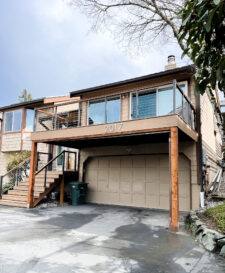
What LP SmartSide Actually Is
LP SmartSide is an engineered wood product. At its core, it's strand board — wood strands bonded with resin under heat and pressure, similar in concept to OSB sheathing but manufactured and treated specifically for exterior use. LP adds a zinc borate treatment to resist fungal decay and insect damage, then applies a resin-saturated overlay and factory primer or finish coat over the surface.
It's a genuine engineering improvement over the old, unstabilized hardboard siding products of the 1980s and 90s that gave engineered wood a bad reputation in the first place. LP has spent real money on testing and stands behind the current product with a warranty. It's lighter than fiber cement, easier on saw blades, and less expensive per square foot in most markets.
What James Hardie Fiber Cement Is
Fiber cement is a different category of material entirely. It's made from Portland cement, ground sand, and cellulose fiber, mixed and cured (autoclaved) into a dense, stable board. There's no wood strand structure to swell or delaminate, because there's no raw wood fiber acting as the load-bearing matrix — the cellulose is there for reinforcement, encased in a mineral-based product.
James Hardie makes climate-specific product lines, and the HZ5 line is engineered for the wetter, harsher weather zones that include the Pacific Northwest. The factory ColorPlus finish is baked on and warrantied separately from the substrate, which matters in a region where UV isn't the main threat but wind-driven rain and prolonged damp certainly are.
Where the Difference Actually Shows Up: Whatcom County Weather
Semiahmoo sits right on the water, which means homes here deal with a combination that's tougher than most: salt air off Semiahmoo Bay and the Strait of Georgia, driving rain that comes in sideways during winter storms, and a long, low-sun moss season that keeps north-facing walls damp for months at a stretch. This is the environment where the difference between an organic-core product and a mineral-core product stops being theoretical.
Moisture Is the Real Test
Engineered wood siding is manufactured to resist moisture far better than old hardboard, but it's still a wood-strand product at its core. Cut edges, fastener penetrations, and any point where the factory coating is compromised are the places water can find a way in over time. Once moisture gets past the treated surface into the strand core, that's an organic material in a wet climate — the exact conditions that cause slow deterioration. It's manageable with diligent caulking and maintenance, but it puts the burden of long-term performance on upkeep discipline more than the product itself does.
Fiber cement doesn't have that failure mode. It absorbs and releases moisture without the core material breaking down, because there's no organic strand structure to rot. It can still take on water at unsealed cut edges, which is why correct installation — factory-primed or field-sealed cut edges, proper flashing, correct fastener placement — still matters. But the consequence of a missed detail is very different between the two products.
Moss, Algae, and the North Side of the House
Anyone who's owned a home in this part of Washington knows the north and west walls stay damp long after the south side has dried out, and that's where moss and algae take hold first. Both siding types can grow surface moss in shaded, damp corners — that's a coating and cleaning issue on any exterior material. The difference is what happens underneath that moss if it sits for a season or two without being addressed. On a mineral substrate, prolonged surface dampness is a cosmetic and coating concern. On an organic substrate, it's a slower-moving risk to the material itself.
Salt Air and Fasteners
Direct salt exposure near the bay accelerates corrosion on anything metal — flashing, fasteners, trim. That part is true regardless of which siding you choose, and it's why we spec corrosion-resistant fasteners and flashing details on every job out here. It's a shared consideration, not a point of difference between the two products, but it's part of why installation quality matters as much as material choice.
Side-by-Side: The Honest Comparison
| Factor | LP SmartSide (Engineered Wood) | James Hardie (Fiber Cement) |
|---|---|---|
| Core material | Wood strand, resin-bonded, borate-treated | Cement, sand, cellulose fiber |
| Moisture response | Resists well when coating is intact; vulnerable if compromised long-term | Does not rot; dimensionally stable when wet |
| Fire classification | Combustible (treated, but wood-based) | Non-combustible |
| Weight | Lighter, easier to handle and cut | Heavier, requires proper blades and technique |
| Factory finish | Primed or pre-finished, resin overlay | ColorPlus baked-on finish, separately warrantied |
| Typical manufacturer warranty | 5-year workmanship, longer limited product warranty | 30-year non-prorated limited warranty on the substrate |
| Upfront material cost | Generally lower | Generally higher |
| Install sensitivity | Moderate — cut edge sealing, caulking discipline matters | Moderate to high — cut edge treatment, fastener spacing, clearances matter |
Fire Resistance Isn't Just a Brochure Line
Washington's wildfire smoke seasons have gotten longer and more intense over the past several years, and while Semiahmoo isn't in a high wildfire-risk zone the way some interior counties are, non-combustible siding is increasingly something insurers and homeowners both pay attention to. Fiber cement's non-combustible rating isn't marketing — it's a real material property, and it's one of the harder-to-quantify reasons we don't feel the need to offer a wood-based alternative alongside it.
Warranty Structure: Read What You're Actually Signing Up For
Both manufacturers offer real warranties, but the structures aren't identical, and the fine print matters more than the headline number. LP's product warranty is meaningful, but engineered wood warranties commonly include provisions around maintenance requirements — caulking, painting cycles, moisture exposure — that can affect a claim if those maintenance steps lapse. James Hardie's fiber cement warranty is longer in years and less dependent on an ongoing maintenance schedule, because the underlying material isn't degrading the way an organic core can. The ColorPlus finish carries its own separate warranty term, which is worth understanding before you assume "the siding" and "the paint job" are covered the same way.
We're not going to tell you every SmartSide installation fails or every warranty claim gets denied — that's not true and it's not our place to say. What we will say is that we'd rather stand behind a warranty structure that doesn't hinge on a homeowner keeping up a strict caulking and inspection schedule for three decades on a house that gets driving rain half the year.
What We Tell Homeowners Who Ask About LP SmartSide
We get this question often enough that we want to answer it directly: LP SmartSide is not a product we consider unsafe or a bad value for every homeowner in every climate. In drier regions with less driving rain, it performs well and costs less. Our decision not to install it is specific to what we've seen fiber cement do, side by side, in Whatcom County's combination of salt air, sustained damp, and heavy winter rain — and specific to the fact that we'd rather install one product extremely well than split our crews' expertise across two very different material systems.
Questions Worth Asking Any Contractor, Regardless of Product
- Is the siding rated for this specific coastal climate zone, or a generic national rating?
- Who is installing it — is siding their specialty, or one of several trades they handle?
- How are cut edges and seams treated, and is that spelled out in the written scope?
- What does the warranty actually require of you as the homeowner to stay valid?
- What fastener and flashing materials are being used given the salt air exposure here?
- Can you see the manufacturer's installation instructions for this specific product line?
Our Position, Plainly Stated
We install James Hardie fiber cement, in the HZ5 climate-engineered line, because it's the product we trust to perform correctly on Semiahmoo homes for decades without asking homeowners to maintain a perfect caulking schedule to keep it that way. That's not a claim that every alternative fails — it's a statement of what we've chosen to specialize in and stand behind. If you're weighing your options, we're glad to walk through what a Hardie installation actually involves on your specific home, including the ColorPlus color lines and trim details that work well with this region's architecture.
If you'd like a straightforward look at what fiber cement siding would cost and involve for your home, we're happy to come take a look and give you a free, no-pressure estimate — no obligation, just an honest assessment.