 Semiahmoo Exterior
 A Common Question We Get in Semiahmoo
Primed wood siding — usually finger-jointed pine, spruce, or fir boards primed at the factory — has been a staple of Pacific Northwest home construction for decades. It's affordable, it's easy for framing crews to install, and it looks the part on a traditional Whatcom County home. So when homeowners in Semiahmoo ask why we don't install it, they're usually surprised by the answer: it's not that primed wood is a bad product. It's that it's a high-maintenance product in a location that punishes any lapse in that maintenance.
We install James Hardie fiber cement siding exclusively. Before we explain why, it's worth giving primed wood siding a fair hearing — because understanding what it does well is the whole reason this is a real trade-off and not an easy call.
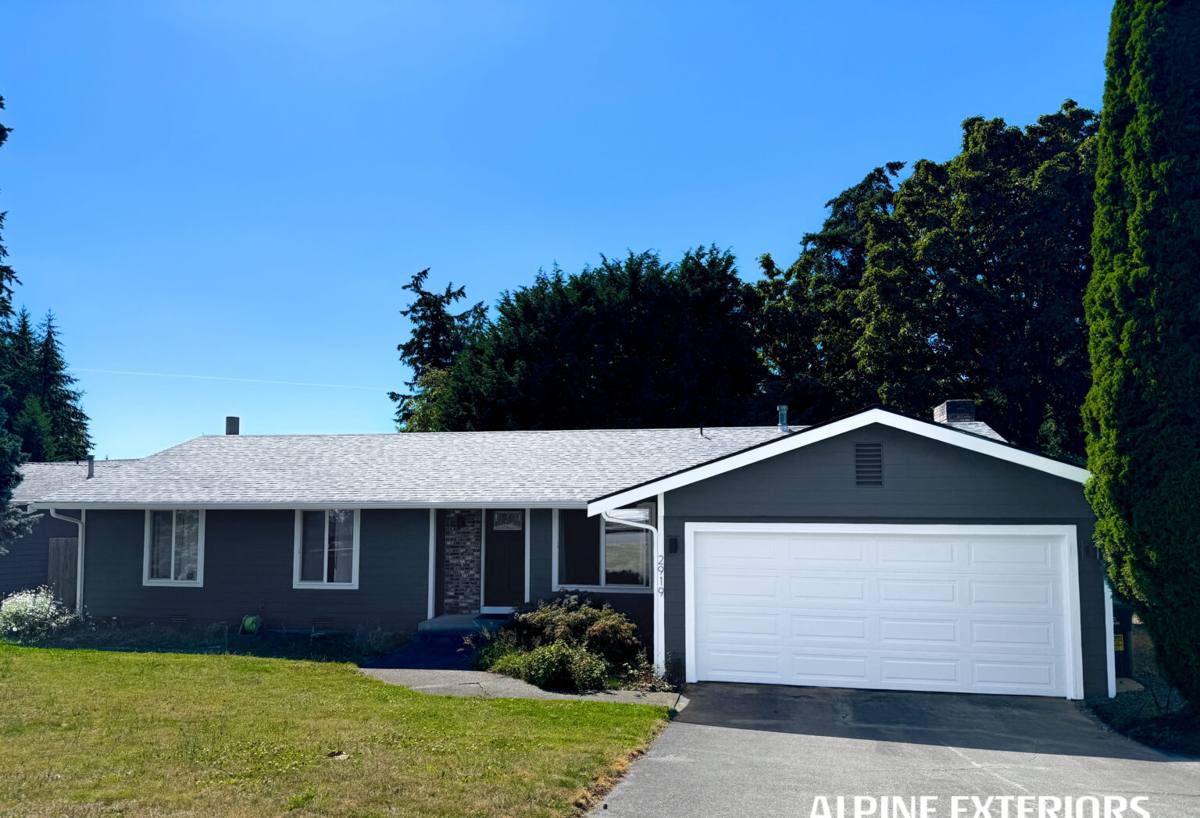
What Primed Wood Siding Gets Right
Primed wood has real advantages, and we're not going to pretend otherwise:
- Lower material cost than most engineered or fiber cement alternatives, which matters on tight renovation budgets.
- Familiar to install for general contractors and carpenters, since it cuts, nails, and finishes like standard lumber.
- Authentic wood grain and profile that some homeowners specifically want for a historic or craftsman look.
- Repairable in sections — a damaged board can be cut out and replaced without specialty tools.
For a shed, an outbuilding, or a low-budget project where appearance and long-term care aren't top priorities, primed wood can still make sense. The trouble starts when it's the primary siding on a full-time residence exposed to Whatcom County weather year-round.
Why "Primed" Doesn't Mean "Protected"
The factory primer on this siding is a base coat, not a finish. It's designed to give the topcoat paint something to grip — it is not a moisture barrier on its own, and it's not designed to sit exposed to weather for more than a few weeks before it gets a real paint job. That distinction gets lost in a lot of sales conversations, and it's the root of almost every problem we've seen with primed wood siding over the years:
- Cut ends, seams, and nail holes are the most vulnerable points — if they aren't field-primed and caulked correctly at install, water gets behind the primer immediately.
- Any gap in the topcoat paint — even a hairline crack from normal wood movement — becomes a wick that pulls moisture into the board.
- Once moisture gets into the wood fiber, primed wood swells, and paint adhesion fails from the inside out, so the damage is often invisible until the paint is already bubbling or peeling.
None of this is a manufacturing defect. It's the nature of wood as a material — it's hygroscopic, meaning it absorbs and releases moisture with the seasons. Paint and primer only manage that behavior; they don't eliminate it.
Where Whatcom County Weather Makes This Worse
Semiahmoo sits right on the water, and that changes the math on wood siding significantly. Salt air accelerates the breakdown of paint films and corrodes the fasteners holding boards in place faster than it would inland. Driving rain off the Strait pushes moisture into seams and laps that would stay dry in a more sheltered location. And the long, gray moss season here — often running from fall through spring — means algae and moss get a real foothold on any north-facing or shaded wall, holding moisture against the wood surface for months at a time instead of drying out between storms the way it might in a drier climate.
We've walked plenty of Semiahmoo homes where primed wood siding installed even eight or ten years ago is already showing soft spots, paint failure, or moss staining on the shaded elevations — not because the homeowner neglected it entirely, but because the maintenance window in this climate is tighter than most people expect.
The Maintenance Reality
This is the core of our objection: primed wood siding isn't a one-time install. It's an ongoing commitment.
| Maintenance Task | Typical Frequency in This Climate | Consequence If Skipped |
|---|---|---|
| Repaint / recoat | Every 5-8 years (often sooner on sun/salt-exposed walls) | Paint film fails, bare wood absorbs moisture |
| Caulk inspection and touch-up | Annually | Water intrusion at seams and trim |
| Moss/algae removal | 1-2 times per year on shaded walls | Trapped moisture, accelerated rot |
| Spot repair of soft or split boards | As needed, ideally caught early | Rot spreads to sheathing and framing |
Add that up over a 20-30 year ownership window and the maintenance cost — in both money and homeowner time — often exceeds what people budgeted for when they chose wood siding for its lower upfront price.
What Happens When Maintenance Slips
We're not trying to scare anyone — wood siding that's properly maintained can last a long time. But real life gets in the way: a homeowner sells before the next repaint is due, a rental property doesn't get the same attention an owner-occupied home would, or a busy few years mean the five-year repaint window stretches to seven or eight. In a Whatcom County coastal microclimate, that gap is often enough for moisture to get established behind the paint film. Once rot sets into a board, the fix usually isn't "repaint" — it's cutting out and replacing the affected section, and sometimes inspecting the sheathing behind it for water damage.
As a company, we don't want to install a product where a few missed maintenance cycles can turn into a structural repair. That's a decision we made after years of doing exactly those repairs on other contractors' wood siding jobs.
Why We Standardized on James Hardie Instead
James Hardie fiber cement siding solves the specific problems we just described, which is why it's the only siding product we install:
- Non-combustible — fiber cement doesn't burn, which matters given wildfire smoke seasons are becoming more common even in Western Washington.
- Engineered for moisture — Hardie's HZ5 product line is specifically formulated for wet, marine climates like ours, resisting swelling and moisture damage in a way raw wood fiber can't.
- ColorPlus factory finish — a baked-on finish that's far more durable than field-applied paint over primer, and it's backed by its own finish warranty separate from the product warranty.
- Stable in moss and algae conditions — fiber cement doesn't feed mold or fungal growth the way wood fiber can, which matters a lot on shaded, north-facing walls during our moss season.
- Strong transferable warranty — coverage that's meaningful if you sell the home within the warranty period, not just while you own it.
It costs more upfront than primed wood. We tell every homeowner that directly. But it's a decision we can stand behind for the life of the product, not just the first repaint cycle.
What to Ask Before Choosing Wood Siding
If you're set on a wood look for your Semiahmoo home, or you're evaluating bids that include primed wood, here's what we'd want you to ask any contractor:
- Who is field-priming the cut ends and seams during install, and is that included in the price?
- What's the repaint schedule they're recommending, and does that match what's realistic for your exposure (sun, salt air, shade)?
- Is the warranty on the wood itself, the primer, or neither — and what does it actually cover?
- How is the wall assembly detailed for drainage behind the siding, given how much rain this area gets?
- What's the plan if a board shows early signs of rot — spot repair, or does it signal a broader moisture problem?
If a contractor can't answer these clearly, that's worth knowing before the siding goes up, not after.
Our Honest Take
Primed wood siding isn't a scam or a bad product — it's a product that requires a level of ongoing care that doesn't fit how most homeowners actually live, especially in a coastal Whatcom County climate with salt air, heavy rain, and a long moss season. We'd rather install one product well, stand behind it fully, and not have that conversation with you again in five years about repainting or replacing rotted boards. That's why James Hardie is what goes on homes we work on.
If you're weighing siding options for a home in Semiahmoo or anywhere in Whatcom County, we're happy to walk your property, point out what we're actually seeing on your walls, and talk through what makes sense for your budget and your home. Reach out for a free, no-pressure estimate using the form below.