 Semiahmoo Exterior
 A Peninsula That Wears Down Exteriors Faster Than Most
Point Roberts sits on its own finger of land at the southern tip of the Tsawwassen Peninsula, surrounded on three sides by Boundary Bay and the Strait of Georgia. That geography is part of what makes the community special, and it's also exactly why homes there take a harder hit from the weather than a house twenty miles inland. Constant exposure to salt-laden air off the water, long stretches of driving rain through the fall and winter, and a moss season that can run most of the year on shaded, tree-covered lots all add up to exterior wear that shows up sooner than homeowners expect.
We work throughout Whatcom County out of Semiahmoo, and Point Roberts is a regular part of that service area. We've seen what salt air does to fasteners and trim, what standing moisture does to the wrong siding product, and what a shaded, moss-prone roofline does to shingles that aren't rated for it. That local knowledge shapes every recommendation we make here — starting with the products we choose to install.
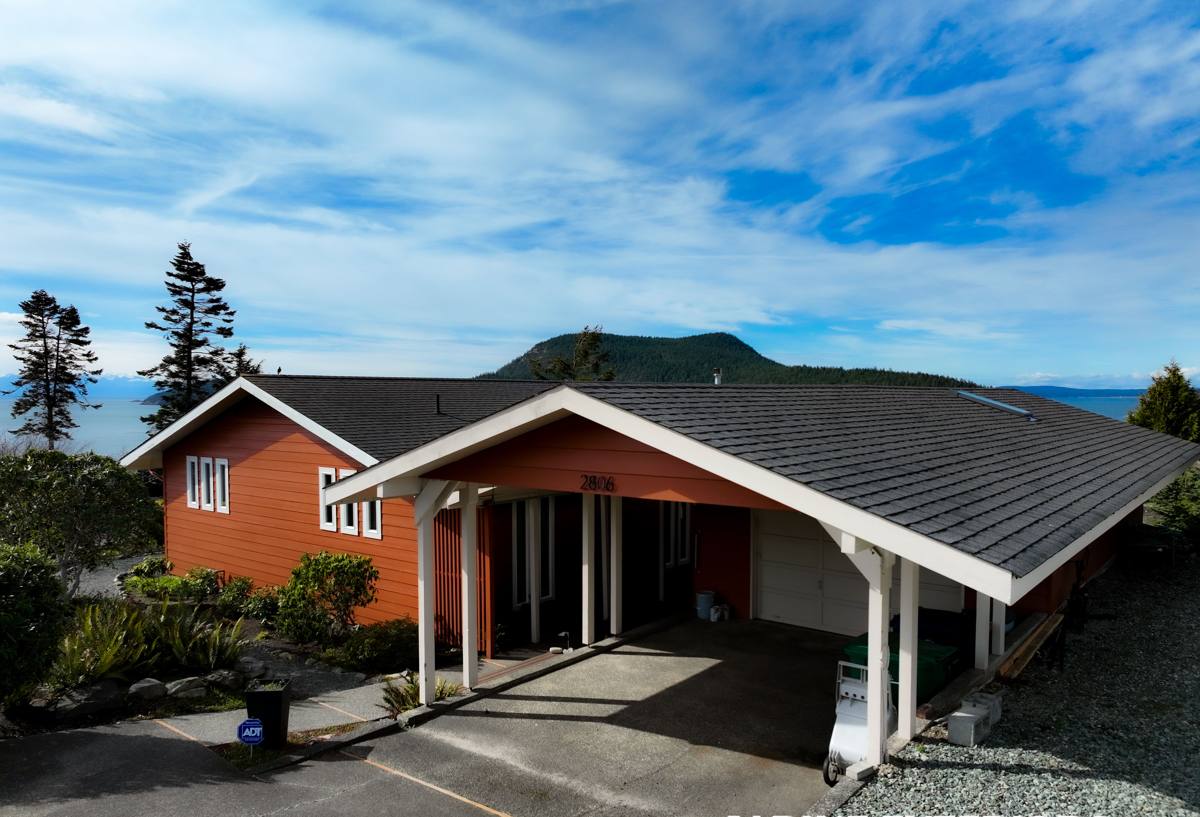
Siding Built for Salt Air and Constant Moisture
Salt air is corrosive and it's persistent. It settles into seams, works into fastener heads, and accelerates the breakdown of any siding material that isn't engineered to resist it. Combine that with the region's rain totals and the deep shade many Point Roberts lots get from mature fir and cedar cover, and you get a climate that punishes siding choices that would hold up fine somewhere drier or more open.
Why We Only Install James Hardie
We install James Hardie fiber cement siding exclusively. It's not the cheapest option on the market, and it's not the only option that will work in a coastal climate — but it's the one we're willing to put our name behind after years of seeing how different materials actually perform once they've been exposed to a few winters of salt air and driving rain. Hardie's fiber cement doesn't rot, doesn't swell with moisture the way wood-based products can, and it's non-combustible, which matters in a region where wildfire smoke and dry-season fire risk have become a bigger part of the conversation even in wet coastal counties. Hardie's ColorPlus factory finish is baked on and warranted against fading, which matters when a house faces open water and direct sun for a good part of the year.
What the Wrong Siding Does in This Climate
We don't install vinyl, LP SmartSide, Cemplank, Allura, or primed wood siding, and it's worth being direct about why. Vinyl expands and contracts more than fiber cement and can warp under sustained heat-cold cycling near open water. Engineered wood products depend on an intact factory coating to keep moisture out — once that coating is compromised at a cut edge or fastener point, moisture can wick into the wood substrate, and a shaded, damp lot like many in Point Roberts gives that process every advantage. Primed cedar or spruce looks great on day one but needs a maintenance schedule most homeowners can't keep up with once a house is fully sided and the excitement of a new look has worn off. None of these are bad products in every setting. They're just not what we're willing to warranty on a peninsula that gets this much sustained moisture and salt exposure.
Roofing for a Wet, Wind-Exposed Peninsula
Roofs on Point Roberts deal with two separate stresses: near-constant moisture from rain and fog off the water, and wind exposure that's noticeably higher on open, waterfront lots than it is a mile or two inland. That combination shortens the useful life of a roofing system that isn't installed with enough attention to underlayment, flashing, and ventilation detail. A roof that's merely "up to code" on paper can still trap moisture underneath if the ridge and soffit ventilation isn't sized correctly for a shaded, damp site — and trapped moisture is what drives premature deck rot and shingle failure from underneath, not just from the top down.
We pay particular attention to flashing at every roof-to-wall transition and around any chimney or vent penetration, since that's where driving rain finds its way in first. On homes with heavy tree cover, we also talk with homeowners about gutter and roof-valley maintenance, because moss and needle buildup in those spots holds moisture against the roofing material far longer than open runoff would.
Windows That Actually Keep Wind-Driven Rain Out
A lot of window failure in coastal Whatcom County isn't the glass or the frame — it's the flashing and sealant detail around the rough opening. Wind-driven rain doesn't need much of a gap to find its way behind trim and into wall assemblies, and once it's in, it can sit there for a long time before anyone notices a stain or a soft spot. When we replace windows, we treat the flashing and weather barrier integration as seriously as the window unit itself, because a well-built window installed with a poor seal will leak just as badly as a cheap one.
For homes directly exposed to open water, we also talk with owners about frame material and glazing choices that hold up to sustained salt exposure without the hardware corroding or the seals degrading early.
Decks That Survive Shade, Moss, and Standing Moisture
Decks in Point Roberts face a rougher version of a problem every Pacific Northwest deck deals with: they don't dry out between rain events the way a deck in a sunnier, more open location would. Shaded decking boards stay damp longer, which is exactly the environment moss and mildew need to take hold, and it's also what accelerates rot in ledger boards, joists, and any fastener that isn't rated for sustained wet contact. Proper drainage planning, decking material chosen with the site's shade level in mind, and stainless or coated fasteners all matter more here than they would on a dry, sun-exposed lot inland.
We also look closely at the ledger board connection to the house on every deck project, since that's the single point where a failure does the most damage — both to the deck and to the siding and framing behind it.
Getting Materials and a Crew to an Exclave
Point Roberts is a U.S. exclave — the only way to reach it by land is through Canada, across the Tsawwassen border crossing, since it's cut off from the rest of Whatcom County by water. That's not a small logistical detail. It affects how material deliveries get scheduled, how crew days are planned, and why a contractor who treats Point Roberts as an afterthought tacked onto a mainland schedule often ends up costing homeowners time and money in delays. We plan Point Roberts projects around that reality from the estimate stage forward — sequencing material orders and crew scheduling so a border crossing doesn't turn into a week of lost progress.
It's also part of why hiring a contractor who already knows the area matters more here than in most communities. A crew that's worked in Point Roberts before understands the crossing logistics, the site access on narrower peninsula lots, and the climate conditions well enough to plan around them instead of discovering them mid-project.
Cost Factors for Exterior Work on Point Roberts
Every project is different, but these are the factors that tend to move the price of siding, roofing, window, or deck work in this specific location:
| Factor | Why It Matters Here |
|---|---|
| Border crossing logistics | Material delivery and crew scheduling has to account for crossing time, which affects project sequencing more than it would on the mainland |
| Salt air exposure | Waterfront and near-waterfront homes need corrosion-resistant fasteners and hardware, which costs more than standard fasteners |
| Tree cover and shade | Heavily shaded lots need more attention to ventilation and drainage detail during installation, which adds labor time |
| Existing moisture damage | Homes that have had years of moss and moisture exposure sometimes need substrate repair before new siding, roofing, or decking goes on |
| Access and lot layout | Narrower peninsula lots and limited staging space can affect how quickly material gets moved and set |
A Homeowner's Maintenance Checklist for This Climate
Even the best-installed exterior needs some seasonal attention in a climate like this. We give homeowners a version of this list on every project:
- Clear gutters and roof valleys of moss and debris at least twice a year, more often under heavy tree cover
- Check siding caulk joints and trim seals annually for gaps that could let wind-driven rain in
- Rinse salt residue off siding and window frames near open water a few times a year
- Inspect deck ledger boards and fasteners annually for early signs of moisture damage
- Keep tree branches and vegetation trimmed back from the roofline and siding to reduce shade-driven moss growth
- Have flashing around roof penetrations checked every few years, since that's where most hidden leaks start
Why a Local Crew Makes the Difference
A lot of exterior problems on Point Roberts don't come from bad luck — they come from work that was designed for a drier, less exposed climate and installed here anyway. Getting the ventilation, flashing, fastener, and material choices right for a salt-air, high-moisture, heavily shaded peninsula isn't a matter of upgrading to a slightly better product; it's a matter of understanding how this specific site behaves across a full year of weather. That's the value a local crew brings that a contractor unfamiliar with the area can't easily replicate, no matter how skilled they are elsewhere.
If you're weighing siding, roofing, window, or deck work on a Point Roberts home, we're happy to walk the property, talk through what your specific site is dealing with, and put together a free, no-pressure estimate — no obligation, just a straight assessment of what your exterior needs.