 Semiahmoo Exterior
 Exterior Work in a Climate That Doesn't Cut Corners
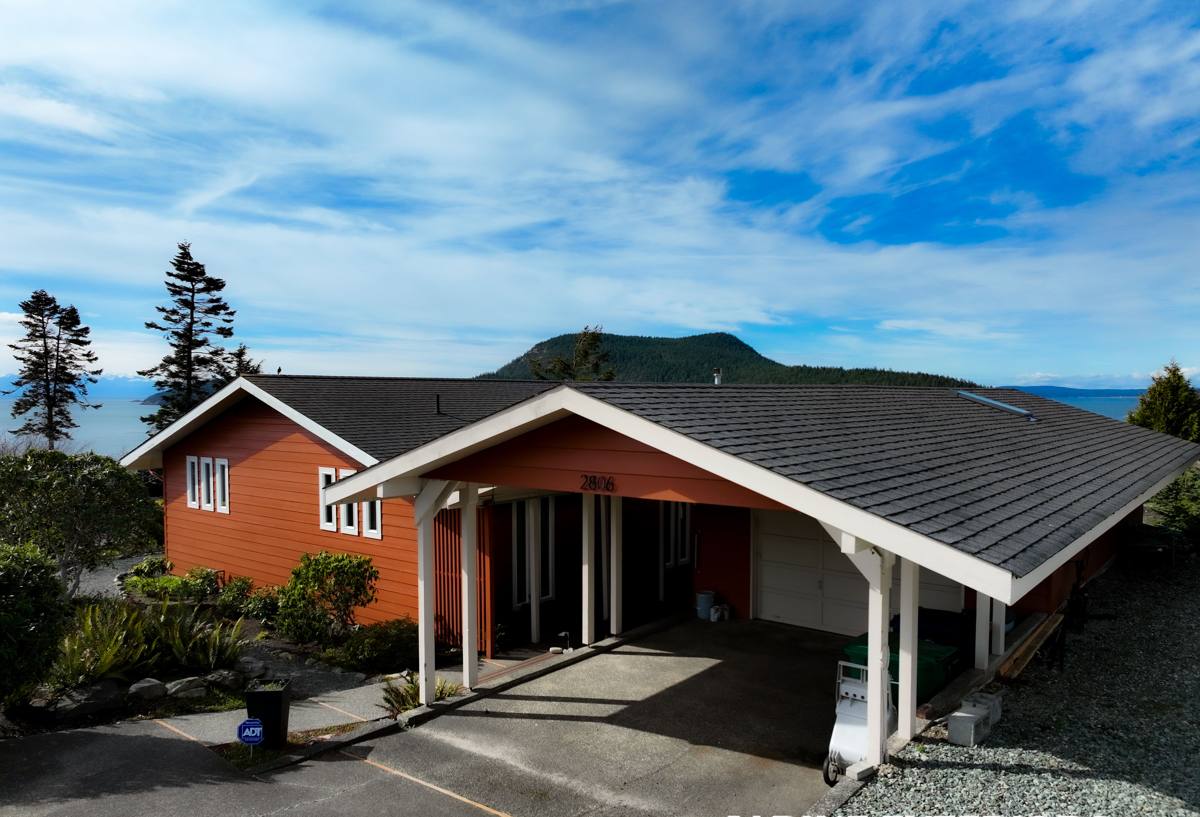
Homes in Bellingham, Semiahmoo, and the rest of Whatcom County sit right where the Salish Sea meets the Cascades foothills, and that location shapes everything about how an exterior ages here. You get salt-laden air off the water, long stretches of wind-driven rain, and a moss and algae season that runs most of the year in shaded or north-facing areas. None of that is dramatic on its own, but stacked together over a few winters, it finds every weak point in a siding job, a roof, a window install, or a deck that wasn't built for this environment.
We work on exteriors in this region every week, and the patterns repeat: paint that fails early on the weather side of a house, trim that soaks up moisture at end grain and joints, roofs that hold moss longer than they should, and decks that stay damp for days after a storm. A lot of that isn't bad luck — it's a mismatch between the materials or the installation and the climate they're actually sitting in.
What Salt Air and Driving Rain Actually Do to a House
Salt Air
Properties closer to Semiahmoo Bay, Drayton Harbor, and the Bellingham Bay shoreline deal with airborne salt that accelerates corrosion on fasteners, flashing, and exposed metal, and that can degrade certain paint and coating systems faster than they'd wear inland. It's a slower process than storm damage, but it's constant, and it shows up first in the details — nail heads bleeding rust through paint, hinges and hardware pitting, caulk joints breaking down sooner than expected.
Driving Rain
Whatcom County doesn't just get rain, it gets rain pushed sideways by wind off the water. That matters because a lot of exterior failures aren't about water sitting on a surface — they're about water being forced horizontally into seams, laps, and joints that were only ever designed to shed water falling straight down. Siding laps, window flashing, and deck ledger connections all take more pressure here than they would in a calmer, drier climate.
Moss and Algae Season
Cool, damp, and shaded conditions for much of the year mean moss and algae get a real foothold on roofs, north-facing siding, and decking that doesn't dry out quickly. Beyond the cosmetic issue, moss holds moisture against a surface far longer than open air would, which is exactly the condition that rots wood, lifts shingles, and breaks down coatings from underneath.
Siding: Why We Standardized on One Product
We install James Hardie fiber cement siding exclusively. We don't install vinyl, LP SmartSide, Cemplank, Allura, primed spruce, or cedar, and that's a deliberate call based on what actually holds up in this climate over the long haul, not a sales preference.
Vinyl expands and contracts with temperature swings and can warp or crack in sustained wind exposure, and it isn't a fire-resistant material. Engineered wood products like LP SmartSide perform reasonably well when installation and maintenance are done exactly to spec, but they're wood-based, which means they're more vulnerable to moisture intrusion at cut edges and seams than fiber cement is — a real concern in a market that sees this much sustained rain. Primed spruce and cedar are beautiful but demand a maintenance schedule (recoating, caulking, moisture monitoring) that most homeowners underestimate until the siding is already showing damage.
James Hardie fiber cement is non-combustible, holds its factory-applied ColorPlus finish far longer than field-painted alternatives, and Hardie's HZ5 product line is engineered specifically for climates with heavy moisture exposure — which describes Whatcom County about as well as any region in the state. It doesn't rot, it resists moss and algae growth better than wood-based sidings, and it comes with a strong transferable warranty when installed to Hardie's specification. That's the whole reason we build the business around one product instead of offering five.
Siding Material Trade-Offs
| Material | Moisture Resistance | Maintenance | Fire Resistance | Our Position |
|---|---|---|---|---|
| James Hardie Fiber Cement | Excellent | Low — factory finish, occasional caulk checks | Non-combustible | What we install |
| Vinyl | Fair — prone to warping in wind/heat cycles | Low, but limited repair options | Combustible | Not installed |
| LP SmartSide / Engineered Wood | Good if maintained precisely | Moderate — edge sealing critical | Combustible | Not installed |
| Cedar / Primed Spruce | Fair — needs ongoing sealing | High — recoating cycle required | Combustible | Not installed |
Roofing for a High-Moisture, High-Moss Climate
Roofs here take a beating from a combination most regions don't deal with together: near-constant moisture, shaded microclimates in the tree cover common around Bellingham, and salt exposure closer to the water. Moss buildup is the most visible problem, but the real damage is what happens underneath it — trapped moisture that works its way under shingles and shortens the life of the roof deck.
Proper roofing work in this area means attention to ventilation, valley and flashing detail that can handle sideways rain, and material choices that resist moss growth rather than just tolerating it. We also look closely at flashing around chimneys, skylights, and roof-to-wall transitions, since those are the points that fail first when driving rain is part of the equation.
Windows: Sealing Out Wind-Driven Rain
Window failures in this climate are rarely about the glass — they're about the seal, the flashing, and how the window integrates with the siding around it. Wind-driven rain will find any gap in a window's flashing pan or trim, and once water gets behind a window frame, the damage often isn't visible until there's already rot in the framing or staining on interior sills.
When we replace windows or install new ones as part of a siding project, we treat flashing integration as seriously as the window unit itself. A quality window installed with poor flashing will leak eventually in this climate; a modest window installed correctly, with proper pan flashing and integration into the siding's water management, will outperform it.
Decks: Built for Wet Winters and Salt Exposure
Decks in Whatcom County deal with two problems at once — sustained dampness that never fully dries out between storms, and, closer to the water, salt exposure that accelerates fastener corrosion and finish breakdown. The most common deck failures we see aren't structural collapse, they're slower issues: ledger board connections that trap moisture against the house, decking boards that cup or split from repeated wet-dry cycling, and hardware that rusts and stains the surface around it.
Good deck work here starts with proper ledger flashing and a gap between the house and the deck framing so water has somewhere to go, corrosion-resistant fasteners appropriate for coastal exposure, and decking material chosen with this climate in mind rather than a warmer, drier one.
Signs Your Exterior Needs Attention
- Paint or coating that's peeling or bubbling on the south or west-facing walls first
- Moss or dark streaking on roofing, especially on shaded or north-facing sections
- Soft or spongy spots on deck boards, railings, or stairs
- Rust staining running down from nail heads or metal hardware
- Caulk that's cracked, shrunk, or pulled away from siding joints and window trim
- Window sills or interior trim that feel damp or show staining after storms
- Siding that's visibly warped, cracked, or separating at the seams
Why a Local Crew Matters
Exterior work done by a crew that doesn't know this climate tends to follow generic best practices that were written for a drier, milder region. That's how you end up with flashing details that work fine in low-rain climates but fail here, or siding installed without the extra attention to lap and seam protection that constant wind-driven rain demands. A crew that works in Bellingham and Whatcom County regularly knows which details actually matter locally — because we see what happens when they're skipped.
We also know the practical side: permitting expectations in this area, how to sequence work around the wetter months, and what a Whatcom County winter will do to an exterior project if it isn't buttoned up before the weather turns.
Our Process
- Inspection and assessment — we look at siding, roofing, windows, and decking as a system, since water problems in one area often start somewhere else
- Honest scope and estimate — what actually needs doing now versus what can wait, with no pressure to upsell
- Materials matched to this climate — James Hardie siding, moisture-appropriate roofing and flashing details, and hardware rated for coastal exposure
- Installation to spec — proper flashing, fastening, and water management, not just a finished-looking surface
- Walkthrough and follow-up — so you know what maintenance, if any, the new exterior actually needs
If you're noticing early wear on your siding, moss taking hold on the roof, or a deck that never quite dries out, it's worth having a local crew take a look before those small problems turn into structural ones. We offer free, no-pressure estimates for homeowners in Bellingham, Semiahmoo, and throughout Whatcom County — use the form below to get started.