 Semiahmoo Exterior
 Why This Question Is Harder to Answer in Whatcom County
Most homeowners think about roof replacement the way they think about tires — count the years, check the tread, replace when it looks worn. That works fine in a dry climate. It works less well on the Semiahmoo peninsula, where a roof is fighting salt-laden air off the water, months of driving rain, and a moss season that can run from October through May. Two roofs installed the same year, on the same street, can age at very different rates depending on tree cover, sun exposure, and how well the roof was ventilated when it went on.
Rather than relying on a single "20 years and you're done" rule, it helps to know the actual signs a roof gives off before it fails — and to understand why those signs show up sooner here than they would inland.
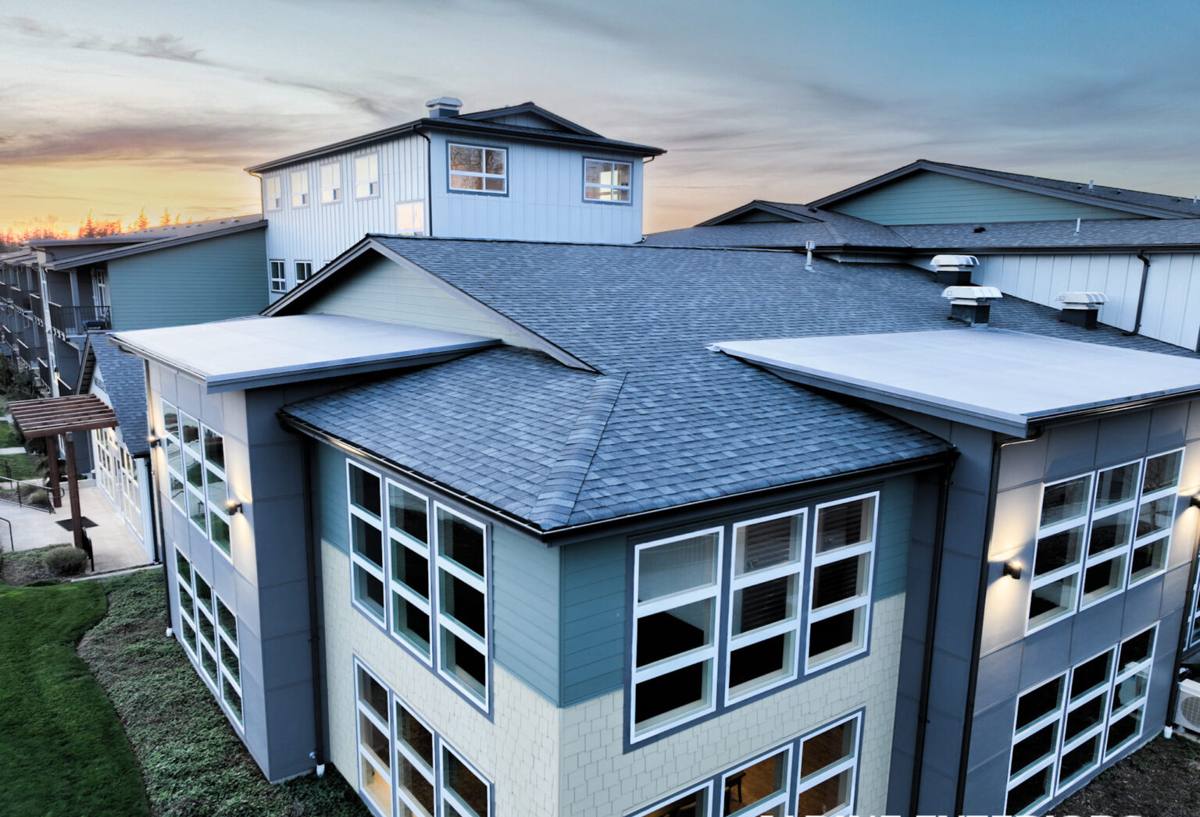
Signs Your Roof Is Telling You Something
From the Ground
- Shingles that are curling, cupping, or losing their flat lay
- Bald spots where granules have washed off, exposing the black asphalt mat underneath
- Streaking — dark algae staining, especially on north-facing slopes that stay damp longer
- Thick moss growth along ridges, valleys, and shaded edges
- Sagging in the roofline between rafters, which usually points to deck or structural moisture damage
- Missing shingles or exposed nail heads after a windstorm
From Inside the House
- Water stains on ceilings or upper walls, even faint ones that come and go with weather
- Daylight visible through the attic roof deck
- Damp, musty smell in the attic that wasn't there before
- Higher heating bills, which can mean failing insulation from a slow, undetected leak
Any one of these on its own might just mean a repair. Several at once, especially combined with a roof that's already past the midpoint of its expected life, is usually the signal to start planning a replacement rather than another round of patches.
How Long Different Roofing Materials Actually Last Here
Manufacturer life expectancy numbers are tested under generic conditions, not the specific mix of salt air and sustained moisture Whatcom County delivers. Real-world life in this area tends to run at the shorter end of the published range, especially on homes close to the water or under heavy tree cover.
| Material | Typical Published Life | Realistic Life Near Semiahmoo |
|---|---|---|
| 3-tab asphalt shingle | 15-20 years | 12-17 years |
| Architectural (dimensional) asphalt shingle | 25-30 years | 20-25 years |
| Cedar shake | 25-30 years | 18-25 years, with regular treatment |
| Standing-seam metal | 40-60 years | 35-50 years |
| TPO / flat membrane | 15-20 years | 12-18 years |
The gap between "published" and "realistic" is almost entirely explained by moisture retention. A roof that dries out fully between rain events ages on schedule. A roof that stays damp because of moss, shade, or poor attic ventilation is aging faster than the calendar suggests, regardless of material.
Why Moss and Salt Air Do More Damage Than They Look Like They Do
Moss isn't just cosmetic. It holds water against the shingle surface long after the rain has stopped, which keeps the mat saturated and accelerates granule loss. Where moss establishes along a ridge or valley, it can also lift shingle edges enough for wind-driven rain to work underneath — and this stretch of Whatcom County gets plenty of wind-driven rain off the Strait of Georgia. Left untreated for a few seasons, moss root structures can work into the shingle itself.
Salt air is a slower, quieter problem. It accelerates corrosion on exposed metal — flashing, nail heads, gutter fasteners, roof vents — well before the shingles themselves show obvious wear. A roof with rusting flashing or corroded valley metal is often closer to a leak than the shingle condition alone would suggest, which is why a proper inspection checks metal components separately from the shingle field.
What Waiting Actually Costs
The expensive part of a failing roof is rarely the roof itself — it's what a slow leak does to everything underneath it before anyone notices. Roof decking, rafters, insulation, drywall, and even siding at the eaves can all take on water damage long before a leak becomes visible from inside the house. By the time a homeowner sees a ceiling stain, moisture has usually been working for months.
Replacing a roof before it fails is a planned expense. Replacing a roof after it fails usually means paying for the roof plus deck repair, insulation replacement, drywall repair, and sometimes mold remediation — costs that a roof replacement alone would never have included.
Repair or Replace? A Practical Way to Decide
| Situation | Repair Usually Makes Sense | Replacement Usually Makes Sense |
|---|---|---|
| Age of roof | Under 60% of expected life | Past 70-80% of expected life |
| Damage extent | Isolated to one area (one slope, one flashing point) | Spread across multiple slopes or repeated leak locations |
| Granule loss | Light, scattered | Widespread bald patches |
| Decking condition | Solid, no soft spots | Soft, spongy, or visibly stained decking |
| History | First repair in several years | Second or third repair call in 12-18 months |
A useful rule of thumb: if a repair would cost more than roughly a third of a full replacement, or if the roof has needed more than one repair visit in the last couple of years, it's worth getting a full replacement quote alongside the repair quote before committing either way.
A Quick Inspection Checklist Before You Call Anyone
- Walk the property and look at each roof slope from the ground with binoculars — don't climb onto the roof yourself
- Check the attic for daylight, staining, or damp insulation
- Note which slopes have moss or algae staining and whether it's new or long-standing
- Check gutters for shingle granules, which indicate accelerated wear
- Look at flashing around chimneys, skylights, and where the roof meets walls for rust or gaps
- Pull out any past repair invoices — a pattern of repairs is data, not bad luck
Timing a Roof Replacement with Other Exterior Work
If a roof is nearing replacement age, it's worth stepping back and looking at the rest of the exterior at the same time — particularly the siding. Roofs and siding tend to age on similar timelines because they're exposed to the same weather, and coordinating the two projects saves money on staging, disposal, and site access that would otherwise be paid for twice.
This is also a good moment to think honestly about what's on the walls, not just the roof. Homes in this area often have siding — vinyl, LP SmartSide, cedar, or older fiber cement — that's showing the same salt-air and moisture wear as the roof it sits under. We install James Hardie fiber cement exclusively, and we bring that same standard into these conversations: it's non-combustible, holds a factory ColorPlus finish that doesn't need repainting on the schedule other materials do, and Hardie's HZ5 product line is engineered specifically for the freeze-thaw and moisture cycling this climate produces. If a roof and siding project are both on the table, doing them together is usually the more efficient path, and we'll say so plainly rather than upselling a job that doesn't need it.
What a Professional Roof Replacement Actually Involves
A proper replacement is more than stripping and re-covering. It should include a full tear-off to bare decking, an inspection and repair of any damaged sheathing found underneath, new underlayment rated for this climate, correct ice-and-water shield at eaves and valleys, new flashing at every penetration, and attic ventilation checked and corrected if it's inadequate. Skipping the ventilation step is a common shortcut — a new roof installed over a poorly ventilated attic will trap moisture and age prematurely, undoing much of the benefit of the replacement.
Choosing a Roofing Contractor in Semiahmoo
Local experience matters more here than in most climates, because a contractor who mostly works inland won't necessarily account for salt exposure or the length of the moss season when specifying materials and ventilation. Ask any contractor for their license and insurance information directly, ask what underlayment and ventilation approach they use for coastal Whatcom County properties, and get the scope of work in writing before signing anything — verbal promises about "we'll take care of the flashing" mean nothing once the crew is gone.
If you're seeing any of the warning signs above, or you just want an honest read on where your roof stands, we're happy to take a look. We offer free, no-pressure estimates and will tell you straight whether you're looking at a repair, a replacement, or a few more years of life left in what's up there now.