 Semiahmoo Exterior
 Exterior Contracting for Semiahmoo Resort Homes
Semiahmoo Resort sits about as close to the water as a Whatcom County property can get, out on the spit facing Semiahmoo Bay and Drayton Harbor with the Canadian border a short walk away. That location is the whole appeal of living or owning here — and it's also the reason homes on the spit take a beating that inland Blaine and Birch Bay properties simply don't. Salt-laden wind off the bay, driving rain funneled straight off the water, and a long gray moss season each work on siding, roofing, trim, windows, and decks in ways that generic exterior work doesn't account for. We build our approach around that reality rather than treating Semiahmoo like any other Whatcom County address.
This page covers what we see on Semiahmoo Resort homes, how our siding, roofing, window, and deck work is adapted for it, and why we standardized on James Hardie fiber cement siding rather than the vinyl, engineered wood, or other fiber cement products you'll find elsewhere.
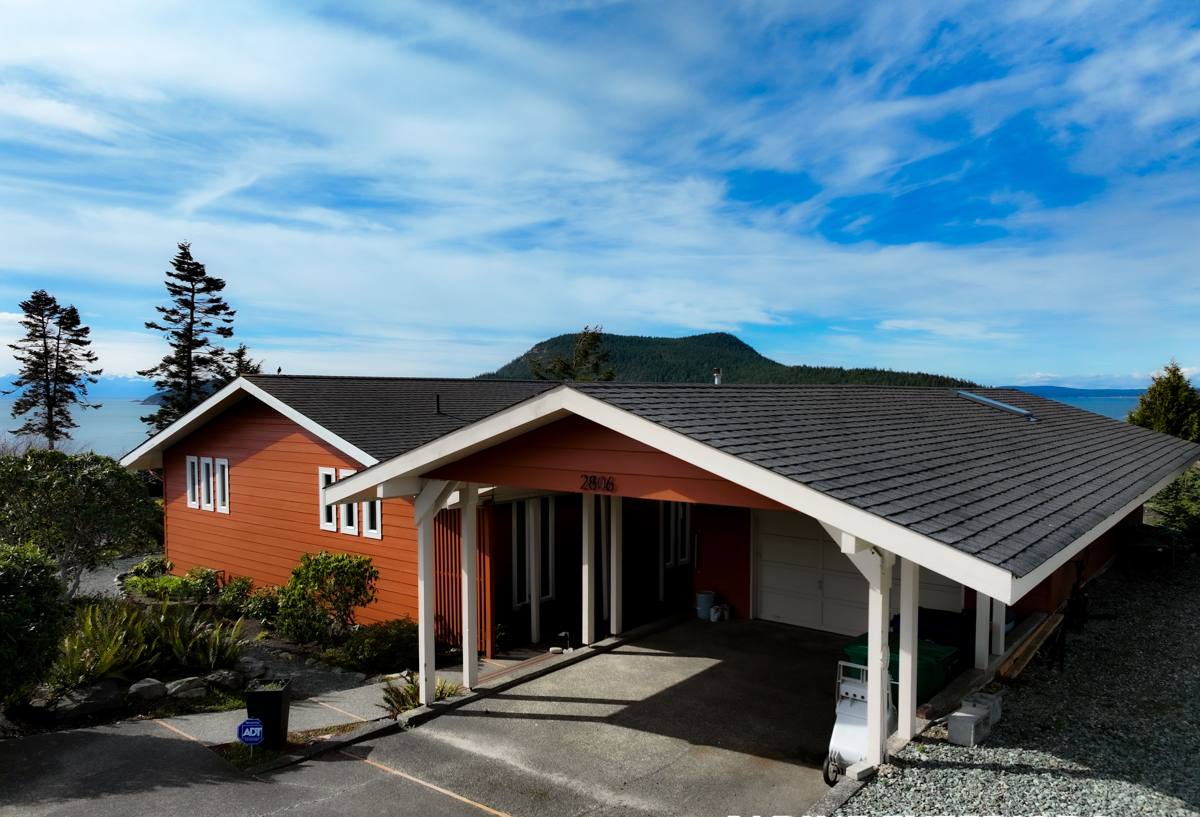
What the Semiahmoo Climate Does to a Home's Exterior
Salt Air
Airborne salt from the bay settles on every exterior surface, not just the side facing the water. It accelerates corrosion on fasteners, flashing, and hardware, and it degrades cheaper paint and coating systems faster than the same products perform even a few miles inland. Over years, unprotected or poorly finished siding on a waterfront property can chalk, fade, and break down well ahead of its expected lifespan.
Driving Rain
Storms coming off the Strait of Georgia and the Salish Sea hit the spit with little to break the wind first. That means rain doesn't just fall on Semiahmoo homes, it's driven sideways into siding seams, window trim, and roof-to-wall transitions. Water intrusion at these joints is usually a slow, invisible problem until it isn't — by the time staining or soft trim shows up inside, moisture has often been working behind the surface for a while.
Moss and Sustained Dampness
Whatcom County's wet season runs long, and a shaded, waterfront lot holds moisture even longer. Roofs, north-facing siding, and anything under tree cover are prone to moss and algae growth that traps damp material against the building envelope. Left unaddressed, that sustained dampness shortens the life of roofing material and creates conditions where wood-based siding and trim are especially vulnerable to rot.
Siding: Why We Only Install James Hardie
Siding is the first line of defense against everything described above, and it's also where material choice matters most on a property like this. We install James Hardie fiber cement exclusively — we do not install vinyl, LP SmartSide, Cemplank, Allura, primed spruce, or cedar. That's a deliberate standard, not a default, and it's worth explaining why.
Vinyl siding is affordable and low-maintenance in mild conditions, but it's a plastic product that can become brittle and crack in cold snaps, and it relies on unsealed, overlapping joints that aren't built to resist wind-driven rain the way a marine-exposed spit demands. Engineered wood products like LP SmartSide use a wood-strand core that performs well in many climates but is inherently more moisture-sensitive at cut edges and seams than fiber cement — a real concern where salt air and driving rain both attack the same joints. Primed spruce and cedar are natural wood: attractive, but they demand ongoing repainting and sealing to keep moisture out, and in a marine environment that maintenance interval shrinks. Even among fiber cement competitors, we've standardized on James Hardie specifically because of its factory-applied ColorPlus finish, its HZ5 product engineering for wet marine climates, and the strength of its transferable warranty when the product is installed to Hardie's spec — something that matters when you're evaluating a decades-long investment in siding you won't want to redo.
None of this means other products are junk — vinyl and engineered wood siding are installed successfully across the country. It means that for a non-combustible, factory-finished, marine-climate-engineered material with a strong warranty track record, Hardie fiber cement is what we're willing to put our name behind, and it's what goes on every home we side.
James Hardie Product Lines We Use
- HardiePlank lap siding — the standard horizontal siding profile, available in several textures and exposures
- HardiePanel vertical siding — for board-and-batten or modern vertical looks
- HardieTrim — matching trim boards for corners, window and door surrounds, and fascia
- ColorPlus factory finish — baked-on color that resists the fading and chalking salt air accelerates on field-painted surfaces
Roofing for a Marine, Moss-Prone Property
Roofing on a spit-front home has to handle wind-driven rain at every penetration and transition, plus sustained moisture that promotes moss growth even on well-installed systems. Our roofing work on Semiahmoo Resort homes focuses on flashing detail at valleys, chimneys, skylights, and roof-to-wall intersections — these are the points that fail first in driving-rain conditions, far more often than the field of the roof itself. We also account for moss and algae resistance in material selection and recommend a periodic inspection and gentle cleaning cadence appropriate to a shaded or waterfront lot, since moss left to establish itself holds moisture against roofing material and shortens its service life.
Windows: Sealing Against Wind and Salt
Window failures on the coast are rarely about the glass — they're about the seal between the window unit and the wall. Wind-driven rain finds any gap in flashing or sealant around a window opening, and salt air accelerates the breakdown of lower-quality sealants and hardware. When we replace or install windows on a Semiahmoo Resort home, proper flashing integration with the siding system is the priority, along with hardware and finishes suited to a marine environment. A window that's a good product but poorly integrated into the wall assembly will leak; correct installation matters as much as the unit itself.
Decks: Built for Salt Air and Constant Moisture
Outdoor living is a big part of why people buy on Semiahmoo Resort in the first place, and decks here face the same combination of salt exposure and sustained dampness as the rest of the exterior. Fasteners and hardware need to be rated for coastal, corrosion-prone conditions, framing and ledger connections need careful flashing to keep water from tracking back into the structure, and decking material choice should account for a long wet season rather than assuming a drier interior-county climate. We build and repair decks with those conditions in mind rather than applying a one-size-fits-all approach.
Cost Factors to Understand Before You Budget
Every property is different, but these are the factors that most affect scope and cost on a Semiahmoo Resort exterior project:
| Factor | Why It Matters Here |
|---|---|
| Wind/water exposure of the lot | Direct waterfront and unshielded sides need more attention to flashing and joint detail than sheltered elevations |
| Existing moisture damage | Hidden rot behind old siding or trim, common on long-neglected coastal homes, adds repair scope before new material goes on |
| Roof complexity and shading | More valleys, penetrations, and tree cover mean more flashing detail and moss-prevention planning |
| Access on the spit | Some Semiahmoo Resort lots have tighter access or HOA/site logistics that affect scheduling and staging |
| Material selection | Fiber cement siding, quality roofing, and coastal-rated hardware cost more upfront than budget alternatives but hold up longer in this climate |
Why a Local Crew Matters
A contractor who mainly works inland Whatcom County jobs won't automatically think about salt-rated fasteners, driving-rain flashing details, or moss-season roof maintenance — because most of their work doesn't require it. Crews who regularly work Semiahmoo Resort, Blaine, and the surrounding waterfront know which details actually get tested by this specific climate and which corners genuinely cannot be cut. That local pattern recognition is worth more than a lower bid from someone unfamiliar with spit conditions.
What to Check When Hiring for a Semiahmoo Resort Exterior Project
- Washington contractor license and proof of insurance, verified independently rather than taken on faith
- Direct experience with waterfront or marine-exposure homes, not just general residential work
- A clear explanation of flashing and joint detail at windows, roof transitions, and siding seams — not just a material brand name
- Manufacturer training or certification for the siding and roofing systems being installed
- A written scope that addresses moisture and corrosion resistance specifically, not a generic proposal
Get a Free Estimate
If you own a home on Semiahmoo Resort and you're dealing with worn siding, roof or window concerns, or a deck showing its age, we'll walk the property, point out what the salt air, rain exposure, and moss season have actually done, and give you an honest, no-pressure estimate for what it takes to fix it right. Use the form below to get started.