 Semiahmoo Exterior
 Exterior Work Built for Blaine Harbor's Coastline
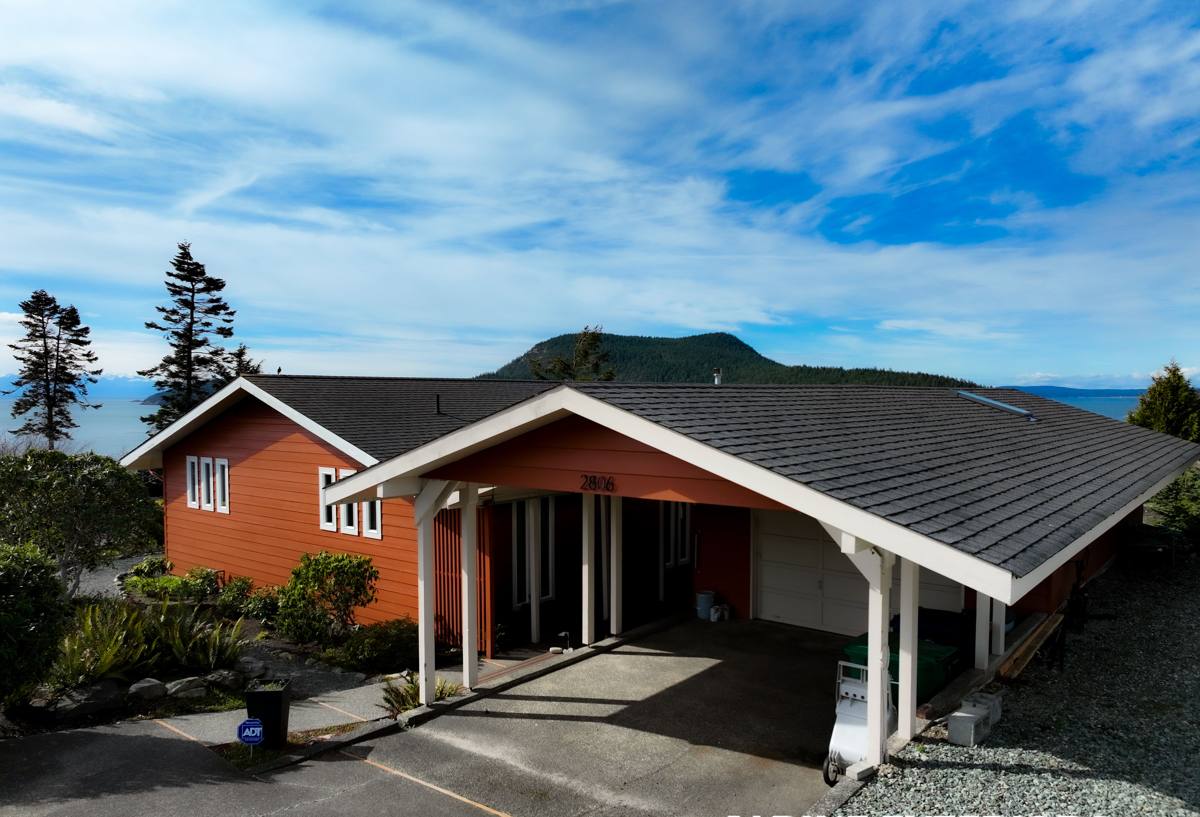
Blaine Harbor sits right where the land meets Semiahmoo Bay, and that location is exactly what makes it beautiful — and exactly what makes it hard on a house. Homes here take on a different combination of stresses than a house ten miles inland in Whatcom County. There's the salt-laden air coming off the water, the driving rain that blows in sideways during winter storms, and a moss and mildew season that can run most of the year in the shaded, damp spots around a property. None of this is unusual for a Pacific Northwest coastal community, but it does mean the exterior materials and installation choices that work fine elsewhere can fall short here.
We work on siding, roofing, windows, and decks for homes throughout the Semiahmoo area, and Blaine Harbor is a neighborhood we know well. This page walks through what the local climate actually does to a home's exterior over time, and how we approach each part of the building envelope to hold up against it.
What Salt Air and Driving Rain Actually Do
Salt Air
Air moving off Semiahmoo Bay carries fine salt particles that settle on every exposed surface — siding, trim, fasteners, flashing, and roofing hardware. Salt is corrosive to bare or poorly coated metal, and it can accelerate the breakdown of some paints and coatings over years of exposure. It's rarely dramatic; it's slow, cumulative wear that shows up as premature fastener rust, chalky or fading paint, and finishes that need repainting years earlier than the same product would need inland.
Driving Rain
Storms off the water don't just fall straight down — wind pushes rain sideways into wall assemblies, under trim, and into any gap in flashing or siding laps. A house near the harbor needs its water management details — flashing, kick-out diverters, window and door integration, deck ledger flashing — done correctly the first time, because wind-driven rain finds the mistakes that vertical rain never would.
Moss and Prolonged Dampness
Shaded rooflines, north-facing walls, and anything under tree cover stays damp longer here than in drier parts of the state. That extended dampness is what moss needs to establish itself on roofing and siding, and it's also what feeds rot in any wood component that isn't properly sealed or ventilated. A long moss season isn't just a cosmetic nuisance — sustained moisture against a wall or roof surface is the single biggest driver of exterior failure we see.
Siding: Why We Install Only James Hardie
Siding is the first line of defense against everything described above, and it's also the exterior material homeowners ask us about most. We install James Hardie fiber cement siding exclusively. We don't install vinyl, LP SmartSide, Cemplank, Allura, primed spruce, or cedar — and we think homeowners in a place like Blaine Harbor deserve an honest explanation of why, not just a sales pitch.
Where Other Products Fall Short in This Climate
- Vinyl siding is affordable and low-maintenance in mild conditions, but it can warp or become brittle with age, its seams and laps are a weak point for wind-driven rain intrusion, and its color is baked into the material itself with no factory topcoat protecting against fading from salt exposure over time.
- LP SmartSide is a wood-strand product with a resin-saturated core, which performs reasonably well when detailing is perfect, but it's an engineered wood product at its core — it depends on caulking, painting, and edge sealing staying intact indefinitely in an environment that is actively working against all three.
- Primed spruce and cedar are natural wood. They can look excellent, but wood siding in a high-moisture, salt-air coastal environment needs a maintenance schedule most homeowners underestimate: repainting, re-caulking, and watching for rot at every joint and cut end.
- Cemplank and Allura are also fiber cement, and fiber cement as a category is the right material family for this climate. Our decision to standardize on Hardie specifically comes down to their ColorPlus factory finish process, their HZ5 product engineering for climates like ours, and the depth of their installation network and warranty backing — not a claim that other fiber cement brands are unsafe or defective.
Why James Hardie
Fiber cement itself is non-combustible and dimensionally stable — it doesn't expand and contract with moisture the way wood does, and it doesn't degrade in UV and salt exposure the way vinyl can. James Hardie's ColorPlus finish is baked on in a factory-controlled process, which gives a more consistent, longer-lasting color than field-applied paint and reduces the repainting cycle homeowners have to plan for. Hardie also engineers specific product lines (their HZ5 line, for example) for cold and moisture-heavy climates, which is directly relevant to a house sitting in Whatcom County's marine weather pattern. Combined with a strong transferable warranty, it's the product we're comfortable standing behind on a home that's going to face salt air and driving rain for the next several decades.
Roofing in a Moss-Heavy Environment
Roofs in Blaine Harbor deal with the same driving rain and moss pressure as siding, but with more consequence if flashing or underlayment details are wrong — a roof leak travels and often shows up somewhere other than where it started. We pay particular attention to:
- Flashing at valleys, chimneys, and any roof-to-wall transition, since these are the spots wind-driven rain exploits first
- Ventilation, because a poorly ventilated attic traps moisture that feeds both rot and moss growth from underneath
- Material selection and installation that accounts for sustained shade and dampness on north-facing slopes, which hold moss longer than sun-exposed sections
Moss removal and prevention is worth doing right rather than aggressively — pressure-washing moss off a roof can strip granules and shorten the roof's life, so we favor treatment and maintenance approaches that clear moss without damaging the roofing material underneath.
Windows: Sealing Out Wind-Driven Moisture
Window performance in a coastal wind-driven-rain environment comes down almost entirely to installation quality, not just the window unit itself. A well-built window installed with poor flashing integration will leak; a modest window installed correctly usually won't. We pay close attention to:
- Proper flashing sequencing so water sheds outward and never behind the window frame
- Sill pan flashing to catch and redirect any incidental moisture that does get past the exterior seal
- Compatible sealants and materials rated for the temperature swings and salt exposure of a bay-front property
Energy performance matters too, but in this climate, keeping bulk water out of the wall assembly around the window is the detail that prevents the expensive repairs down the road.
Decks: Built for Wet Wood and Salt Exposure
Outdoor living space near the water is one of the reasons people love Blaine Harbor, but a deck here is under near-constant assault from rain, standing moisture, and salt air. The details that matter most on a deck built for this environment:
- Ledger board flashing where the deck meets the house — this is one of the most common failure points on any deck, and it's the connection point most exposed to wind-driven rain
- Proper drainage and spacing in the decking material so water doesn't pool and sit against fasteners or framing
- Fastener and hardware selection rated for coastal, salt-exposed conditions to avoid premature corrosion
Comparing Siding Materials for a Coastal Whatcom County Home
| Material | Salt Air Resistance | Moisture Behavior | Maintenance Cycle |
|---|---|---|---|
| James Hardie Fiber Cement | Strong — factory ColorPlus finish resists fading and wear | Dimensionally stable, non-combustible, engineered HZ lines for wet/cold climates | Low — repainting only if ever needed, decades between major service |
| Vinyl | Moderate — can fade and become brittle over time | Seams and laps vulnerable to wind-driven rain intrusion | Low upfront, but limited lifespan in harsh coastal exposure |
| LP SmartSide | Moderate — depends on sealed edges and intact paint | Engineered wood core; performance tied to caulk and paint staying intact | Moderate — repainting and edge sealing on a regular schedule |
| Primed Spruce / Cedar | Lower — natural wood exposed to salt and moisture cycles | Expands, contracts, and can rot at joints and cut ends if not maintained | Highest — regular repainting, caulking, and inspection required |
Why a Local Crew Matters Here
A crew that works Semiahmoo and Whatcom County regularly knows which walls take the worst of the wind-driven rain, how long moss season actually runs on a shaded roofline, and which flashing details matter most on a bay-front property versus one further inland. That's not something you can fully substitute with a general contractor's checklist — it comes from doing this work in this exact climate, season after season. It also means we're a known, local presence if a warranty question or follow-up comes up years down the road, rather than a crew that passed through once.
A Quick Homeowner Checklist
If you're evaluating your home's exterior in Blaine Harbor, a few things worth checking:
- Look for chalky, faded, or peeling paint on siding, especially on walls facing the water
- Check north-facing and shaded roof sections for moss buildup or dark streaking
- Inspect window trim and caulk lines for gaps, especially after a windy storm season
- Look at deck ledger boards and fastener heads for rust or staining
- Note any soft spots, discoloration, or bubbling on siding near ground level or downspouts
Getting Started
Whether it's a full siding replacement, a roof that's showing its age, windows that let in more draft and moisture than they should, or a deck that needs rebuilding, we're happy to take a look and give you a straightforward, no-pressure assessment of what your home actually needs. Reach out for a free estimate using the form below.