 Semiahmoo Exterior
 Exterior Work Built for Wiser Lake's Climate
Wiser Lake sits inland from Semiahmoo Bay in Whatcom County, and while it doesn't get the direct salt spray of the shoreline, it shares the same weather pattern that defines exterior work across this whole corner of Washington: long stretches of wet, gray months, driving rain that comes in sideways off Pacific storm systems, and enough shade from surrounding trees and lake-effect humidity to keep moss and algae growing on north-facing walls and rooflines nearly year-round. Homes near the water also pick up a fainter version of the salt air that rolls in off the Strait of Georgia and Semiahmoo Bay, which adds a slow corrosion factor to fasteners, flashing, and anything metal on the exterior.
None of this is dramatic, disaster-movie weather. It's slow, cumulative, and easy to underestimate — which is exactly why so many exteriors in this area fail years before they should. Paint that peels in patches on the shaded side of the house. Trim that goes soft at the bottom corners. Roof valleys that stay damp long after a storm has passed. This page covers how we approach siding, roofing, windows, and decks for homes in and around Wiser Lake, and why a crew that actually works this specific stretch of Whatcom County matters more than it might seem.
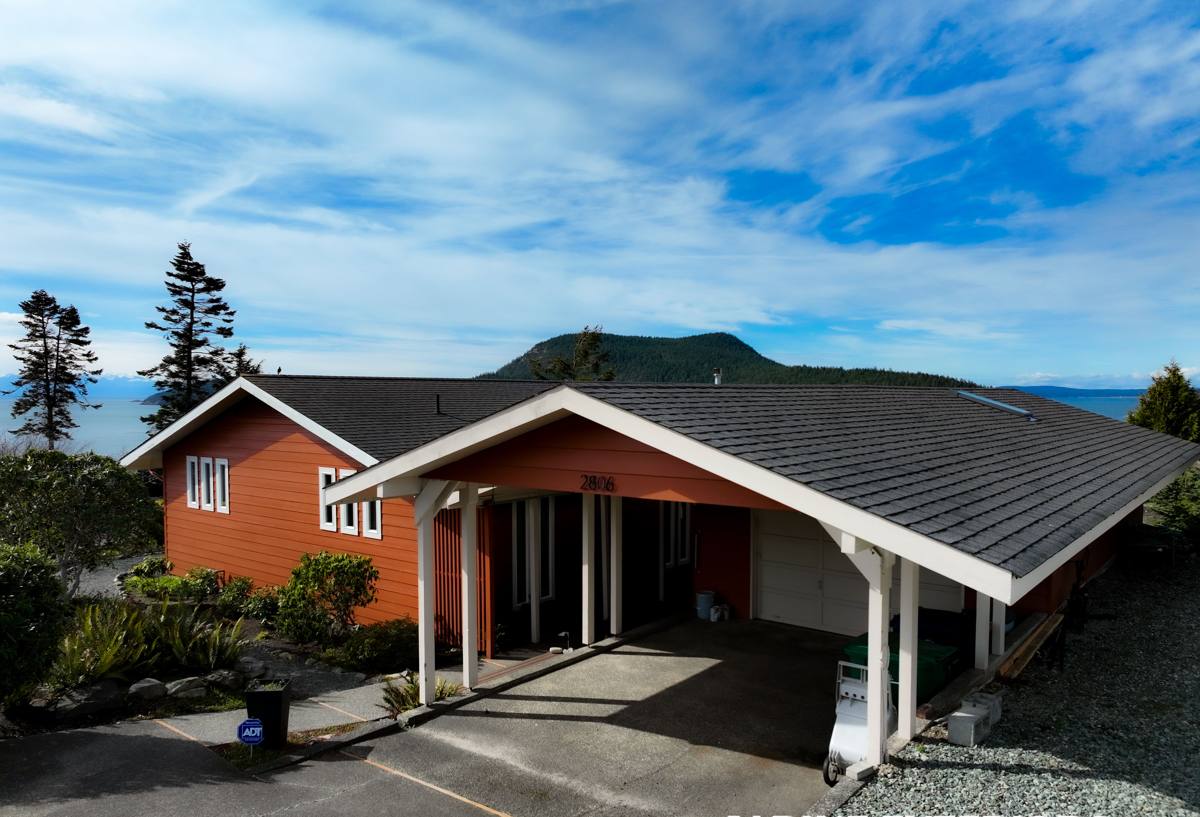
What the Local Climate Actually Does to a House
Moisture That Doesn't Let Up
Whatcom County gets a genuinely long wet season, and Wiser Lake's setting — inland, tree-lined, near open water — tends to hold humidity a little longer than drier parts of the county. Surfaces that don't get direct sun for much of the day stay damp longer after rain, which is the single biggest driver of moss, mildew, and slow material breakdown on a home's exterior.
Moss Season Is Basically Year-Round
Moss doesn't need much to get established — shade, moisture, and a rough or porous surface are enough. On roofs, it lifts shingles and holds water against the deck. On siding, it holds moisture against the substrate and, on products that aren't dimensionally stable, contributes to swelling and paint failure. On decks, it turns walking surfaces slick and traps moisture against fasteners and framing.
Salt-Influenced Air
Even set back from the water, Wiser Lake homes get some benefit of proximity to Semiahmoo Bay's salt-tinged air, especially during wind events off the Strait. It's a slower corrosive process than what a beachfront home experiences, but over a couple of decades it still shortens the life of untreated fasteners, cheaper flashing, and exposed metal trim.
Wind-Driven Rain
Storms coming through this part of Washington often bring rain at an angle, not straight down. That matters because it pushes water into laps, seams, and joints that a vertical-rain assumption wouldn't stress. Flashing details and proper overlap at siding courses and window openings carry more of the load here than they would in a drier climate.
Siding: Why We Only Install James Hardie
We install James Hardie fiber cement siding exclusively. We don't install vinyl, LP SmartSide, Cemplank, Allura, primed spruce, or cedar. That's not a marketing position — it's a decision based on what actually holds up on homes in this climate over 15, 20, and 30 years, and what we're willing to put our name behind.
What Moisture-Sensitive Materials Struggle With Here
Wood-based composite siding products, including engineered wood, rely on factory sealing and careful field treatment of every cut edge to keep moisture out. In a climate with this much sustained dampness and moss pressure, any gap in that sealing — a cut edge left untreated, a nail driven too hard, a caulk joint that fails after a few winters — becomes a place where water gets in and the substrate starts to swell or soften. Vinyl siding doesn't absorb water the same way, but it moves a lot with temperature swings, can crack in cold snaps, and fades unevenly over decades of Washington's UV exposure, with no practical way to refinish it short of replacement.
Why Fiber Cement Performs Differently
James Hardie siding is cement-based, not wood-based, so it doesn't swell, rot, or feed moss growth the way organic materials can. It's also non-combustible, which matters increasingly to insurers and homeowners across Washington. Hardie's ColorPlus factory-applied finish is baked on under controlled conditions and holds color and adhesion far better than field-applied paint on trim or lap siding — a real advantage in a climate where north-facing walls barely see direct sun for months at a time.
Product Lines We Work With
- HardiePlank lap siding — the most common choice for Wiser Lake homes, available in smooth and cedar-textured finishes
- HardiePanel vertical siding — often used for accent walls, gables, or a more modern look
- HardieShingle — a shaped-shingle profile for homes wanting a traditional Pacific Northwest look without the maintenance of real cedar shingles
- HardieTrim — matched trim boards that hold paint and profile far longer than dimensional lumber trim exposed to this climate
Hardie's HZ5 product line is engineered specifically for climates with freeze-thaw cycling and sustained moisture exposure, which describes Whatcom County's weather well. Combined with a transferable warranty, it's a system we can stand behind on a lake-adjacent home the same way we would on a coastal one.
Roofing for a Wet, Mossy Property
Roofs at Wiser Lake do a lot of quiet work. Between shade from surrounding trees and consistent regional moisture, moss establishment is one of the most common issues we see on roofs in this area, along with valley and flashing wear from years of sustained water flow. Our roofing work focuses on getting the underlying system right — proper underlayment, correctly lapped flashing at valleys, chimneys, and wall intersections, and adequate ventilation to keep the deck from staying damp from the underside. Material choice matters too, but a well-installed roof with mediocre ventilation will still underperform a moderately-specified roof with the details done correctly.
Windows: Managing Condensation and Driving Rain
Two issues show up repeatedly on older homes in this area: window units that have lost their seal and fog between panes, and window flashing that wasn't detailed to handle wind-driven rain. Both are climate-driven problems. Interior humidity combined with cooler glass temperatures for much of the year makes condensation a persistent nuisance on underperforming units, and improperly flashed openings are one of the more common hidden water-entry points we find during siding tear-off. When we replace windows, we pay close attention to how the opening is flashed and integrated with the siding water management plane — not just what the window itself is rated for.
Decks: Built for Standing Water and Moss
A deck in this climate spends a lot of its life wet. Framing that isn't properly separated from ledger boards and structural connections traps moisture, and decking surfaces without adequate drainage or airflow underneath become moss and mildew magnets. We build and repair decks with attention to proper flashing at the ledger, fastener choice that resists the area's slow corrosion pressure, and decking material and spacing that lets water actually shed instead of pooling.
Cost Factors for Wiser Lake Homeowners
| Factor | Why It Matters Here |
|---|---|
| Home exposure (shaded vs. open) | Shaded, tree-surrounded lots need more moss mitigation and drainage detailing |
| Existing substrate condition | Water damage found during tear-off adds scope but is far cheaper to fix now than later |
| Siding material | Fiber cement costs more upfront than vinyl or engineered wood, less over a 20-30 year span |
| Roof pitch and complexity | More valleys and penetrations mean more flashing detail and moss-prone areas |
| Access for equipment | Lakefront and wooded lots can limit staging and add labor time |
Why a Local Crew Matters Here
Wiser Lake isn't a generic zip code to us. A crew that regularly works Whatcom County's coastal-adjacent climate knows which details are optional in a drier region and which ones are load-bearing here — how much overlap a siding course actually needs, where moss will establish first on a given roof orientation, and which flashing shortcuts show up as leaks in three years instead of twenty. That local pattern recognition is the difference between an exterior that looks right on installation day and one that's still performing a decade later.
A Straightforward Process
- On-site assessment of your home's current siding, roofing, windows, or deck condition
- Honest discussion of what's actually needed versus what can wait
- Clear, itemized proposal — no vague allowances
- Scheduled work with weather-aware sequencing, since Whatcom County rain doesn't wait for a calendar
- Final walkthrough before we consider the job done
If you're weighing a siding, roofing, window, or deck project for your Wiser Lake home, we're happy to take a look and talk through what your specific property is facing. The estimate is free, there's no pressure, and you'll get a straight answer about what your home actually needs.