 Semiahmoo Exterior
 Exterior Work in Cherry Point: A Different Set of Conditions
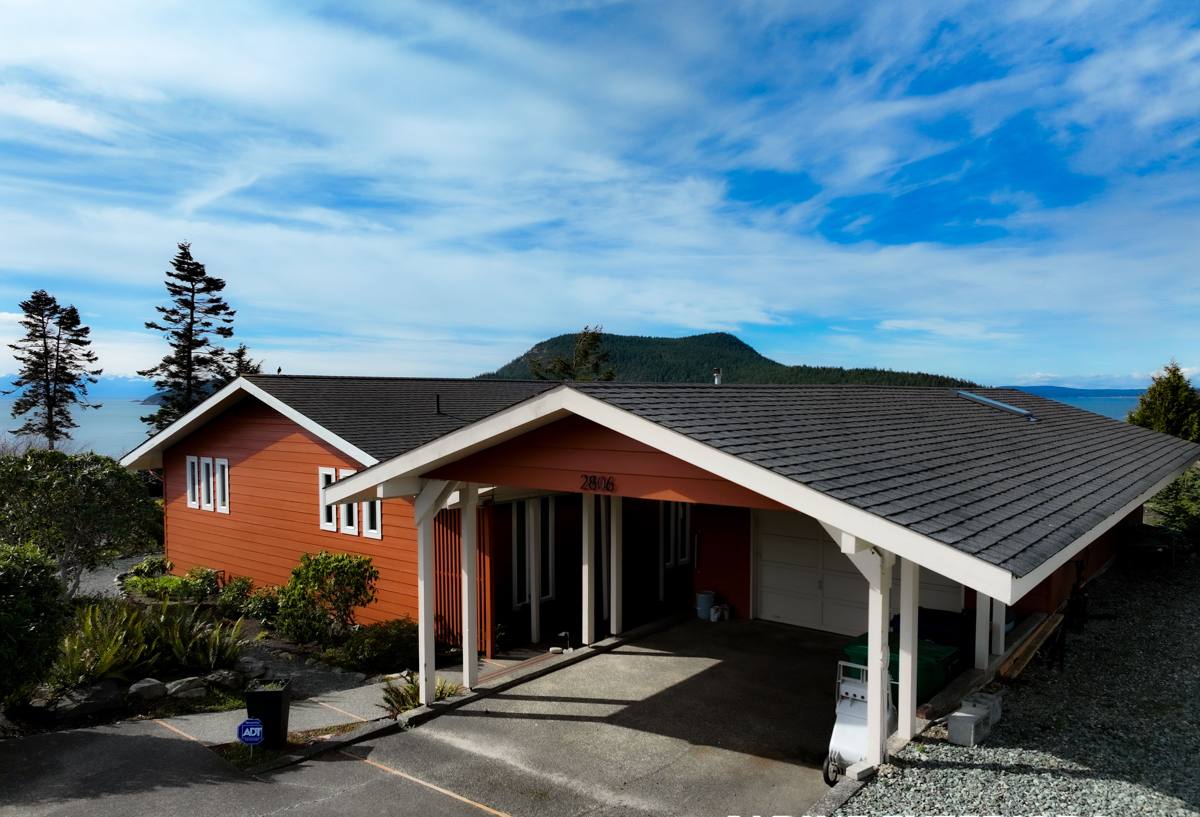
Cherry Point sits along the Strait of Georgia in Whatcom County, close enough to open water that homes here take on a version of the coastal climate that's noticeably harder on building exteriors than what you'd see just a few miles inland. It's a mix of rural properties, wooded lots, and waterfront exposure, which means every house in the area is dealing with some combination of salt-laden wind, driving rain, and long stretches of shade and dampness that keep surfaces wet longer than they'd like to be. We work throughout this stretch of Whatcom County and see the same patterns show up on siding, trim, roofs, and decks year after year.
None of this means Cherry Point homes are doomed to constant repair. It means the materials and installation details matter more here than they would in a drier, more sheltered part of the state. That's the whole reason we structure our siding, roofing, window, and deck work the way we do.
Salt Air and What It Does to a Building Exterior
Proximity to the Strait of Georgia means airborne salt is a real factor, not a theoretical one. Salt air accelerates corrosion on exposed metal fasteners, flashing, and hardware, and it can be tough on paint films and caulking over time, causing them to break down faster than the manufacturer's stated lifespan would suggest inland. It doesn't damage every material equally — dense, factory-finished products hold up differently than raw or site-finished ones.
This is one of the reasons fastener selection and flashing details matter as much as the siding or roofing product itself. A great material installed with the wrong hardware in a salt-exposed location will still show problems early. We spec corrosion-resistant fasteners and flashing as standard practice for homes in this part of Whatcom County, not as an upgrade.
Driving Rain and Wind-Driven Water Intrusion
Open shoreline exposure means wind doesn't just blow — it drives rain sideways into wall assemblies, window frames, and door openings in a way that sheltered inland lots rarely experience. Water that would simply run down a wall on a calmer site gets pushed laterally and can find its way behind trim, around window flanges, or into any gap in a siding installation that wasn't detailed for this kind of exposure.
This is a water-management problem before it's ever a cosmetic one. The right approach is a continuous drainage plane, correctly lapped house wrap, properly flashed windows and penetrations, and siding installed with the clearances and fastening patterns the manufacturer actually specifies for high-exposure zones. Skipping any one of those steps is usually invisible on day one and expensive five or ten years later.
Where Wind-Driven Rain Problems Usually Start
- Window and door flashing that wasn't integrated with the water-resistive barrier
- Siding butt joints and corners without proper caulking or flashing behind them
- Deck ledger boards and rim joist connections exposed to standing or splashing water
- Roof-to-wall transitions and chimney or vent penetrations without step flashing done correctly
- Gutters and downspouts undersized or clogged, pushing water back toward the wall
Moss, Shade, and the Long Wet Season
Whatcom County's wet season runs long, and wooded or shaded lots around Cherry Point hold moisture on roofs and north-facing siding well after more exposed areas have dried out. That combination — organic debris, shade, and prolonged dampness — is exactly what moss and algae need to establish themselves on roofing and siding surfaces.
Moss isn't just a cosmetic issue. On roofing, it lifts shingle edges and holds water against the roof deck, which shortens the life of the roof system. On siding, sustained moisture exposure is the enemy of any wood-based or wood-composite product, and it's part of why we don't install primed spruce, cedar, or LP SmartSide in areas with this kind of moss and moisture pressure. Fiber cement doesn't feed mold or moss growth the way wood-based products can, which matters a great deal on a shaded, damp lot.
Siding: Why We Install James Hardie and Nothing Else
We standardized on James Hardie fiber cement siding for every job we take on, including here in Cherry Point, and we don't install vinyl, LP SmartSide, Cemplank, Allura, primed spruce, or cedar. That's not a marketing position — it's a decision built around what actually holds up under salt air, wind-driven rain, and a long moss season without turning into an ongoing maintenance project for the homeowner.
Fiber cement is dense, non-combustible, and dimensionally stable, so it doesn't swell, cup, or rot the way wood-based siding can when it stays damp for weeks at a time. Hardie's ColorPlus factory finish is baked on under controlled conditions, which gives it better adhesion and UV stability than most site-applied paint jobs, and it means less repainting over the life of the siding. Hardie also engineers specific product lines (their HZ5 designation, for example) for regions with more moisture and temperature swing, which is the right fit for western Washington's coastal belt.
We're not going to tell you every other product is a disaster — vinyl is inexpensive and low-maintenance in mild conditions, cedar has real aesthetic appeal, and LP SmartSide has improved over the years. But vinyl can warp and fade under sustained UV and temperature cycling and it isn't a good match for a fire-conscious build. Cedar and primed spruce require real upkeep — recoating, caulk maintenance, moisture monitoring — that most homeowners underestimate until they're a few years in. In a location like Cherry Point, those maintenance burdens compound faster than they would somewhere drier and more sheltered. Hardie's transferable warranty and track record in similar coastal Pacific Northwest markets are why it's the one product we're willing to put our name behind here.
| Factor | James Hardie Fiber Cement | Vinyl | Wood / LP SmartSide |
|---|---|---|---|
| Moisture & moss resistance | High — doesn't feed mold or rot | High, but seams can trap moisture | Requires ongoing maintenance to resist |
| Salt air / coastal durability | Strong, factory-finished | Can chalk, fade, warp over time | Finish breaks down faster near salt exposure |
| Fire resistance | Non-combustible | Combustible | Combustible |
| Maintenance over 15 years | Low — factory finish holds up | Low, but limited repair options | Higher — recoating, caulking, monitoring |
| Warranty | Long, transferable manufacturer warranty | Varies widely by product | Varies; finish warranty often shorter than substrate |
Roofing for Cherry Point Homes
Roofing in this area has to handle the same combination of wind-driven rain and prolonged dampness as siding, plus direct exposure to whatever storms come off the Strait. We look closely at flashing details around chimneys, skylights, and roof-to-wall transitions, since those are the spots that actually fail first, more often than the field of the roof itself. Proper underlayment, ventilation, and moss-resistant material choices all matter more on a shaded or waterfront lot than they would on a dry inland roof.
Gutters and downspout capacity deserve attention too. A roof can be installed correctly and still cause problems downstream if the drainage system can't keep up with the volume and intensity of Whatcom County rain events, especially during the wetter months when the ground is already saturated.
Windows: The First Line of Defense Against Wind-Driven Rain
Windows are one of the most common sources of water intrusion on wind-exposed lots, and it's rarely the window unit itself that fails — it's the flashing and integration with the wall assembly around it. When we replace windows in Cherry Point, we treat the flashing detail as equally important as the window product, because a well-built window installed without proper flashing will still leak in a driving-rain scenario. We also look at overall window performance — glazing, air sealing, and frame material — with the wind exposure of the specific lot in mind, since a house tucked back in trees and a house sitting more exposed toward the water don't have identical needs.
Decks: Built for Marine-Adjacent Exposure
Decks in this area face constant cycles of rain, damp shade, and salt air, all of which are hard on fasteners, ledger connections, and any wood surface that isn't properly sealed and maintained. Ledger board attachment and flashing at the house connection is the single most important structural detail on any deck, and it's also one of the most common places we find corrosion or rot on older decks in this region. We use corrosion-resistant hardware and proper flashing at that connection as a baseline, not an option, and we talk through decking material trade-offs — composite versus wood — based on how much sun, shade, and moisture a specific deck will actually see.
A Practical Seasonal Checklist for Cherry Point Homeowners
- Clear moss and debris from roof surfaces and valleys before the wet season sets in
- Check gutters and downspouts for clogs after fall leaf drop
- Look for chalking, fading, or caulk failure around siding joints and window trim
- Inspect deck ledger boards and fasteners for rust staining or soft wood
- Watch for peeling paint or dark staining on north-facing or shaded wall sections, a sign moisture isn't drying out between rain events
- Have flashing at roof penetrations and window heads checked every few years, since these are the spots that fail quietly
Why a Local Crew Matters Here
A crew that works this stretch of Whatcom County regularly knows which lots sit more exposed to wind off the water, which ones hold moisture longest under tree cover, and which details actually matter for this climate versus a generic installation approach. That local knowledge shows up in small decisions — fastener choice, flashing sequence, product line selection — that don't show up on a spec sheet but make a real difference in how an exterior performs five, ten, and twenty years out. We'd rather get those details right the first time than have a homeowner discover them the hard way during a wet Cherry Point winter.
If you're weighing a siding, roofing, window, or deck project on a Cherry Point property, we're happy to take a look and talk through what your specific lot is dealing with. Reach out for a free, no-pressure estimate using the form below.