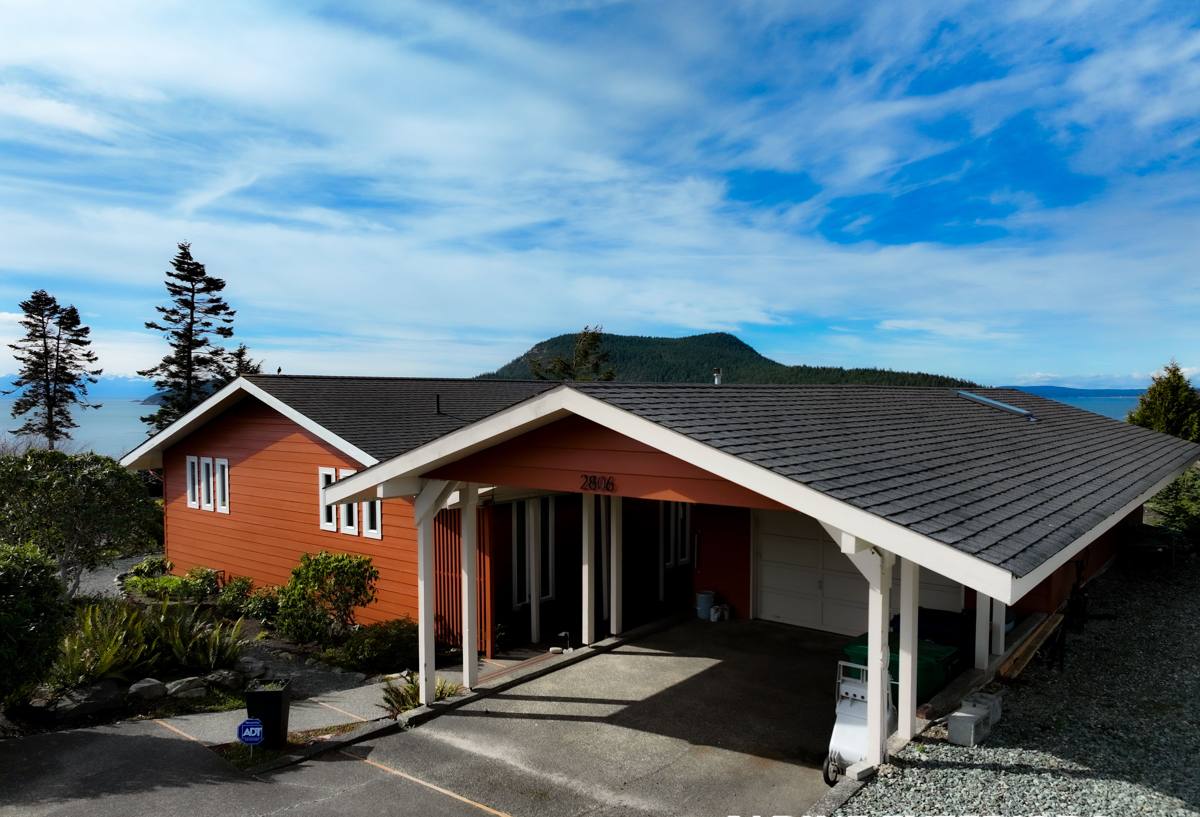
 Semiahmoo Exterior
 Exterior Work Built for Laurel's Climate
Laurel sits in that stretch of Whatcom County where the weather doesn't do anything dramatic — it just doesn't let up. Rain falls sideways more often than straight down. Moss doesn't wait for a wet winter; it finds a foothold almost year-round on anything shaded or north-facing. And even this far from open water, the region's marine-influenced air carries enough moisture and salt to work on unprotected wood, metal fasteners, and painted surfaces slowly, over years, until a homeowner notices the siding looks tired or the roof edge is soft.
None of this is unusual for the area — it's just what owning a home in Whatcom County involves. What matters is whether the exterior materials and workmanship on a house were chosen with that reality in mind, or just installed the way they'd be installed anywhere else in the country. We work on homes in Laurel and the surrounding communities because we understand that difference, and we build every job — siding, roofing, windows, or decks — around it.
What This Climate Actually Does to a House
Constant Moisture Exposure
Whatcom County doesn't get the heaviest rainfall totals in the state, but it gets frequent, driving rain over long stretches of the year, often pushed sideways by wind off the water. That means exterior surfaces spend more time wet than dry for months at a stretch. Any gap in flashing, any seam that wasn't sealed correctly, any siding product that absorbs water at the edges — this climate will find it and exploit it.
The Moss Problem
Moss thrives here because it doesn't need much: shade, moisture, and time. Roofs are the most visible casualty, but moss and algae also colonize north-facing siding, deck boards, and anywhere debris collects and holds dampness against a surface. Left alone, it holds moisture against the material underneath, which accelerates rot in wood and can degrade lesser siding products faster than the manufacturer's warranty assumes.
Salt-Tinged Air
Laurel isn't beachfront, but this region's weather systems move inland off the water, and that means fasteners, flashing, and unprotected metal components take on a slow corrosive load over years. It's not dramatic — it's cumulative. Homes built with the wrong hardware or unsealed connection points show it first at fastener heads and roof edges.
Siding in Laurel: Why We Install Only James Hardie
We install James Hardie fiber cement siding exclusively. We don't install vinyl, LP SmartSide, Cemplank, Allura, or primed spruce and cedar siding — not because those products have no place in the industry, but because after years of doing exterior work in this climate, we don't think they hold up the way homeowners expect over the long run here, and we'd rather stand behind one product system we trust completely than offer several we have reservations about.
What Each Alternative Gets Right — and Where It Struggles Here
- Vinyl siding is inexpensive and low-maintenance in mild climates, but it becomes brittle in cold snaps, expands and contracts with temperature swings, and can warp or blow off in the wind events this region sees in fall and winter.
- LP SmartSide (engineered wood) performs reasonably when installed and maintained precisely, but it's a wood-based product, and wood-based products are more sensitive to the sustained moisture exposure typical of a Whatcom County winter — edges and cut ends need diligent sealing to avoid swelling.
- Cemplank and Allura are also fiber cement, and structurally that's the right family of product for this climate. Our reservation isn't the material chemistry — it's that we've built our installation standards, warranty relationships, and factory-finish experience around the Hardie system specifically, and we don't want to split that expertise across competing product lines.
- Primed spruce and cedar siding is a natural, attractive option, but it's real wood, meaning it needs repainting on a cycle, is vulnerable to moisture at every cut edge and fastener hole, and is the most likely of any option here to develop rot or moss colonization if maintenance slips even one season.
Why We Standardized on Hardie
James Hardie fiber cement is non-combustible, dimensionally stable in wet-dry cycling, and available in HZ product lines engineered for specific climate zones — including the wetter, cooler conditions typical of the Pacific Northwest. The factory-applied ColorPlus finish resists fading and holds up to the region's moisture better than field-applied paint, and it comes with a strong transferable warranty that matters when correctly installed. For a house in Laurel that's going to sit through decades of Whatcom County winters, we think it's the more defensible long-term choice — and it's the only siding we put our name behind.
Roofing Considerations for the Area
A roof in this part of Whatcom County works harder than it looks like it should. Moss growth on shaded slopes, valleys, and north sides shortens the useful life of roofing material if it's not addressed, because it holds water against the surface long after a rain event has passed. Flashing at chimneys, vents, and valleys is where we see the most trouble on older homes — small failures there let water travel where it shouldn't, often for a long time before anyone notices a stain on a ceiling.
When we work on a roof in Laurel, we're paying particular attention to ventilation (a poorly ventilated attic traps moisture and accelerates decay from the inside), flashing detail at every penetration, and gutter and downspout capacity sized for the volume of rain this area actually receives, not a generic national average.
Windows: The Overlooked Exterior Component
Windows don't get the same attention as siding or roofing, but in a climate this wet, a poorly sealed or aging window is a direct path for moisture into wall framing. Condensation between panes, soft or discolored trim, and drafts around the frame are all signs that the seal or flashing around a window has failed. Replacement windows installed with correct flashing and drainage paths — not just caulk over an old opening — are what actually keeps water out here, and it's worth having that detail checked even on a window that looks fine from across the room.
Decks: Built for Wet Ground and Shade
Decks in Laurel face a specific combination of problems: they're often partially shaded, they sit close to grade or landscaping that holds moisture, and they take the same driving rain and moss pressure as everything else on the house. Wood decks need real maintenance — cleaning, sealing, and attention to ledger board flashing where the deck meets the house, which is one of the most common hidden rot locations in the region. Composite decking reduces some of that maintenance burden but still depends on correct substructure work and drainage to perform well long-term. Either way, the framing and ledger connection matter more here than the decking material itself.
Comparing Siding Options for This Climate
| Material | Moisture Resistance Here | Maintenance Burden | Longevity in This Climate |
|---|---|---|---|
| James Hardie fiber cement | Strong; dimensionally stable wet-dry | Low; factory finish, no repainting cycle needed | Long-term, backed by transferable warranty |
| Vinyl | Fair; can warp or crack in wind and cold | Low, but repairs are visible patch jobs | Moderate; UV and impact wear over time |
| LP SmartSide (engineered wood) | Moderate; sensitive at cut edges and seams | Moderate; sealing and inspection needed | Depends heavily on installation precision |
| Cedar / primed spruce | Lower; absorbs moisture, prone to swelling | High; repainting and sealing on a cycle | Shorter without diligent upkeep |
Why a Local Crew Matters in Laurel
A lot of exterior problems in this region trace back to work that was done correctly for a drier climate but not for this one — flashing details that assume less rain, siding fastening patterns that don't account for wind-driven moisture, or ventilation that's adequate somewhere else but not here. A crew that works Whatcom County regularly knows where moss actually collects on a given roof pitch, how much gutter capacity a real storm needs, and which details on a Hardie installation are worth the extra ten minutes because this climate will test them eventually.
That local knowledge doesn't show up on a spec sheet. It shows up ten years later, in whether the siding still looks like it did on install day and whether the roof edge is still tight.
A Simple Seasonal Exterior Checklist for Laurel Homeowners
- Check north-facing roof slopes and siding for moss buildup at least once before winter
- Clear gutters and downspouts before the fall rains start in earnest
- Look at window trim and frames for soft spots, peeling paint, or fogging between panes
- Inspect deck ledger boards where the deck meets the house for staining or softness
- Watch for discoloration or bubbling on siding, especially near ground level and roof lines
- Have flashing at chimneys, vents, and valleys checked every few years, not just after a leak appears
Getting Started
If you're noticing moss creeping across the roof, siding that's starting to look worn, windows that fog or draft, or a deck that needs more than a quick clean, it's worth having someone look at the whole picture rather than patching one symptom at a time. We're happy to walk a Laurel property, point out what we see, and put together a free, no-pressure estimate — use the form below to get started.