 Semiahmoo Exterior
 Why Roof Quotes Vary So Much
Ask three roofing contractors to bid the same house in Semiahmoo and you can end up with three numbers that don't seem to have much in common. That's not necessarily a sign that someone is padding their price or cutting corners — roofing is one of those projects where the final number depends on a long list of variables, and not every contractor accounts for the same ones up front. This page walks through what actually moves the price, so you can read a bid with some context instead of just comparing bottom-line totals.
We're a siding and exteriors contractor based in Whatcom County, and roofing questions come up constantly in the course of exterior projects — a failing roof and failing siding often show up on the same house at the same time, especially once a home passes the 20-25 year mark. This page is general education, not a sales pitch for a specific roofing package.
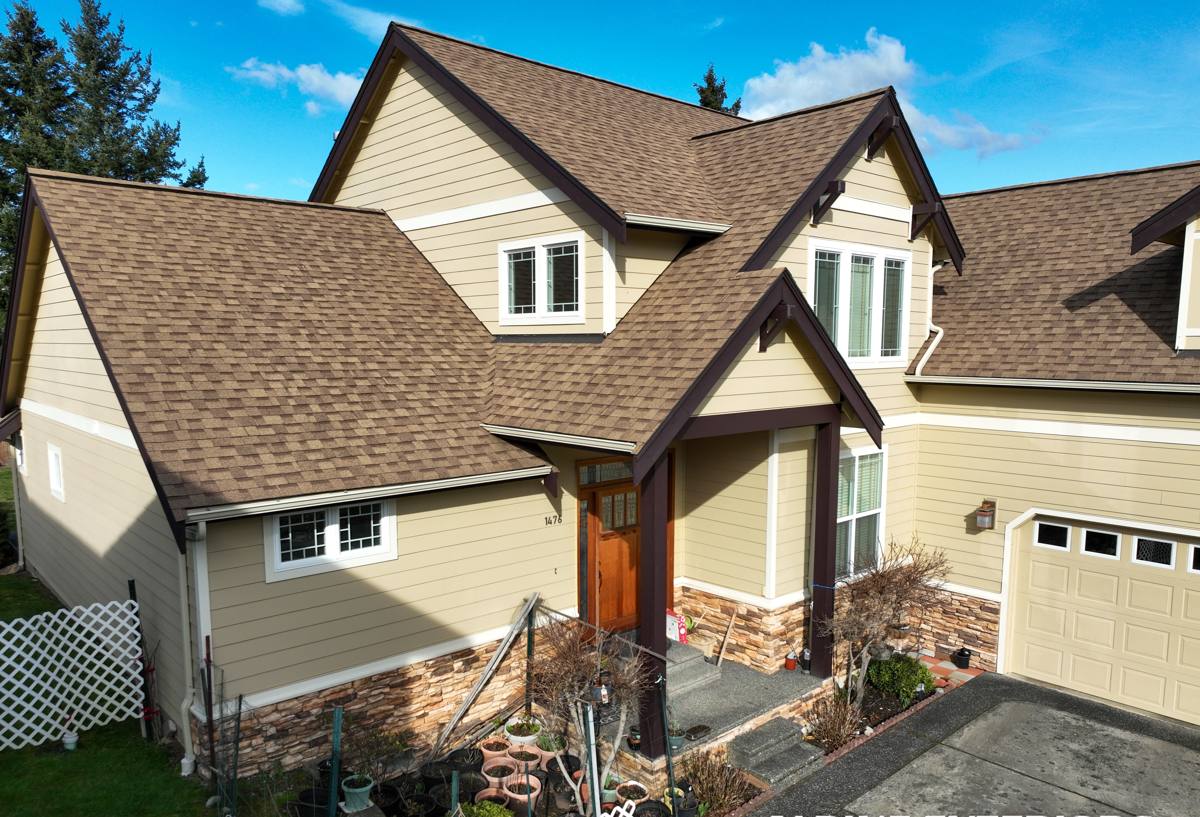
The Core Cost Drivers
Every roofing bid, regardless of who writes it, is built from the same handful of variables. Understanding them helps you figure out why one quote is higher than another, and whether that difference is justified.
| Factor | Why It Matters |
|---|---|
| Roof size (squares) | Roofing is priced by the "square" — 100 square feet. A bigger footprint means more material and more labor hours, plain and simple. |
| Roof pitch | Steep roofs are slower and riskier to work on, requiring more safety setup and reducing how much a crew can install per day. |
| Number of layers to remove | Tearing off two or three layers of old shingles takes longer and produces more disposal weight than a single-layer tear-off. |
| Roof complexity | Valleys, dormers, skylights, and multiple planes all add flashing detail, cutting, and labor time compared to a simple gable roof. |
| Decking condition | Soft or rotted plywood underneath the old roofing isn't visible until tear-off starts, and replacing it is priced separately. |
| Material choice | Standard asphalt composition, higher-tier laminate shingles, and metal roofing occupy very different price tiers. |
| Access and site conditions | Steep lots, limited driveway access, or landscaping that has to be protected can add setup time and dumpster placement challenges. |
Squares and Pitch: The Baseline
Before anything else, a bid starts with square footage and pitch. A single-story rambler with a low-slope roof and a two-story home with steep dormers can have the same square footage and still land at very different labor costs, because pitch changes everything about how fast — and how safely — a crew can work.
Material Choice: Where the Range Really Opens Up
Asphalt composition shingles remain the most common roofing material in this region, and for good reason — they're a proven, cost-effective option when installed correctly. Within asphalt shingles alone there's a real spread: basic three-tab shingles sit at the low end, architectural (laminate) shingles in the middle, and premium designer or algae-resistant lines toward the top. Metal roofing, standing-seam in particular, costs meaningfully more up front but is often chosen for its longevity and how it sheds moss and moisture.
The right material isn't automatically the most expensive one. It's the one that matches the roof's pitch, the home's exposure, and how long you plan to own the house. A roofer who asks about your timeline before recommending a product is doing you a favor.
What's Under the Shingles Matters as Much as What's On Top
A roof is a system, not a single layer, and a lot of the cost — and the reason two "same size" bids differ — lives underneath the visible shingles.
- Underlayment: Synthetic underlayment and self-adhered ice-and-water membrane in vulnerable areas (valleys, eaves, around penetrations) cost more than basic felt but do far more to keep water out.
- Decking: Old or water-damaged plywood sheathing has to be replaced sheet by sheet during tear-off. This is almost never known until the old roofing is off, which is why most honest bids list decking replacement as a per-sheet allowance rather than a guess.
- Ventilation: Ridge vents, soffit vents, and proper attic airflow affect both the roof's lifespan and the shingle warranty. Skipping ventilation upgrades to save money up front can shorten the life of an otherwise good roof.
- Flashing: Chimneys, skylights, and wall-to-roof transitions all need new flashing, not just new shingles run up against old metal. Reusing old flashing is a common corner-cutting move that shows up as a leak years later.
Whatcom County Climate: Why Local Conditions Push Costs Up
Semiahmoo sits close enough to the water that salt-laden air is a real factor for roofing components, not just siding. Exposed metal — flashing, fasteners, vent stacks — corrodes faster here than it does further inland, which is why many local roofers spec corrosion-resistant fasteners and flashing as standard rather than an upgrade. It's a modest cost difference, but skipping it shortens the life of the whole roof around the failure points.
Driving rain off the Strait is another factor. Whatcom County gets wind-driven rain events that push water sideways and upward under poorly lapped shingles or thin underlayment. That's part of why ice-and-water membrane in valleys and along eaves is treated as standard practice locally rather than an optional add-on — it's cheap insurance against the specific way this region's weather attacks a roof.
Then there's moss. The long, wet moss season in this part of Washington is hard on any roof that doesn't get much sun or airflow, particularly north-facing slopes and roofs shaded by mature trees. Moss holds moisture against the shingle surface, works into the granule layer over time, and can lift shingle edges. Algae-resistant shingles, adequate ventilation, and simply choosing a material that handles the wet season well all factor into a roof's real cost of ownership here, even if they add a bit to the upfront price.
Tear-Off vs. Roofing Over
Installing new shingles directly over an existing layer is sometimes offered as a lower-cost option, and it can look attractive on a bid. In practice, most reputable roofers in this region avoid it except in narrow circumstances, for a few reasons: it hides the condition of the decking underneath, it traps moisture between layers, and most manufacturers won't back their full warranty over a second layer. A full tear-off costs more upfront in labor and disposal, but it's the only way to actually inspect and fix what's underneath — which matters more here than in a drier climate, given how much moisture this roof will see over its life.
Costs Homeowners Often Don't See Coming
A handful of line items catch people off guard because they aren't part of the "roof" in the way most people picture it:
- Permits: Whatcom County and local jurisdictions require permits for roof replacement, and that fee is a real, unavoidable cost.
- Disposal: Tear-off debris is heavy. Dumpster and hauling fees scale with the number of layers removed and the size of the roof.
- Decking replacement: As noted above, this is discovered mid-project and billed as an allowance, not a fixed number, until the old roofing comes off.
- Code-driven upgrades: Current building code may require ice-and-water shield in areas the old roof didn't have it, or updated ventilation — these aren't upsells, they're what passing inspection requires.
- Skylight or chimney flashing replacement: Often billed separately from the base roofing price since it's specialty work.
Checklist: What to Ask Before You Sign
- Does the bid specify tear-off to bare decking, or is roofing over the old layer being offered?
- Is decking replacement priced as a per-sheet allowance, and is that rate spelled out in writing?
- What underlayment is being used, and does it include ice-and-water membrane in valleys and along eaves?
- Are corrosion-resistant fasteners and flashing being used, given the coastal exposure here?
- Is a ventilation assessment included, or does the bid assume the existing attic airflow is adequate?
- Does the price include permit fees and disposal, or are those billed separately later?
- What's the manufacturer's warranty, and does it stay valid with this specific installation method?
- Is the crew installing the roof direct employees, or subcontracted out — and who's liable if something goes wrong?
When Roof and Siding Wear Out Together
It's common on older homes in this area for the roof and the siding to reach the end of their useful life around the same time, since they're often original to the house and exposed to the same salt air, rain, and moss conditions. If you're already planning a roof replacement and your siding is chalking, cracking, or showing rot at the seams, it's worth having both assessed at once — not because they have to be done together, but because scaffolding, staging, and scheduling can sometimes be shared, and it gives you a full picture of what the exterior actually needs.
On the siding side, we only install James Hardie fiber cement, and we're upfront that this is a deliberate standard, not an availability issue. Given the same salt air and moisture exposure that shapes roofing decisions here, we've found that non-combustible fiber cement with a factory-applied finish holds up to this climate more predictably over time than the wood-based or vinyl alternatives — but that's a separate conversation from your roof, and we're happy to have it separately if and when it's relevant.
Getting an Honest Number for Your Roof
The only way to get a real number instead of a rough range is to have someone walk the roof, measure it, and look at what's underneath where they can. If you're weighing a roof replacement in Semiahmoo or anywhere in Whatcom County, we're glad to take a look and give you a straightforward, no-pressure estimate — whether that conversation stays focused on the roof or ends up covering the exterior as a whole.