 Semiahmoo Exterior
 Marietta's Exterior Challenge: Salt, Rain, and Moss
Marietta sits in the northwest corner of Whatcom County, close enough to Semiahmoo Bay and the Strait of Georgia that salt-laden air is a constant factor in how exteriors age here. Add driving rain off the water, long gray stretches with little direct sun, and a moss season that can run eight months or more, and you have a climate that is genuinely tougher on siding, roofing, windows, and decks than most marketing materials from national building product companies want to admit.
None of these stresses are dramatic on their own. It's the combination, repeated year after year, that separates exteriors that hold up for decades from ones that need real intervention by year ten or twelve. Understanding that combination is the starting point for any honest conversation about exterior work in this neighborhood.
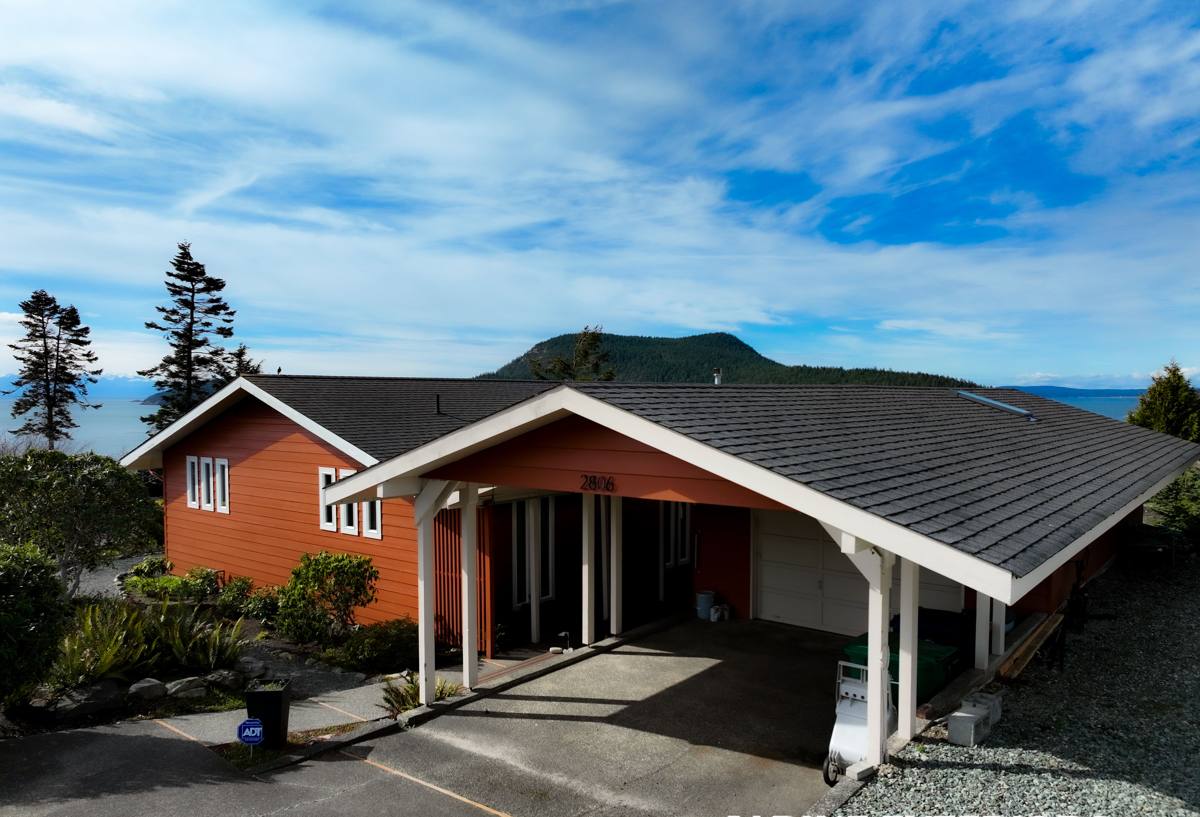
What Salt Air Does to a Home's Exterior
Coastal proximity means airborne salt settles on every exterior surface, not just near the water's edge. Over time, salt is corrosive to exposed metal fasteners, flashing, and hardware, and it accelerates the breakdown of some paints and coatings faster than inland weathering would. It also interacts with moisture — salt is hygroscopic, meaning it holds onto water rather than letting a surface dry out quickly, which matters a great deal for any exterior material that isn't built to shed water fast.
Where This Shows Up First
- Fasteners and flashing that corrode or stain before the siding or roofing around them shows any wear
- Caulk and sealant joints that fail earlier than their rated lifespan
- Painted or coated surfaces that chalk, fade, or lose adhesion sooner near the coast than a few miles inland
- Metal roofing and gutter components that need corrosion-resistant fasteners and finishes, not standard hardware
The fix isn't complicated, but it does require using the right materials and fastener specs for a coastal-adjacent property rather than defaulting to whatever is standard practice inland.
Driving Rain and Wind-Driven Moisture
Whatcom County doesn't get the heaviest rainfall totals in Washington, but the rain that does fall near Semiahmoo Bay frequently arrives sideways, pushed by wind off the water. Wind-driven rain behaves differently than straight-down rain — it gets forced up under laps, into seams, and around penetrations that would stay dry in a calmer climate. This is exactly the kind of moisture exposure that separates a well-detailed exterior from one that looks fine for a few years and then starts failing at the joints.
For siding specifically, this is where product choice and installation quality matter more than most homeowners realize. A material that absorbs and holds moisture, or a housewrap and flashing detail that wasn't built for sideways rain, will show problems at seams, corners, and window and door openings long before the field of the wall shows anything.
Why This Drives Our Siding Standard
It's a big part of why our crew installs James Hardie fiber cement siding exclusively and does not install vinyl, LP SmartSide, Cemplank, Allura, primed spruce, or cedar. Fiber cement doesn't swell, rot, or provide the kind of organic surface that supports moss and mildew growth the way wood-based products can. Hardie's HZ5 product line is specifically engineered for climates with sustained moisture exposure, which fits this part of Whatcom County well. That's not a knock on every alternative product across every application — it's our professional judgment, based on what holds up in exactly this kind of weather, on exactly this kind of coastline.
Moss Season: Longer Here Than Most of Washington
Moss needs shade, moisture, and organic material to root into, and Marietta's tree cover combined with a long wet season gives it plenty of all three. Moss on a roof isn't just cosmetic — as it grows, it holds moisture against roofing material, can lift shingle edges, and gradually breaks down the surface it's rooted in. On siding, moss and algae growth is more common on north-facing walls and anywhere shaded by trees or neighboring structures, and it points to a surface that isn't drying out between rain events the way it should.
Practical Moss Management
- Keep gutters clear so water isn't sitting against roof edges longer than necessary
- Trim back tree limbs that shade roof and wall sections for most of the day
- Have roofing inspected before moss growth becomes heavy enough to lift material
- Choose siding with a factory finish that resists organic growth rather than relying on field-applied coatings alone
James Hardie's ColorPlus factory finish is baked on under controlled conditions and holds up better against the kind of biological growth this climate encourages than field-painted or unfinished wood-based sidings, which is one more reason it's the product we stand behind.
Siding: Why We Only Install James Hardie
We get asked fairly often why we don't offer vinyl or one of the engineered wood products as a lower-cost option. The honest answer is that we've made a standard for our crew, not a judgment on every homeowner's situation everywhere. Vinyl siding is inexpensive and easy to install, but it's a petroleum-based product that can warp in heat, becomes brittle in cold, and doesn't hold paint if a homeowner wants to change color down the line. Engineered wood products like LP SmartSide use treated wood strand technology that performs reasonably well when installation and maintenance are done exactly to spec, but wood-based substrates are inherently more vulnerable to sustained moisture exposure than fiber cement — and sustained moisture is exactly what this part of Whatcom County delivers for much of the year.
James Hardie fiber cement is non-combustible, dimensionally stable, and built specifically to resist the freeze-thaw and moisture cycling that coastal Pacific Northwest weather produces. The HZ5 line is engineered for climates like this one, the ColorPlus finish is warrantied against fading and peeling, and the product carries a strong transferable warranty that matters if a home changes hands. When correctly installed — proper flashing, correct fastener spacing, correct clearances from grade and roofing — it's a system built for exactly the conditions Marietta homes face.
Roofing, Windows, and Decks in a Coastal Microclimate
Roofing
Roof material and fastener choice both need to account for salt exposure and sustained moisture, not just wind and snow load. Proper ventilation matters more here than in drier climates, since a roof assembly that can't breathe holds moisture longer and gives moss more time to establish.
Windows
Window flashing and sealant details are where wind-driven rain finds its way in. Correct integration between the window unit and the surrounding siding or wall assembly is not optional in this climate — it's the difference between a dry wall cavity and a slow, hidden moisture problem.
Decks
Decks take the most direct exposure of any exterior element — full sun when it appears, full rain when it doesn't, and standing moisture if drainage isn't planned correctly. Fastener corrosion resistance and proper board spacing for drying are both more important here than in an inland yard.
Cost Factors to Understand Before You Budget
| Factor | Why It Affects Cost |
|---|---|
| Home exposure to wind and water | More exposed elevations need more careful flashing and detailing, which takes more labor time |
| Existing moisture damage | Hidden rot or water intrusion discovered during tear-off adds repair scope |
| Tree cover and shade | Heavier moss and organic growth can mean more prep work before installation |
| Material choice | Fiber cement has a higher material cost than vinyl but a longer service life and stronger warranty |
| Access and site conditions | Sloped lots or limited access near the water can affect equipment and labor time |
We don't publish blanket pricing because every home's exposure and condition is different — but we're upfront that fiber cement siding costs more upfront than vinyl. The trade-off is a product that isn't fighting the same moisture and organic growth battle that this coastline puts every wood-based or vinyl product through.
Why a Local Crew Matters Here
A crew that works this specific stretch of Whatcom County coastline regularly knows which elevations take the worst of the wind-driven rain, how long moss season really runs, and which fastener and flashing details actually hold up against salt exposure over years, not just on paper. That's different from general regional experience. Exterior work done to a generic Pacific Northwest standard can still fall short in a spot like Marietta, where the combination of salt air, coastal wind, and shade-driven moss adds up to something more demanding than the regional average.
If you're weighing exterior work on a Marietta home — whether that's siding replacement, a roofing project, window updates, or deck work — we're happy to take a look and talk through what your specific home is facing. Reach out for a free, no-pressure estimate using the form below.