 Semiahmoo Exterior
 New Roof Installation Built for the Peace Arch Area
Homes near Peace Arch sit in one of the more demanding roofing environments in Whatcom County. You're close enough to Semiahmoo Bay to get salt-laden air working on every exposed fastener and metal flashing, close enough to the border corridor to catch driving rain off the Strait, and far enough north that moss has months longer to establish itself on a shaded roof plane than it would further inland. A roof that's engineered for a dry-climate spec sheet doesn't hold up the same way out here. When we install a new roof for a Peace Arch homeowner, we're building for this specific combination of conditions, not just following a generic manufacturer install guide.
This page is focused on one job: full new roof installation for homes in and around Peace Arch. Not repairs, not maintenance — the complete tear-off and new roof system, done right for this location.
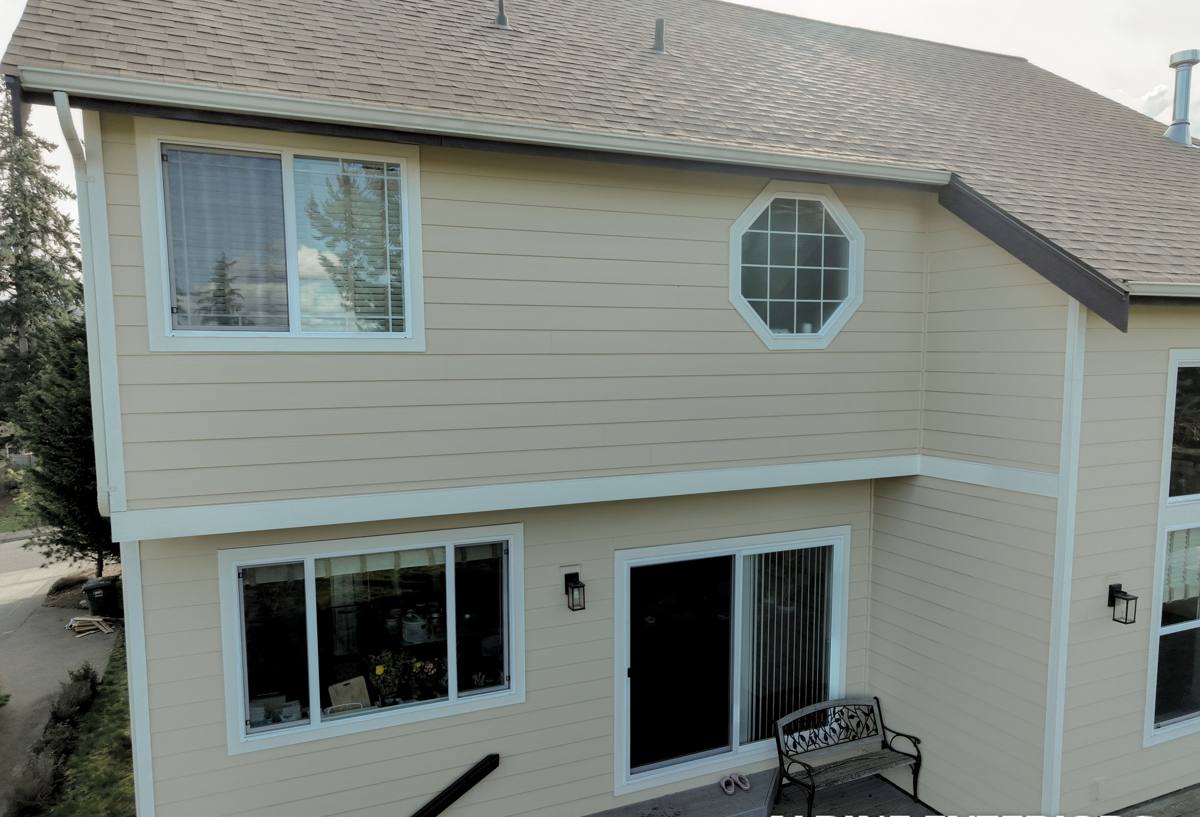
What Peace Arch Homes Are Up Against
Salt Air and Metal Fatigue
Being close to the water means airborne salt settles on every exposed surface of a roof — flashing, exposed fasteners, vents, gutters. Over years, that accelerates corrosion on standard fasteners and lower-grade metal components. It's not dramatic or fast, but it's constant, and it's the reason we default to corrosion-resistant fastener grades and flashing metals on homes this close to the bay rather than treating it as an upgrade.
Driving Rain and Wind-Driven Water
Whatcom County rain doesn't always fall straight down. Storms coming off the Strait of Georgia push rain sideways into roof planes, valleys, and wall-roof intersections. That kind of wind-driven moisture finds every weak point in an underlayment lap, every under-driven nail, every valley that was cut instead of woven or properly metal-lined. A roof built for calmer weather further inland can look fine for a season or two here and still leak the first time a real coastal system rolls through.
The Long Moss Season
Shaded, north-facing, and tree-covered roof sections in this area can stay damp for most of the year. That's exactly what moss needs to get established, and once it does, it lifts shingle edges, holds moisture against the roof deck, and shortens the life of the roofing material underneath it. A new roof install is the best point in the roof's life to address moss-prone areas — through material choice, zinc or copper strip placement, and ventilation — rather than fighting it after the fact.
What a Correct New Roof Install Actually Involves
A new roof is more than shingles going down. The parts homeowners don't see are usually what determine whether the roof performs for its full expected lifespan in a climate like this one.
- Full tear-off to the deck — never a layover on an existing roof, so we can actually inspect and address what's underneath
- Deck inspection and repair of any soft, delaminated, or water-damaged sheathing before anything new goes down
- Ice-and-water shield or high-performance underlayment at eaves, valleys, and any low-slope transitions, sized for this region's rain volume rather than a bare-minimum code spec
- Properly woven or metal-lined valleys, since valleys are where wind-driven rain concentrates and where cut-and-butted shingle valleys tend to fail first
- Corrosion-resistant flashing at all roof-wall intersections, chimneys, and penetrations — this matters more here than in drier inland areas
- Balanced intake and exhaust ventilation, which controls attic moisture and slows the conditions that let moss and algae take hold
- Zinc or copper moss-control strips at the ridge on shaded or tree-covered roof planes
- Correct fastener count, placement, and grade for the specific roofing product and this coastal exposure
Skip any one of these and the roof may still look correct from the ground. What changes is how long it actually lasts and how it behaves the first time it's tested by a real coastal storm.
Roofing Material Considerations for This Location
There's no single "best" roofing material for every home — it depends on the roof's exposure, slope, shading, and the homeowner's priorities. What we do is walk through the real trade-offs for a Peace Arch property specifically, rather than defaulting to whatever's easiest to install.
| Material | How It Handles Salt Air & Rain | Moss Resistance | General Lifespan |
|---|---|---|---|
| Architectural asphalt shingle | Good, with corrosion-resistant fasteners and proper underlayment | Moderate — benefits from zinc strips on shaded planes | 25-30 years |
| Metal roofing (standing seam) | Excellent when properly coated and fastened; sheds wind-driven rain well | High — hard surface discourages moss establishment | 40-50+ years |
| Cedar shake | Requires more maintenance in constant coastal moisture | Low without regular treatment — moss-prone in shaded areas | 20-30 years with upkeep |
| Synthetic/composite shingle | Good, consistent performance in wet coastal conditions | Moderate to high depending on product | 30-50 years |
We'll walk you through which option fits your roof's actual sun exposure, tree cover, and slope during the estimate — not just push whatever has the best margin.
Our New Roof Installation Process
1. On-Site Assessment
We look at slope, shading, tree cover, existing ventilation, and any signs of past moss or moisture problems before recommending a system. A roof plane that's shaded most of the day gets treated differently than one in full sun.
2. Material and System Selection
Based on that assessment, we recommend a roofing material and underlayment package suited to the specific exposure of your home — not a one-size-fits-all package used across every job regardless of location.
3. Tear-Off and Deck Inspection
Full removal of the old roofing down to the deck, with any damaged sheathing identified and repaired before new material goes down.
4. Underlayment, Flashing, and Ventilation Installation
This is where the coastal-specific work happens — ice-and-water shield placement, valley treatment, corrosion-resistant flashing, and ventilation balancing.
5. Roofing Material Installation
Installed to manufacturer spec and adjusted for this region's wind and rain exposure, including fastener grade and pattern.
6. Final Walkthrough
We go over the finished roof with you, including any moss-prevention measures installed and what maintenance, if any, we recommend going forward.
Why a Crew That Already Works Peace Arch Matters
Roofing crews that mostly work inland or in drier parts of the state don't build the same habits a crew working this stretch of Whatcom County does. Knowing which roof planes on a Semiahmoo-area home tend to hold moisture, which valley details actually keep out wind-driven rain, and where salt corrosion shows up first isn't something you get from a manufacturer's install manual — it comes from doing this work in this specific environment, repeatedly. That local pattern recognition is what separates a roof that performs for 25-plus years out here from one that starts showing problems in year five.
What to Check Before Hiring for a New Roof
- Do they perform a full tear-off, or offer to layover the existing roof?
- Do they specify underlayment and flashing details in writing, not just the shingle brand?
- Do they address ventilation as part of the install, not as an afterthought?
- Do they talk about moss prevention specific to your roof's shading and slope?
- Are they licensed and insured to work in Washington, with references from work in this area?
- Does the written estimate spell out fastener grade and flashing material, especially for a coastal property?
Cost Factors for a New Roof Near Peace Arch
Every roof is priced differently based on real conditions, but the main variables we walk through with homeowners are consistent. This isn't a quote — it's what actually moves the number.
| Factor | Why It Affects Cost |
|---|---|
| Roof size and number of planes | More square footage and more valleys/hips mean more material and labor |
| Existing deck condition | Rot or delamination found during tear-off requires sheathing replacement |
| Material choice | Metal and premium composite systems cost more upfront than standard asphalt |
| Roof pitch and access | Steep or hard-to-access roofs take longer and require more safety setup |
| Ventilation upgrades | Adding or correcting intake/exhaust ventilation adds material and labor |
| Moss-control measures | Zinc/copper strips and extra underlayment on shaded planes add modest cost |
A straightforward, accessible roof in good structural condition will land on the lower end of a range; a roof with deck repairs, steep pitch, or a premium material moves toward the higher end. We'll give you real numbers once we've actually seen the roof.
Get a Free Estimate for Your Peace Arch Roof
If your roof near Peace Arch is aging, showing moss, or you're just planning ahead for a replacement, we're glad to come take a look. There's no pressure and no obligation — just a straightforward assessment of what your roof actually needs given its exposure, slope, and shading, and a clear, itemized estimate for a new roof built to hold up against salt air, driving rain, and Whatcom County's moss season. Fill out the form below to schedule your free estimate.