 Semiahmoo Exterior
 Window Replacement Built for the Peace Arch Climate
Homes near Peace Arch sit close enough to the water and the border that they take a different kind of weather beating than houses ten miles inland. Salt-laden air off Semiahmoo Bay and Boundary Bay gets into everything metal and organic. Driving rain comes in sideways during winter storms, not straight down. And the long, gray stretch from late fall through spring keeps north-facing walls and window sills damp enough, long enough, for moss and mildew to take hold. Windows here don't fail because they're old — they fail because they were never detailed for this specific mix of salt, wind-driven rain, and prolonged moisture. Replacing them correctly means understanding that mix, not just swapping frames.
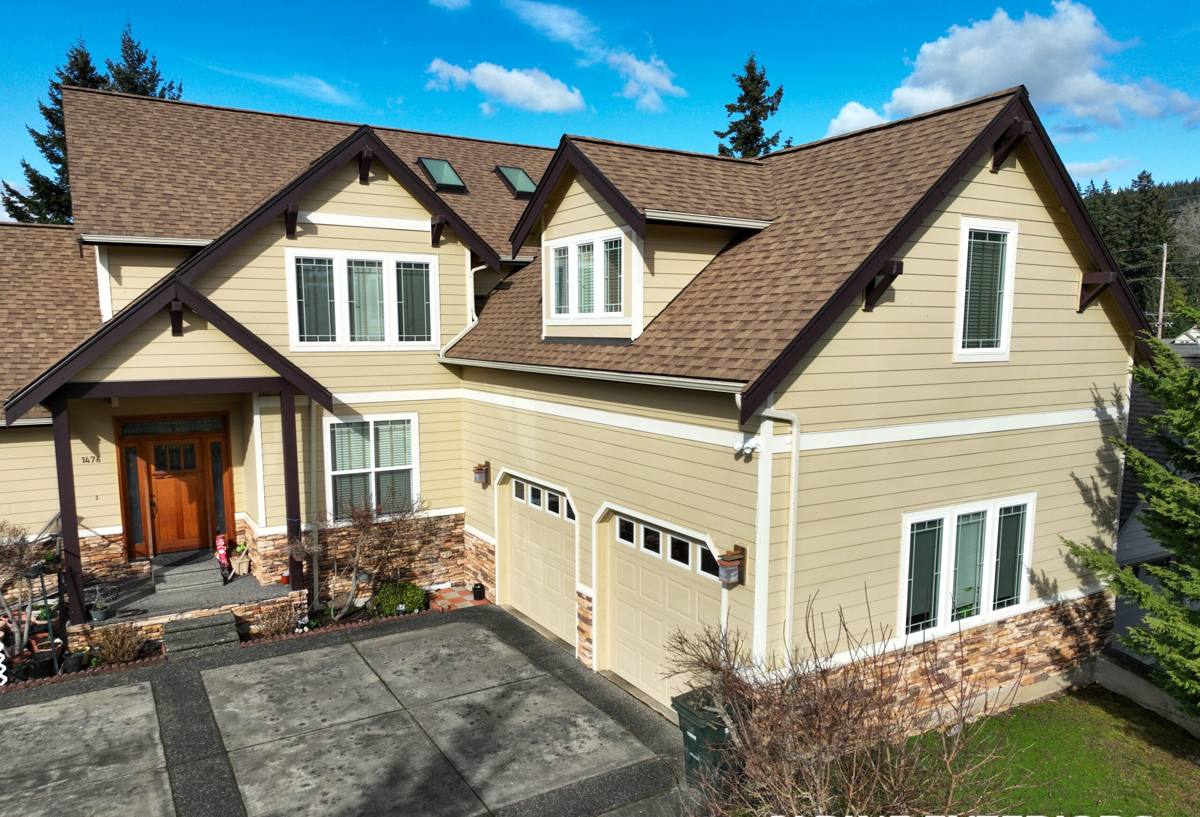
What Salt Air, Rain, and Moss Actually Do to Windows
Salt-Laden Air
Airborne salt is corrosive to exposed metal hardware, aluminum components, and even some window cladding finishes over time. On homes close to the bay, we see pitting on cheaper hardware, chalking on lower-grade finishes, and corrosion around fasteners years before it would show up on an inland home. It's not dramatic — it's slow, and it's easy to miss until a lock mechanism starts binding or a sash won't seat properly.
Driving Rain and Wind-Driven Moisture
Whatcom County storms regularly push rain sideways against west- and south-facing walls. A window that would stay dry under a calm, straight-down rain in a milder climate gets tested hard here. Weak flashing details, gaps in sill pan drainage, or a sloppy sealant job show up as water staining on interior trim or drywall — often well after the storm, once water has worked its way behind the frame.
Moss and Prolonged Dampness
Long moss season means anything horizontal — sills, exterior trim, the tops of frames — stays damp for extended stretches. Wood that isn't properly primed and sealed on all six sides before installation will hold that moisture and start to soften or rot from the inside, even if the paint looks fine on the surface. Vinyl and fiberglass don't rot, but moss and algae still build up on any ledge that doesn't shed water cleanly, and that buildup traps moisture against whatever is underneath it.
Signs Your Peace Arch Home's Windows Need Attention
- Visible daylight or drafts around the frame when the house is otherwise sealed up
- Condensation forming between panes (a sign the seal has failed on a double- or triple-pane unit)
- Soft or spongy wood at the sill or lower frame corners
- Paint that's bubbling, peeling, or chalking faster than the rest of the exterior
- Hardware that's stiff, corroded, or won't lock flush anymore
- Green or black staining at the sill that keeps coming back after cleaning
- A noticeable jump in heating costs with no other explanation
- Water staining on interior trim or drywall below or beside the window after a heavy storm
Any one of these on its own might not mean much. Two or three together, especially on a wall that takes direct weather off the bay, usually means it's time to stop patching and start planning a real replacement.
What a Correct Window Replacement Job Actually Involves
Removal and Inspection
The old unit comes out carefully so we can see what's actually happening behind it — the state of the sheathing, the framing, and any existing flashing. This is the point where hidden rot or water damage from years of a bad seal shows up. It has to be dealt with before a new window goes in, not covered over.
Flashing and Moisture Management
This is the step that matters most for homes taking driving rain off the water. A correctly installed window uses a sill pan to catch and direct any water that gets past the primary seal, plus flashing tape integrated with the house's weather-resistive barrier in the right shingle-lap order — so water is always directed out and down, never trapped behind the frame. Skipping or rushing this step is the single most common reason window replacements fail early in this climate.
Choosing the Window for This Site
Frame material, glass package, and hardware all get chosen based on the wall's actual sun and rain exposure, not a one-size answer for the whole house. A wall facing the water gets different treatment than a sheltered side yard.
Sealing and Finish Work
Interior and exterior sealant beads, insulation around the frame, and trim work are finished to shed water and block air movement — not just to look clean. A tidy caulk line that isn't backed by a real air seal is cosmetic, not functional.
Choosing Materials for a Marine Climate
There's no single "best" window material — there's a best fit for a given wall, budget, and exposure. Here's how the common options hold up under salt air, wind-driven rain, and a long damp season:
| Frame Material | Salt Air Resistance | Moisture Behavior | Maintenance |
|---|---|---|---|
| Vinyl | Good — won't corrode or pit | Doesn't absorb water; drainage design matters most | Low; occasional cleaning |
| Fiberglass | Very good — stable and non-corrosive | Dimensionally stable in wet-dry cycling | Low |
| Wood (clad exterior) | Depends entirely on cladding quality and detailing | Vulnerable at any exposed or poorly sealed wood surface | Higher — requires ongoing inspection at joints |
| Aluminum | Weaker — prone to corrosion and pitting near salt water without a marine-grade finish | Conducts cold and can promote condensation | Moderate to high near the bay |
We tend to steer homeowners near the water away from bare or lower-grade aluminum for this reason — not because it can't be made to work, but because it demands a level of finish quality and upkeep that most budgets don't account for. It's a maintenance-burden and long-term-cost conversation, not a claim that any one brand or product is bad.
Our Process, Start to Finish
- On-site assessment of each window's exposure, current condition, and any hidden moisture damage
- Honest recommendation on frame material, glass package, and whether full-frame replacement or an insert makes sense for that opening
- Written estimate with no pressure to decide on the spot
- Removal, inspection, and repair of any rot or damage found behind the old unit before anything new goes in
- Installation with proper sill pan flashing, integrated weather barrier tie-in, and full perimeter air sealing
- Interior and exterior trim finished, hardware tested, and site cleaned up
- Walkthrough so you know how to operate and maintain the new windows in this climate
Why Local Experience Near Peace Arch Matters
A crew that only sees a handful of homes near the water each year treats every job like a generic install. A crew that regularly works this specific stretch of Whatcom County knows which walls take the worst of the winter storms, which older homes in the area tend to have hidden flashing problems from past work, and where moss buildup usually starts first. That familiarity shows up in fewer callbacks and windows that actually perform the way they're supposed to for the full length of their warranty — not just the first dry summer.
What Affects the Cost of a Window Replacement Here
| Factor | Why It Matters |
|---|---|
| Number and size of openings | More or larger windows mean more material and labor |
| Full-frame vs. insert replacement | Full-frame costs more but is often required when there's rot or when flashing needs correcting |
| Frame material and glass package | Fiberglass and higher-performance glass cost more upfront than basic vinyl |
| Wall exposure | Water-facing walls may need extra flashing detail or drainage work |
| Existing damage | Hidden rot found during removal adds repair scope before the new window goes in |
| Trim and finish work | Matching existing trim profiles or repainting adds time and material |
We don't quote a whole-house price off a phone call — every opening gets looked at, because the difference between a straightforward insert and a full-frame repair with rotted sheathing is significant, and we'd rather tell you that upfront than adjust the number mid-job.
Living With New Windows in This Climate
Even a correctly installed window benefits from a little seasonal attention here. Rinsing salt residue off frames and glass a few times a year, keeping gutters and nearby drainage clear so water isn't sitting against the wall, and checking sills for early moss or algae buildup before it spreads all go a long way. None of it is heavy maintenance — it's the kind of five-minute check that catches a small issue before it becomes a warranty call.
If your windows near Peace Arch are drafty, fogging between the panes, or showing water stains after storms, we're happy to take a look and give you a straightforward, no-pressure estimate — just fill out the form below.