 Semiahmoo Exterior
 Deck Building in Lynden: Built for This Ground and This Weather
Lynden decks live under a different set of conditions than decks built somewhere dry and inland. Whatcom County brings long stretches of steady rain, humidity that lingers into the afternoon, and moss growth that starts almost as soon as a surface stays damp for more than a day or two. Add the salt-tinged air that moves inland off the Semiahmoo shoreline on a west wind, and you have an environment that is genuinely harder on outdoor lumber, fasteners, and finishes than most manufacturers' warranty language assumes. A deck built here needs to be built for here — not for a catalog photo taken somewhere sunny.
We build and repair decks in Lynden as part of our regular service area, not as an occasional add-on. That matters because the right approach to framing, fastening, and finishing a Lynden deck is learned by watching how decks in this specific climate actually age over several wet seasons — not by reading a spec sheet once.
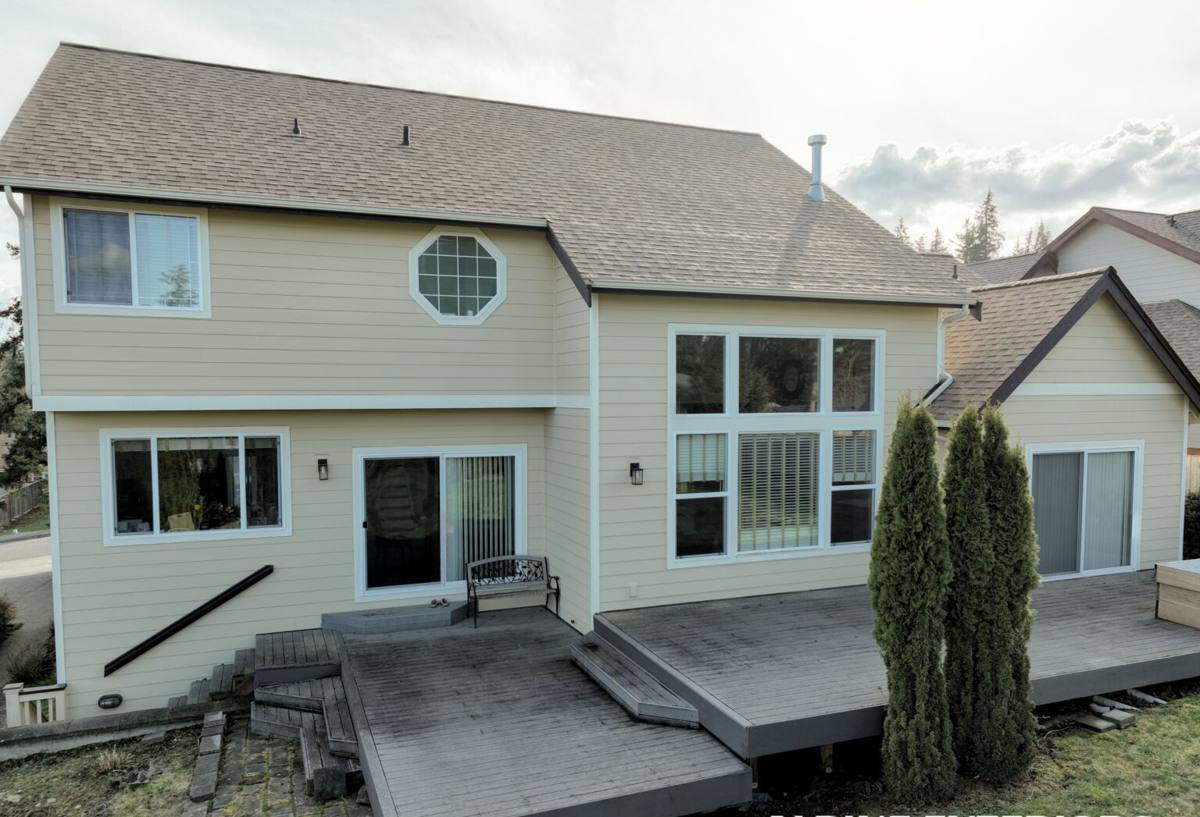
What Lynden's Climate Actually Does to a Deck
Before talking about materials or process, it helps to understand what's working against a deck once it's built.
Driving Rain and Standing Moisture
Whatcom County doesn't just get rain — it gets sustained, wind-driven rain that finds its way into joints, fastener holes, and ledger connections that would stay dry in a lighter climate. Water that isn't given a clear path off the deck surface and out from underneath the structure will sit, and sitting water is what starts rot, corrodes hardware, and lifts finishes.
A Long Moss and Algae Season
Moss and algae need shade, moisture, and time — Lynden decks, especially those under tree cover or on the north side of a house, get all three for most of the year. Moss isn't just cosmetic. It holds moisture against the deck surface, and on wood decking it can accelerate softening and rot in the boards underneath it.
Salt-Tinged Air
Semiahmoo's proximity to the water means the air carries a fine salt content that travels further inland than most homeowners expect. Salt exposure speeds up corrosion in fasteners, joist hangers, and any exposed metal hardware — which is one of the most common places we find deck failures starting, well before the visible decking boards show real damage.
Freeze-Thaw Cycling
Whatcom County winters aren't brutally cold, but they do dip below freezing often enough, and thaw often enough, that water trapped in wood grain, in a crack, or under a poorly sealed fastener will expand and contract repeatedly. Over a few seasons, that cycle opens up small problems into larger ones.
What a Correctly Built Deck Needs Here
None of this means a deck can't hold up well in Lynden — it means the build has to account for these conditions from the ground up, not patch around them later.
- Proper drainage slope away from the house and off the deck surface, so water doesn't pool against the ledger board or foundation.
- Ledger board flashing installed correctly where the deck attaches to the house — this is the single most common source of hidden rot we find on older Lynden decks.
- Corrosion-resistant fasteners and hardware rated for coastal or wet-climate exposure, not standard interior-grade hardware.
- Joist tape or capping on framing lumber to keep fasteners from creating a moisture trap at every screw point.
- Airflow underneath the deck so the structure can dry out between rain events instead of staying damp continuously.
- Decking material chosen deliberately for how it handles sustained moisture, not just for upfront cost or appearance.
Decking Material Options for Lynden Homes
There isn't a single "best" decking material for every Lynden home — it depends on budget, how much upkeep the homeowner wants to do, and how shaded or exposed the site is. Here's how the common options actually compare in this climate.
| Material | Moisture Behavior Here | Maintenance in a Wet, Mossy Climate | General Cost Position |
|---|---|---|---|
| Pressure-treated wood | Handles moisture reasonably well if sealed and maintained; end grain and fastener points are the weak spots | Needs periodic cleaning, moss removal, and resealing to hold up long-term | Lower upfront cost |
| Cedar | Naturally moisture- and insect-resistant, but still needs finish maintenance in sustained wet conditions | Moderate — benefits from cleaning and refinishing on a regular cycle | Mid-range |
| Composite decking | Doesn't absorb moisture into the board itself, which helps with rot; can still grow surface moss/algae if not cleaned | Lower overall, but not maintenance-free — surface cleaning still matters | Higher upfront, lower ongoing |
Whatever material a homeowner chooses, the framing and fastening underneath it matters just as much as the surface — a composite deck built on poorly protected framing will still fail from the structure up.
Repair, Rebuild, or New Build — How We Assess a Lynden Deck
Not every deck problem means starting over. When we look at an existing deck in Lynden, we're checking a specific set of things to figure out what stage it's actually at.
Signs a Deck Can Often Be Repaired
- Isolated soft spots in a few boards, with the framing underneath still solid
- Surface moss and graying that hasn't compromised the wood structurally
- Loose railings or stair treads from worn fasteners rather than rotted framing
Signs a Deck Needs Structural Attention or a Rebuild
- Soft or spongy framing near the ledger board attachment to the house
- Visible corrosion or failure in joist hangers and structural hardware
- Widespread rot that's spread past individual boards into the support structure
- A deck that was never properly flashed at the house connection to begin with
We'd rather tell a Lynden homeowner honestly that a deck has another few good years in it with targeted repair than sell a full rebuild that isn't needed — and just as honestly flag it when the structure really has reached the end of its safe service life.
Our Deck Building Process
The process for a new deck or a full rebuild in Lynden generally moves through these stages:
- On-site assessment. We look at the site's exposure, drainage, sun/shade pattern, and connection point to the house before recommending anything.
- Design and material selection. We walk through decking material trade-offs honestly, based on the home's specific conditions and the homeowner's maintenance preferences and budget.
- Permitting. Deck projects in Whatcom County typically require permitting depending on size and height — we handle that coordination as part of the project.
- Framing and structural work. This is where climate-specific detailing matters most: ledger flashing, corrosion-resistant hardware, proper joist spacing, and drainage slope get built in at this stage, not added afterward.
- Decking installation. Boards are installed with attention to spacing for drainage and airflow — too tight and water sits, too loose and the surface feels unfinished.
- Railings, stairs, and finish work. Final structural elements and any staining or sealing get completed and inspected.
- Walkthrough. We go over basic care — cleaning frequency, moss prevention, and what to watch for — so the deck holds up between our visits.
Ongoing Care That Actually Matters in This Climate
A well-built deck in Lynden still needs some seasonal attention — the climate doesn't let any exterior surface go completely maintenance-free.
- Sweep leaves and debris off the surface regularly, especially in fall, so moisture doesn't get trapped against the boards.
- Clean moss and algae off the surface before it spreads — the earlier it's addressed, the easier and less damaging the cleaning.
- Check railings and stair connections periodically for looseness, since corrosion and freeze-thaw cycling work on fasteners over time.
- Reseal or refinish wood decking on the schedule appropriate to the product — skipping this is one of the fastest ways to shorten a wood deck's life here.
- Keep an eye on the area where the deck meets the house — this is the highest-risk spot for hidden moisture problems.
Why Local Experience on This Specific Job Matters
A deck crew that mostly works drier inland climates will often build to a generic standard — adequate somewhere else, undersized for what Lynden actually throws at a structure over a few wet seasons. We work in Whatcom County regularly enough to know which fastener grades hold up against the salt content in the air here, which drainage details actually keep water off a ledger board through a real Pacific Northwest winter, and which decking choices tend to disappoint homeowners once the moss season sets in. That's not a marketing point — it's the difference between a deck that needs real attention in five years and one that's still solid in fifteen.
Get an Honest Look at Your Lynden Deck Project
Whether you're planning a new deck, replacing an aging one, or just want a straight answer on whether your current deck needs repair or replacement, we're glad to come take a look. There's no pressure and no obligation — just a clear, honest assessment based on what your specific property and structure actually need. Use the form below to request a free estimate.