 Semiahmoo Exterior
 Why Birch Bay Siding Takes a Different Approach
Birch Bay sits close enough to the water that salt air is part of daily life for every home in the area, not just the ones with a direct water view. Combine that with the driving winter rain that comes off the Strait and the long, damp shoulder seasons that let moss and algae get a foothold on north-facing walls, and you've got a climate that is genuinely harder on exterior siding than most inland parts of Whatcom County. A siding installation done for a home in Bellingham's south hill or out in the county's drier pockets doesn't need to account for the same combination of salt exposure, wind-driven moisture, and moss pressure that a Birch Bay home does. That's the starting point for how we approach every siding job in this neighborhood.
This page is about siding installation specifically for Birch Bay homes — what the local conditions demand from the material and the install, what a correct job actually involves, and why the details matter more here than they do twenty miles inland.
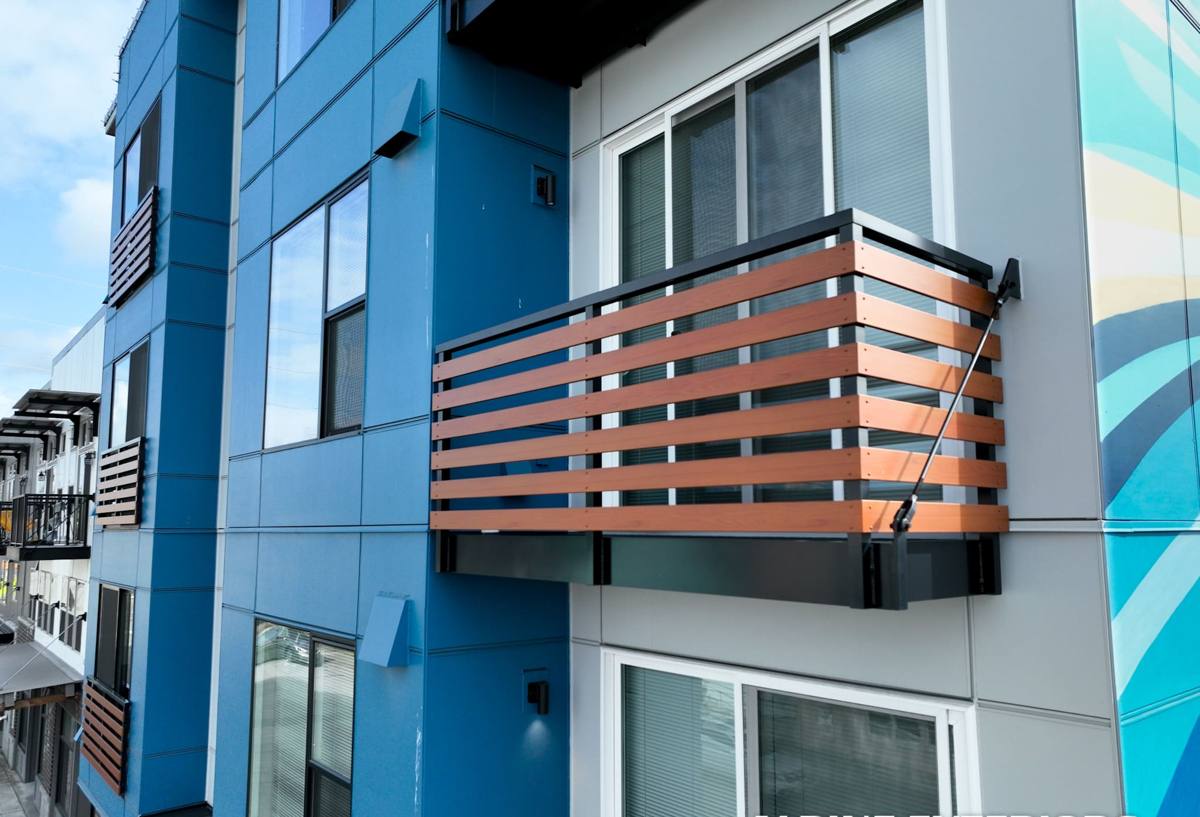
What Birch Bay's Climate Does to Siding
Salt Air
Airborne salt is corrosive to exposed metal fasteners and trim, and it accelerates the breakdown of coatings and finishes that aren't built to handle it. Over years, siding products with weaker factory finishes chalk, fade, and lose their seal faster in a salt-air environment than they would a few miles inland. Fastener choice and finish quality both matter more here than the spec sheet numbers alone suggest.
Driving Rain
Wind-driven rain off the water doesn't just wet a wall — it pushes moisture sideways and upward into laps, seams, and penetrations that would stay dry in a calmer rain event. Siding systems and installation details that rely on gravity alone to shed water can fail in exactly these conditions. Proper lap coverage, correctly sequenced flashing, and tight seams around windows and doors aren't optional extras in Birch Bay; they're the difference between a wall that stays dry and one that doesn't.
Moss and Algae Season
Whatcom County's damp season runs long, and Birch Bay's proximity to the water keeps humidity elevated even on days that aren't actively rainy. North- and west-facing walls, and anything shaded by trees or a neighboring structure, are prone to moss and algae growth if the siding surface holds moisture or has a texture that gives spores somewhere to grip. The finish and the drainage behind the siding both affect how much of a moss problem a wall develops over time.
What a Correct Siding Installation Involves
Siding is a system, not just a product. A wall that fails prematurely in Birch Bay almost never fails because the panel itself was bad — it fails because something behind or around the panel wasn't done right. A correct installation covers each of these layers:
- Substrate inspection — checking the sheathing underneath the old siding for rot, soft spots, or prior water damage before anything new goes up
- Weather-resistive barrier — a continuous, properly lapped water-resistive barrier installed shingle-style so water sheds downward and outward, never inward
- Flashing at every penetration — windows, doors, hose bibs, vents, and any other wall penetration get flashed so driving rain can't work its way behind the siding
- Correct fastening — the right fastener type, length, and placement for the specific siding product and substrate, driven to the manufacturer's spec rather than just "snug"
- Proper lap and clearance — correct overlap between courses, and proper clearance from grade, roof lines, and decks so water and moisture don't sit against the bottom edge of the siding
- Caulking and sealant only where specified — over-caulking traps moisture behind siding just as often as under-caulking lets it in; the manufacturer's install guide tells you which joints get sealed and which don't
Skip or shortcut any one of these steps and the siding on top can look fine for a year or two before problems start showing up underneath — usually as rot, staining, or a section that needs to come off entirely to find out what went wrong.
Why We Install James Hardie — and Only James Hardie
We standardized on James Hardie fiber cement siding for every job we do, including here in Birch Bay, and we don't install vinyl, LP SmartSide, primed spruce, cedar, or other fiber cement brands. That's a deliberate choice, not a default.
Fiber cement is non-combustible, which matters in a region where wildfire smoke and fire-season awareness have become a normal part of Pacific Northwest summers. Hardie's ColorPlus factory finish is baked on under controlled conditions rather than field-painted, which gives it better adhesion and more consistent UV and salt-air resistance than a job-site paint job can match. Hardie also engineers specific product lines (their HZ5 line, for example) for regions with more moisture exposure — which is exactly the profile Birch Bay fits. And the warranty is transferable, which matters to anyone who might sell the home down the road.
We're not going to pretend other products don't have their place — vinyl is inexpensive and low-maintenance in mild climates, cedar has genuine natural appeal, and LP SmartSide has improved over the years. But in a salt-air, high-moisture, moss-prone environment like Birch Bay, we've seen enough of how these materials age over a decade or two of real Pacific Northwest weather to know which one holds up with the least maintenance and the fewest surprises. That's Hardie, installed correctly. We'd rather do one product exceptionally well than several products adequately.
Siding Options: How They Hold Up in a Salt-Air, High-Moisture Climate
| Material | Salt Air Resistance | Moisture/Rot Risk | Moss/Algae Resistance | Maintenance |
|---|---|---|---|---|
| James Hardie Fiber Cement | Strong — non-metallic core, factory finish holds up well | Very low when installed to spec | Good — dense surface resists spore adhesion | Occasional wash; repaint not needed for years |
| Vinyl | Fair — can chalk and become brittle faster near salt air | Low rot risk itself, but traps moisture if installed poorly | Moderate — textured/patterned vinyl can hold moss spores | Low, but cracks and warps over time and can't be repainted easily |
| Cedar | Fair — natural material but finish breaks down faster near salt | Higher — organic material, vulnerable if finish fails | Poor — natural wood texture is moss-prone in damp shade | High — refinishing, sealing, and moss treatment needed regularly |
| LP SmartSide / Primed Wood | Fair — engineered wood, finish quality is critical | Moderate to higher — wood-based core is moisture-sensitive | Moderate | Moderate to high — finish maintenance matters a lot |
Our Installation Process in Birch Bay
1. On-Site Assessment
We walk the home, check the existing siding and what's underneath where visible, and look specifically at areas most exposed to salt-laden wind and driving rain — corners, west- and south-facing walls, and anything near the water side of the lot.
2. Tear-Off and Substrate Check
Old siding comes off and we inspect the sheathing underneath for rot or moisture damage before anything new goes up. Any compromised sheathing gets addressed before the new siding system goes on — covering over a wet or rotted substrate just hides a problem that gets worse.
3. Weather Barrier and Flashing
A continuous weather-resistive barrier goes on, properly lapped, with flashing installed at every window, door, and penetration. This is the step that does the most work in a driving-rain, salt-air environment, and it's the step that's invisible once the siding goes up — which is exactly why it has to be done right the first time.
4. Hardie Installation to Manufacturer Spec
Panels or planks go up with the correct fasteners, correct lap, and correct clearances, following James Hardie's published installation instructions for the specific product line and this climate zone.
5. Final Walkthrough
We walk the finished job with the homeowner, checking seams, trim, and caulking, and go over basic care so the siding performs the way it's supposed to for the long haul.
Why a Crew That Already Works Birch Bay Matters
A siding crew that mostly works inland jobs doesn't run into salt-air corrosion on fasteners or trim on a regular basis, and they may not think twice about it. A crew that works Birch Bay and the surrounding Whatcom County coastline sees it often enough to build it into every material and fastener decision without being asked. The same goes for flashing details around driving rain and for reading which walls on a given lot are going to be moss-prone based on sun exposure and tree cover. None of this is exotic knowledge — it's just familiarity that comes from doing the work in this specific environment repeatedly, rather than treating every coastal job as a one-off.
Before You Hire: A Practical Checklist
- Ask what weather-resistive barrier and flashing details they use — and whether they can explain why, not just what
- Confirm they're installing to the siding manufacturer's written specifications, not just "how we usually do it"
- Ask how they handle fastener selection for salt-air exposure
- Ask whether they inspect and address substrate condition before re-siding, not just over it
- Get a clear answer on warranty coverage — both the material warranty and their own workmanship warranty
- Ask whether they've worked in Birch Bay or similar coastal Whatcom County conditions before
What This Means for Your Project
Every Birch Bay home is a little different — some sit closer to the water and take more direct salt exposure, some are more sheltered by trees or terrain but deal with more shade-driven moss instead. A correct siding installation accounts for the specific exposure of your walls, not just a generic regional spec. That's why we look at the actual home before we talk products or pricing.
If your current siding is showing moss buildup, staining, cracking, or you're just planning ahead for a home that can handle what Birch Bay's climate throws at it, we're happy to take a look and walk you through what a proper Hardie installation would involve for your specific home. Reach out for a free, no-pressure estimate using the form below.