 Semiahmoo Exterior
 Storm Damage Roof Repair Built for Wiser Lake Conditions
Homes around Wiser Lake sit in a part of Whatcom County that takes weather seriously. Winter windstorms roll through with real gusts, driving rain works its way sideways under loose shingles and flashing, and the salt-tinged air blowing in off the Strait of Georgia adds a corrosion factor that inland roofs simply don't deal with. Add a moss season that can run half the year in a shaded, moisture-heavy climate like this one, and you've got a roof that's under more or less constant low-grade stress even before a real storm hits.
Storm damage roof repair here isn't just about patching what a single bad night did. It's about looking at a roof that was already carrying wear from salt exposure and moss growth, and making sure the repair addresses the storm damage without leaving those underlying problems to cause the next leak. That's the standard we hold ourselves to on every Wiser Lake roof we work on.
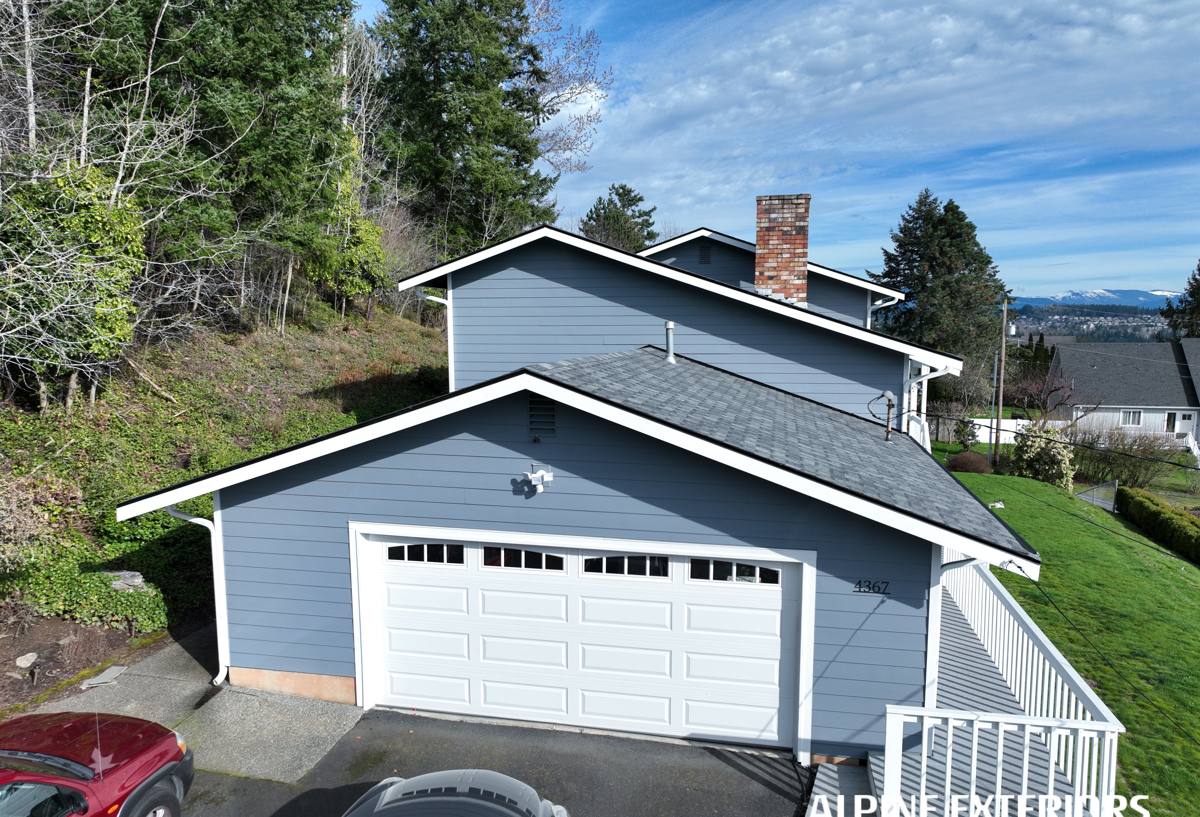
What Winter Storms Actually Do to a Wiser Lake Roof
Wind and rain rarely damage a roof in the dramatic way homeowners picture. Most storm damage is quieter than that, and it's often invisible from the ground.
Wind Damage
Sustained gusts and sharper wind events can lift shingle tabs, crack sealant strips, and loosen ridge cap shingles along the peak — usually the first place to fail because it takes the brunt of wind uplift. Once a shingle's seal is broken, it may look fine from the driveway but no longer sheds water the way it's designed to.
Wind-Driven Rain
This is the one that causes the most water intrusion. When rain is being pushed horizontally instead of falling straight down, it can work its way under shingle edges, around chimney and vent flashing, and into any gap that a calm-weather rain would never reach. A roof that's handled years of normal Pacific Northwest rain can still leak during a storm that drives water at an angle.
Debris Impact
Falling branches and windblown debris can bruise or crack shingles, dent metal flashing and gutters, and in harder hits, puncture the roof deck itself. Impact damage doesn't always show up as an obvious hole — sometimes it's a soft spot that only becomes clear once you're standing on it.
Moss and Moisture Working Together
Moss doesn't cause storm damage directly, but it sets the stage for it. Moss mats hold moisture against the shingle surface, lift edges as they grow, and clog the small channels water needs to drain through. A roof with established moss going into a storm is already compromised — the storm just finds the weak points faster.
Why Salt Air and Long Moss Seasons Change the Repair Approach
A storm repair in a drier inland climate can sometimes get away with a straightforward patch. That's not the case this close to the water.
- Fasteners and flashing corrode faster. Salt-laden air accelerates rust on exposed nail heads, metal flashing, and gutter hardware. A repair that uses standard-grade fasteners may hold for a season and then start failing again from corrosion, not storm stress.
- Moss regrowth is close to guaranteed if it's not addressed. Repairing a storm-damaged section without dealing with moss nearby just sets up the same failure again next wet season.
- Moisture doesn't dry out quickly here. In a climate with long stretches of overcast, damp weather, a roof deck that's absorbed water from a storm leak can stay wet longer than it would in a sunnier region, which raises the risk of rot if the repair isn't thorough.
- Underlayment condition matters more. Because this roof type sees more cumulative moisture exposure over its life, the underlayment beneath storm-damaged shingles is more likely to already be compromised, not just the visible shingle layer.
This is why we don't treat storm repair as a cosmetic fix. We check what the storm damaged, but we also check what the storm exposed.
How We Approach a Storm Damage Repair at Wiser Lake
1. Ground and Roof-Level Inspection
We start by walking the property and then getting on the roof itself. Storm damage is often missed from the ground — a lifted shingle tab, a cracked pipe boot, or bent flashing rarely shows up in a driveway glance. We check the roof surface, flashing points, valleys, and any areas where moss has been established, since those are the spots most likely to have hidden weak points.
2. Identify the Full Scope, Not Just the Obvious Damage
If a homeowner calls about a leak in one room, we don't stop once we find the shingle that caused it. We check the surrounding area for related wear — because in a climate like this, one failure point is often a sign of others nearby that just haven't leaked yet.
3. Interior Check for Water Intrusion
Where accessible, we look at the attic or roof deck from the underside for staining, damp insulation, or soft wood. Catching moisture early, before it spreads or leads to rot, keeps a storm repair from turning into a bigger structural job later.
4. Repair Using Materials Suited to the Environment
We match shingles as closely as possible to the existing roof, use corrosion-resistant fasteners and flashing appropriate for a coastal-influenced climate, and make sure underlayment and flashing details are sealed correctly — not just covered over.
5. Clean-Up and Documentation
We clear debris from the repair area and document the damage and the work performed, which matters if you're filing an insurance claim.
Repair vs. Replacement: How We Help You Decide
Not every storm-damaged roof needs a full replacement, and not every roof can be responsibly patched and called good. The right call depends on the roof's age, how much of the surface is affected, and what condition the underlying materials are in.
| Factor | Favors Repair | Favors Replacement |
|---|---|---|
| Roof age | Under 12-15 years, standard asphalt shingle | Nearing or past expected lifespan |
| Extent of damage | Isolated to one section or slope | Spread across multiple areas or slopes |
| Moss/moisture history | Minimal moss, deck appears dry | Established moss, signs of deck moisture or rot |
| Shingle match availability | Close match available | Discontinued style, visible mismatch likely |
| Underlying flashing/decking condition | Sound, just needs the damaged section addressed | Corroded flashing or soft decking found during inspection |
We'll walk you through what we find and give you an honest read on which side of that table your roof falls on — we're not going to sell a full replacement when a proper repair will genuinely hold up, and we're not going to patch something that's going to fail again in a year.
What to Check After a Storm, Before You Call
A quick, safe look around your property can help you describe the problem accurately when you do call for an inspection.
- Check gutters and the ground below the roofline for shingle granules, torn shingle pieces, or metal flashing debris
- Look for visible gaps, lifted edges, or missing shingles from a safe distance — binoculars work better than a ladder
- Check ceilings and attic spaces (if accessible) for new staining, discoloration, or damp spots
- Note any large branches or debris that came down near the roof, even if you don't see damage yet
- Check that downspouts are draining properly and not backed up with storm debris or displaced moss
- Photograph anything unusual before cleanup, in case it's useful for an insurance claim later
If anything on that list looks off, it's worth getting an inspection before the next storm system comes through, rather than waiting for a leak to show up indoors.
Working With Insurance on Storm Damage Claims
Many storm damage repairs are eligible for insurance coverage, particularly when wind or falling debris caused clear, datable damage. We provide the documentation — photos, a written description of the damage, and our assessment of cause — that most insurance adjusters need to process a claim. We're not a public adjuster and won't promise a specific claim outcome, but we can make sure the roofing side of your claim is backed by an accurate, professional inspection rather than guesswork.
Why Local Storm-Repair Experience Matters at Wiser Lake
A roofing crew that mostly works drier, calmer regions of the state doesn't necessarily think about salt-air corrosion or long moss seasons as part of a standard repair. Around here, those factors aren't occasional considerations — they're part of nearly every job. Knowing which flashing details tend to fail first in this climate, which fastener grades hold up, and how to spot moss-related deck moisture before it becomes a bigger problem comes from working roofs in Whatcom County specifically, not from general roofing experience alone.
We also know that storms here tend to come in waves through the fall and winter, which means a repair done in November needs to hold through several more weather systems before spring gives the roof a break. We build repairs with that stretch in mind, not just the storm that prompted the call.
Get a Free, No-Pressure Estimate
If a recent storm has left you with a leak, missing shingles, or just a nagging feeling that your roof took a hit, we're happy to come take a look. There's no obligation and no pressure — just an honest assessment of what's going on and what it would take to fix it right. Use the form below to request your free estimate.