 Semiahmoo Exterior
 Windows in Laurel Face a Tougher Job Than Most
Laurel sits close enough to the water off Semiahmoo that its homes take on a different kind of weather than houses even a few miles inland. Salt-laden air moves through the neighborhood on a regular basis, driving rain comes in sideways during winter storms, and the damp, low-light stretch from fall through spring gives moss and algae months to get established on anything that stays wet. Windows are one of the first things on a house to show the wear from all of that. A window that would last several decades in a dry inland climate can start failing years earlier here if it wasn't built or installed with this coastline in mind.
This page is about doing window replacement right for a Laurel home specifically — not a generic rundown of window types, but what actually matters when the house sits this close to Semiahmoo's salt air and weather.
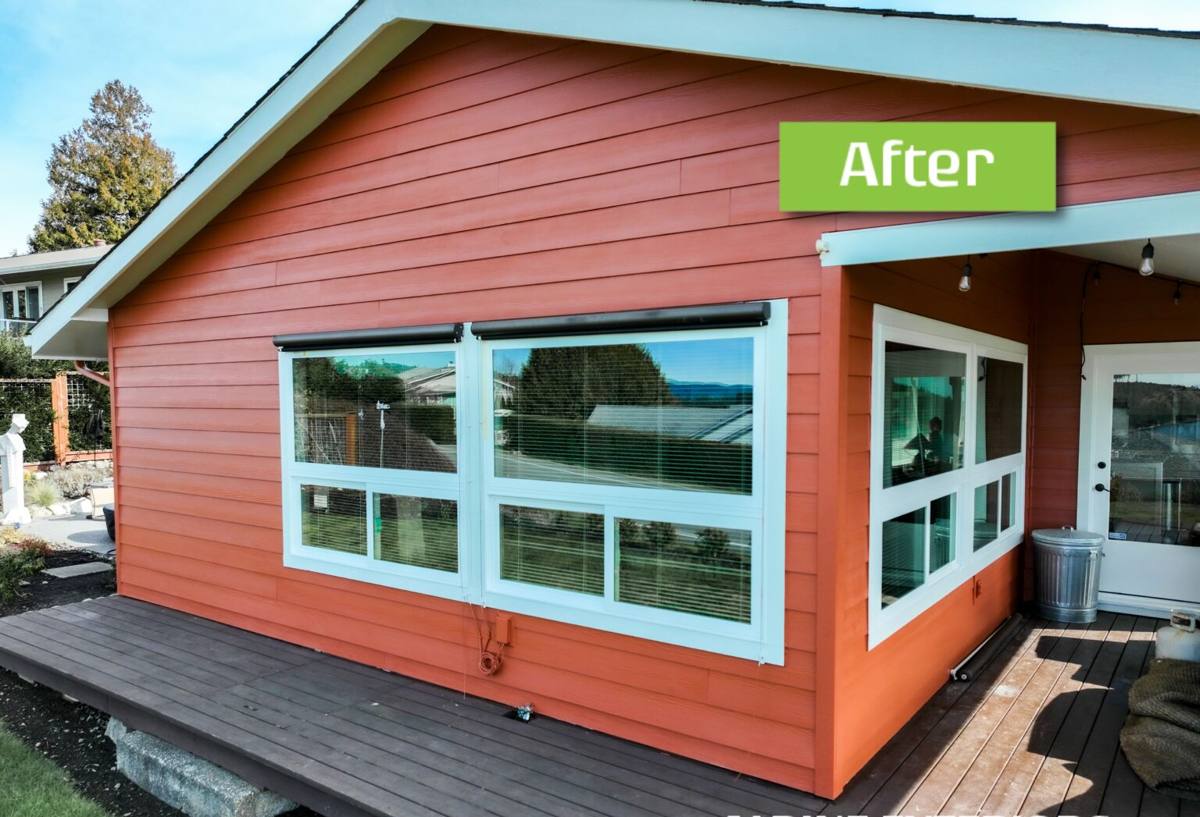
What Salt Air and Driving Rain Actually Do to a Window
Salt air is corrosive to metal hardware — hinges, locks, balance systems, and screen frames all take a slow beating even when the glass and frame look fine. Once corrosion starts on hardware, windows get harder to open and close, locks stop seating properly, and seals that depend on hardware alignment start to fail early.
Driving rain is a different problem. It doesn't just sit on a window the way ordinary rain does — wind pushes it sideways and upward against the frame, testing every seam, seal, and flashing detail. A window that's watertight in calm weather can still leak during a Whatcom County windstorm if the installation didn't account for wind-driven water. Most window leaks we find in this area trace back to installation and flashing, not the window unit itself.
Then there's moss and algae. Anywhere on a house that stays shaded and damp for long stretches — often around window sills, under eaves, and along north-facing walls — will grow moss over a long enough wet season. On windows, that usually shows up as green or black staining on sills and lower frames, and it holds moisture against the surface longer than it would otherwise sit there, which speeds up rot in wood components and accelerates finish breakdown on lower-grade vinyl.
Why This Matters More in Laurel Than It Would a Few Miles Inland
Proximity to the water means more airborne salt, more direct exposure to wind-driven rain off the strait, and a longer stretch of damp shade during the wet months. None of this means windows can't hold up here — it means the material, the glazing, and especially the installation details need to be chosen for this specific exposure rather than a one-size-fits-all approach.
What a Correct Window Replacement Job Actually Involves
Replacing a window is not just popping the old unit out and setting a new one in the same hole. Done correctly, it's a sequence of steps where any shortcut becomes a future leak or a rot problem hidden behind trim:
- Remove the old window carefully to expose the rough opening and check the condition of the framing, sill, and sheathing underneath.
- Inspect for hidden damage. On a Laurel home, this is the step that matters most — old flashing failures often leave rot or moisture staining that isn't visible until the window comes out.
- Repair the opening before anything new goes in. A new window installed over a soft or damp sill just repeats the same failure on a delay.
- Install flashing correctly — sill pan flashing, side flashing, and head flashing layered so water is directed out and down, never trapped behind the siding.
- Set and shim the new window square and level, with the manufacturer's specified fasteners and clearances.
- Seal and insulate the gap between the frame and rough opening with the right materials — not just a bead of caulk covering the outside.
- Finish trim and exterior detailing so water sheds away from the window rather than pooling against it.
Every one of those steps matters everywhere, but on a home exposed to driving rain and salt air, the flashing and sealing steps are where most long-term problems start if they're rushed.
Choosing a Frame Material for This Climate
There's no single "best" window material for every house — it depends on the home's exposure, budget, and how much upkeep the owner wants to do. Here's how the common options hold up specifically against salt air, moisture, and maintenance demands:
| Frame Material | Salt Air / Corrosion Resistance | Moisture Behavior | Maintenance Load | General Cost Position |
|---|---|---|---|---|
| Vinyl (quality-grade) | Good — won't corrode, hardware quality varies by manufacturer | Doesn't absorb water; seals are the weak point | Low | Lower to mid |
| Fiberglass | Very good — dimensionally stable, resists corrosion well | Very stable in wet/dry cycling | Low | Mid to higher |
| Aluminum-clad wood | Cladding protects well; cut edges and joints need attention | Wood core can be vulnerable if seals fail | Moderate | Higher |
| Bare wood | Poor without diligent upkeep near salt air | Needs consistent finish maintenance to resist rot | High | Mid to higher |
| Uncoated aluminum | Weak — prone to pitting and corrosion over time near the water | Conducts moisture and cold; condensation-prone | Moderate to high | Lower |
For most Laurel homes, we lean toward quality vinyl or fiberglass as the practical, low-maintenance choice against salt air. We don't push bare wood or uncoated aluminum in this location — not because they're bad products everywhere, but because the maintenance burden and corrosion exposure this close to the water make them a harder sell for a homeowner who wants to install once and not think about it again for years.
Glass and Weatherproofing Choices That Matter Here
Beyond the frame, the glass package affects both comfort and moisture performance:
- Double-pane vs. triple-pane: Double-pane with a good low-E coating is adequate for most homes; triple-pane adds cost but helps with condensation resistance and comfort on north- and water-facing walls that take the brunt of the wind.
- Low-E coatings: Help manage heat loss and reduce interior condensation buildup, which matters during Whatcom County's long damp stretch when indoor humidity and cold glass combine to fog windows.
- Argon or krypton gas fill: Improves insulation value without changing the window's appearance.
- Weep holes and drainage paths: Any window that can hold wind-driven water needs a clear path for it to drain back out — these need to stay unobstructed, especially where moss and debris tend to build up.
None of these choices matter if the installation around them leaks — glass package and flashing work together, not as substitutes for each other.
Signs a Laurel Home's Windows Are Due for Replacement
Some problems are obvious; others hide until they're worse. Worth checking for:
- Windows that are hard to open, close, or lock — often a sign hardware has started to corrode
- Visible condensation between panes, meaning the seal has failed
- Soft or discolored trim and sill areas around the window
- Green or black staining on sills or lower frames from moss and algae
- Drafts or a noticeable temperature difference near the window in winter
- Peeling paint or bubbling finish on wood-framed windows
- Visible daylight or gaps around the frame
- A musty smell near a window that suggests trapped moisture behind the wall
One or two of these can often be repaired. Several at once, or any sign of rot in the surrounding wall framing, usually means replacement is the more honest recommendation.
Our Process, Start to Finish
We keep the process straightforward and try to avoid surprises:
- Walkthrough and assessment — we look at each window in question, check the surrounding wall condition, and talk through what's actually needed versus what could wait.
- Honest written estimate — covering the window package, labor, and any framing repair we expect to find.
- Scheduling around weather — we plan installs to minimize how long an opening sits unprotected, which matters in a climate where a sudden squall off the water is always a possibility.
- Installation with full flashing and sealing detail — no shortcuts on the steps that determine whether the window still performs in ten years.
- Final walkthrough — checking operation, seals, and exterior finish before we consider the job done.
Why It Matters That We Already Work in Laurel
A crew that regularly works homes in and around Laurel and the broader Semiahmoo area already has a working sense of which wall assemblies, siding types, and window ages show up most often in this neighborhood, and where moisture problems tend to concentrate given the local exposure to wind and salt air. That's not a substitute for a proper on-site inspection of your specific house, but it does mean fewer surprises and a crew that isn't guessing at how Whatcom County's coastal weather behaves on a real job site.
If your Laurel home has windows that are sticking, fogging, staining, or just past their reasonable service life, we're happy to take a look and give you a straightforward, no-pressure estimate — no obligation, just an honest read on what your windows actually need. The form below is the easiest way to get that scheduled.