 Semiahmoo Exterior
 New-Construction Windows for Drayton Harbor Homes
Drayton Harbor sits right up against the water in the Semiahmoo area of Whatcom County, and that location shapes everything about how a window should be built into a home here. Whether you're framing a new house, finishing an addition, or doing a full tear-out replacement down to the studs, "new-construction" windows are installed differently than a simple retrofit — and getting that installation right matters more here than it does inland, where the weather is easier on a building envelope.
This page covers what new-construction window installation actually involves, what Drayton Harbor's climate demands from the materials and methods, and how we approach the work so the windows we put in still look and perform the way they should years down the road.
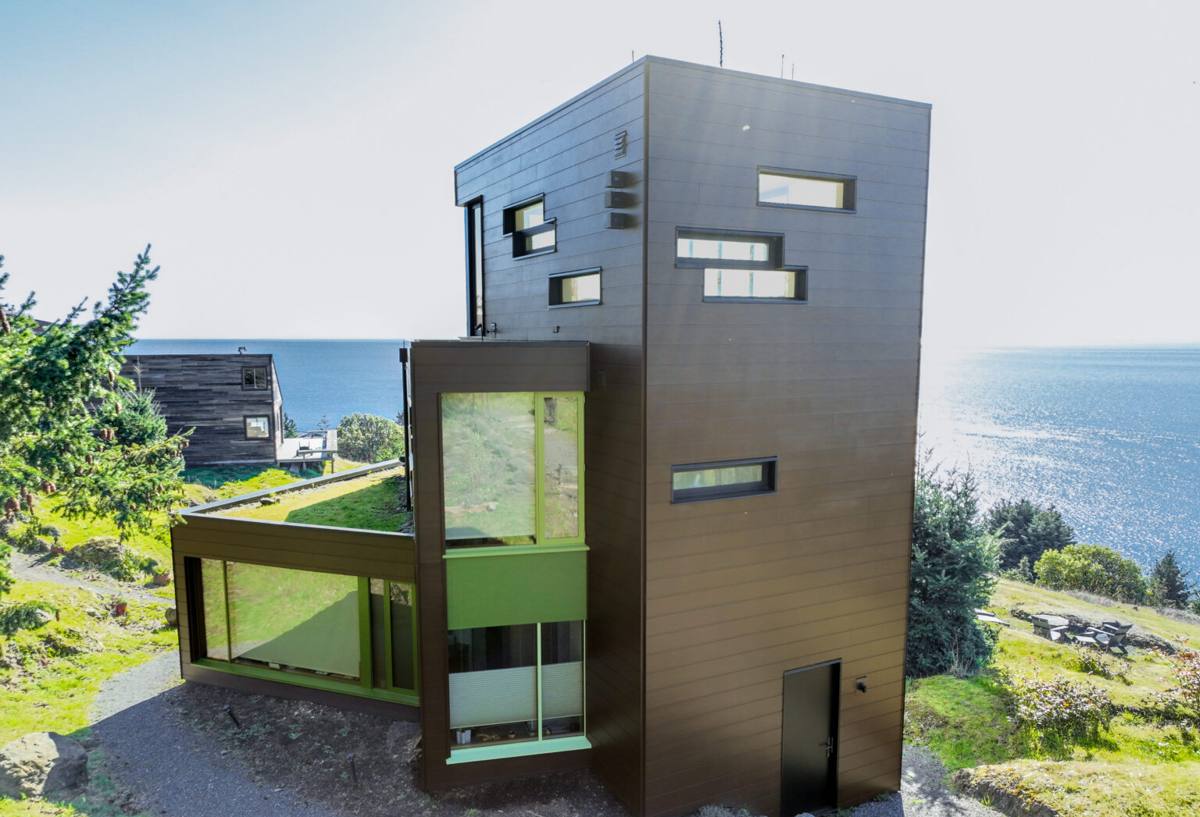
New-Construction vs. Retrofit: Why the Distinction Matters
"New-construction" windows have a nailing fin (or flange) around the perimeter of the frame. That fin gets integrated directly into the wall's weather-resistive barrier — the house wrap, flashing tape, and sheathing — before siding or trim goes back on. A retrofit or "pocket" window, by contrast, gets inserted into an existing frame with the old exterior trim staying in place, relying more on sealant and less on a fully rebuilt water management system around the opening.
For new builds, additions, and full-frame replacements where the siding is coming off anyway, new-construction windows are the correct choice. They let us rebuild the flashing and drainage plane from scratch instead of working around what's already there. In a location like Drayton Harbor, where wind-driven rain and salt-laden air are a regular part of the weather pattern, that fresh, fully integrated water management layer is the difference between a window that performs for decades and one that starts letting moisture into the wall cavity within a few years.
When New-Construction Installation Is the Right Call
- Building a new home or accessory structure
- Adding a room, sunroom, or bump-out where new wall framing is involved
- A full re-side project where siding is already being stripped down to the sheathing
- Replacing windows on a home with known water intrusion history around openings
- Upgrading frame material (for example, moving from aluminum to vinyl or fiberglass) where the rough opening needs adjustment
What Drayton Harbor's Climate Does to Windows Over Time
Drayton Harbor's proximity to the water means homes here deal with a combination that's tougher on windows than most inland Whatcom County neighborhoods:
Salt Air
Airborne salt from the harbor and the Strait accelerates corrosion on any exposed metal — hardware, hinges, screen frames, and especially aluminum components. It also breaks down cheaper finishes and coatings faster than a standard product warranty usually anticipates. This is one of the biggest reasons frame material and hardware choice deserve real thought here rather than defaulting to whatever's cheapest.
Driving Rain
Storms coming off the water don't just fall straight down — wind pushes rain sideways into wall assemblies with real force. A window opening that relies only on caulk and hope, rather than properly lapped flashing and a sloped sill pan, will eventually take on water during a hard blow. This is exactly the failure mode that separates a correctly done new-construction install from a rushed one.
Long Moss and Mildew Season
The Pacific Northwest's extended damp season means anything that traps moisture — poor drainage at a sill, debris sitting in a track, shaded and slow-drying trim — becomes a growth surface for moss, algae, and mildew for much of the year. Window design and installation details that promote drainage and airflow reduce how much of this problem shows up around your openings.
What a Correct New-Construction Install Actually Involves
A window is only as good as the opening it sits in. The install sequence matters as much as the window itself, and skipping steps is where most long-term problems start.
- Rough opening inspection — checking that framing is square, plumb, and properly sized before anything else happens.
- Sill pan flashing — a sloped, waterproof pan at the base of the opening so any water that gets past the window has a built-in path back outside instead of soaking into the framing.
- Flashing tape and house wrap integration — flashing the sides and top in the correct shingle-lap order (bottom to top) so water is always directed outward and downward, never trapped behind the wrap.
- Setting and shimming the window — leveling and securing the frame without racking it, which affects both operation and long-term seal performance.
- Fastening through the nailing fin — into solid framing per the manufacturer's schedule, not just tacked in a few spots.
- Sealing and backer rod at the interior and exterior — the right sealant in the right location, not caulk used as a substitute for proper flashing.
- Trim and siding tie-in — finishing the exterior so water sheds past the window rather than pooling at the head or sill.
Any one of these steps done wrong can undo the benefit of an otherwise good window. This is the part of the job that doesn't show up in a product brochure but determines whether the install holds up through a few decades of Drayton Harbor winters.
Choosing a Frame Material for This Location
There's no single "best" frame material for every home — it depends on your budget, your home's style, and how much upkeep you want to take on. Here's how the common options hold up specifically against salt air, driving rain, and a long damp season:
| Frame Material | Salt Air / Corrosion | Moisture Handling | Upkeep |
|---|---|---|---|
| Vinyl | Very good — won't corrode | Good when properly flashed; won't rot | Low — occasional cleaning |
| Fiberglass | Excellent — very stable, resists pitting | Excellent dimensional stability in wet/dry cycles | Low |
| Wood-clad | Fair — cladding protects wood, but any breach invites rot | Requires intact cladding and good detailing at joints | Moderate to higher — watch cladding seams |
| Aluminum | Poor without marine-grade coatings — prone to corrosion near salt water | Conducts moisture and cold readily | Higher near the coast |
Near Drayton Harbor specifically, we steer most homeowners away from standard aluminum frames and uncoated hardware because of how quickly salt exposure attacks the metal here — it's not that aluminum is a bad product broadly, it's that this particular environment is hard on it. Vinyl and fiberglass tend to be the more maintenance-friendly, longer-performing choices for waterfront and near-waterfront properties.
Our Process for New-Construction Window Work
We keep the process straightforward and don't cut corners on the parts that don't show once the trim goes back on:
- On-site assessment — we look at rough openings, existing wall assembly (for replacements), and site exposure to wind and rain direction.
- Material and sizing plan — matched to your home's design, budget, and how exposed that elevation is to weather off the water.
- Flashing and drainage plan — built for this climate, not a generic inland install.
- Installation — following manufacturer fastening and flashing specs, which also keeps warranty coverage intact.
- Final inspection and walkthrough — checking operation, seals, and trim before we call the job done.
Common Mistakes We See on Older or DIY Installs
- Caulk used in place of proper flashing and a sill pan
- Flashing tape lapped in the wrong order, funneling water behind the wrap instead of out
- Fasteners missing solid framing, leaving the window loose over time
- Aluminum or uncoated hardware installed on exposed, water-facing elevations
- Trim details that let water sit at the sill instead of shedding away
Living With Your Windows in a Salt-Air, Moss-Prone Climate
Even a correctly installed window benefits from some seasonal attention in this environment.
- Rinse salt residue off exterior frames and glass periodically, especially after storms
- Clear debris from tracks and weep holes so water can drain as designed
- Check and refresh exterior sealant joints every couple of years — sealant is a wear item, not a permanent fix
- Keep nearby vegetation trimmed back to reduce shade and trapped moisture around openings, which slows moss and mildew growth
- Inspect hardware and hinges for early corrosion, particularly on elevations facing the water
What Affects the Cost of a New-Construction Window Project
| Factor | Why It Matters |
|---|---|
| Frame material | Fiberglass and higher-end vinyl cost more upfront but need less upkeep near the water |
| Number and size of openings | More and larger windows mean more flashing, labor, and material |
| Wall complexity | Multiple stories, tricky rooflines, or scaffolding needs add labor time |
| Existing condition (replacements) | Rot or water damage found once siding comes off adds repair scope |
| Trim and exterior finish | Custom trim work or matching existing architectural detail affects cost |
We give straightforward, itemized estimates so you know what you're paying for and why — there's no reason a window quote should be a mystery.
Why Hire a Crew That Already Works in Drayton Harbor
A crew that regularly works this stretch of Whatcom County near Semiahmoo already knows which elevations take the worst of the wind-driven rain, how aggressively salt air here attacks unprotected hardware, and how long moss season really runs in a given year. That local familiarity shows up in small decisions — flashing details, material recommendations, sealant choice — that a crew unfamiliar with this specific coastal exposure might not think to make. It also means we're around locally if a question comes up after the job is done, not just passing through.
If you're planning new construction, an addition, or a full window replacement in Drayton Harbor, we're happy to walk the site with you and give you a straightforward, no-pressure estimate — just fill out the form below to get started.