 Semiahmoo Exterior
 Why Decks Near the Peace Arch Take a Beating
Homes close to the Peace Arch border crossing and along the Semiahmoo waterfront deal with a combination of conditions that most inland decks never see. Salt-laden air off Semiahmoo Bay and Drayton Harbor works into fastener heads, joist hangers, and any exposed metal, corroding it faster than a standard product datasheet assumes. Add Whatcom County's driving winter rain, which comes in sideways off the water more often than straight down, and water finds its way into ledger connections, stair stringers, and railing posts that were never properly flashed to begin with. Then there's the moss. Shaded, damp decking under mature trees or on the north side of a house holds moisture for weeks at a time, and that moss season stretches from fall through spring here. Wood that stays wet that long doesn't just look dirty — it starts to break down from the inside.
None of this means a deck near the Peace Arch is doomed. It means the repair has to account for what's actually happening to the structure, not just patch what's visible on the surface.
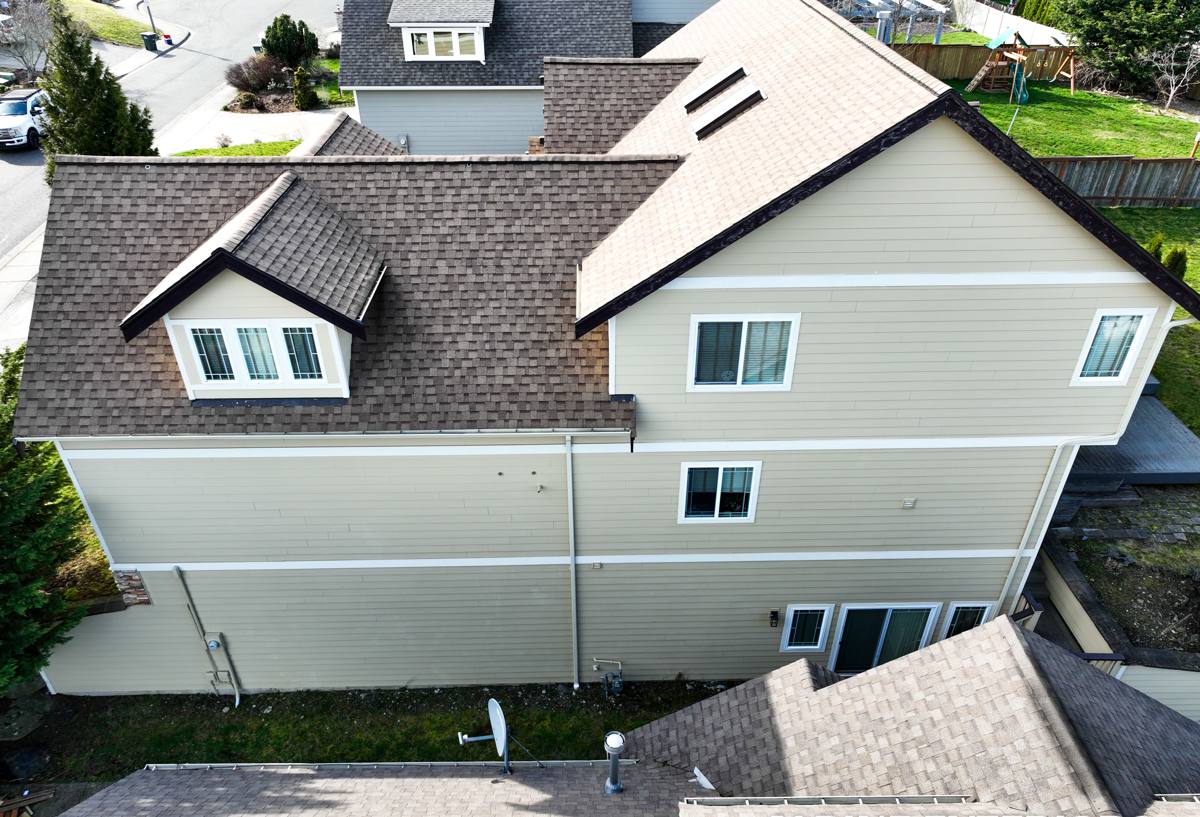
Common Deck Problems We Find in Semiahmoo Homes
Every deck is different, but in this area we see the same handful of failure points over and over:
- Ledger board rot — where the deck attaches to the house, often from missing or failed flashing that lets rain run behind the siding and soak the ledger for years before anyone notices.
- Corroded joist hangers and fasteners — standard galvanized hardware breaking down faster than expected because of the salt air, sometimes showing rust streaks on the wood before the hardware itself visibly fails.
- Soft or spongy decking boards — usually from moss and standing water holding moisture against the wood, especially on boards with poor gaps for drainage.
- Post base rot — support posts sitting directly on concrete or buried in soil without a proper standoff, wicking moisture up from below.
- Loose or wobbly railings — railing posts that were never through-bolted properly, or that have rotted where they meet the rim joist.
- Stair stringer failure — stringers exposed to splash-back from rain and runoff, often the first structural element to go because they're rarely inspected.
Most of these problems start small and stay hidden. A deck can look fine from a few feet away while the connection points underneath are already compromised.
What a Correct Deck Repair Actually Involves
A repair that actually holds up here starts with finding out why the original section failed, not just replacing the board that looks bad. That means:
Structural Inspection First
We check the ledger connection and flashing, the joist hangers, the post bases, and the railing post connections before we touch a single board. A lot of "just replace this one plank" jobs turn out to have a rotted joist underneath that would have failed the new board within a year or two.
Moisture and Rot Testing
We probe suspect wood rather than guessing from appearance. Surface graying from sun and weather is cosmetic. Wood that gives under a probe or feels soft is structural rot and needs to come out, not be sealed over.
Code and Safety Compliance
Guardrail height, baluster spacing, and stair rise/run all have to meet current Washington building code, and Whatcom County will expect that on anything that requires a permit. Repairing a railing that's out of spec is a chance to bring it up to code, not just make it match what was there before.
Proper Flashing and Drainage
Any repair that touches the ledger board gets correct flashing this time, even if the original installation skipped it. This is the single most common root cause of ledger rot we find, and it's the fix that actually prevents the problem from coming back.
Repair or Replace? How We Help You Decide
Not every deck problem needs a full rebuild, and not every deck is worth patching. The honest answer depends on how much of the structure is affected and how the deck was built originally.
| Factor | Leans Toward Repair | Leans Toward Replacement |
|---|---|---|
| Extent of rot | Isolated to a few boards or one connection point | Found in multiple framing members or the ledger |
| Age of structure | Under 15 years, built to a decent original standard | Older deck nearing the end of typical lumber lifespan |
| Code compliance | Already meets current guardrail and spacing code | Railings, stairs, or footings don't meet current code |
| Original construction quality | Proper flashing and hardware were used originally | No flashing, undersized framing, or poor original layout |
| Budget priority | Want to extend the life of a sound structure | Want a long-term fix without recurring repair costs |
We'll walk you through which category your deck falls into and give you a straight answer, including when repair is genuinely the smarter choice and we're not going to talk you into more work than you need.
Our Deck Repair Process
- On-site inspection. We look at the whole structure, not just the area you're worried about, including the ledger, framing, posts, and railings.
- Written diagnosis and plan. You get a clear explanation of what's actually wrong, what's driving it, and what fixing it correctly involves.
- Repair or rebuild the affected sections. We remove everything that's compromised, including hidden framing if it's rotted, not just the visible boards.
- Correct hardware and flashing on every connection we touch. If we're already into a ledger or post base, we fix the moisture path, not just the wood.
- Final walkthrough. We check railings for solidness, stairs for level, and drainage for proper flow before we call it done.
Materials and Hardware We Choose for Coastal Exposure
Given the salt air around Semiahmoo Bay, standard mill-galvanized fasteners and hangers corrode faster here than they would further inland. For repairs on homes near the water, we favor stainless steel or heavy hot-dip galvanized hardware rated for coastal and treated-lumber contact, and we use flashing tape at ledger and post connections rather than relying on caulk alone, since caulk is the first thing to fail under repeated wetting and drying. For decking material, pressure-treated lumber remains a solid, budget-friendly choice as long as it's properly gapped and finished for drainage, while composite decking trades a higher upfront cost for lower moss and moisture maintenance over time. We'll talk through the trade-offs for your specific deck rather than defaulting to one material for every job.
Homeowner Maintenance Checklist
A repaired deck lasts a lot longer with a little seasonal attention. Between visits from a contractor, this is worth doing yourself:
- Sweep leaves and debris off the deck surface regularly through fall, especially in shaded spots where moss takes hold fastest.
- Scrub visible moss or algae off boards at the start of moss season rather than waiting until it's thick and slick.
- Check that gaps between boards are clear so water can drain instead of pooling.
- Look at the ledger connection where the deck meets the house once a year for staining or gaps in flashing.
- Test railings by hand for any looseness or give, especially after a hard winter.
- Keep gutters and downspouts near the deck clear so runoff isn't dumping extra water onto it.
Why Local Experience in Peace Arch Matters
A deck repair crew that mostly works drier inland areas doesn't always think first about flashing, hardware grade, or moss-driven rot, because those aren't the problems they see most. Working consistently in Semiahmoo and the surrounding Whatcom County waterfront means we're looking for salt corrosion and driving-rain intrusion by default, not as an afterthought. We also know what Whatcom County expects for permitted deck work, which keeps repairs from turning into a compliance headache later, whether that's at resale or during a future project.
Timing Your Repair Around Whatcom County Weather
Late spring through early fall gives the driest working window here, which matters for anything involving fresh lumber, flashing, and fasteners that need proper cure and set time. That said, rot doesn't wait for good weather, and a compromised ledger or post base left through another wet winter usually gets worse, not better. If we find a safety issue during an inspection — a wobbly railing or a failing stair stringer — we'll flag it as something to address promptly regardless of season, while less urgent cosmetic repairs can often be scheduled for the drier months.
If you've got a deck near the Peace Arch that's showing soft spots, loose railings, or moss that won't quit, we're happy to come take a look. The estimate is free, there's no pressure, and you'll get a straight answer about what's actually going on underneath — use the form below to get started.