 Semiahmoo Exterior
 Custer Roofs Face a Specific Kind of Weather
Custer sits inland just enough from the water to still catch what blows off Semiahmoo Bay and the Strait of Georgia, and close enough to the coast that salt-laden air reaches roofs here more often than most homeowners realize. Add Whatcom County's long, wet fall-through-spring stretch, and you get a roofing environment that's harder on materials than drier parts of the state. Roofs in this area deal with three things working against them at once: near-constant moisture, salt air that accelerates corrosion on metal components, and enough shade and dampness to grow moss almost year-round on north-facing slopes and anywhere debris collects.
None of that means a roof here is doomed to fail early. It means repairs have to account for the actual conditions the roof lives in, not just patch the visible symptom. A shingle repair that ignores underlying moss growth, or a flashing fix that uses the wrong fastener for salt exposure, tends to fail again within a year or two. Correct repair work in Custer starts with understanding why the roof failed in the first place.
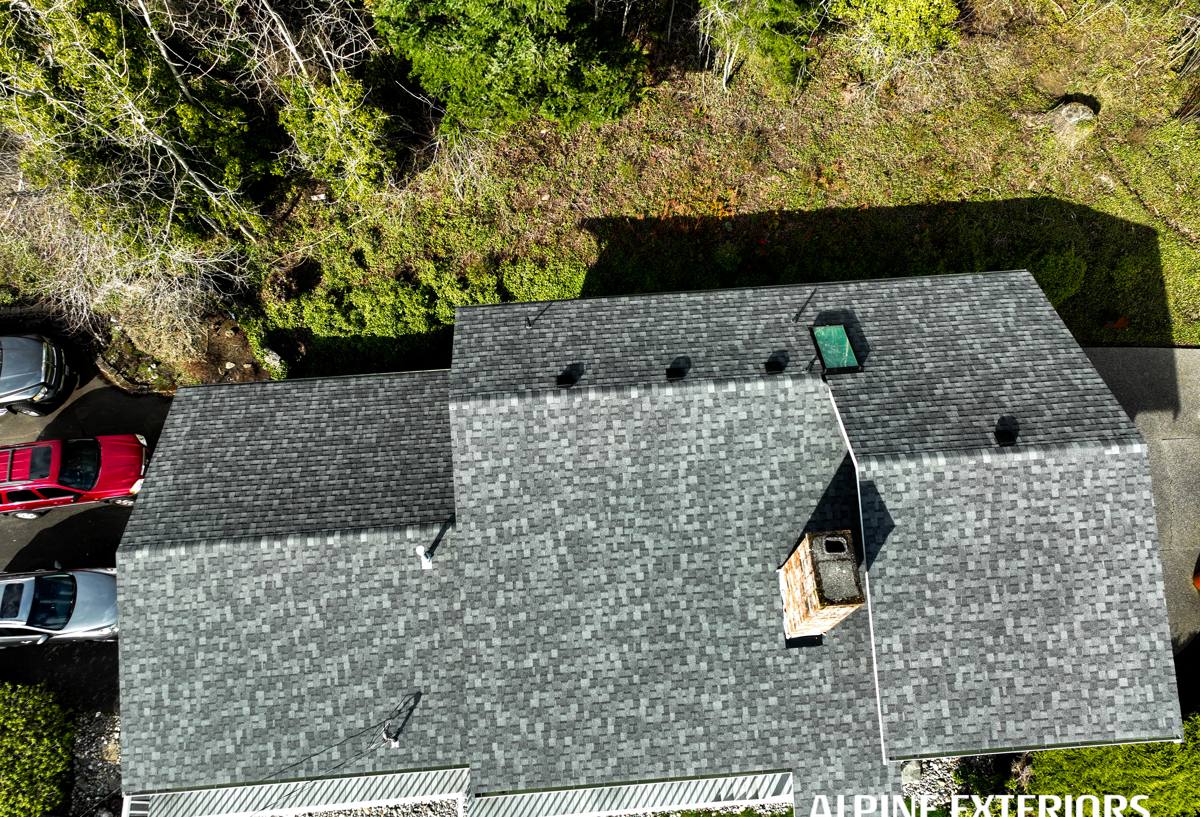
Signs a Custer Roof Needs Repair
Interior leaks and water stains
A ceiling stain, a damp patch in the attic insulation, or a musty smell in an upstairs closet almost always traces back to a specific point of failure on the roof — a cracked pipe boot, lifted shingle tab, or corroded flashing seam. These rarely show up right where the water enters, since water tends to travel along the roof deck or rafters before dripping down, so tracing the source correctly matters more than patching where the stain appears.
Missing, cracked, or curling shingles
Wind off the water and repeated wet-dry cycling are hard on asphalt shingles. Tabs that have curled, cracked, or blown off entirely expose the underlayment beneath, and that underlayment is not designed for long-term sun and rain exposure on its own. A few damaged shingles caught early is a straightforward repair; left through another wet season, it usually becomes a deck repair as well.
Heavy moss and algae growth
Moss isn't just cosmetic. As it establishes on a roof, its root structure lifts shingle edges and holds moisture against the roofing material continuously instead of letting it dry between rains. On shaded, north-facing slopes — common on wooded Custer lots — moss can take hold within a couple of seasons if it isn't controlled.
Granule loss and bald patches
Asphalt shingles shed their protective granules as they age; finding gritty buildup in gutters or downspouts, or noticing shiny, bald patches on the roof surface, signals the shingle's UV and weather protection is wearing thin in that spot.
Why Salt Air and a Long Moss Season Are a Tough Combination
Most roofing guidance is written for drier climates, and it tends to underplay two things that matter a lot in this part of Whatcom County. First, airborne salt accelerates corrosion on exposed metal — nail heads, flashing, gutter fasteners, and vent caps all corrode faster near the water than they would inland, and once a fastener starts rusting, it loses holding power exactly where wind uplift needs it most. Second, moss doesn't behave like an occasional nuisance here; it's closer to a recurring seasonal load. A roof that gets cleaned once and never addressed again will typically be re-covered in moss within a year or two, especially under overhanging trees.
The practical result is that repair choices need to hold up to both problems at once. That means favoring corrosion-resistant fasteners and flashing, sealing and re-flashing details correctly rather than relying on caulk as a long-term fix, and pairing any moss-related repair with a plan to keep it from coming right back.
What a Correct Roof Repair Actually Involves
Diagnosing before patching
A repair that only addresses the visible symptom — a stain on the ceiling, a curling shingle — without finding the actual entry point tends to resurface within a season. Correct diagnosis means getting on the roof, checking flashing at every penetration (chimneys, vents, skylights), inspecting valleys where water concentrates, and checking the roof deck itself for soft spots where moisture has already gotten in.
Matching materials and technique to what's already there
Repairs should use compatible materials — matching shingle profile and, where possible, color, using flashing metal that won't corrode against dissimilar metals already on the roof, and following the same fastening pattern the rest of the roof was installed with. A mismatched or poorly integrated repair often stands out visually and can create a new weak point where old and new materials meet.
Addressing the cause, not just the hole
If moss lifted a section of shingles, the repair should include removing the moss correctly (not just scraping the surface, which can tear shingle mat), treating the area, and improving drainage or airflow if that's realistically what's driving regrowth. If corrosion took out a flashing seam, the fix should use hardware rated for coastal exposure, not a like-for-like replacement of the part that just failed.
Common roofing materials in Custer — how they hold up locally
| Material | Typical local lifespan | Sensitivity to salt air & moss | Repair considerations |
|---|---|---|---|
| Asphalt composition shingle | 18–25 years | Moderate — granule loss accelerates in wet, shaded areas | Most common; repairs are straightforward if matched by age and profile |
| Metal (standing seam or panel) | 35–50+ years | Fasteners and cut edges are the weak point near salt air | Repairs need corrosion-resistant fasteners and proper sealant at penetrations |
| Cedar shake / shingle | 20–30 years with upkeep | High — retains moisture, moss-prone, needs regular treatment | Repairs require careful splitting-out of damaged shakes, not just surface patching |
| Composite / synthetic shingle | 30–40 years | Low to moderate | Fewer local repair references; matching discontinued profiles can be harder |
Asphalt shingle is by far the most common roofing material on Custer homes, which is part of why we see the same handful of failure patterns repeatedly: granule loss on south and west exposures from sun, and moss and soft decking on north-facing, tree-shaded slopes from moisture.
Our Roof Repair Process
The process is the same whether the job is a single flashing repair or a multi-area patch after a windstorm.
- Inspection. We walk the full roof, not just the reported problem area, since one visible leak often isn't the only weak point.
- Written scope and honest recommendation. We explain what needs repair now, what's worth monitoring, and when a repair genuinely isn't the right call anymore versus a section or full replacement.
- Repair work. Damaged shingles, decking, or flashing are removed and replaced with matched materials; corrosion-prone fasteners are upgraded where exposure warrants it.
- Moss and debris treatment. Where moss contributed to the damage, we clear it correctly and treat the area to slow regrowth.
- Cleanup and walkthrough. Debris and old materials are removed from the property, and we walk the finished work with the homeowner.
What Roof Repairs Typically Cost
Roof repair pricing varies with the size of the damaged area, roof pitch and access, the material involved, and whether the deck underneath needs replacing along with the surface. Rather than quote a flat number that won't fit most jobs, here's how the major factors move the price:
| Factor | Effect on cost |
|---|---|
| Size of repair area | A few shingles vs. a full slope changes both material and labor substantially |
| Roof pitch and access | Steep or hard-to-reach roofs take longer and require more safety setup |
| Deck condition underneath | Rotten or soft decking adds carpentry work beyond the surface repair |
| Material type | Cedar and metal repairs generally cost more per square foot than asphalt |
| Flashing and penetrations involved | Chimneys, skylights, and multiple vents add detail work |
| Moss removal and treatment | Adds time but prevents the same repair from failing again quickly |
Most straightforward shingle or flashing repairs on a Custer home fall in a broad low-to-mid four-figure range; larger areas, deck replacement, or full-slope moss remediation push toward the higher end of that range or beyond. We give a firm, itemized number after seeing the roof in person — not a phone estimate.
Maintenance That Extends the Life of a Repair
A repair done correctly should last for years, but Custer's climate rewards a bit of upkeep in between service calls. This is the checklist we give homeowners after a repair:
- Clear gutters and downspouts at least twice a year so water isn't backing up under the roof edge
- Trim back overhanging branches to cut down on shade and debris that feed moss growth
- Have moss and algae treated before it visibly takes hold, not after
- Check the attic after heavy storms for any sign of new moisture, even a faint musty smell
- Have flashing and penetrations inspected every couple of years, since these fail quietly before a leak ever shows up
- Address minor shingle damage promptly rather than waiting for it to spread across a slope
Why a Crew That Already Works in Custer Matters
Roofing advice that's accurate for eastern Washington or a drier coastal climate can be the wrong call here. A crew that regularly works roofs around Semiahmoo and greater Whatcom County already knows which slopes on a typical Custer lot hold moss the longest, which fastener choices actually hold up against salt air over a decade instead of just at installation, and how the wet season timing affects when repairs should happen versus when they can safely wait. That local pattern recognition is what keeps a repair from becoming a repeat visit.
It also means straightforward logistics: knowing the area, understanding typical roof ages and construction for homes built during Custer's different growth periods, and being able to respond quickly when a storm off the water causes damage that can't wait.
Getting a Straight Answer About Your Roof
Not every roof problem needs a full crew and a big invoice — sometimes a roof genuinely just needs a section repaired and a maintenance plan going forward, and we'll tell you that plainly. If you're seeing a leak, moss buildup, or storm damage on a Custer roof, we're happy to take a look, explain exactly what we find, and give you a free, no-pressure estimate with no obligation to move forward. Use the form below to get started.