 Semiahmoo Exterior
 Why Siding Wears Out Faster Near Peace Arch
Homes in the Peace Arch area sit at the northern tip of Whatcom County, close to the water where Semiahmoo Bay, Drayton Harbor, and the open Strait push weather onshore with very little to slow it down. That location is part of what makes this stretch of Semiahmoo desirable, but it also means the exterior of a house here works harder than a house twenty miles inland. Three things in particular shorten the life of ordinary siding: salt-bearing air, wind-driven rain, and a moss and algae season that can run for most of the year.
None of that is a reason to panic about your current siding. It's a reason to be deliberate about what goes back up when it's time to replace it, and about how it's installed. A siding job that would hold up fine in a dry, sheltered subdivision further south can fail early here if it isn't matched to this specific exposure.
Salt Air and Wind-Driven Rain
Salt in the air doesn't dissolve siding, but it changes how moisture behaves on a wall. Salt-laden humidity keeps surfaces damp longer than plain rainwater does, which matters most at the places where water is already trying to get behind the siding — laps, seams, and trim joints. Add wind-driven rain, which is common during fall and winter storms off the water, and you get rain forced sideways and even slightly upward into gaps that a calmer climate would never test. Fasteners that aren't corrosion-resistant, caulk joints that were never meant to take standing water, and thin trim boards all show stress from this combination years before they would somewhere more sheltered.
The Long Moss Season
Shaded, humid, and mild — that's a description of a lot of yards near Peace Arch, and it's also the exact recipe moss and algae need. On siding materials that hold moisture at the surface or in a porous substrate, moss doesn't just look bad. It holds water against the material for weeks at a time, which is what actually causes rot and paint failure, not the moss itself. Homes with heavy tree cover or a north-facing wall that rarely sees direct sun are the ones that need the most attention when choosing a siding replacement material and finish.
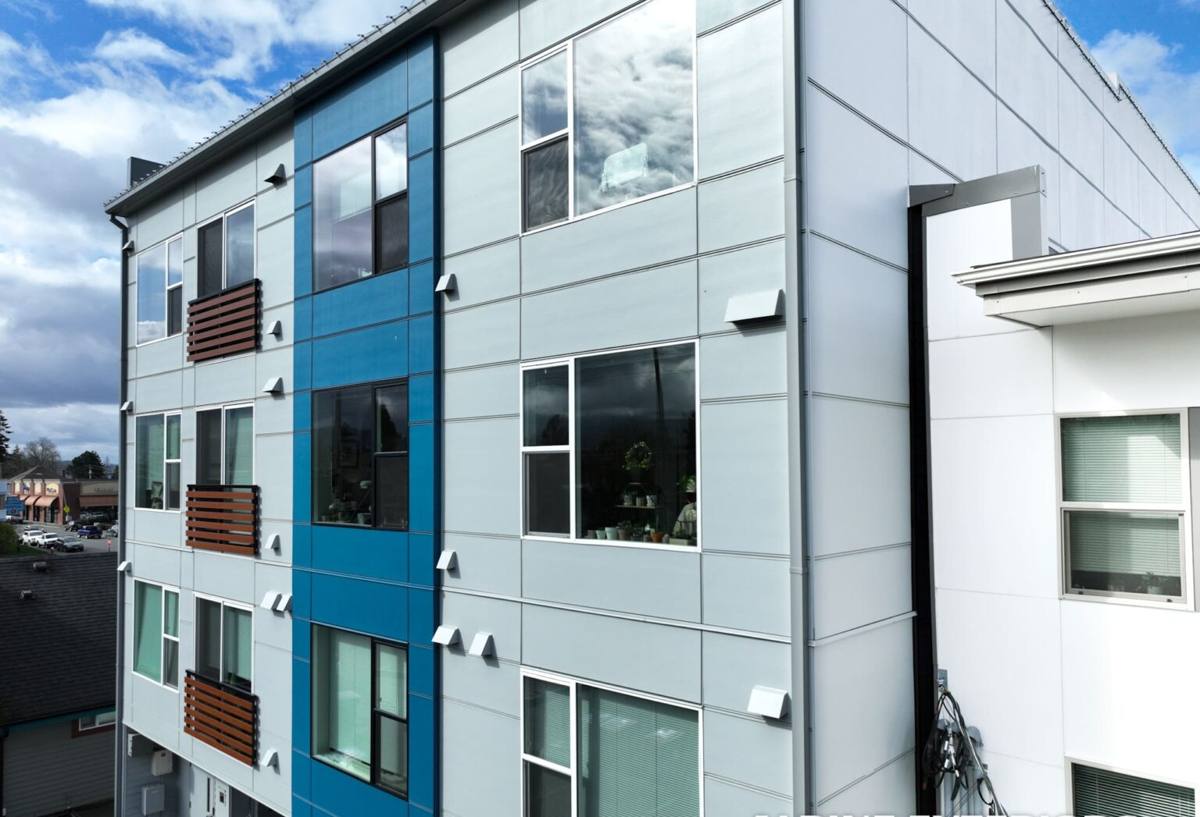
Signs a Peace Arch Home Needs Siding Replacement
Some of these show up early and get dismissed as cosmetic. On this peninsula, they're usually a sign that moisture has already started working its way into the wall assembly.
- Paint that's peeling, bubbling, or chalking within two or three years of a repaint
- Soft or spongy spots when you press on the siding, especially near the bottom courses
- Boards that are cupping, warping, or separating at the seams
- Moss or algae that returns within a season or two of cleaning
- Visible gaps opening up around windows, doors, or corner trim
- A musty smell near exterior walls, or noticeably higher heating bills from drafts
- Siding that's approaching or past the 20–25 year mark, particularly wood-based products
If you're seeing two or more of these at once, it's worth having someone look at what's happening underneath the siding, not just the surface.
What a Correct Siding Replacement Job Involves
Replacing siding well is mostly about what happens before the new boards ever go up. Rushing the tear-off or skipping the water management details is how a brand-new siding job ends up with the same problems as the old one in half the time.
Tear-Off and Sheathing Inspection
Once the old siding comes off, the sheathing underneath tells the real story. In a climate this wet, it's common to find soft or discolored sheathing around old window flashing, at wall bottoms, or wherever a previous installation cut corners. That wood needs to be replaced, not covered over, before anything new goes back on. This is also the point where a crew either finds a problem early, while it's a manageable repair, or a homeowner finds out later, when it's a much bigger one.
Weather-Resistive Barrier and Flashing
The house wrap and flashing behind the siding do more of the actual waterproofing work than the siding itself. On a home exposed to wind-driven rain, correct overlap on the weather-resistive barrier, properly integrated window and door flashing, and kick-out flashing where a roofline meets a wall aren't optional extras — they're what determines whether wind-blown rain stays outside the wall or finds its way in.
Installing James Hardie Fiber Cement
We install James Hardie fiber cement exclusively, and the installation details matter as much as the product. That means following Hardie's specified nail pattern and fastener type, leaving the correct gaps at butt joints and trim for expansion, and caulking only where Hardie's instructions call for it rather than sealing every seam shut, which can trap moisture instead of letting it drain. Installed to spec, the factory-applied ColorPlus finish is also part of the moisture defense — it's baked on under controlled conditions, not brushed on in the field, so it holds up more evenly against this area's UV and salt exposure.
Why We Install Only James Hardie Siding
We used to see the full range of siding products go up on homes in this area, and we've seen how each one actually performs a decade or two later in a marine climate — not just how it performs on a spec sheet. That experience is why we standardized on James Hardie fiber cement and stopped installing vinyl, LP SmartSide, primed spruce, and cedar. Each of those products has real strengths; we're not claiming otherwise. But for the specific combination of salt air, wind-driven rain, and moss exposure common here, the trade-offs stopped making sense to us.
| Factor | James Hardie Fiber Cement | Vinyl | LP SmartSide / Wood |
|---|---|---|---|
| Moisture behavior | Non-organic, doesn't rot; engineered for wet climates | Doesn't rot, but can warp or crack in temperature swings | Engineered wood or solid wood; vulnerable if moisture reaches the core |
| Fire resistance | Non-combustible | Melts and can contribute fuel in a fire | Combustible |
| Moss/algae resistance | Dense surface resists organic growth; ColorPlus finish sheds moisture | Resists growth but shows dirt and staining over time | More porous surface can hold moisture and support growth |
| Maintenance | Occasional wash; repaint interval much longer with ColorPlus | Low maintenance but limited repair options once damaged | Regular repainting/resealing needed to stay protected |
| Typical warranty | Long-term, transferable manufacturer warranty | Varies widely by manufacturer and product tier | Varies; often shorter than fiber cement |
Vinyl holds up reasonably well in dry climates but can become brittle over time and doesn't offer the same fire resistance. LP SmartSide and cedar can look great and perform fine when meticulously maintained, but that maintenance burden is real, and this location's moisture load doesn't leave much room for it to slip. James Hardie's fiber cement composition, combined with its climate-specific HZ product engineering and a strong transferable warranty, is what we're willing to put our name behind here.
Our Process for Peace Arch Projects
- On-site assessment — We walk the exterior, check exposure on each elevation, and look for existing moisture or moss patterns.
- Written scope — You get a clear breakdown of what's being replaced, what products are used, and what the tear-off will likely reveal.
- Tear-off and sheathing repair — Old siding comes off, damaged sheathing gets replaced, and the wall is dried out before anything closes it back up.
- Weather barrier and flashing installation — House wrap, window/door flashing, and kick-out flashing go in per code and manufacturer spec.
- James Hardie installation — Siding, trim, and accessories go up following Hardie's fastening and clearance requirements.
- Final walkthrough — We go over the finished work with you before calling the job complete.
Choosing a Contractor Who Knows This Peninsula
Siding contractors who mostly work inland or in drier parts of the state don't always account for wind-driven rain and salt exposure the way a crew that regularly works Semiahmoo and the surrounding Whatcom County waterfront does. That shows up in small but consequential decisions — fastener choice, how tight or loose a joint is left for drainage, where extra flashing gets added even when it's not strictly required by code. A crew that already knows how this stretch of coastline behaves is less likely to have to learn those lessons on your house.
When vetting any contractor for a siding project here, it's reasonable to ask:
- Are they licensed and insured to work in Washington, and can they show proof
- Do they carry manufacturer certification for the product they're installing
- Will they put the full scope of work, materials, and warranty terms in writing
- Do they inspect and repair sheathing as part of the job, or just cover over what's there
- Can they explain how they'll handle flashing and drainage for your specific exposure
Cost Factors for Siding Replacement in This Area
Every home is different, and we don't quote sight unseen, but these are the variables that generally move the price up or down on a Peace Arch-area project.
| Factor | How it affects cost |
|---|---|
| Total square footage of siding | Larger wall area means more material and labor |
| Sheathing condition | Rot or damage found during tear-off adds repair scope |
| Trim and architectural detail | More corners, gables, and trim lines add labor time |
| Number of stories and access | Taller walls or difficult access require more equipment and time |
| Existing siding removal | Some materials come off faster and cleaner than others |
| Flashing and drainage upgrades | Added protection at roof lines and openings increases scope but reduces future risk |
Maintaining Your New Siding Through Whatcom County Winters
Fiber cement installed correctly needs relatively little upkeep, but "little" isn't "none," especially this close to the water. A periodic rinse to clear salt residue and organic buildup, particularly on shaded or north-facing walls, keeps moss from getting a foothold. It's worth a quick annual look at caulking around windows, doors, and trim to catch any joints that have opened up. Keeping gutters clear reduces splash-back onto lower courses during heavy rain, and trimming back vegetation that shades a wall helps it dry out between storms instead of staying damp for weeks.
If your current siding is showing wear, or you're just not sure whether what you have will make it through another few winters here, we're happy to take a look. We offer free, no-pressure estimates for Peace Arch and the surrounding Semiahmoo area — use the form below to get started.