 Semiahmoo Exterior
 Siding Repair Built for Drayton Harbor's Waterfront Conditions
Drayton Harbor sits right at the edge of Semiahmoo, sharing the same shoreline exposure that makes this stretch of Whatcom County one of the harder places in the region to keep exterior siding in good shape. Homes here face salt-laden air rolling off the water almost daily, wind-driven rain that hits walls sideways instead of straight down, and a moss season that can run for most of the year on shaded or north-facing surfaces. Siding repair in a setting like this isn't the same job as patching a wall in a dry, inland town — the same conditions that damaged the siding in the first place will work against a sloppy repair just as fast.
We work Drayton Harbor and the surrounding Semiahmoo area regularly, and siding repair is one of the calls we get most often — a cracked panel after a storm, a soft spot near a downspout, staining that keeps coming back no matter how many times it's cleaned. This page focuses specifically on what siding repair looks like for homes in this harbor-front community: what the climate does to siding here, how we decide between a repair and a replacement, and what a repair actually needs to include to hold up through another wet Whatcom County winter.
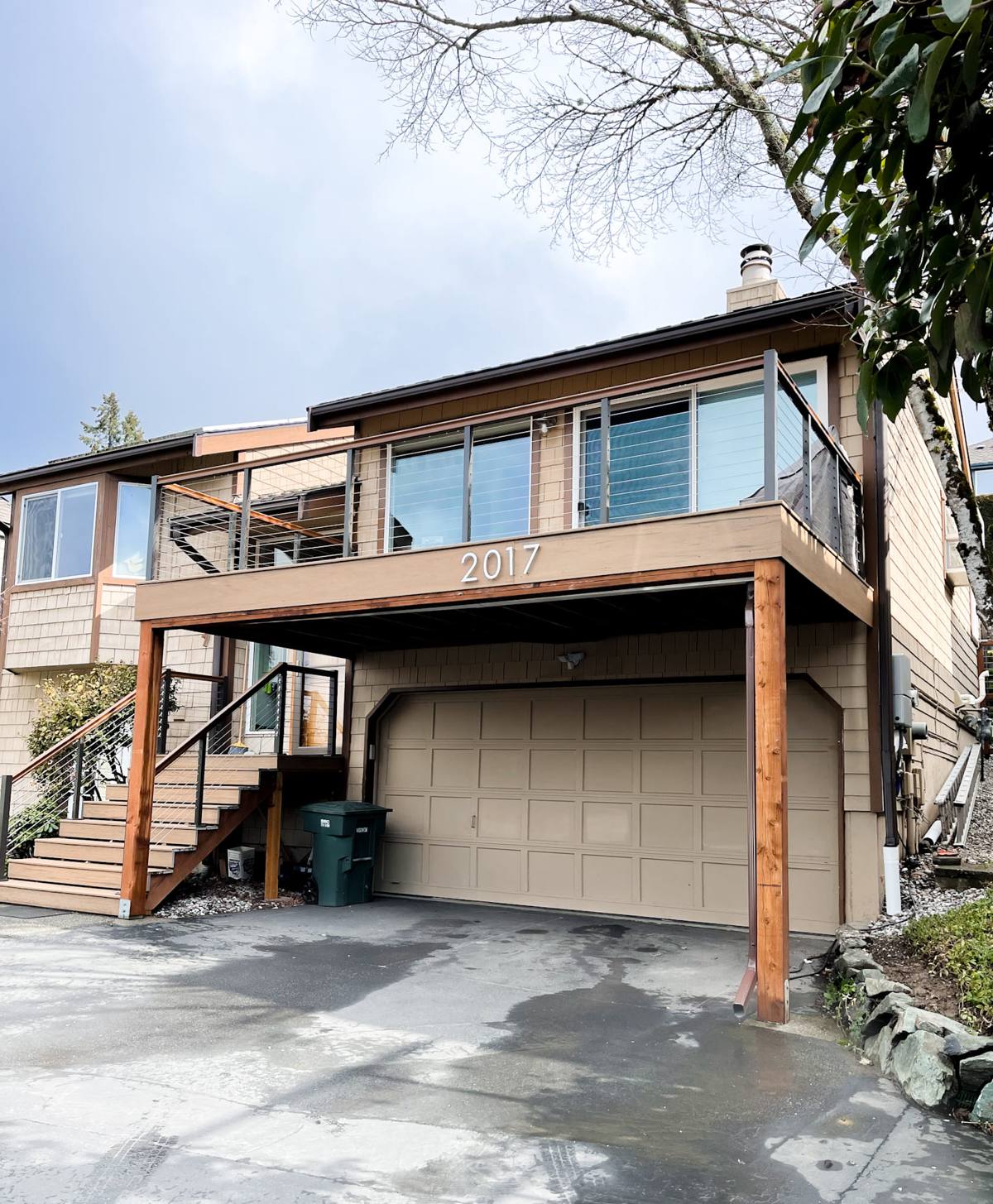
What Drayton Harbor's Climate Does to Siding
Salt Air Off the Water
Being this close to the harbor means a steady, low-level dose of salt in the air, even on days without a storm in sight. Salt accelerates corrosion on fasteners, flashing, and any exposed metal trim, and it breaks down lower-quality paint and coatings faster than a drier inland climate ever would. When we're diagnosing a repair, corroded fasteners or rusted trim are often the first thing we check, because they're frequently the actual source of a leak that shows up somewhere else on the wall.
Driving Rain Off the Harbor
Storms coming across Drayton Harbor don't fall straight down — wind pushes the rain sideways into siding joints, window flashing, and the seams where trim meets wall. That sideways load finds gaps a careless repair would leave behind, and it's a big part of why a quick caulk-and-paint patch rarely holds for long on a waterfront home. Repairs here need to account for water moving sideways and upward under wind pressure, not just water running downhill.
A Long Moss and Mildew Season
Mild temperatures combined with near-constant moisture give moss and mildew a growing season that can stretch across most of the year on shaded walls. Any siding with surface porosity or hairline cracking becomes a foothold for growth, and once moss and mildew take hold, they hold moisture against the wall longer, which accelerates whatever damage started the problem. A repair that doesn't address the underlying moisture path will usually see the same staining return within a season or two.
Signs a Drayton Harbor Home Needs Siding Repair
Because of the constant moisture and salt exposure here, siding problems tend to show up earlier and progress faster than they would in a more sheltered part of the county. Homeowners near the harbor should watch for:
- Cracked, split, or visibly warped siding panels, especially on walls that face the water
- Soft or spongy spots when you press on the siding, particularly low on the wall or around window and door trim
- Staining or discoloration that returns quickly after cleaning
- Moss or mildew building up on shaded or north-facing sections
- Rust streaking near fasteners, corner trim, or flashing
- Gaps opening up at butt joints, corners, or where siding meets trim
- Peeling or bubbling paint, which often signals moisture trapped behind the surface
- A musty smell or visible staining on an interior wall that backs up to an exterior wall
Any one of these can be a minor, isolated repair. Several appearing together, especially on the same wall, usually points to a moisture problem that's been building for a while and deserves a closer look before it spreads further.
Repair vs. Replacement: How We Decide
Not every damaged section of siding needs to come off the whole house, and not every crack is a simple patch. We look at the extent of the damage, what's behind it, and how much of the wall is affected before recommending either option.
| Factor | Usually Points to Repair | Usually Points to Replacement |
|---|---|---|
| Extent of damage | Isolated panel or small section | Damage spread across multiple walls or wide areas |
| Moisture behind the siding | Surface only, sheathing still dry and sound | Soft or rotted sheathing found once siding is opened up |
| Age and condition of existing siding | Siding is otherwise sound and holding its finish | Siding is aging out, chalking, or failing broadly |
| Material match | Matching material and finish are available | Discontinued product or no reasonable color match |
| Root cause | Isolated fastener, flashing, or impact damage | Systemic issue like missing rain screen or bad house wrap across the wall |
We won't push a full replacement when a proper repair will genuinely hold, and we won't patch over a problem that's going to reopen in a year. That call gets made after we've actually opened up the affected area and looked at what's underneath, not from a driveway estimate.
What Correct Siding Repair Involves
A repair that's going to last through Drayton Harbor's weather has to do more than fill a crack or swap a panel. The details that get skipped are usually the same ones that cause a repeat call a year or two later:
- Finding the actual moisture path — tracing water intrusion back to its source (flashing, a fastener, a failed sealant joint) instead of just treating where the damage happens to be visible
- Checking the sheathing and house wrap — confirming what's behind the siding is dry and sound before closing the wall back up
- Matching material and profile correctly — using a compatible product and matching reveal, so the repair doesn't create a new water trap at the seam
- Restoring the rain screen gap — making sure any drainage cavity behind the siding is intact so moisture that does get in can drain and evaporate
- Correct fastener type and spacing — using corrosion-resistant fasteners placed to spec, especially important this close to salt air
- Proper flashing and sealant at the repair edges — every new seam needs to shed water the same way the original wall assembly was designed to
Skipping any of these might make a repair look finished on install day, but it won't hold up against another season of wind-driven rain off the harbor.
Repairing James Hardie Siding vs. Other Materials
We install James Hardie fiber cement siding exclusively on full siding jobs, and it's also the material we prefer to repair with, because it holds its color and dimensional stability well enough that a properly matched patch blends in rather than standing out. Hardie's ColorPlus finish is factory-applied, so a repair using matching Hardie product and touch-up finish typically holds its color far better over time than field-painted patches on other materials.
That said, a lot of homes around Drayton Harbor were built or previously sided with other products — vinyl, engineered wood like LP SmartSide, or older cedar and primed wood siding — and we do repair those where it makes sense. The honest trade-off is that repairs on those materials tend to be more limited. Vinyl can crack and become brittle with age and UV exposure, making clean patch repairs harder to blend. Engineered wood products are more sensitive to moisture intrusion at the repair edge, since the core material can swell if water gets behind a patch. Older cedar and primed wood need more frequent maintenance to keep a repair from becoming a recurring job.
When a repair on one of those materials is realistic and cost-effective, we'll do it and tell you plainly. When the damage points to a broader moisture or material issue that a patch would only mask, we'll say that too — and if a homeowner decides to move to full replacement at that point, James Hardie is what we recommend and the only product we install, for the same reasons we explain on our full siding pages: a non-combustible core, a factory finish built to hold up against salt air and constant moisture, and a strong transferable warranty when the installation follows spec.
Our Siding Repair Process for Drayton Harbor Homes
- On-site inspection: We walk the property and look at the affected area directly, including opening up the siding where needed to see what's happening underneath, rather than estimating from photos or a drive-by look.
- Honest diagnosis: We identify the actual cause of the damage — moisture path, fastener failure, impact damage, or a broader material issue — and explain it in plain terms.
- Repair or replacement recommendation: Based on what we find, we recommend the option that will actually hold up, with the reasoning behind it, not just a price.
- Material matching: For Hardie repairs, we match panel type, reveal, and finish as closely as current product lines allow.
- Repair work: We address the moisture source first, restore the wall assembly correctly (house wrap, rain screen, flashing), then install and finish the new siding section.
- Final check: We walk the completed repair with you before considering the job done, so you know exactly what was fixed and why.
Cost Factors for Siding Repair Near Drayton Harbor
| Factor | Why It Matters Here |
|---|---|
| Size and location of the damaged area | Water-facing walls and sections behind gutters or downspouts often need more extensive repair once opened up |
| Condition of the sheathing behind the siding | Hidden rot found once siding is removed is common on long-neglected leaks and adds to the scope |
| Material match availability | Older or discontinued siding profiles can be harder to match cleanly, sometimes pushing toward a larger repair section |
| Fastener and flashing condition | Corroded hardware near the water often needs full replacement, not just spot fixes |
| Access and wall height | Waterfront and multi-story homes can require additional staging or equipment |
These are general factors, not a quote — every repair depends on what we actually find once we're on the wall, which is why we look in person before giving a real number.
Timing a Siding Repair Around Drayton Harbor's Weather
Whatcom County's wettest, windiest stretch typically runs from late fall through winter, and Drayton Harbor's open water exposure makes that period harder on both an active repair and the crew doing it. Spring and summer generally give the driest, most stable conditions for cutting into siding, letting sealants and finishes cure properly, and confirming a wall is fully dry before it's closed back up. That said, active moisture intrusion or a fully cracked panel exposing the wall shouldn't wait for ideal weather — a temporary or emergency fix followed by a proper repair in better conditions is often the right call rather than leaving an open wall through a storm cycle.
Why a Local Crew Matters for a Drayton Harbor Repair
A crew that repairs siding around Drayton Harbor regularly has already seen how salt air, wind-driven rain, and a long moss season actually play out on real homes in this specific setting, not just on a manufacturer's spec sheet. That experience shapes practical decisions on repair day — where a patch is genuinely enough versus where it's masking a bigger problem, which walls take the worst of the harbor weather and need extra attention at the seams, and which fastener and flashing choices are worth the added time so you're not calling back after the next storm off the water. A generic repair approach that works fine in a sheltered inland neighborhood often falls short on a harbor-front wall, and knowing that difference up front is what keeps a repair from turning into a repeat job.
If you're seeing cracked, stained, or soft siding on your Drayton Harbor home, we're glad to take a look and give you a straightforward assessment of whether it needs a repair or something more. Reach out using the form below to schedule a free, no-pressure estimate.