 Semiahmoo Exterior
 Cherry Point's Climate Is Harder on Siding Than It Looks
Cherry Point sits close enough to the water that homes here deal with a combination most inland Whatcom County properties never see: salt-laden air moving off the strait, wind-driven rain that hits walls sideways instead of falling straight down, and a damp, shaded microclimate that keeps moss and algae active for most of the year. Any one of those on its own is manageable. Together, they wear through the wrong siding material faster than most homeowners expect.
Salt air is corrosive to exposed metal fasteners and fittings, and it accelerates the breakdown of certain paints and coatings over time. Driving rain doesn't just wet the siding surface — it pushes moisture up under laps, around trim, and into any gap in the water-resistive barrier that wasn't detailed correctly. And a long moss season means organic growth gets a head start on siding that holds moisture or has a rough, porous surface for spores to grab onto. A siding system for Cherry Point has to hold up to all three at once, not just one.
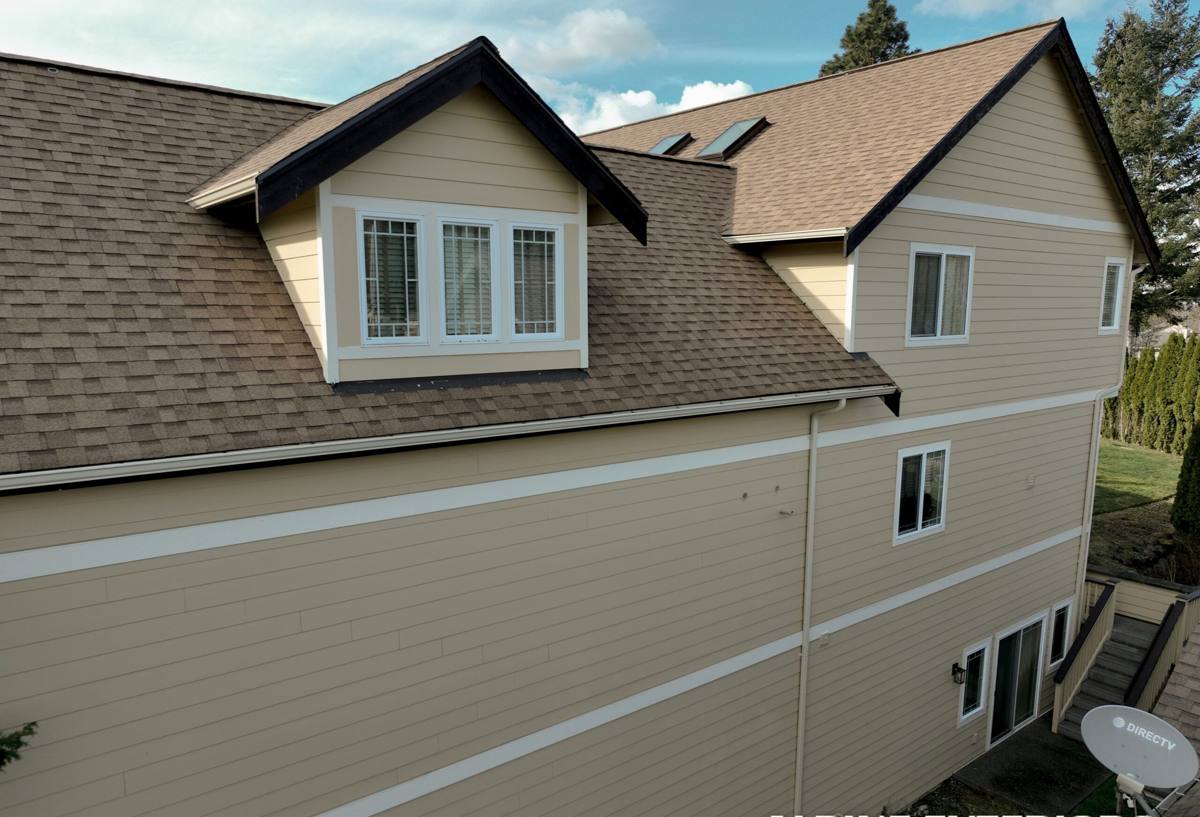
What Cherry Point Homes Actually Need From Their Siding
Given that combination, the priorities for a Cherry Point exterior are different from a drier inland job. We're looking for a material and installation approach that:
- Resists moisture absorption at the core of the material, not just at a painted surface
- Won't rust, corrode, or streak from salt exposure at fasteners and trim
- Holds a factory finish long enough that repainting isn't a recurring maintenance cycle
- Sheds wind-driven rain through correct flashing and drainage detail, not just caulk
- Doesn't provide a food source or rough texture that speeds up moss and algae colonization
This is exactly the set of trade-offs that pushed us to standardize on one product for every siding job we do, including here in Semiahmoo.
Why We Install Only James Hardie Fiber Cement in This Area
We don't install vinyl, LP SmartSide, primed wood, or other fiber cement brands. That's a deliberate standard, not a sales pitch, and it matters more in a climate like Cherry Point's than almost anywhere else we work. Vinyl can warp and gap under thermal cycling and doesn't hold up well to sustained wind pressure at exposed elevations. Engineered wood products rely on the integrity of a resin-treated wood core — if water finds a way past a seam or fastener hole over the years, the core is what's absorbing it. Other fiber cement brands vary in formulation and finish quality, and we've standardized on the one system we can vouch for on every job.
James Hardie fiber cement is a cement, sand, and cellulose composite. It doesn't have a wood core to rot, it's non-combustible, and it's manufactured with regional climate zones in mind rather than a one-size-fits-all formulation.
HZ5 Engineering for the Pacific Northwest
Hardie makes its siding in different HZ (HardieZone) formulations depending on the moisture and freeze-thaw conditions a region sees. Western Washington, including Whatcom County, falls in the HZ5 zone, engineered for sustained damp exposure. That's a meaningful distinction from siding formulated for a drier, hotter climate — the moisture resistance built into the panel itself is matched to what Cherry Point actually deals with most months of the year, not an average national condition.
ColorPlus Finish vs. Field Painting
Salt air is hard on paint. A factory-applied ColorPlus finish is baked on in a controlled environment, cures more evenly than a field-applied coat, and comes with its own finish warranty separate from the substrate warranty. For a home exposed to salt spray and constant damp, that finish durability translates directly into fewer repaint cycles and less chalking and fading at the elevations that catch the most weather.
What a Correct Installation Actually Involves
Fiber cement siding is only as good as the installation behind it. A huge share of the siding failures we get called out to inspect aren't material failures — they're installation shortcuts that let water in behind a perfectly good product. In a driving-rain environment like Cherry Point, these details aren't optional extras; they're what determines whether the siding lasts 30-plus years or needs remedial work in five.
Moisture Management for Wind-Driven Rain
Correct installation starts with a water-resistive barrier installed shingle-style so every layer drains outward and down, never inward. Behind that, we install a rainscreen gap on exposed elevations so any moisture that does get past the siding face has somewhere to drain and dry instead of sitting against the sheathing. Every window, door, and penetration gets properly lapped flashing — not caulk used as a substitute for flashing, which is one of the most common shortcuts we see on homes we're asked to re-side.
Fastening and Clearances
Fasteners are set to Hardie's specified pattern and depth, driven flush without overdriving (which crushes the material and opens a path for moisture). We hold factory-specified clearances at grade, roof lines, decks, and dissimilar materials so water has room to shed instead of wicking up into the bottom edge of a course. Caulk gets used at the joints Hardie specifies, with a quality sealant rated for exterior movement, not as a blanket fix for gaps that shouldn't exist in the first place.
| Installation Detail | Why It Matters at Cherry Point |
|---|---|
| Shingle-lapped water-resistive barrier | Directs wind-driven rain down and out instead of trapping it against sheathing |
| Rainscreen gap | Lets incidental moisture from salt spray and rain dry out instead of sitting against the wall |
| Factory flashing at penetrations | Prevents the caulk-only shortcuts that fail first under sustained coastal weather |
| Correct fastener pattern and depth | Keeps panels secure without cracking the material or opening moisture paths |
| HZ5-rated panels with ColorPlus finish | Matched to sustained regional dampness; finish resists salt-driven fading |
Our Process for a Cherry Point Siding Project
Every project starts with a walkthrough of the home's specific exposure — which elevations take the worst of the weather off the water, where moss and algae are already established, where old caulk or trim has failed, and where the existing siding or sheathing shows signs of moisture damage that needs to be addressed before new siding goes up. We don't cover up a wet wall assembly; if we find rot or compromised sheathing, we deal with it as part of the job, not after.
From there we handle product selection (siding profile, plank exposure, trim, and color), a full tear-off and inspection of what's underneath, correct water-resistive barrier and rainscreen installation, and Hardie installation to factory spec with the right fasteners and flashing at every transition. We clean up thoroughly and walk the finished job with the homeowner before calling it done.
Cost Factors for Cherry Point Homes
Every home is different, but the same handful of factors move the price on most Cherry Point projects:
| Factor | Why It Affects Cost |
|---|---|
| Home size and elevation count | More wall area and more corners/penetrations means more material and labor |
| Condition of existing sheathing | Rot or moisture damage found during tear-off adds repair scope before siding can go up |
| Siding profile and trim complexity | Lap width, trim detailing, and accent elements affect material and install time |
| Access and exposure | Homes closer to the water or with difficult access may need extra weather protection during the job |
| Existing moss/algae buildup | Heavier buildup on old siding can mean more prep and disposal work |
We give a firm, itemized quote after the walkthrough rather than a rough phone estimate — in a climate this variable from one elevation to the next, a real look at the house matters.
Living With Fiber Cement Siding in a Moss-Prone, Salty Environment
Hardie siding is low-maintenance compared to wood or vinyl, but "low-maintenance" doesn't mean "no maintenance," especially this close to the water. A little seasonal attention keeps the siding performing the way it's designed to for decades.
- Rinse siding gently once or twice a year to clear salt residue, especially on elevations facing the water
- Keep gutters and downspouts clear so runoff isn't sheeting down the siding face
- Trim back vegetation and tree cover that keeps siding shaded and damp longer than necessary
- Check and refresh caulking at trim joints and penetrations every few years, not just when a gap becomes visible
- Address moss or algae early with a gentle wash rather than pressure-washing, which can drive water behind the panels
- Watch for any soft spots, staining, or bubbling at the base of walls near grade, a sign moisture is getting trapped somewhere
Why a Crew That Already Works Cherry Point Matters
Siding installation isn't uniform across regions, and a crew that mostly works drier, inland climates can miss the details that matter here. Knowing which elevations take the worst of the wind and rain off the water, how aggressive moss growth gets in shaded, damp yards, and how salt air behaves on trim and fasteners over years, not months, comes from working this specific stretch of Whatcom County repeatedly. That familiarity shows up in small decisions — where to add extra flashing, which corners need closer attention to the rainscreen detail, how to sequence a project around the wetter months — that a generic installation crew won't necessarily think to make.
If you're weighing a siding project for a Cherry Point home, we're happy to walk the property, look at what your current siding is telling us, and put together a straightforward, no-pressure estimate for a Hardie installation built for the conditions your home actually faces.