 Semiahmoo Exterior
 Building Decks for Peace Arch's Coastal Climate
Peace Arch sits close enough to Semiahmoo Bay and the broader Whatcom County coastline that salt-laden air is a fact of life for anything built outdoors. Add the region's long stretch of driving rain each fall and winter, plus a moss season that can run from October well into spring, and a deck here is working harder than the same structure would in a drier inland climate. A deck built without those conditions in mind doesn't fail overnight — it fails slowly, in ways that are expensive to catch late and cheap to prevent early.
This page is about deck building specifically for Peace Arch and the surrounding Semiahmoo area: what the climate actually does to a deck over time, what a correctly built one requires, and how we approach the work differently because of where we work.
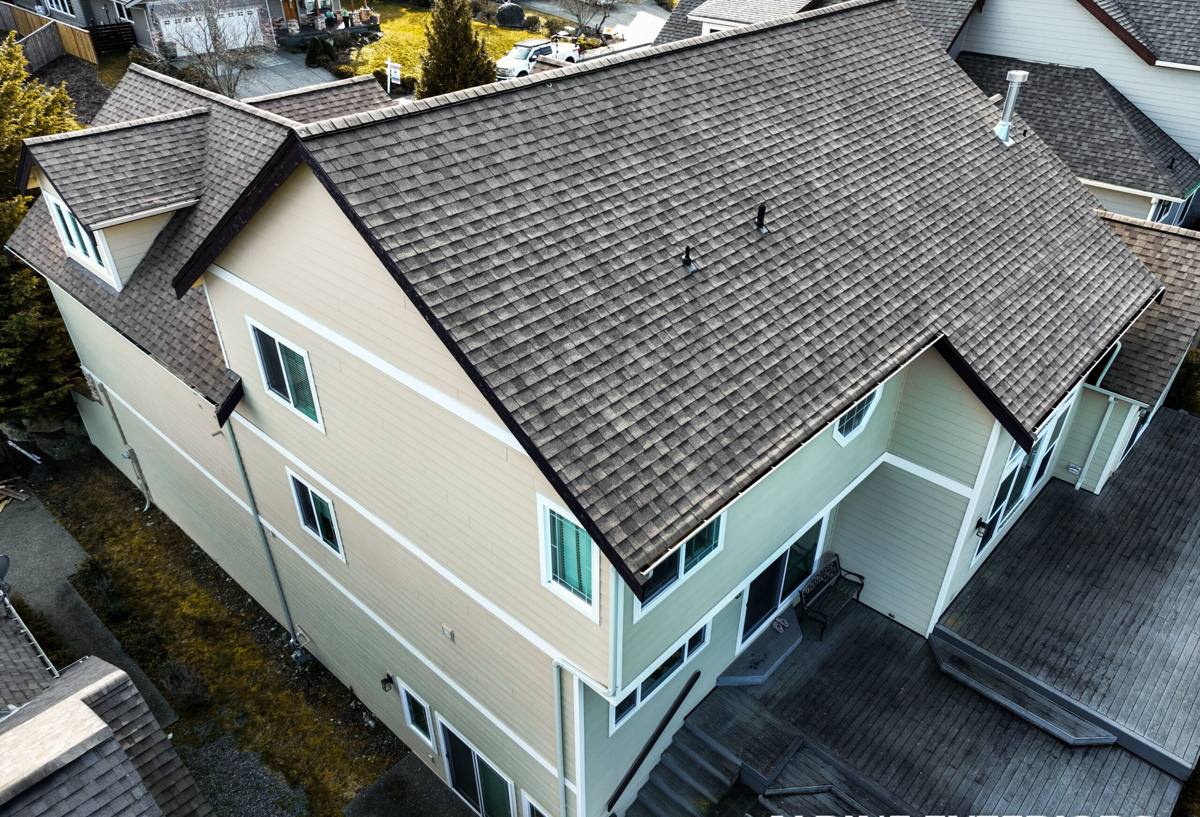
What Salt Air, Rain, and Moss Do to a Deck Over Time
Corrosion from Salt Air
Salt in the air accelerates corrosion on any exposed metal — fasteners, joist hangers, post bases, railing hardware. In an inland yard, mid-grade galvanized hardware might hold up fine for years. Closer to the water, that same hardware can start rusting and staining the wood around it much sooner. Once a fastener starts to corrode, it loses holding strength quietly, long before it looks obviously bad from the surface.
Standing Water and Rot
Whatcom County's rain doesn't just fall hard, it falls often and for long stretches. Any spot on a deck where water can sit — a poorly sloped board, a clogged gap, a ledger board without proper flashing — becomes a rot starting point. Wood decking that's designed to shed water quickly resists this; decking or framing that traps moisture against itself doesn't, regardless of the species.
Moss as a Structural Problem, Not Just Cosmetic
Moss and algae on a deck surface are usually treated as a cosmetic nuisance, but they're also a moisture and safety issue. Moss holds water against the board surface, which speeds up wood breakdown underneath a mat of growth you can't see through. It also gets slick fast, which matters on stairs and any sloped or shaded section of decking. A deck that's designed and sited to fight moss growth from the start needs far less aggressive cleaning later.
Framing and Fasteners: Where Corners Get Cut
Fastener Grade Matters More Here
This is the single biggest difference between a deck built for this climate and one that isn't. Standard galvanized fasteners are rated for general use, not for sustained salt-air exposure. For framing connectors, structural screws, and hardware in a coastal-influenced area like Peace Arch, we use fastener and connector grades rated for higher corrosion resistance — typically stainless steel or heavy-duty coated hardware matched to the decking manufacturer's requirements. It costs more upfront. It's not optional if you want the frame to still be sound in fifteen years.
Ledger Attachment and Flashing
Where a deck attaches to the house is the most common place we find hidden rot on older decks in this area — usually because the ledger board wasn't flashed correctly to shed water away from the house band joist. Proper flashing, and a small air gap or drainage path behind the ledger, keeps water from wicking into the house structure itself. This detail is invisible once the deck is finished, which is exactly why it's worth getting right the first time.
Choosing a Decking Surface That Can Handle This Climate
There's no single "correct" decking material for every project — it depends on budget, maintenance appetite, and how much shade and moss exposure the site actually gets. Here's how the common options compare for a Peace Arch-area deck specifically:
| Material | Moisture & Moss Behavior | Maintenance | Typical Lifespan Here |
|---|---|---|---|
| Pressure-treated wood | Resists rot with proper treatment, but surface holds moss/algae readily in shaded, damp spots | Annual cleaning and periodic sealing recommended | 15-20 years with upkeep |
| Cedar | Naturally moisture-resistant, ages to grey without sealing, still needs periodic moss treatment | Sealing every 2-3 years to hold color; cleaning as needed | 15-25 years with upkeep |
| Capped composite | Doesn't absorb water like wood, but moss and algae still grow on the surface film in shaded, damp areas | Occasional washing; no sealing or staining | 25-30+ years, manufacturer-warrantied |
| PVC decking | Fully moisture-proof board; surface can still host surface-level moss/mildew film that needs washing | Lowest maintenance of the group; occasional washing | 25-30+ years, manufacturer-warrantied |
Worth noting: no material is "moss-proof." Anything left damp and shaded long enough will grow something on the surface. The real variable is how much that growth affects the material underneath — wood degrades as moss holds moisture against it, while capped composite and PVC don't rot but still need washing to stay safe underfoot and to look right.
Footings, Drainage, and Site Prep
Frost Depth and Soil
Whatcom County code requires footings to be set below the local frost depth and sized appropriately for the soil conditions on your lot. Soil in this area varies from lot to lot — some Peace Arch properties have well-draining ground, others hold water longer, especially on flatter sites closer to the water. We check actual site conditions before finalizing footing depth and spacing rather than assuming a standard spec will work everywhere.
Grading Away from the House
A deck built over ground that doesn't drain away from the house creates a standing-water problem underneath the structure, which speeds up both rot and moss growth in the crawlspace below the decking. Where grading is an issue, we address drainage as part of the deck build rather than leaving it for the homeowner to discover during the next heavy rain event.
Permits and Code in Whatcom County
Most new deck construction and many deck replacements in Whatcom County require a building permit, with requirements tied to deck height, size, and attachment to the house. Permit review typically covers footing depth and spacing, ledger attachment and flashing, guardrail height and baluster spacing (important if the deck is a certain height above grade), and stair geometry. We handle the permit process as part of the job rather than treating it as the homeowner's responsibility — it protects you if the work is ever reviewed during a future home sale.
Our Deck Building Process
- Site assessment — we look at drainage, sun/shade exposure, soil, and how close the site is to salt air influence to inform material and hardware choices.
- Design and material selection — we walk through decking, railing, and fastener options honestly, including cost trade-offs, before anything is ordered.
- Permitting — plans are prepared and submitted to Whatcom County as required for the scope of work.
- Footings and framing — footings poured to code depth, framing built with corrosion-rated hardware and correctly flashed ledger attachment.
- Decking and railing installation — installed per manufacturer spacing and fastening specs to preserve warranty coverage.
- Final walkthrough and inspection — county inspection where required, plus our own final check before calling the job done.
Keeping Your Deck Ahead of Moss and Mildew
Whatever material you choose, a little regular upkeep goes a long way in this climate. A simple seasonal routine most homeowners can manage on their own:
- Sweep debris (leaves, needles, seed pods) off the deck regularly — trapped organic matter is what moss and mildew feed on.
- Wash the surface at least once a year, more often in shaded or north-facing areas, with a deck-safe cleaner (avoid high-pressure washing on wood, which can damage the grain).
- Check and clear gaps between boards so water and debris keep draining through rather than building up.
- Inspect fastener heads and railing hardware yearly for early rust staining — a fastener showing rust is worth flagging before it loosens.
- Reseal wood decking on the schedule recommended for the species, don't wait until it's visibly grey and dry.
- Trim back overhanging branches or shrubs that keep sections of the deck shaded and damp longer than the rest.
Why Local Experience in Peace Arch Matters
A deck contractor who mostly works inland doesn't run into the same failure patterns we see regularly this close to the water — corroded hardware years before it should be, ledger rot from flashing that wasn't detailed for this much rain, decking chosen without accounting for how much shade and moss exposure a given yard actually gets. None of that requires exotic materials or unusual techniques to solve. It just requires building for the conditions that are actually present on your lot, not a generic spec sheet.
If you're planning a new deck or need to replace one that's showing its age, we're happy to take a look and talk through what makes sense for your property. Reach out for a free, no-pressure estimate using the form below.