 Semiahmoo Exterior
 Windows Built for Blaine Harbor's Marine Climate
Blaine Harbor sits right where the weather comes off the water first. Homes here take a different kind of beating than houses even a few miles inland in Whatcom County — salt-laden air, driving rain that hits siding and glass sideways, and a moss season that stretches longer than most homeowners expect. Windows are one of the first components to show that wear, and one of the most expensive to get wrong. This page is about one thing: custom window work done specifically for Blaine Harbor conditions, not a generic replacement job pulled from a catalog.
"Custom" here doesn't mean fancy shapes or oversized glass for its own sake. It means the window is matched to the opening, the exposure, and the wall assembly of your specific home, with materials and details chosen because they hold up in this environment — not just because they're the cheapest option at the yard.
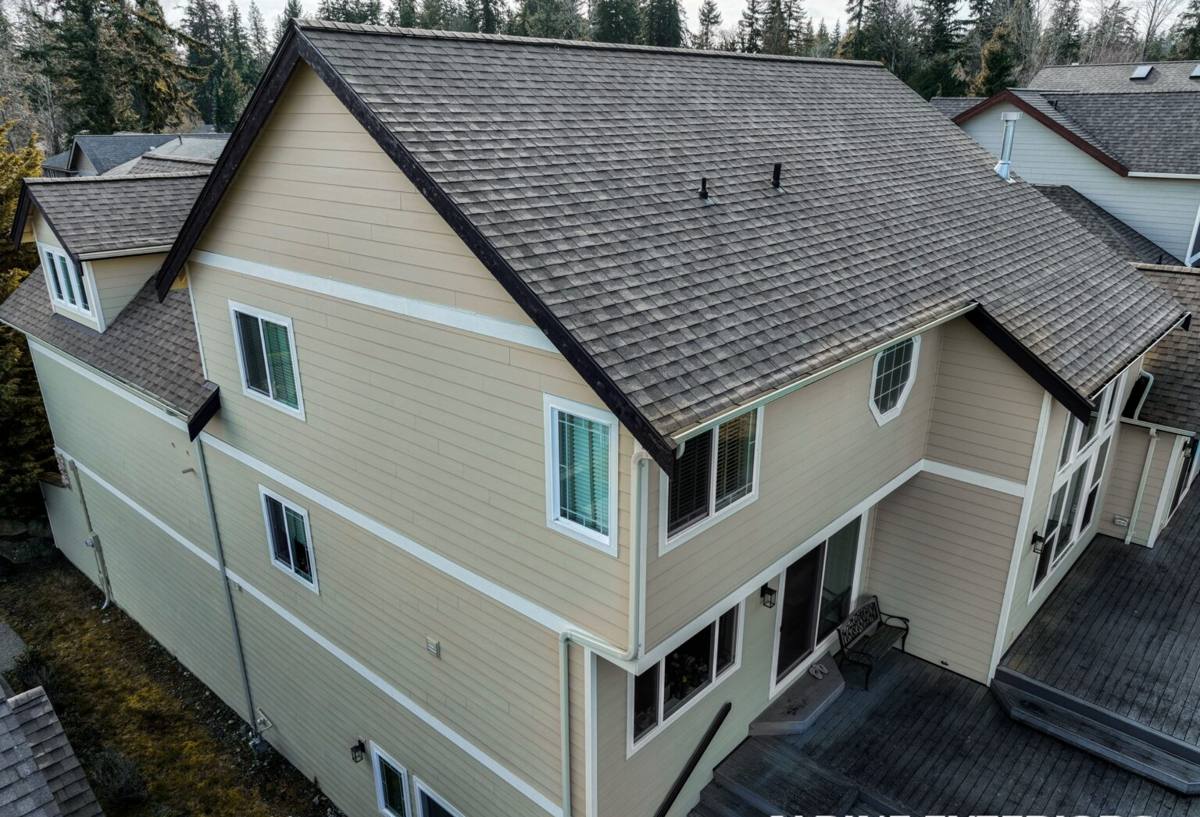
What Salt Air, Rain, and Moss Actually Do to Windows
It helps to understand the mechanism, not just the symptom.
Salt air
Airborne salt is conductive and corrosive. It settles into hardware, cladding seams, and any exposed metal fasteners. Over years, it accelerates corrosion on hinges, locks, and balance systems, and it can dull or pit certain finishes faster than a manufacturer's inland warranty terms anticipate.
Driving rain
Wind off the water doesn't just fall on a window — it pushes against it. That changes how water behaves at the frame-to-wall junction. A window that would perform fine on a sheltered inland wall can leak at a Blaine Harbor exposure if the flashing detail, sill pan, or sealant joint wasn't built for wind-driven water intrusion in the first place.
Moss and constant moisture
Whatcom County's moss season is long, and it's not just a roof and gutter issue. Moss and algae thrive anywhere moisture sits — window tracks, sills, and the bottom edge of frames that don't drain well. Trapped organic growth holds water against wood and finish surfaces far longer than open air would, which is exactly what shortens a window's service life.
None of this means windows in Blaine Harbor fail faster by default. It means the margin for a mediocre installation or the wrong material choice is much smaller here than it is a few miles inland.
What a Correct Custom Window Job Involves
A window replacement is really two jobs: the unit itself, and the opening it goes into. In a marine exposure, both matter equally.
- Accurate measurement of the existing rough opening, including any out-of-square or settled framing common in older coastal homes
- Removal of the old unit without damaging surrounding sheathing, framing, or siding that will need to seal back up correctly
- Inspection of the opening for hidden rot, prior water staining, or failed flashing before anything new goes in
- A sill pan or sloped sill detail that sheds water outward instead of letting it pool at the bottom corners
- Proper flashing integration with the house wrap or building paper, lapped correctly so water sheds down and out, not behind the cladding
- Backer rod and sealant at the exterior joint rated for movement and UV exposure, not just general-purpose caulk
- Correct shimming and fastening so the sash operates smoothly and the frame isn't racked, which is what causes premature seal failure
- Interior air sealing so conditioned air isn't leaking into the wall cavity and creating condensation risk from the inside
Skip any one of these steps and the window itself becomes almost irrelevant — even a well-built unit will underperform in a wall opening that wasn't prepped for wind-driven rain.
Choosing the Right Frame Material for This Exposure
There's no single "best" window material for every home — the right choice depends on your home's exposure, your maintenance appetite, and your budget. Here's how the common options actually behave in a salt-air, high-moisture environment like Blaine Harbor, based on what we see in the field.
| Frame Material | Salt Air / Corrosion Behavior | Moisture & Rot Risk | Maintenance Needed |
|---|---|---|---|
| Vinyl | Does not corrode; hardware quality varies by manufacturer | No rot risk in the frame itself; drainage design still matters | Low — periodic cleaning of tracks and weep holes |
| Fiberglass | Very stable; minimal expansion/contraction, holds finish well near the water | No rot risk; dimensionally stable in wet-dry cycling | Low to moderate |
| Aluminum | Prone to pitting and corrosion over time in direct salt exposure unless finish is marine-rated | No rot, but can conduct cold and promote interior condensation | Moderate — finish and hardware need monitoring |
| Wood / Wood-clad | Exterior cladding protects the wood, but any breach exposes it to rot | Highest rot risk if seals or cladding fail near this much moisture | Highest — regular inspection and refinishing |
We're not going to tell a homeowner that wood windows are a bad product — plenty of them perform well for decades. Our professional standard for a direct Blaine Harbor exposure leans toward vinyl or fiberglass because they remove the rot variable entirely and tolerate the wet-dry cycling this location produces year-round. For homes set back from the harbor or under more overhang protection, wood-clad and aluminum both remain reasonable choices with the right maintenance plan.
Glass and Hardware Choices That Matter Here
Frame material gets most of the attention, but two other details make a real difference in this climate.
Glass package
Double-pane insulated glass is standard and performs well for most homes. For west- and water-facing exposures that take the brunt of wind and driving rain, a low-E coating and argon fill help with both energy performance and interior condensation control during our wetter, colder months — condensation on interior glass is often a sign of a glazing or ventilation issue worth addressing at replacement time.
Hardware and finish
Locks, hinges, and balance hardware take the earliest visible corrosion damage in salt air. Marine-grade or corrosion-resistant hardware finishes cost a little more up front but avoid the sticky locks and stiff cranks that are one of the most common service calls we see on windows installed without this exposure in mind.
Our Process for Blaine Harbor Custom Window Projects
- On-site assessment. We look at each opening individually — exposure direction, existing water staining, framing condition, and how the current windows have actually performed, not just their age.
- Material and glass recommendation. Based on that assessment, we recommend frame material, glass package, and hardware suited to that specific wall's exposure, and explain the honest trade-offs of each option.
- Detailed measurement and ordering. Custom units are built to the actual opening, not a standard size, which avoids the gaps and shim stacks that create long-term sealing problems.
- Careful removal and opening prep. We check the sheathing and framing behind the old window before installing anything new, and address any hidden moisture damage we find.
- Installation with full flashing and sealing details. Sill pan, flashing integration, backer rod and sealant, and interior air sealing are treated as part of the job, not optional extras.
- Final check and walkthrough. We test operation, confirm a clean seal line, and walk the homeowner through what to expect and how to maintain the new windows going forward.
Signs Your Current Windows Are Losing the Fight
Most window problems in this area show up gradually. Watch for these:
- Fogging or haze between the panes — a sign the seal has failed and insulating gas has escaped
- Sashes that stick, drag, or won't latch smoothly, especially after damp weather
- Visible white or gray corrosion buildup on hinges, cranks, or locks
- Soft spots, paint bubbling, or dark staining at the sill or lower frame corners
- A noticeable draft near the frame edge during windy, wet weather
- Moss, algae, or standing water collecting in the exterior track or weep holes
- Interior condensation on the glass that wasn't there a few years ago
Any one of these on its own isn't an emergency. Several at once, especially on a harbor-facing wall, usually means the window is on its way out and worth addressing before hidden framing damage sets in.
Maintenance That Actually Extends Window Life Here
Even the right window benefits from a little seasonal attention in this climate. Clearing debris and moss from tracks and weep holes before the wet season keeps drainage paths open. Rinsing accumulated salt film off frames and glass periodically, especially after storms, cuts down on long-term corrosion and buildup. Checking exterior sealant joints once a year for cracking or separation catches small gaps before they become active leaks. None of this is complicated, but it's the difference between a window that looks and performs the same in fifteen years and one that needs early intervention.
Why Local Experience in Blaine Harbor Matters
A crew that mostly works inland jobs will often use the same detailing they'd use anywhere else — because it works fine anywhere else. Blaine Harbor doesn't give you that room for error. We work this specific stretch of Whatcom County regularly, which means we already know which exposures take the worst of the wind-driven rain, where moss and drainage problems tend to start, and which material and hardware choices actually hold up here instead of just on paper. That's not a marketing point — it's the reason the same window spec can perform differently a mile apart depending on how close it sits to the water.
If your windows are showing their age, or you're planning a replacement and want it done right the first time for this exposure, we're happy to take a look. Reach out for a free, no-pressure estimate using the form below — we'll assess your home's specific exposure and give you straight options, not a sales pitch.