 Semiahmoo Exterior
 Ferndale's Climate Is Harder on Siding Than Most Homeowners Realize
Ferndale sits in Whatcom County close to Semiahmoo Bay and the Puget Sound shoreline, which means homes here deal with a combination most siding products were never designed for: salt-laden air moving in off the water, long stretches of driving rain, and a moss season that can run most of the year under the tree cover common to this part of the county. Any one of those factors will shorten the life of a mediocre siding job. Together, they expose weak installation work fast — usually within a few wet seasons, not a few decades.
This page is about one job done right: fiber cement siding installed on a Ferndale home, matched to what this specific climate does to a building envelope over time.
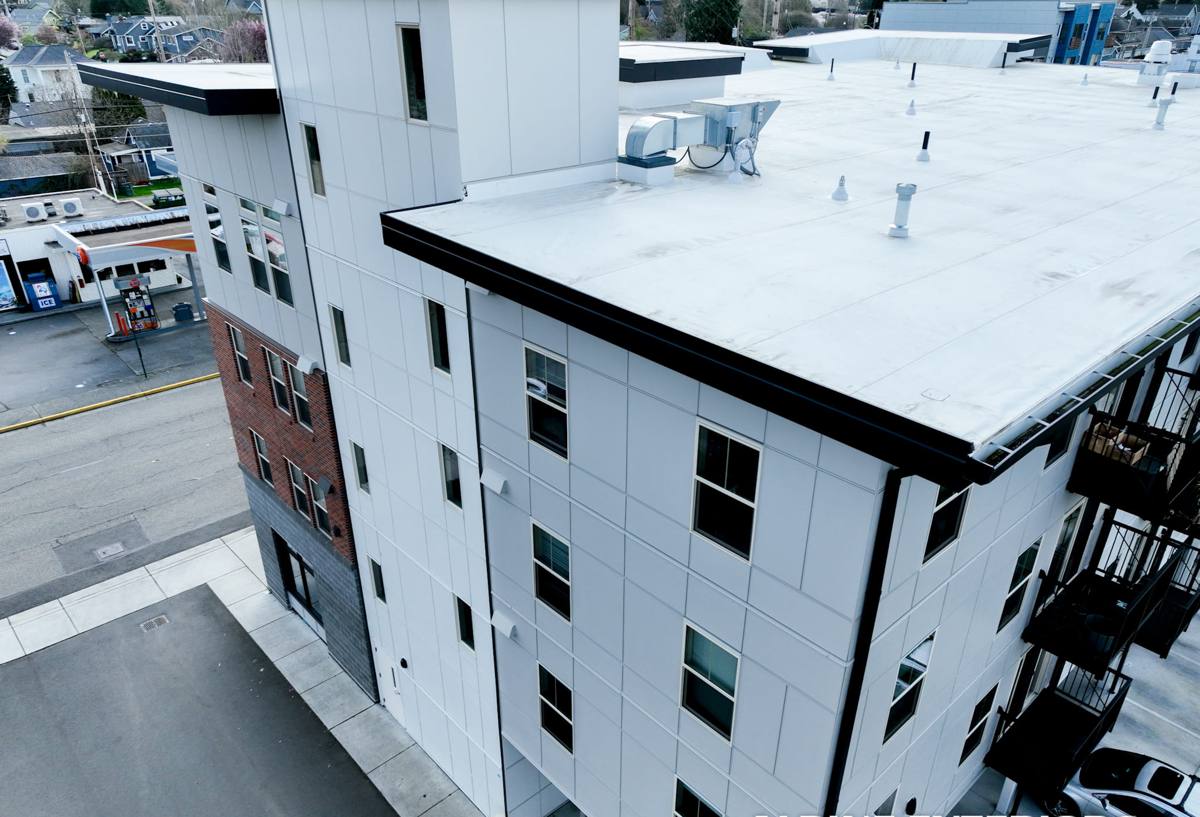
What Salt Air, Rain, and Moss Actually Do to Siding
Salt Air
Airborne salt doesn't just sit on a surface — it's hygroscopic, meaning it pulls moisture out of the air and holds it against whatever it lands on. On siding, that means more time spent damp, which accelerates paint failure, corrodes fasteners that aren't properly rated, and feeds any organic growth already present. Homes closer to the water take the brunt of this, but salt-laden moisture travels further inland on wind than most people expect.
Driving Rain
Whatcom County doesn't just get rain — it gets wind-driven rain that hits siding at an angle, working its way into laps, seams, and butt joints instead of running straight down and off. A siding system depends on correct overlaps, flashing, and drainage behind the cladding to handle that. Get the water management wrong and it doesn't matter how good the siding material is — moisture will find a way behind it.
Moss and Organic Growth
Shaded, damp, and mild — Ferndale's climate is close to ideal for moss, algae, and mildew. On siding, sustained organic growth holds moisture against the surface, degrades coatings, and on porous or wood-based products can lead to rot underneath. A siding material's resistance to moisture absorption, and a finish that resists staining, both matter more here than in drier parts of the state.
Why We Install Only James Hardie Fiber Cement
We made a deliberate decision years ago to install James Hardie fiber cement siding exclusively — not vinyl, not LP SmartSide, not Cemplank, not Allura, not primed spruce or cedar. That's not a marketing position, it's a standard we hold because of what we've seen these products do (or fail to do) in exactly this kind of climate.
Vinyl siding is inexpensive and low-maintenance in dry, moderate climates, but it's a poor water-management material on its own — it relies almost entirely on the water-resistive barrier behind it, expands and contracts significantly with temperature swings, and can crack or become brittle over time. Engineered wood products like LP SmartSide use wood strand cores that, however well-treated, remain more vulnerable to sustained moisture exposure at cut edges and fastener penetrations than a cement-based product. Primed spruce or cedar is a real wood product with real wood problems: it needs consistent refinishing, and in a climate this wet, gaps in that maintenance schedule show up as rot, not just cosmetic wear. Other fiber cement brands like Cemplank and Allura are legitimate competitors to Hardie on paper, but we standardized on one manufacturer, one set of installation specs, and one warranty structure so our crews master it completely rather than splitting attention across several systems.
James Hardie is a non-combustible fiber cement product with a factory-applied ColorPlus finish, engineered specifically for different climate zones, backed by a strong transferable warranty when installed to the manufacturer's spec. For a home dealing with salt air, driving rain, and moss, that combination of moisture resistance, finish durability, and fire resistance is the right trade-off.
HZ5 Engineering: Why the Product Matters for This Climate
James Hardie makes climate-specific product lines, and the Pacific Northwest — including Whatcom County — falls into their HZ5 (moisture-focused) engineering zone. That's not a marketing label; it reflects real differences in the cement formulation and moisture-resistance testing aimed at exactly the conditions Ferndale sees: sustained dampness, wind-driven rain, and freeze-thaw cycling in the colder months.
The factory-applied ColorPlus finish is just as important as the substrate. It's baked on under controlled conditions, which gives it better adhesion and fade resistance than field-applied paint — and in a climate where organic growth and salt moisture attack a finish constantly, a coating that resists staining and doesn't need repainting every few years is a real, practical advantage, not a convenience feature.
What a Correct Fiber Cement Install Actually Involves
Fiber cement siding is only as good as the install behind it. The material can be exactly right for Ferndale's climate and still fail early if it's hung wrong. A correct job includes:
- Full inspection and repair of the sheathing and water-resistive barrier before any siding goes up — no covering up existing rot or moisture damage
- Correct flashing at every window, door, and penetration, lapped so water sheds outward and down, never into the wall
- Proper fastener placement and type — corrosion-resistant fasteners driven to Hardie's specified depth, not overdriven or underdriven
- Correct clearances at grade, roof lines, and decks so siding never sits in standing water or constant splash-back
- Manufacturer-specified overlaps and gaps at butt joints, sized for the wood movement and expansion Hardie's install guide calls for
- Caulking and sealant only where Hardie's specifications actually call for it — over-caulking traps moisture instead of releasing it
- A final inspection against the manufacturer's install checklist, not just a visual walk-around
Skipping any one of these doesn't show up on day one. It shows up in year three or four, as a stain pattern, a soft spot, or a warranty claim that gets denied because the install didn't meet spec.
Comparing Siding Options for a Ferndale Home
| Material | Moisture Performance in This Climate | Maintenance Burden | Typical Lifespan Here |
|---|---|---|---|
| James Hardie Fiber Cement (HZ5) | Engineered for sustained moisture and wind-driven rain; non-combustible | Low — factory finish, no repainting cycle in normal use | Decades when installed to spec |
| Vinyl Siding | Relies heavily on the barrier behind it; can warp or crack with temperature swings | Low, but limited repair options if damaged | Moderate, shorter in harsh coastal exposure |
| LP SmartSide (engineered wood) | Vulnerable at cut edges and fasteners if moisture gets in | Moderate — coating and edge sealing need monitoring | Moderate, dependent on install quality |
| Primed Spruce/Cedar | Absorbs moisture readily; needs a dry, well-ventilated install to perform | High — regular repainting and inspection required | Shorter without diligent upkeep |
This isn't a case where every option is "fine, just pick what you like." In a climate that punishes moisture mistakes, the material and the install both need to be right — which is why we don't offer the other options at all.
Our Process, Start to Finish
- Assessment: We walk the home, check the existing siding and sheathing condition, and look specifically for the kind of moisture and moss damage common in this area.
- Product and color selection: We go over the Hardie lines and ColorPlus color options that fit the home and hold up best in salt-air, moss-prone exposure.
- Prep: Old siding comes off, sheathing gets inspected and repaired as needed, and the water-resistive barrier is corrected or replaced before anything new goes up.
- Installation to spec: Flashing, fastening, clearances, and joint work all follow Hardie's published installation guide — not shortcuts.
- Final inspection: We check the finished work against the manufacturer's checklist so the warranty is actually intact, not just assumed.
Why a Crew That Already Works Ferndale Matters
Siding installation isn't one-size-fits-all across Washington. A crew used to drier east-side conditions, or to climates without this level of salt exposure, can make choices — on flashing details, fastener spacing, or finish selection — that would be fine elsewhere and wrong here. A crew that already works Whatcom County knows what moss growth looks like when it's cosmetic versus when it signals a moisture problem underneath, knows which exposures in Ferndale take the worst of the driving rain, and installs accordingly instead of learning it on your house.
That local familiarity is also what keeps a warranty meaningful. James Hardie's warranty depends on installation to spec — a crew that's installed it repeatedly in this exact climate is less likely to make the kind of small error that voids coverage years down the line.
Cost Factors to Expect
Every home is different, but the main cost drivers on a Ferndale fiber cement job are consistent: the amount of sheathing repair needed once old siding comes off, the home's overall square footage and trim complexity, the Hardie product line and finish selected, and access (multi-story sections, tight setbacks, or landscaping that limits staging). A straightforward single-story home in good condition underneath will cost less than one needing sheathing repairs, complex trim work, or difficult access — we'll walk through the specifics for your home during the estimate rather than quoting a number that doesn't apply to your actual property.
If you're weighing a siding replacement in Ferndale, we're happy to take a look and give you a straightforward, no-pressure estimate — including an honest read on what your current siding and sheathing actually need. Use the form below to get started.