 Semiahmoo Exterior
 Building a Deck That Holds Up in Bellingham's Marine Climate
A deck in Bellingham does a different job than a deck almost anywhere inland. It sits under a marine layer that keeps humidity high most of the year, takes wind-driven rain off Semiahmoo Bay and the Strait, and spends long stretches of fall and winter shaded and damp enough for moss and algae to take hold on any horizontal surface. None of that means a deck can't last decades here — it just means the build has to account for salt-laden air, sustained moisture, and low winter sun angles from the first framing decision onward, not as an afterthought once boards start showing problems.
This page covers what we build into custom decks for homes in and around Bellingham specifically: material choices that actually perform in this climate, the structural and drainage details that separate a deck that lasts from one that doesn't, and how our process works from first walk-through to final punch list.
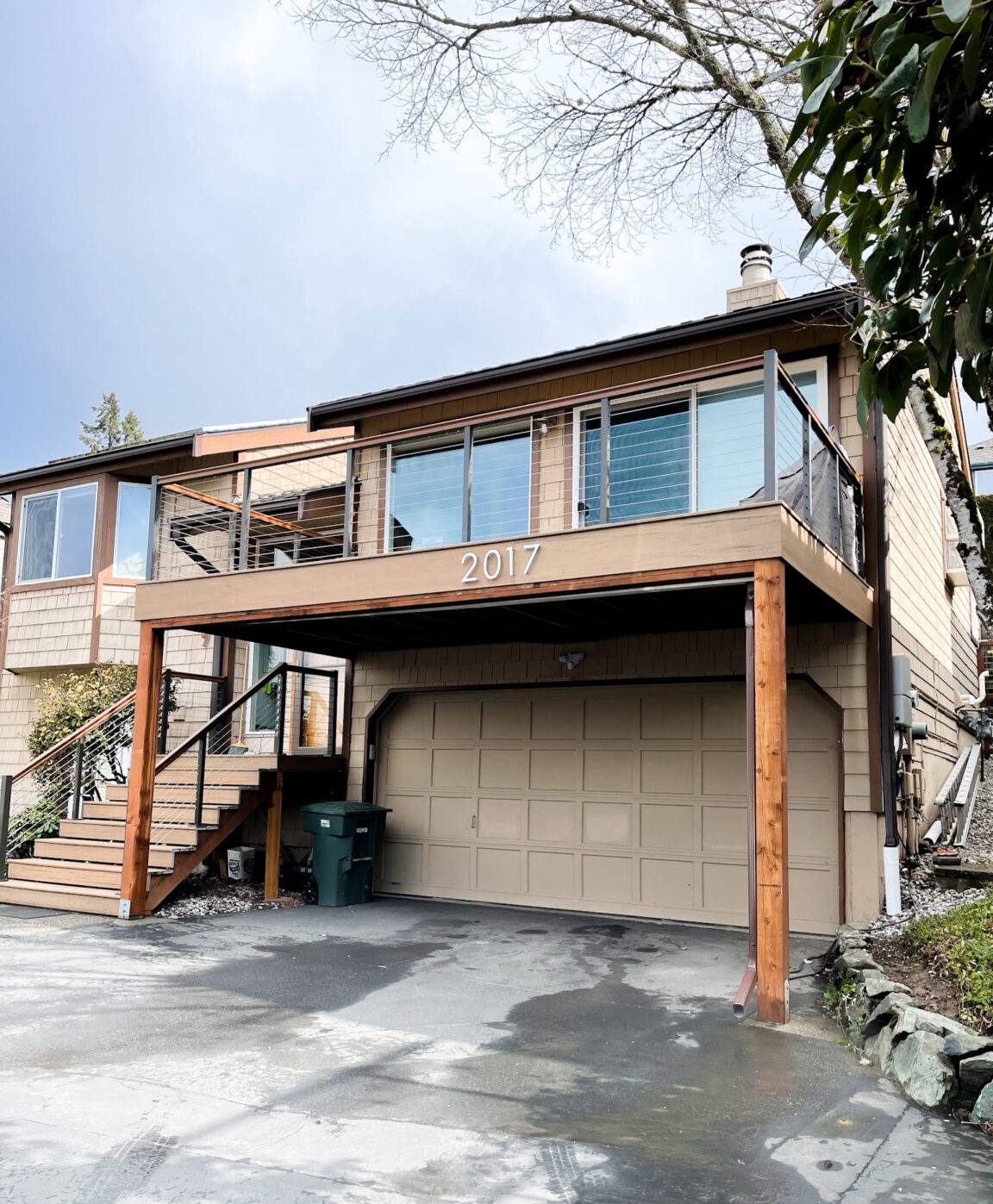
What Salt Air, Rain, and Moss Actually Do to a Deck
Salt Air and Corrosion
Proximity to Semiahmoo Bay means airborne salt settles on everything outdoors, including deck hardware. Standard zinc-coated fasteners and connectors corrode faster here than they would forty miles inland, and once a fastener starts rusting, it weakens the connection it's holding and can bleed rust stains into the surrounding wood or composite. This is a durability issue, not a cosmetic one — corroding hardware at a ledger board or a post base is a structural problem waiting to happen.
Driving Rain and Moisture Intrusion
Whatcom County gets a lot of rain, and a meaningful share of it comes in sideways during winter storms. Wind-driven rain finds gaps that a light, straight-down rain never would — around ledger boards where a deck attaches to the house, under poorly lapped flashing, and in end grain that isn't sealed. Water that gets behind or under a deck's structure and can't drain or dry out is the single biggest cause of rot in this region.
Moss and the Long Shoulder Seasons
Bellingham's moss season isn't a few weeks — it's most of the year on shaded, north-facing, or tree-covered decks. Moss and algae hold moisture against the decking surface, make boards slick and dangerous underfoot, and on wood decking can accelerate surface decay if left unaddressed. Decking choice, board spacing, and even a deck's orientation relative to sun exposure all affect how much moss pressure a given deck will face.
Choosing the Right Decking Material for This Climate
There's no single "best" decking material — the right choice depends on budget, how much upkeep you want to do, and how much sun exposure the deck gets. Here's how the common options actually perform under Whatcom County conditions:
| Material | Upfront Cost | Moss/Algae Resistance | Salt Air Behavior | Maintenance Load |
|---|---|---|---|---|
| Pressure-treated lumber | Lowest | Low — porous surface holds moisture and organic growth | Fine if hardware is corrosion-rated | Annual cleaning, periodic sealing |
| Cedar | Moderate | Moderate — natural oils help but fade over time | Fine if hardware is corrosion-rated | Regular oiling/staining to hold color and resist decay |
| Capped composite | Higher | High — dense cap sheds moisture and resists staining | Excellent | Occasional wash, no sealing/staining |
| PVC decking | Highest | Highest — non-porous, doesn't absorb moisture | Excellent | Lowest — periodic wash only |
We don't push every client toward the most expensive option. A well-built cedar deck with the right fasteners and a realistic maintenance plan can serve a Bellingham home well for many years. What we won't do is install decking without matching it to a maintenance plan the homeowner actually intends to follow — a wood deck that never gets cleaned or resealed will show problems in this climate faster than the same deck would in a dry inland region.
Framing Material Matters Too
Whatever decking goes on top, the framing underneath takes the real structural load and sits closest to standing moisture. We frame with pressure-treated lumber rated for ground contact where it's near grade, and we treat cut ends and drilled holes in the field with an approved sealant — a cut end of pressure-treated lumber is exposed, untreated wood, and skipping the field treatment is one of the more common shortcuts that shortens a deck's life.
What Correct Construction Looks Like Below the Surface
Most of what determines whether a deck lasts happens before the decking boards ever go down. This is the part that isn't visible once the project is finished, which is exactly why it needs to be done right the first time.
Ledger Board and Flashing
Where a deck attaches to the house is the single most water-exposed connection on the whole structure, and it's the spot driving rain finds first. A correct ledger attachment uses proper flashing that laps over the house's weather-resistive barrier and directs water out and away from the wall assembly, not just a bead of caulk and a hope. We use dedicated ledger flashing with a drainage gap behind the ledger board so any moisture that does get in has somewhere to go.
Footings and Post Bases
Footings need to be sized and set to local frost depth and soil conditions, and posts need to sit on bases that keep the wood off the concrete and away from standing water — post-to-concrete contact is one of the fastest ways to introduce rot at a structurally critical point. We use elevated, corrosion-rated post bases rather than setting posts directly in or on concrete.
Drainage and Airflow Underneath
A deck built low to the ground or over a patio needs a real plan for where water goes — whether that's a below-deck drainage system, sloped grading, or simply enough clearance for air to circulate and framing to dry between rain events. Decks that trap moisture underneath with no airflow are the ones we see rotting from the joists up, often before the visible decking shows any sign of a problem.
Fasteners and Hardware
Given the salt air, we use stainless steel or heavy-duty coated fasteners and connectors rated for coastal exposure, along with joist tape on top of framing members to keep decking screws from sitting in a moisture trap where they penetrate the joist. Hidden fastener systems, where applicable to the decking product, also reduce the number of surface penetrations where water can enter the board.
Railings and Structural Hardware in a Marine Environment
Railings take direct weather exposure on every side and often see more hand contact and wear than the decking itself. Metal railing components and their fasteners are especially vulnerable to salt-air corrosion if they're not rated for it, and a corroding baluster connection is a safety issue, not just a maintenance one. We spec railing hardware the same way we spec deck fasteners — for coastal exposure, not just general outdoor use — and we make sure post-to-frame connections are through-bolted into properly blocked framing rather than toe-screwed into the rim joist alone.
Our Process, Start to Finish
- On-site assessment — we walk the property, look at sun exposure, drainage, existing structure (for replacements), and how the space will actually be used.
- Design and material selection — we go over decking and railing options honestly, including maintenance trade-offs, and build a layout that fits the house and the way you'll use the space.
- Permitting — most deck projects in Whatcom County require a building permit, and elevated decks typically require engineered footing and framing details; we handle the permit application and inspections.
- Demolition/removal (replacement projects only) — old decking, framing, and any compromised structural elements are removed and disposed of.
- Footings and framing — footings are set to proper depth, posts and beams go in, and the ledger connection is flashed correctly before anything else proceeds.
- Decking, railing, and finish details — decking is installed with proper spacing and fastening, railings go on, and stairs, skirting, or lighting are finished out.
- Final walkthrough — we go over the finished deck with you, including a realistic maintenance schedule for the material you chose.
Signs an Existing Deck Needs Attention
If you're not sure whether your current deck needs repair or full replacement, these are the things worth checking before the wet season sets in:
- Soft or spongy spots underfoot, especially near the house connection or stair stringers
- Visible gaps or rust staining around the ledger board
- Persistent moss or algae that returns within weeks of cleaning
- Fasteners that are rusted, backed out, or missing
- Wobble or movement at railing posts
- Standing water that doesn't drain within a few hours of rain stopping
- Gaps or separation where decking boards meet at joints
Any one of these on its own might be minor. Several together, especially near the ledger board or a support post, usually means it's time for a professional look rather than another round of surface cleaning.
Permits and Practical Considerations for Whatcom County Homes
Deck projects in this area generally fall under Whatcom County or the local municipal building code, depending on where the property sits, and most decks above a certain height off grade need a permit along with inspections at the footing and framing stages. Setback requirements from property lines also come into play for larger decks. We factor permitting timelines into the project schedule up front so it isn't a surprise partway through, and we handle the inspection process directly rather than leaving that on the homeowner.
Why It Matters That We Already Work in Bellingham
A crew that builds decks across a wide range of climates has to relearn local conditions on every job. A crew that already works Bellingham regularly knows which framing and fastener specs actually hold up against this area's salt air and rain patterns, knows the local permitting process, and has already made — and corrected for — the mistakes that show up when a deck is built to a generic spec instead of a Whatcom County one. That familiarity shows up less in the sales pitch and more in the parts of the deck you never see once it's finished: the flashing detail behind the ledger board, the post base keeping wood off concrete, the fastener spec that won't be rusting in five years.
Ready to Talk Through Your Deck Project
If you're planning a new deck or replacing one that's showing its age, we're happy to come take a look, talk through material options honestly, and put together a straightforward estimate — no pressure, no obligation. Use the form below to get in touch and we'll go from there.