 Semiahmoo Exterior
 Why Lynden Decks Take Extra Punishment
Lynden sits inland from the coastline, but that doesn't spare it from the same wet weather pattern that soaks the rest of Whatcom County for much of the year. Long stretches of driving rain, short winter days, and slow-drying shade from trees and fences all add up to decks that stay damp far longer than they should. Add in a moss season that can run from fall through spring, and it's easy for a deck to look fine on the surface while the framing underneath is quietly failing.
Homes closer to the water around Semiahmoo deal with salt-laden air on top of that moisture load, which speeds up corrosion on fasteners and hardware. Lynden decks generally don't fight salt air the same way, but they get the same relentless rain and moss exposure — and an under-built or aging deck doesn't care which mechanism is doing the damage. Wet wood rots, corroded fasteners fail, and either way the deck stops being safe to use.
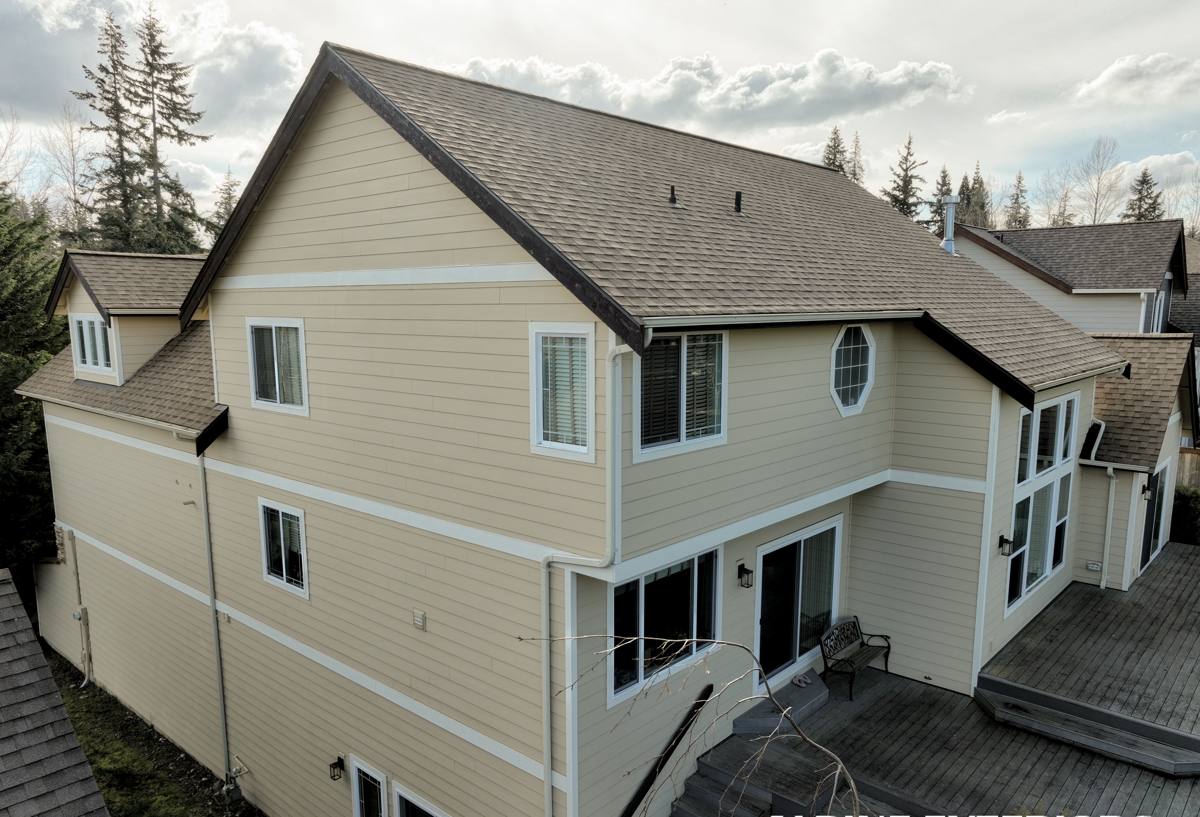
Signs Your Deck Needs Repair, Not Just a Wash
A pressure wash and a fresh coat of stain can make a tired deck look decent for a season, but cosmetic work doesn't fix structural problems — and in this climate, structural problems are common. Some of the issues we see most often on Lynden decks include:
- Soft, spongy, or dark-stained boards, especially near the house or in shaded corners
- A ledger board, where the deck attaches to the house, that's cracked, gapped, or missing proper flashing
- Rusted or corroded fasteners, nail heads popping up, or hardware staining the wood around it
- Wobble or movement in the railing, stairs, or the deck frame itself
- Persistent moss or algae film that won't stay off even after cleaning
- Gaps opening up between boards, or boards that have cupped and no longer sit flat
Any single item on that list can be a minor fix. Several of them together usually mean it's time for a real inspection rather than another round of surface cleaning that just hides the problem for another year.
What a Correct Deck Repair Actually Involves
Deck repair isn't just swapping a few boards. A repair that holds up under Whatcom County's rain load has to address the parts you can't see as much as the parts you can.
Framing and Structure
Joists, beams, and posts carry the load of the deck. When these have been sitting wet for years, we check for soft spots, splitting, and rot at the ends where water collects. Depending on the damage, that can mean sistering a joist with new lumber alongside the old one, replacing a section outright, or reinforcing a post and footing that has shifted or settled.
Ledger Board and Flashing
The ledger board is where most serious deck failures start, because it's bolted directly to the house and is easy to build without proper flashing. Water gets behind the ledger, soaks into the rim joist, and rots both the deck attachment and the house framing behind it. A correct repair means pulling back siding as needed, installing flashing that sheds water away from the house, and reattaching the ledger with fasteners rated for the lumber and the load.
Fasteners and Hardware
Most decks that fail early were built or previously repaired with the wrong fasteners, and it shows up as rust streaks and loosening connections within a few years in a climate this wet. We use hot-dip galvanized or stainless hardware rated for contact with treated lumber, not whatever happened to be on the shelf. It costs a little more up front and keeps the connections from failing a second time.
Decking, Railings, and Stairs
Once the structure underneath is sound, we address what's on top — replacing rotted or cupped boards, tightening or rebuilding railings so they meet proper height and spacing, and making sure stair stringers and treads are solid underfoot.
Material Choices for the Repair
When we're replacing boards, we'll talk through the options rather than just matching whatever's there. Pressure-treated lumber is the standard for framing and is often the practical choice for decking too — it's affordable and handles moisture reasonably well when it's properly sealed and maintained. Cedar offers a warmer look and natural rot resistance but needs more regular sealing to hold up through a wet winter. Composite decking cuts down on yearly maintenance and resists moss better than wood, but it comes with trade-offs of its own: a bigger upfront cost, moisture and ventilation behavior that's different from wood, and repairs down the road that may mean sourcing a matching color and profile years later. We'll give you honest pros and cons for your situation rather than push one material for every job.
Repair vs. Replace: How We Make the Call
Not every deck with problems needs to be torn out. The honest answer depends on how much of the structure is still sound versus how much has been compromised by years of moisture. Here's generally how we sort it out:
| What We Find | What It Usually Means | Typical Path |
|---|---|---|
| Surface wear, a few soft boards, isolated rust | Framing is sound; damage is limited to the top layer | Targeted board and hardware replacement |
| Rot at the ledger or rim joist | Water has been getting behind the house connection | Ledger and flashing rebuild, localized framing repair |
| Multiple soft or split joists, post movement | The structural frame has been failing for a while | Partial to full frame reconstruction |
| Original deck is undersized, out of code, or footings are inadequate | Structure was never built to current standards | Full replacement, built to current code |
We'll walk you through which category your deck falls into and why, rather than defaulting to a full tear-out or patching over something that actually needs structural work.
Moss, Algae, and the Slip Hazard Nobody Talks About
Moss on a deck is more than an eyesore. It holds moisture against the wood surface, feeds fungal growth, and turns boards slick enough to be a genuine fall hazard on stairs and ramps — a real concern through the long stretch of the year when Whatcom County stays wet and shaded decks barely get a chance to dry out between storms. As part of a repair, we clean and treat affected surfaces and look at what's actually feeding the problem: overhanging branches, poor drainage under the deck, or boards installed too tight to let air move between them. Fixing the moisture source matters as much as removing the moss itself, or it's back within a season.
Permits and Code Basics for Lynden Homeowners
Depending on the scope of work, deck repairs and replacements in Lynden and the surrounding Whatcom County area can require a permit, particularly when structural framing, footings, or railings are involved, versus simple like-for-like board replacement. Attached decks tied into the house structure and taller decks tend to draw the most scrutiny, while small, ground-level, or freestanding repairs sometimes fall under simpler rules — but we confirm the specifics for your project with the local building department rather than assume. Skipping a permit that was actually required can create real problems later, from insurance disputes to complications at resale.
Our Process, Start to Finish
- Inspection. We get under the deck, check the ledger, and probe suspect boards and framing to give you a straight assessment of what's failing and why.
- Written scope. You get a clear plan of what's being repaired, what's being replaced, and what materials and fasteners we're using — no vague line items.
- Permit check. If the scope requires a permit, we confirm that before work starts, not after.
- The repair. Structural work comes first, then decking, railings, and stairs, then final cleanup and treatment.
- Walkthrough. We go over the finished work with you so you know exactly what was done and what to watch for going forward.
Self-Inspection Checklist
Before you call anyone, a quick walk around your own deck can tell you a lot. Check for:
- Soft spots when you press a screwdriver into the wood near the house and at post bases
- Rust streaks running down from nails, screws, or metal hardware
- Any gap, crack, or daylight visible where the deck meets the house
- Railings that flex or move noticeably when you push on them
- Stair stringers that feel bouncy or uneven underfoot
- Standing water or debris trapped between boards after rain
- Moss or dark green film that returns quickly after cleaning
If you find two or more of these, it's worth getting a professional look before the next wet season adds to the damage.
If You Can't Get It Fixed Right Away
If a repair has to wait, a few simple steps can limit further damage: keep the deck surface clear of wet leaves and debris, avoid letting water pool against the house on the ledger side, and restrict use of any area that feels unstable until it's been looked at. None of this fixes the underlying problem, but it buys time without making things worse.
Why a Crew That Already Works Lynden Matters
Deck problems in this region follow patterns — the same ledger flashing shortcuts, the same undersized framing from a certain era of construction, the same moss-prone shady corners that never quite dry out. A crew that regularly works Lynden and the greater Semiahmoo service area has already seen how local decks age, what tends to fail first, and what the local building department expects for permits and inspections. That familiarity means fewer surprises mid-project and a repair that's built for how this climate actually behaves, rather than a generic fix pulled from a national playbook.
It also means a faster response. When a deck problem shows up — a soft board, a wobbly rail, a ledger that's started to separate — you're not waiting on a crew that has to drive in from outside the area and relearn local conditions every time.
If your deck is showing any of these signs, we're happy to take a look. Reach out for a free, no-pressure estimate using the form below, and we'll give you a straight read on what's going on and what it would take to fix it right.