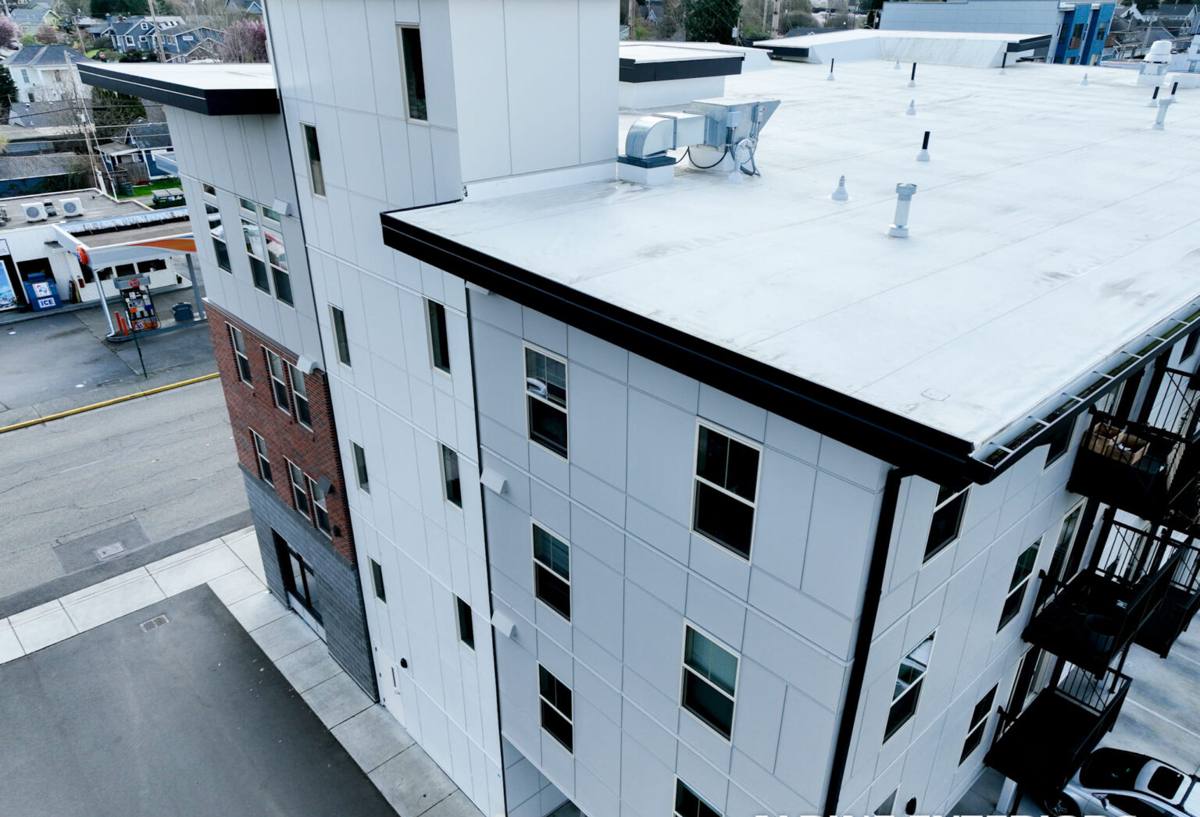
 Semiahmoo Exterior
 Energy Efficiency Means Something Different on the Water
Homeowners searching for energy-efficient windows are usually thinking about heating bills, drafts, and cold spots near the glass. In Ferndale, that's only part of the picture. Whatcom County's marine climate — salt-laden air, near-constant driving rain, and a moss season that can stretch across most of the year — puts as much stress on a window's air and water seals as the Pacific Northwest winter puts on its insulating performance. A window that's rated efficient on paper but installed or sealed wrong for this environment won't stay efficient for long, because the same gaps that leak heat are the gaps that let wind-driven rain and moisture in behind the frame.
That's the angle we take on energy-efficient window work in Ferndale: efficiency and weather-tightness are the same project, not two separate ones. A correctly specified, correctly installed window keeps conditioned air in and keeps this region's wet, salty weather out, and neither half of that works without the other.
What This Climate Does to Window Performance
Mild, Damp Winters and Steady Heat Loss
Ferndale doesn't see the deep-freeze winters that push homeowners further inland to obsess over insulation values. What it sees instead is months of cool, damp weather where the temperature difference between a heated interior and a cold, wet exterior is smaller but constant. Older, poorly sealed windows lose heat steadily through that entire stretch rather than in a few sharp cold snaps, and drafts around the frame or sash are often the first thing homeowners notice — a cold band of air near the window even with the heat running.
Wind-Driven Rain and Air Infiltration
Storms coming off the water push rain sideways into wall assemblies instead of straight down, and the same gaps that let that wind-driven rain find its way behind a poorly flashed window are the gaps that let conditioned indoor air escape. Air sealing and water sealing are, in practice, the same detail work around a window opening — which is part of why we don't treat "energy-efficient" as a separate line item from correct flashing and installation.
Condensation From Constant Humidity
Whatcom County's damp air keeps interior humidity higher for longer stretches of the year than a drier climate would, and that shows up as condensation on window glass and, in older units, moisture trapped between panes. Persistent condensation isn't just a comfort or cosmetic issue — it's usually a sign that a window's seal or glazing package isn't performing the way it should, and over time that moisture can affect the frame and surrounding trim.
Salt Air and Long-Term Seal Life
Homes closer to the water deal with salt-laden air that can accelerate the breakdown of lower-grade weatherstripping, gaskets, and hardware faster than an inland climate would. A window's energy performance depends on those seals staying intact, so a frame and hardware package built for coastal exposure holds its efficiency longer than one that wasn't.
What "Energy-Efficient" Actually Means on a Window Label
Window energy performance is measured by a handful of specific ratings, not a general "efficient" or "not efficient" label, and understanding them helps you compare options honestly instead of going on marketing language alone.
U-Factor
U-factor measures how well a window resists heat transfer — the lower the number, the better it insulates. In a mild, damp climate like this one, U-factor is generally the number worth paying closest attention to, since it reflects year-round heat loss rather than performance in extreme heat or cold. Double-pane low-E windows with insulated frames typically land in a solidly efficient range for this region; older single-pane or poorly sealed double-pane units usually don't come close.
Solar Heat Gain Coefficient (SHGC)
SHGC measures how much solar heat passes through the glass. It matters less here than it would in a sun-heavy climate, but it's still worth considering on south- and west-facing walls, where even Whatcom County's limited direct sun can add unwanted heat gain in summer months or help offset heating load in winter, depending on the coating chosen.
Air Leakage Rating
This rating measures how much air passes through the window assembly itself — a lower number means a tighter window. It's tested on the unit alone, though, not on how well it was installed, which is why two identical windows can perform very differently once they're actually in a wall, depending on the installer's air-sealing work around the frame.
Frame Material and Glazing: What's Actually Worth Paying For
Material and glazing choice both affect energy performance, but not always in the ways homeowners assume from price alone. Here's a general comparison of the factors that matter most for a Ferndale home:
| Factor | Options | What It Affects |
|---|---|---|
| Frame material | Vinyl, fiberglass | Both resist rot better than uncladded wood in this moisture level; fiberglass holds its shape better across temperature swings and can be painted |
| Glazing | Double-pane, triple-pane | Triple-pane improves U-factor and sound dampening further but adds weight, cost, and sometimes isn't necessary for this climate's moderate temperature range |
| Coating | Low-E glass (various formulations) | Reduces heat loss and can cut interior condensation; specific coating affects how much winter heat gain is retained versus summer heat kept out |
| Gas fill | Argon, krypton, air | Inert gas fills between panes improve insulating performance over plain air, with krypton offering a modest additional gain over argon at a higher cost |
| Spacer type | Metal, warm-edge/non-metal | Warm-edge spacers reduce heat transfer at the glass edge and help limit condensation forming along the perimeter of the pane |
None of these choices exist in isolation — a triple-pane window with a poor spacer and a cheap gas fill won't necessarily outperform a well-specified double-pane window. We talk through the actual combination that makes sense for a given home rather than defaulting to whatever sounds most upgraded on a brochure.
Installation Is Where Efficiency Is Actually Won or Lost
A window's rated performance is measured on the unit itself, tested in a lab, not as it performs sealed into a real wall in a Whatcom County storm. The gap between a window's rated performance and its real-world performance almost always comes down to installation — specifically, air sealing and flashing around the rough opening.
Correct installation means the flashing laps properly with the surrounding water-resistive barrier so wind-driven rain is directed out and away from the opening, the gap between the window frame and rough opening is properly insulated and air-sealed rather than left with voids, and every seam is sealed with materials rated for sustained moisture exposure rather than relying on caulk as the only line of defense. Skipping or rushing any of that turns an efficient window into a drafty, leak-prone one within a few wet seasons, regardless of what the label said when it left the factory.
Signs a Ferndale Home Is Losing Energy Through Its Windows
- Noticeable drafts or cold spots near window frames even with the window fully closed and locked
- Fogging or visible moisture trapped between the panes of a double-pane window
- Interior condensation on window glass that returns even after wiping it down
- Rooms near windows that feel colder than the rest of the house during winter months
- Visible gaps, cracked caulk, or deteriorated weatherstripping around the frame
- Heating running more than seems reasonable for the size of the home
- Windows that are difficult to fully latch, which can leave a small but constant air gap
Our Process for Energy-Efficient Window Projects in Ferndale
We start with an on-site look at the existing windows — checking frame condition, seal integrity, glazing performance, and how the current flashing ties into the surrounding siding. From there we walk through which windows are reasonable candidates for repair or resealing versus which ones have reached the point where replacement is the more honest recommendation, along with the specific frame, glazing, and gas-fill combination that fits the home's exposure and the budget involved.
Flashing and air-sealing detail are handled as standard practice on every window we install, not offered as an upgrade homeowners have to specifically request. We also give a written scope before work begins, separating the manufacturer's product warranty from our own installation warranty, so it's clear what's covered and by whom if a question comes up years down the line.
A Few Things Worth Asking Before You Hire
- Ask what U-factor and air leakage rating the proposed windows carry, not just whether they're labeled "energy efficient"
- Ask specifically how flashing and air sealing around the rough opening will be handled, not just what window brand is being sold
- Confirm current Washington state contractor licensing and active liability insurance
- Get a written scope that separates the manufacturer's warranty from the installer's workmanship warranty
- Ask about lead times, since energy-efficient window orders built to specific sizes can take several weeks to arrive
Why Hiring a Crew That Already Works This Area Matters
A contractor who regularly works Ferndale and the surrounding Whatcom County coastline already understands how wind-driven rain, salt-laden air, and a long moss season affect window performance differently than they would in a drier, more sheltered inland climate. That experience shows up in specific decisions — how much lap a flashing detail gets, whether a gas-fill upgrade is worth the added cost for a given elevation, which hardware grade holds up against marine air — and those decisions are what actually determine whether an energy-efficient window keeps performing for one wet winter or for decades.
If you're dealing with drafty windows, rising heating bills, or persistent condensation on a Ferndale property, we're happy to take a look and give a straightforward, honest read on what's actually going on. Reach out below for a free, no-pressure estimate.