 Semiahmoo Exterior
 Windows Built for Custer's Coastal-Adjacent Climate
Custer sits close enough to Semiahmoo Bay and Drayton Harbor that homes here deal with a climate most window manufacturers never test for in their standard warranty language. It's not a harsh desert climate or a dry mountain one — it's persistent moisture, salt-tinged air pushing in off the water, and a heating season that runs long by national standards. Windows that work fine in Spokane or Yakima can underperform here within a few years if they weren't chosen and installed with this specific environment in mind.
This page covers what actually matters when you're replacing windows in Custer: the climate factors that shorten window lifespan, what a correctly installed energy-efficient window looks like, and how our process is built around the realities of Whatcom County weather rather than a generic national playbook.
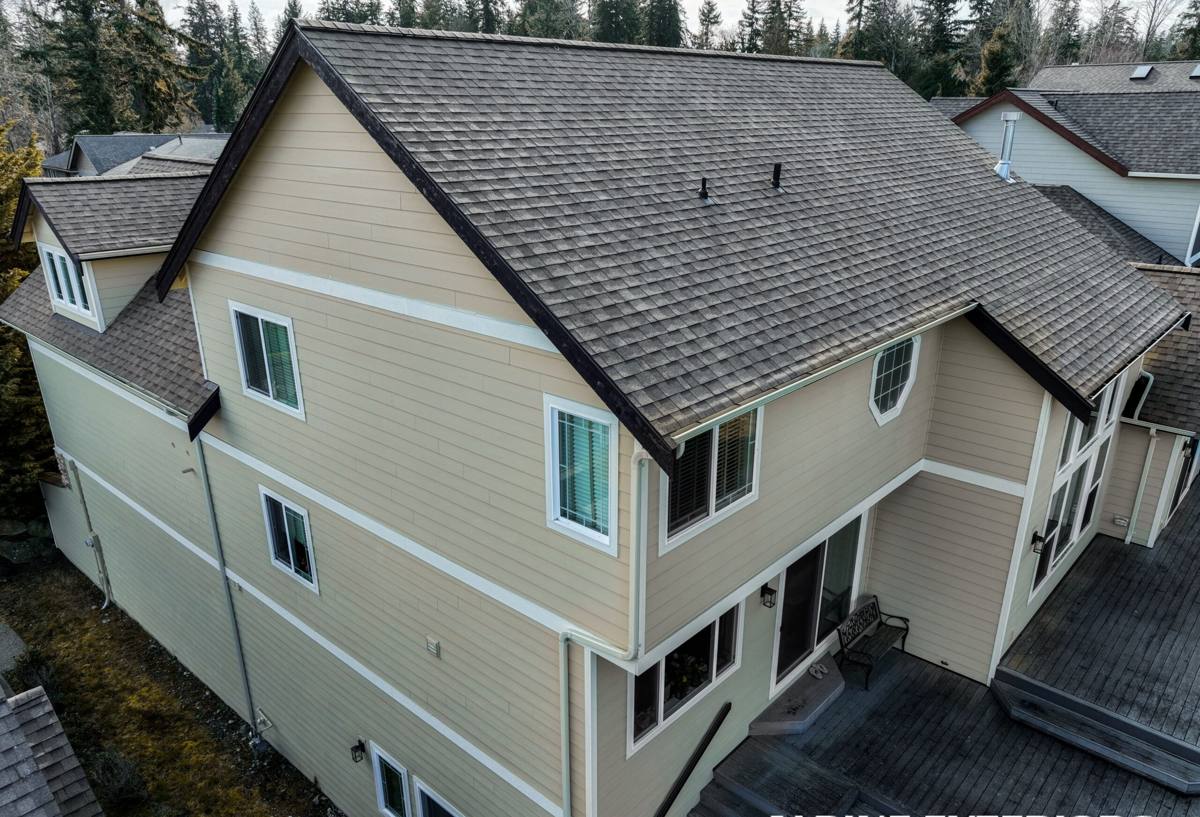
What the Local Climate Does to Windows Over Time
Three factors show up over and over when we inspect older windows in the Custer and Semiahmoo area:
Salt Air
Proximity to Semiahmoo Bay and the Strait of Georgia means the air carries fine salt content that settles on exterior surfaces. Over years, this accelerates corrosion on unprotected metal hardware — hinges, cranks, balance systems, and screws — and can degrade certain finishes faster than in inland communities. It's not dramatic or fast, but it's constant, and it's the reason hardware quality and finish selection matter more here than in a lot of other parts of the state.
Driving Rain
Whatcom County gets weather that doesn't just fall straight down — wind-driven rain off the water pushes moisture sideways into wall assemblies, especially on west- and south-facing elevations. A window that's watertight in a still rain but not properly flashed and sealed for wind-driven conditions will eventually let moisture into the wall cavity. This is one of the most common failure points we find in older installations, and it's almost always an installation issue, not a product defect.
Long Moss Season
The extended wet season that makes moss thrive on roofs and siding also affects window sills, trim, and any wood components nearby. Moisture that lingers on horizontal surfaces for months at a time promotes rot in unprotected wood and can trap dampness against frames if drainage paths aren't designed correctly. A window replacement that ignores sill drainage is setting up a maintenance problem a few years down the road.
What "Energy-Efficient" Actually Means for This Climate
Energy efficiency isn't just a sticker on the glass. For a Custer home, it's a combination of glass performance, frame material, and — most importantly — installation quality. Get any one of these wrong and the others can't compensate.
Glass Packages and Low-E Coatings
Most homes in this area do well with a dual-pane, low-E (low-emissivity) glass package with an argon gas fill. Low-E coatings reflect radiant heat back into the home during our long heating season while still letting in usable daylight. Triple-pane glass offers a further step up in insulation and sound dampening, which some homeowners near busier roads or with north-facing exposure find worthwhile — but it comes at added cost and weight, so it's worth weighing against your specific home rather than assuming more panes is automatically the right call.
Frame Materials That Hold Up Near Salt Water
Frame material is where a lot of the long-term performance difference actually lives. The table below reflects how common frame options tend to perform specifically in a coastal-influenced, high-moisture climate like Custer's — not a generalized national comparison.
| Frame Material | Salt Air Resistance | Moisture Handling | Maintenance |
|---|---|---|---|
| Vinyl | Very good — won't corrode | Good, if properly sealed | Low — occasional cleaning |
| Fiberglass | Excellent — dimensionally stable | Excellent | Low |
| Wood-clad | Good on the exterior cladding, vulnerable if cladding is breached | Requires careful detailing at joints | Higher — periodic inspection of cladding seams |
| Aluminum | Poor without upgraded coatings — prone to corrosion and thermal loss | Poor thermal performance in this climate | Moderate to high |
We steer most Custer homeowners toward vinyl or fiberglass for the simple reason that they don't rely on a coating or cladding staying perfectly intact to resist moisture and salt exposure. Wood-clad windows can still be a good fit for homeowners who want a specific interior wood look, but we're upfront that they ask more of you in terms of ongoing inspection. Aluminum-framed windows, while sometimes chosen for a narrow sightline look, are generally a poor match for this climate — the thermal performance and corrosion resistance just aren't there without significant upgrades that add cost.
Why Installation Quality Matters More Than the Window Itself
A high-efficiency window installed poorly will underperform a mid-range window installed correctly — every time. In a driving-rain climate, the details that matter most are:
- Proper flashing integration with the existing water-resistive barrier, lapped correctly so water sheds outward and downward
- Sill pan flashing beneath every window opening, so any moisture that does get past the glazing has somewhere to drain instead of pooling
- Sealants and backer rod rated for exterior exposure, applied at the correct joints — not just a bead of caulk around the trim
- Correct shimming and fastening so the window operates smoothly and doesn't rack out of square over time, which is what eventually breaks seals
- Insulation in the gap between the window frame and the rough opening, so you're not just getting an efficient window in an inefficient hole
This is also where hiring a crew that's actually installed windows in this specific area pays off. The right flashing detail for a wind-driven-rain climate isn't always the default method taught in general training — it's something you learn by seeing what fails here and adjusting for it.
Our Process for Custer Window Replacement Projects
- On-site assessment. We look at your current windows, note signs of moisture intrusion, drafts, condensation, or hardware failure, and check how your home's exposure to wind and rain direction should factor into product and installation choices.
- Product selection. We walk through frame material, glass package, and finish options based on your home's exposure, budget, and how long you plan to stay in the home.
- Removal and inspection. Old windows come out carefully, and we inspect the rough opening and surrounding framing for any hidden moisture damage before anything new goes in — this is often where problems from old, poorly flashed windows get discovered.
- Correct flashing and sealing. Sill pans, flashing tape, and sealants are installed to shed water outward, not just to look finished from the inside.
- Installation and adjustment. Windows are shimmed, squared, insulated, and fastened so they operate correctly and seal properly for years, not just on day one.
- Final walkthrough. We test operation, check for air infiltration, and review care and warranty details with you before we consider the job done.
Signs Your Custer Home's Windows Need Attention
- Condensation forming between the panes (a sign the seal has failed on a dual-pane unit)
- Visible fogging or a milky haze in the glass that doesn't clear
- Drafts you can feel near the frame, especially during winter wind off the water
- Wood sills or trim that feel soft, discolored, or show signs of rot
- Hardware — cranks, locks, hinges — that's stiff, corroded, or no longer catches properly
- Noticeably higher heating bills compared to similar-sized homes nearby
- Visible gaps or cracked, shrinking caulk lines around the exterior trim
Any one of these on its own might just need a repair. Several at once, especially on windows original to an older home, usually means it's more cost-effective to replace than to keep patching.
What Affects the Cost of a Window Replacement in Custer
| Cost Factor | Why It Matters Here |
|---|---|
| Frame material | Vinyl is generally the most budget-friendly; fiberglass and wood-clad cost more upfront but can offset that with durability in this climate |
| Glass package | Dual-pane low-E covers most needs; triple-pane adds cost but can be worth it for exposed or noise-sensitive elevations |
| Number and size of openings | Larger or custom-sized openings, common in older Whatcom County homes, may require special ordering |
| Condition of the rough opening | Hidden moisture damage found during removal can add scope, but catching it now is far cheaper than ignoring it |
| Trim and finish work | Matching existing exterior trim or upgrading it during the project affects labor and materials |
We give straightforward, itemized estimates so you know what you're paying for and why — no vague lump-sum numbers that hide whether you're actually getting proper flashing and sill pan work or just a fast reglaze job.
Why Hire a Crew That Already Works in Custer and Semiahmoo
A window replacement crew that mostly works dry, inland climates will default to installation habits that don't account for wind-driven rain or salt air exposure. Working regularly in Custer and the surrounding Semiahmoo and Whatcom County area means we've seen firsthand which details hold up and which ones fail after a few wet seasons. We're also familiar with local permitting expectations and the kind of older home construction common in this part of the county, which matters when a rough opening doesn't match what's on a modern spec sheet.
If you're weighing whether it's time to replace your windows, or you just want a straight answer on whether your current ones are worth repairing, we're happy to take a look. Reach out for a free, no-pressure estimate using the form below.