 Semiahmoo Exterior
 Storm Damage Roof Repair for Point Roberts Homes
Point Roberts sits on a small peninsula at the very tip of Whatcom County, cut off from the rest of Washington State by the Canadian border and reached by road only through Delta, BC. That geography isn't just a quirk of the map — it puts homes here in direct line of open water on more than one side, with the Strait of Georgia to the west and Boundary Bay to the east. When a windstorm comes through, there's very little land mass to slow it down before it hits a roof.
We handle storm damage roof repair for homes throughout this area, and we treat it as its own kind of job rather than a smaller version of a full re-roof. Storm repair means moving fast to stop active water intrusion, figuring out exactly how far the damage extends beyond what's visible from the ground, and putting the roof back together in a way that holds up through the next storm — not just patching what's easiest to see.
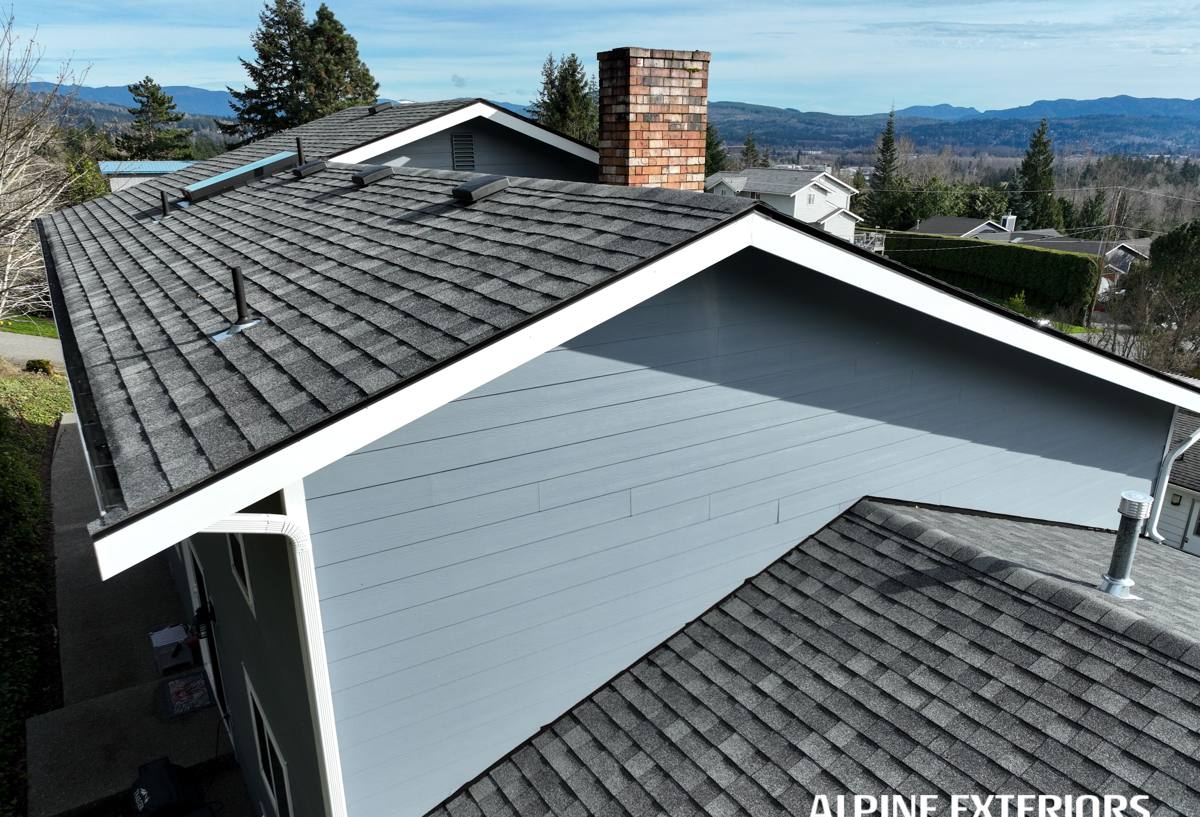
What This Climate Does to a Point Roberts Roof
Wind Off Open Water
With water on multiple sides and little in the way of a windbreak on the exposed faces of the peninsula, storm winds here often hit roof planes with more direct force than they would a few miles inland. That kind of sustained, unbroken wind is exactly what works shingle tabs loose, lifts ridge caps, and drives water up and under laps that were never designed to handle wind coming from that angle. A roof that looks fine from the driveway can already have compromised fastening along the windward edges.
Driving Rain and Wind-Driven Moisture
Rain during a storm off the water rarely falls straight down here — it gets pushed sideways into flashing, valleys, and roof-to-wall transitions with real pressure behind it. That's a heavier moisture load than the region's average rainfall numbers would suggest on their own. It's also why storm damage so often shows up first as an interior leak near a chimney, skylight, or dormer wall rather than as an obvious hole in the roof deck.
A Long Moss and Mildew Season
Whatcom County's mild, damp climate keeps moss and mildew active on shaded, north-facing roof slopes for most of the year, and Point Roberts' waterfront exposure doesn't shorten that season any. Moss holds moisture directly against the shingle surface and works its way under tabs over time, which weakens the roof's grip on its own fasteners well before a storm ever arrives. A roof carrying moss into a windstorm is starting that storm already compromised.
What Counts as Storm Damage — and What Doesn't Always Show
Storm damage isn't always a missing shingle or a visible hole. Wind can loosen a shingle's seal without tearing it off, which leaves it vulnerable to the next storm even though the roof looks intact. Falling branches from storm winds can crack shingles or dent flashing without punching all the way through. And flashing that's been lifted or bent can leak for weeks before it shows up as a ceiling stain inside the house.
- Shingles that are cracked, curled, or missing granules in patches, not just torn off entirely
- Lifted, bent, or missing flashing around chimneys, vents, skylights, and roof-to-wall transitions
- Debris — branches, needles, granules — collecting in valleys or gutters after a storm
- Soft spots or slight sagging when walking the roof, which can mean the decking underneath took on water
- New or worsening water stains on interior ceilings or upper walls following a windy storm
What a Correct Storm Damage Repair Involves
Inspecting Beyond the Obvious Damage
The first step is a full inspection of the roof plane, not just the spot where damage is visible. Wind that tears off shingles in one area has usually loosened the seal on shingles nearby that haven't failed yet. We check the decking underneath any damaged section for soft spots or moisture intake, since repairing shingles over compromised decking just delays the same failure.
Matching Materials and Proper Flashing Detail
When a full replacement isn't warranted, the repair needs to blend into the existing roof — matching shingle profile and, as closely as possible, color and age-weathering — and it needs new underlayment and flashing detail in the repaired section, not just shingles laid back down over old material. Flashing that gets reused or loosely re-bent instead of properly integrated is one of the most common reasons a "repaired" roof leaks again in the next storm.
Documenting the Damage
We photograph and document storm damage thoroughly as part of the assessment — the extent of it, where it's located, and what caused it as best that can be determined. That documentation is useful if you're filing an insurance claim, even though the claim itself is between you and your insurer. A clear, itemized written scope of the repair work also gives you something concrete to compare against any settlement offer.
Our Storm Damage Repair Process
- Initial contact and triage: We ask what happened and what you're seeing — active leaks get prioritized over cosmetic damage.
- Temporary weatherproofing: If water is actively getting in, we address that first, even if it means a temporary cover while the full repair is scheduled.
- Full roof inspection: We check the entire roof plane, not just the damaged section, including decking, flashing, and ventilation.
- Written scope and estimate: You get a clear, itemized description of what needs repair and why, before any work begins.
- Repair with matched materials: Shingles, underlayment, and flashing go in to spec, matched to the existing roof where possible.
- Final walk-through: We go over the completed work with you and point out anything else on the roof worth keeping an eye on.
Repair vs. Full Replacement: What Determines the Right Call
Not every storm-damaged roof needs to come off. The right call depends on a few practical factors, and an honest contractor will walk you through them rather than defaulting to the bigger job.
| Factor | Favors Repair | Favors Replacement |
|---|---|---|
| Extent of damage | Isolated to one section or slope | Widespread across multiple slopes |
| Age of existing roof | Roof is well within its expected service life | Roof was already nearing the end of its life before the storm |
| Decking condition | Decking underneath is dry and sound | Decking shows rot or repeated moisture intake |
| Material availability | Matching shingles are readily available | Original material is discontinued or badly mismatched |
| Underlying condition | No prior history of leaks or moss damage | Storm exposed problems that predate the storm itself |
Costs for storm repair work vary widely depending on how much of the roof is affected, whether decking needs to be replaced, and how accessible the roof is — there's no honest flat number to quote without seeing the roof. What we can tell you upfront is that a proper repair, matched materials and correct flashing included, generally costs less than a full replacement but more than a quick patch — and it should be built to last, not just to pass a glance.
Why a Local Crew Matters in Point Roberts
Point Roberts' location creates a practical problem that a lot of contractors simply avoid: getting a crew and materials there means driving through Canada, since there's no direct road connection to the rest of Whatcom County. Some roofing companies quote the job and then quietly delay it, or decline it outright once they realize what the trip involves. A crew that already works this area regularly has that logistics question solved before your call — materials get staged ahead of time, and a storm-damage response doesn't get stuck behind a border crossing that nobody planned for.
Beyond logistics, familiarity with the specific way wind and rain behave on this peninsula — which slopes take the worst of a storm, where moss builds up fastest, which flashing details tend to fail first — shows up in how the repair gets done, not just how fast it happens.
A Checklist Before Hiring for Storm Damage Roof Repair
- Ask whether they regularly work in Point Roberts, or whether this would be a one-off trip for them
- Confirm current Washington contractor licensing and active liability insurance
- Get a written, itemized scope of the repair before signing anything
- Ask how they'll match materials to your existing roof, and what happens if an exact match isn't available
- Ask whether they document damage with photos in a way that's useful for an insurance claim
Getting Your Roof Assessed
If a recent storm has left you with missing shingles, a new leak, or debris damage on your roof, it's worth having it looked at before the next system moves through — especially with more wind and rain ahead in the wetter months. We're happy to come take an honest look at what happened and what it actually needs. Reach out below for a free, no-pressure estimate.