 Semiahmoo Exterior
 Why Roofs Wear Out Faster Around Drayton Harbor
Homes along Drayton Harbor sit right at the edge of two things that are hard on a roof: open saltwater and heavy, sustained Pacific moisture. The salt air off the harbor doesn't just affect metal railings and hardware — it accelerates the breakdown of asphalt shingle granules, corrodes exposed fasteners and flashing, and works its way into any gap in the roof system faster than it would a few miles inland. Combine that with Whatcom County's long wet season, and you get roofs that age differently here than they do on the drier side of the state.
Driving rain off the water is the other factor. Wind-driven rain doesn't just fall straight down — it pushes sideways under shingle edges, around vent boots, and into any flashing detail that was installed loosely or without enough overlap. A roof that would hold up fine in a calmer inland neighborhood can fail early here if it wasn't built with that wind-driven exposure in mind.
Moss Isn't Cosmetic — It's a Moisture Problem
Shaded, tree-lined lots near the harbor stay damp for months at a stretch, and that's exactly what moss needs to take hold. Left alone, moss holds water against the shingle surface, lifts shingle edges as it grows, and slowly opens paths for water to get underneath the roofing material instead of running off it. By the time moss is visible from the ground, it's usually been working on the roof for a season or more already.
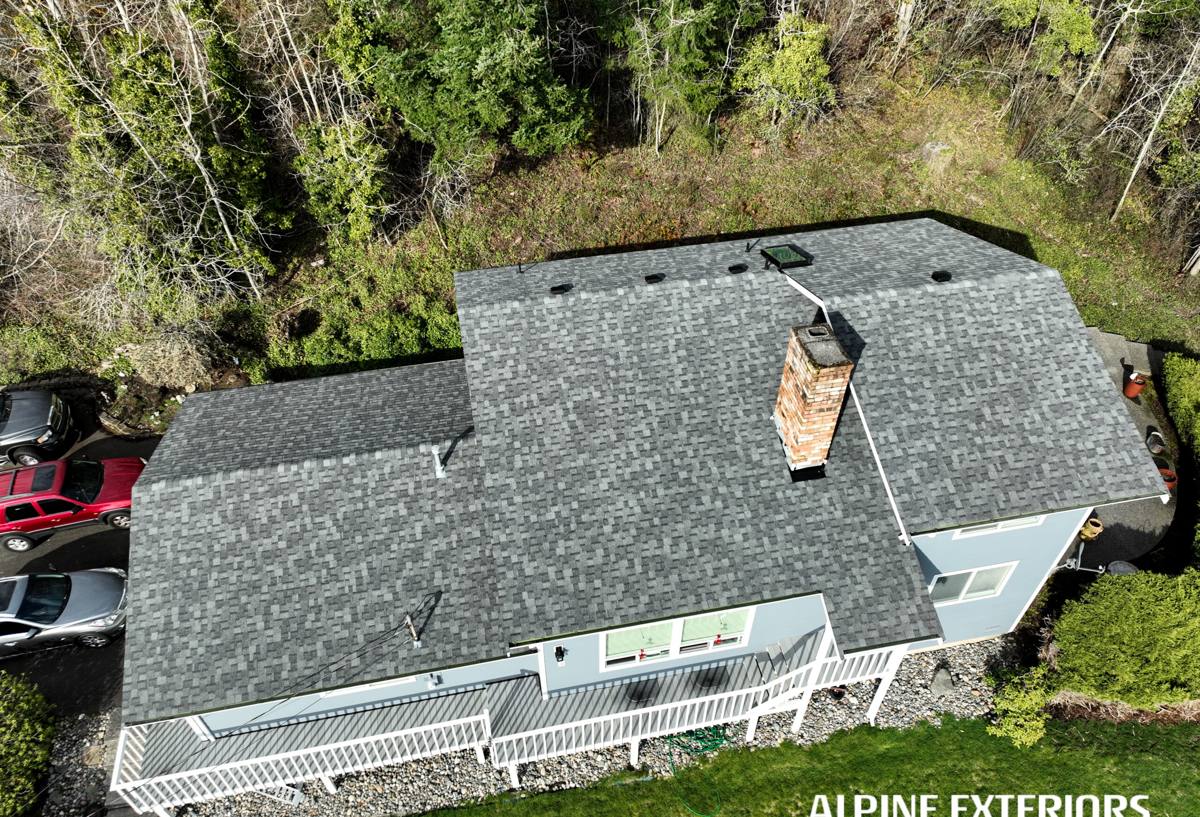
What a Correct Roof Replacement Actually Involves
A roof replacement isn't just stripping old shingles and nailing down new ones. Done right, it's a full system rebuild, and every layer matters more in a salt-air, high-moisture area like this one.
- Full tear-off: all old roofing material removed down to the deck, not layered over — layering traps moisture and hides deck damage.
- Deck inspection and repair: any soft, rotted, or delaminated sheathing gets replaced before anything new goes down.
- Ice-and-water or synthetic underlayment: a continuous moisture barrier, with extra protection at eaves, valleys, and any low-slope transitions where wind-driven rain collects.
- Flashing at every penetration: chimneys, skylights, vent stacks, and roof-to-wall transitions — the majority of leaks trace back to flashing, not the shingles themselves.
- Balanced ventilation: intake at the eaves and exhaust at the ridge, sized to the actual attic, so moisture has somewhere to go instead of condensing under the deck.
- New roofing material, installed to manufacturer nailing patterns and exposure — not shortcuts that void the warranty later.
Skip any one of these steps and the roof might look fine for a year or two, then start failing from the inside — usually right around the areas most exposed to harbor wind and salt.
Material Choices That Make Sense in a Harbor Climate
There's no single "best" roofing material for every home — it depends on the roof's slope, the amount of tree cover, the home's structure, and budget. What we focus on is matching the material to the actual exposure your roof gets.
| Material | Typical Lifespan Here | Salt Air / Moss Considerations | Upfront Cost |
|---|---|---|---|
| Architectural asphalt shingle | 20–30 years | Good performance with proper underlayment and ventilation; algae-resistant granules help slow moss/moisture staining | Moderate |
| Standing seam metal | 40–50+ years | Sheds moisture and moss very well; needs corrosion-resistant fasteners and coatings near the water | Higher |
| Synthetic/composite shake or slate | 30–50 years | Resists moisture absorption better than natural wood shake; low maintenance in shaded, damp areas | Higher |
We steer most Drayton Harbor homeowners away from untreated natural wood shake, not because it can't look good, but because it holds moisture longer than the alternatives above and needs far more upkeep to stay ahead of moss and rot in this kind of climate. That's a maintenance-and-longevity call, not a knock on the product — it's just not the best fit for this exposure.
Fasteners and Flashing Metal Matter Too
In a salt-air environment, the small details corrode first. We use corrosion-resistant fasteners and flashing metals rated for coastal exposure rather than standard-grade hardware — the cost difference is small, but the difference in how long the roof holds up is not.
Our Process, Start to Finish
We keep the process straightforward because a roof replacement is disruptive enough without added confusion about what's happening and when.
- On-site inspection and estimate: we look at the deck, attic ventilation, flashing points, and overall roof condition — not just the shingles from the ground.
- Written scope and pricing: a clear breakdown of materials, labor, and what's included, so there are no surprise add-ons mid-project.
- Material delivery and site protection: landscaping, siding, and outdoor living areas get covered before tear-off begins.
- Tear-off and deck inspection: any deck repairs are flagged and priced before covering them up.
- Underlayment, flashing, and ventilation installation: the parts of the job that actually determine how long the roof lasts.
- New roofing installation: to manufacturer spec, with attention to the wind and rain exposure specific to the property.
- Cleanup and magnetic nail sweep: full jobsite cleanup, including gutters and yard.
- Final walkthrough: we go over the finished roof with you before calling the job done.
Ventilation: The Step Most Often Skipped
A lot of roof problems near the harbor aren't caused by weather hitting the roof from outside — they're caused by moisture building up underneath it. Warm, humid attic air that can't escape condenses on the underside of a cool deck, and over time that moisture feeds rot and mold that has nothing to do with the shingles above. Balanced ventilation — enough intake at the soffits and enough exhaust at the ridge — keeps air moving through the attic so that moisture doesn't have a chance to settle in. It's an easy step to skip because it's invisible once the roof is finished, but it's one of the biggest factors in how long a new roof actually lasts here.
Keeping Moss From Coming Back
A fresh roof doesn't stay moss-free forever if the conditions that caused it in the first place haven't changed. A few things help extend the gap between treatments:
- Algae-resistant shingle granules where the material allows for it
- Zinc or copper strips near the ridge on shaded roofs, which release trace metals that discourage moss growth as rain washes over them
- Keeping overhanging branches trimmed back so the roof gets more light and air movement
- Clearing gutters and valleys regularly so debris doesn't hold moisture against the roofline
None of these replace a properly built roof system, but together they buy you more years before the next major service is needed.
Why a Crew That Already Works Drayton Harbor Matters
A roofing crew that mostly works drier, inland parts of Whatcom County will build a technically fine roof — for a different climate. Working this stretch of Semiahmoo and the harbor regularly means knowing which flashing details actually hold up against wind-driven rain off the water, which fastener grades resist salt corrosion instead of just delaying it, and which roof orientations on this shoreline tend to hold moss longest. That's the kind of judgment that comes from doing the work here repeatedly, not from a manufacturer spec sheet alone.
It also means being realistic with you about timelines. Weather windows near the water can close faster than forecasts suggest, and a crew that's used to that plans the job — and the tear-off schedule in particular — accordingly, so your home isn't left exposed longer than necessary.
What to Look For Before You Hire
- A written, itemized estimate — not just a total price
- Confirmation of proper licensing, bonding, and insurance
- A clear explanation of the underlayment, flashing, and ventilation plan, not just the shingle brand
- A plan for tear-off timing and site protection appropriate to coastal weather
- A manufacturer warranty backed by proper installation, plus a clear labor warranty from the contractor
- References or examples of similar work in the Drayton Harbor or broader Semiahmoo area
If a bid skips over ventilation, flashing detail, or deck inspection entirely and just quotes "reroof," that's usually a sign the scope hasn't been thought through for this climate.
Get a Straightforward Estimate
If your roof is showing granule loss, moss buildup, or you just want an honest read on how many years it has left, we're happy to take a look. The estimate is free, there's no pressure attached to it, and you'll get a clear explanation of what we see and what it would take to fix it — use the form below to get started.