 Semiahmoo Exterior
 Siding Repair Built for Laurel's Weather, Not a Generic Climate
Laurel sits inland from the water but still lives inside the same weather system that shapes the whole Semiahmoo area of Whatcom County: onshore flow off the Salish Sea, long wet winters, and a marine layer that keeps humidity high even when it isn't actively raining. That combination is hard on exterior siding in ways that are easy to underestimate until a repair turns out to be bigger than it looked from the driveway. Salt-tinged air corrodes fasteners and trim faster than it would inland; driving rain off winter storms drives water sideways into laps, corners, and butt joints; and shaded, tree-lined lots hold moisture long enough for moss and algae to get a foothold on siding faces and in ground-level runs.
None of that means siding here fails constantly. It means the repairs that do come up tend to follow a pattern, and a contractor who's worked this specific stretch of Whatcom County recognizes that pattern quickly instead of treating every call as a mystery. This page is about one job, done right, in one place: siding repair for Laurel homes.
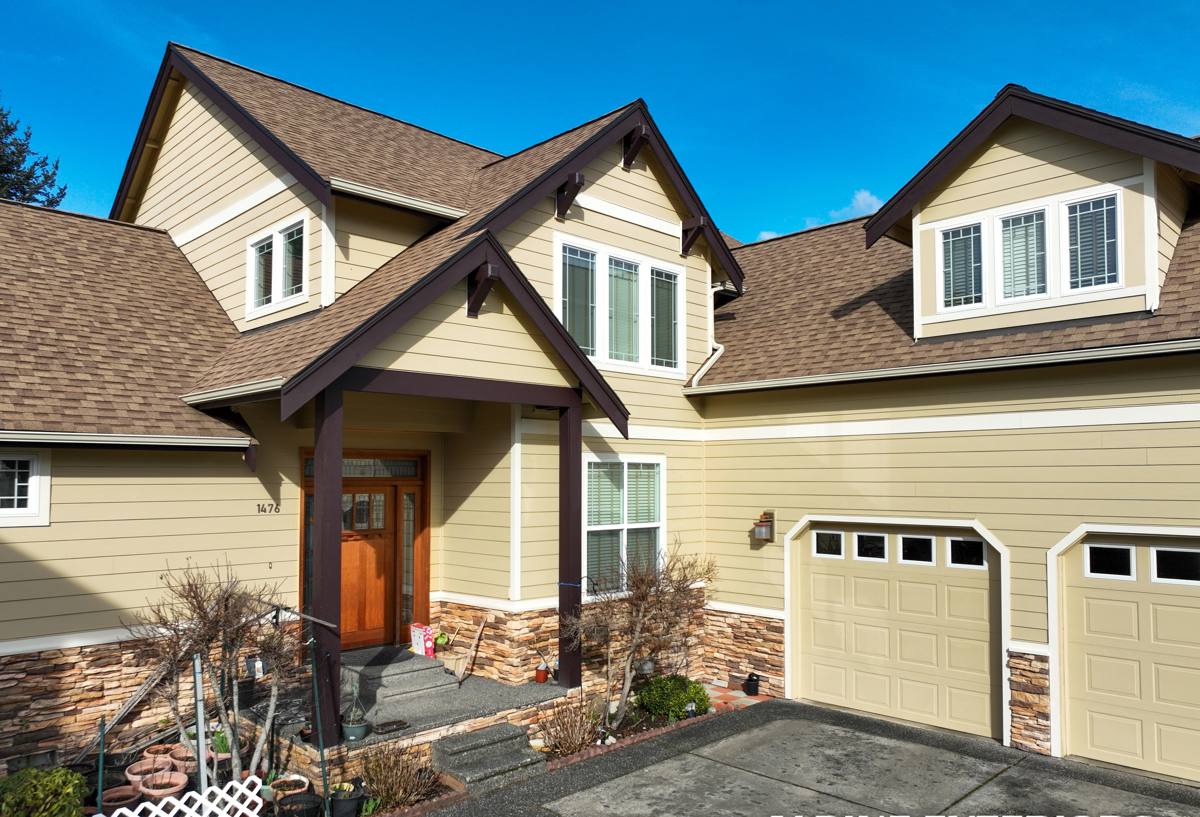
What This Climate Actually Does to Siding Over Time
Salt Air and Fastener Corrosion
Homes closer to Semiahmoo Bay and Boundary Bay get airborne salt carried inland on the wind. It settles on exposed metal — nail heads, flashing edges, trim fasteners — and accelerates corrosion compared to a purely inland home. Once a fastener rusts and loses its grip, the siding piece it's holding starts to move slightly with wind and temperature, which opens tiny gaps that water finds.
Driving Rain and Lap/Joint Failure
Pacific storms in this part of Washington don't just fall straight down — wind-driven rain gets pushed horizontally into wall assemblies. Siding systems are designed to shed that water, but only if the laps, joints, and flashing details are still intact. A cracked caulk line or a lifted lap edge that would be a non-issue in a drier climate becomes an active leak path here within a season or two.
Moss, Algae, and Shade
Laurel's tree cover is part of what makes it a pleasant place to live, but shaded siding stays damp longer after rain and after morning dew burns off elsewhere. Moss and algae take hold on north-facing walls, under eaves, and near ground level where sprinklers or plant beds keep siding wet. Left alone, that growth holds moisture against the siding face and, on the wrong substrate, accelerates deterioration underneath it.
Signs a Laurel Home Needs Siding Repair, Not Just Cleaning
- Soft or spongy spots when you press on a siding panel, especially near the bottom courses or under windows
- Visible cracking, splitting, or bubbling paint on individual boards or panels
- Staining that runs downward from a joint, corner, or window trim — a classic sign of water tracking behind the surface
- Persistent moss or algae that comes back quickly after cleaning, suggesting the surface stays wet longer than it should
- Gaps opening up at butt joints, corners, or where siding meets trim, window casings, or the foundation
- Rust streaks below fastener heads or trim pieces
- A musty smell or visible mold on the interior side of an exterior wall, which can trace back to siding-level water intrusion
What a Correct Siding Repair Actually Involves
A repair that only addresses the visible symptom — replacing one cracked board, caulking over a gap — often misses the reason the damage happened in the first place. On a coastal, tree-shaded lot like Laurel, that usually means water management: where it's getting in, what's happening to it once it's there, and whether the assembly behind the siding is still dry.
Diagnosis Before Demolition
Before we replace anything, we look at the pattern of damage across the wall, not just the one spot that prompted the call. Damage that's isolated to a single board is a different job than damage that follows a flashing line or shows up at every window sill on one elevation. We use moisture meters where it matters — especially around window and door openings, at deck ledgers, and near grade — because siding that looks fine on the surface can be sitting on wet sheathing.
Matching Material and Water Management
Replacement pieces need to match the existing siding's profile and reveal, and where the substrate is James Hardie fiber cement, we match it with Hardie product rather than a different material that will age, expand, and weather differently next to the original. Just as important is what goes behind the new piece: correct house wrap integration, properly lapped flashing at any penetration or trim intersection, and fastening that follows manufacturer spacing rather than whatever pattern is fastest.
Caulking and Sealant, Used Correctly
Caulk has a real job on a siding wall — sealing specific joints — but it is not a substitute for correct flashing and lap sequencing. We use sealant where the assembly is designed to have it, not as a blanket fix for a water problem that actually needs a flashing or lap correction.
Repair vs. Replacement — How We Make That Call
Not every damaged section needs a full re-side, and not every repair call should end with a patch. The right answer depends on how much of the wall is affected and what's happening underneath the siding.
| Factor | Points Toward Repair | Points Toward Replacement |
|---|---|---|
| Extent of damage | Isolated to a few boards or one section | Spread across multiple elevations |
| Sheathing condition | Dry, sound wood behind the damaged siding | Soft, delaminating, or stained sheathing |
| Siding material | Existing James Hardie in good general condition | Aging non-Hardie product nearing end of service life |
| Cause of damage | One-time event: impact, isolated flashing failure | Systemic issue: original installation error, chronic water path |
| Age of siding | Well within expected service life | Already near or past typical replacement age |
When damage is contained and the wall assembly behind it is dry, a targeted repair is the honest recommendation — there's no reason to sell a Laurel homeowner a full re-side for a problem that a proper repair solves. When we find water has been getting behind the siding for a while, we say so plainly and explain what we found, rather than patching over a problem that will resurface.
Why We Repair With James Hardie, Not Whatever's Convenient
This company installs James Hardie fiber cement siding exclusively — we don't install vinyl, LP SmartSide, Cemplank, Allura, primed spruce, or cedar, and that standard carries over into repair work. If your home already has Hardie siding, matching repairs with Hardie keeps the wall performing and aging as one system: same moisture behavior, same factory ColorPlus finish, same expected lifespan across old and new sections.
If a repair call turns into a conversation about replacing a full elevation, we install Hardie's HZ5 product line, engineered for regions that see both sustained moisture and periodic freeze conditions — a reasonable description of a Whatcom County winter. Fiber cement doesn't feed moss and algae the way some organic-based siding substrates can, it's non-combustible, and the factory-applied ColorPlus finish is baked on rather than field-painted, which matters in a climate where field-applied paint has to fight humidity and salt air to cure and hold.
We're not going to tell you every other siding product is defective — most of them do what they're built to do when installed and maintained correctly. Our position is narrower and more practical: for Laurel's combination of salt air, driving rain, and moss pressure, fiber cement from a manufacturer with a strong, transferable warranty and a climate-specific product line is what we're willing to put our name behind.
Our Siding Repair Process, Start to Finish
- Inspection: We walk the affected elevation(s), check moisture levels where relevant, and identify whether the issue is isolated or connected to a broader water path.
- Honest scope and estimate: You get a clear explanation of what we found, what repair options exist, and a written estimate before any work starts — no pressure toward a bigger job than the situation calls for.
- Scheduling around Whatcom County weather: Siding repair needs a dry work window; we schedule with the region's rain patterns in mind rather than promising a date that ignores them.
- Correct execution: Matching material, proper flashing and house wrap integration, manufacturer-spec fastening, and sealant only where the assembly is designed for it.
- Cleanup and walkthrough: We clear debris and walk the repair with you so you know exactly what was done and why.
Why a Crew That Already Works Laurel Matters
A contractor who regularly works this part of Semiahmoo and Whatcom County has already seen how the local microclimate plays out on real walls — which elevations take the worst of the driving rain, how quickly moss returns on shaded lots, and where salt-related fastener corrosion tends to show up first. That familiarity shortens the diagnosis phase and reduces the odds of a repair that solves the symptom but not the cause. It also means faster response when storm damage or a sudden leak needs attention, instead of waiting on a crew that has to learn the area from scratch on your dime.
Local experience also means straight answers about what's actually happening on your specific lot — whether tree cover, orientation, or proximity to the water is the bigger factor in your siding's wear — rather than generic advice that doesn't account for where you live.
Getting Started
If you're seeing cracked boards, persistent moss, staining near a joint, or any of the warning signs above on a Laurel home, it's worth having someone look before a small repair becomes a bigger one. We offer a free, no-pressure estimate — use the form below to get a local crew out to take an honest look at what your siding needs.