 Semiahmoo Exterior
 Roofing Built for California Creek's Conditions
California Creek sits close enough to Semiahmoo Bay and the open water of Boundary Bay that homes here take a different kind of beating than roofs just a few miles inland. Salt-laden air moves through the area constantly, driving rain comes in sideways off the water during winter storms, and the tree cover and shaded, damp conditions common to this part of Whatcom County keep moss and algae growing on roof surfaces for much of the year. None of that is unusual for the region — but it does mean a roof replacement here needs to be planned differently than one going on a house in a dry, open, inland neighborhood.
When we replace a roof in California Creek, we're not just swapping old shingles for new ones. We're building a roof system that's meant to shed water fast, resist salt corrosion on every metal component, and stay clean enough that moss doesn't get a foothold in the first place.
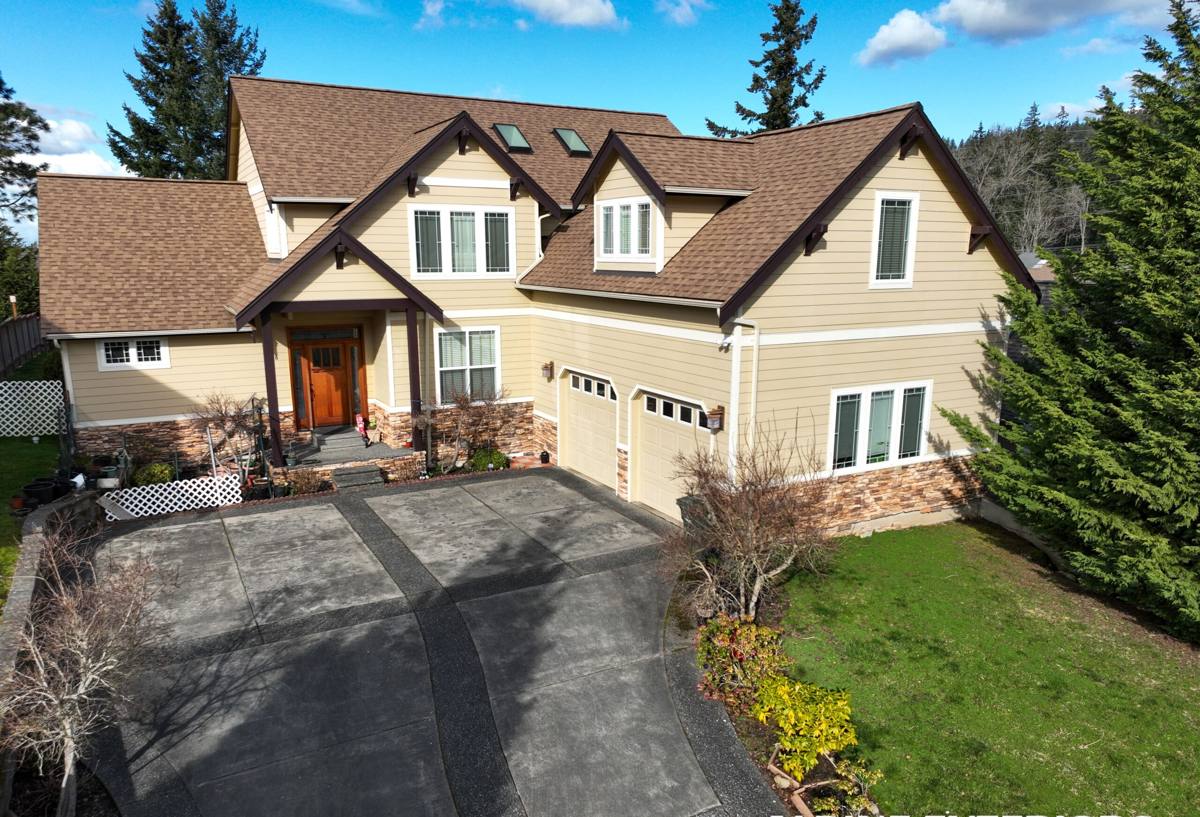
Signs a California Creek Roof Needs Replacement, Not Just Repair
Roofs in this microclimate often show wear in specific patterns tied to moisture and salt exposure. It's worth knowing the difference between a roof that needs a patch and one that's past the point of patching.
- Granule loss that's left bare, shiny patches on south- or west-facing slopes exposed to weather
- Moss or algae that keeps coming back within a season or two of cleaning, even after treatment
- Curling, cupping, or cracked shingles, especially on older three-tab roofing
- Rusted, pitted, or failing metal flashing around chimneys, vents, and valleys
- Soft or spongy decking felt underfoot in the attic, or daylight visible through the roof deck
- Water stains on ceilings or in the attic that show up after wind-driven rain, not just heavy downpours
- A roof that's 20+ years old and has never had underlayment or ventilation upgraded
Any one of these on its own might be repairable. Several at once, or repeated failures in the same spot, usually means the roof system as a whole has reached the end of its useful life for this climate.
What a Correct Roof Replacement Involves Here
Full Tear-Off, Not Overlay
We don't recommend layering new shingles over old ones on homes in this area. Overlaying traps moisture between layers, hides deck damage that's often already present from years of moss and standing water, and shortens the life of the new roofing. A proper replacement starts with a full tear-off down to bare decking.
Deck Inspection and Repair
Once the old roofing is off, we inspect the decking for soft spots, delamination, or rot — common wherever moss has been holding moisture against the roof surface for years. Any damaged sections get replaced before anything new goes down. Skipping this step is one of the most common shortcuts in cheap roof jobs, and it's the one that causes the most expensive problems later.
Underlayment Suited to Wind-Driven Rain
Given how often driving rain comes off the water here, we use synthetic or self-adhering underlayment rated for high wind-driven moisture, with extra ice-and-water shield membrane at eaves, valleys, and around every roof penetration — the places wind-driven rain actually gets pushed under standard shingles.
Flashing and Metal Components
Salt air corrodes cheap or unprotected metal faster than most homeowners expect. We use corrosion-resistant flashing at chimneys, skylights, vent pipes, and valleys, and we pay close attention to fastener quality — standard galvanized fasteners can start showing rust streaks within a few years this close to the water.
Material Options for a Salt-Air, High-Moss Climate
There's no single "best" roofing material for every California Creek home — it depends on your roof pitch, budget, and how much long-term maintenance you want to take on. Here's how the common options compare for this specific climate.
| Material | Moss/Algae Resistance | Salt Air Durability | Typical Lifespan | Maintenance Level |
|---|---|---|---|---|
| Architectural asphalt shingle | Good with zinc/copper strips or algae-resistant granules | Good with quality fasteners and flashing | 25–30 years | Moderate — periodic moss treatment |
| Standing seam metal | Excellent — sheds moss naturally on steep pitches | Excellent with coastal-rated coatings | 40–50+ years | Low |
| Composite/synthetic shake | Good, doesn't absorb moisture like wood | Good | 30–40 years | Low to moderate |
| 3-tab asphalt shingle | Fair — more prone to moss buildup | Fair, budget fasteners are a weak point | 15–20 years | Higher |
We generally steer California Creek homeowners toward architectural shingles or metal over basic three-tab roofing. The lower upfront cost of three-tab shingles gets eaten up quickly by how much faster they take on moss and wind damage in this specific location. That's a maintenance and moisture-behavior tradeoff we're upfront about, not a knock on any manufacturer — every product has a climate it performs best in, and this one isn't it.
Ventilation and Moisture Control Matter More Here
A new roof surface can still fail early if the attic underneath it can't breathe. In a climate with this much ambient moisture and shade, trapped attic humidity feeds mold, rots decking from underneath, and shortens shingle life regardless of how good the material is. As part of a replacement, we evaluate:
- Intake ventilation at the eaves (soffit vents) versus exhaust at the ridge — both need to be balanced, not just present
- Whether existing insulation is blocking soffit airflow
- Bathroom and kitchen exhaust fans that vent into the attic instead of outside (a surprisingly common issue in older homes)
- Signs of past condensation or mold on the underside of the decking or rafters
Fixing ventilation problems during a roof replacement — rather than after — avoids opening the roof back up a second time.
Our Roof Replacement Process
- On-site inspection and estimate. We walk the roof and attic, check decking condition where accessible, and give you an honest read on what the project actually needs.
- Material selection. We go over the tradeoffs for your specific roof pitch, sun/shade exposure, and budget — no pressure toward the most expensive option.
- Permitting. Whatcom County and local jurisdiction permitting is handled as part of the job, not left for the homeowner to figure out.
- Tear-off and disposal. Old roofing is removed and hauled off; property and landscaping are protected during the process.
- Deck repair. Any rot or soft decking found is replaced before underlayment goes down — documented so you know exactly what was found and fixed.
- Underlayment, flashing, and ventilation upgrades. Installed to the standards described above, built for wind-driven rain and salt exposure.
- New roofing installation. Installed to manufacturer specifications so warranty coverage stays intact.
- Final walkthrough. We go over the finished roof with you, including care and moss-prevention tips specific to your property's sun exposure.
Permits, Timeline, and What to Expect
Most straightforward roof replacements in this area take one to three days on-site, weather permitting — and weather is the real variable here. Given how much winter rain this part of Whatcom County gets, we schedule tear-offs around forecast windows so your home isn't left exposed, and we tarp and protect open sections if weather shifts mid-project. Permitting timelines vary, but we handle the paperwork so the schedule isn't held up on your end.
Why Hire a Crew That Already Works in California Creek
Roofing crews that mostly work drier, inland areas sometimes underbuild for what this stretch of coastline actually deals with — lighter underlayment, standard fasteners, minimal flashing at penetrations. It doesn't show up as a problem in year one. It shows up in year five or six, as leaks around vents, rusted flashing, or moss that keeps coming back no matter how often it's cleaned.
A crew that regularly works California Creek and the greater Semiahmoo area already knows which roof details need reinforcing for this exact combination of salt air, wind-driven rain, and shade-driven moss growth. That's not a marketing point — it's the difference between a roof that needs attention again in a few years and one that doesn't.
Choosing a Contractor: What to Check Before You Sign
- Current Washington state contractor license and liability insurance, verifiable on request
- A written estimate that specifies materials, underlayment type, and flashing details — not just a flat price
- Manufacturer certification for the roofing system being installed, if warranty coverage matters to you
- A clear plan for decking repair pricing before work starts, not a surprise change order mid-project
- Local references or completed work in the Semiahmoo/Blaine area you can ask about
- A realistic timeline that accounts for local weather, not an unrealistic rush promise
What a Roof Replacement Typically Costs
Pricing depends on roof size, pitch, current decking condition, and material choice, so we won't quote a number without seeing the roof. In general terms, architectural asphalt shingle replacements tend to fall in the mid range of roofing costs, metal roofing costs more upfront but less over its lifespan, and any project with significant deck rot will run higher regardless of material due to the added carpentry. We'll always break these costs out clearly rather than bundling them into one vague total.
If your California Creek roof is showing its age — moss that won't quit, granule loss, flashing that's starting to rust, or just years of wear from the salt air and rain — we're happy to take a look and give you a straightforward, no-pressure estimate using the form below.