 Semiahmoo Exterior
 Roofing for Ferndale's Corner of Whatcom County
Ferndale sits in a stretch of Whatcom County where weather doesn't do anything in half measures. Winters bring long stretches of low-pressure rain off the Pacific, spring and fall carry the moisture that keeps moss thriving on anything north-facing, and the proximity to the Salish Sea means salt-laden air works its way inland further than most homeowners assume. None of that is unusual for this part of Washington. But it does mean a roof here has to handle a different combination of stresses than the same roof would face fifty miles inland or a few hundred miles south.
Asphalt shingle roofing remains the most common and, for most homes, the most sensible choice in Ferndale. It's not the only option, and it's not right for every roof, but done correctly it holds up well against this climate for decades. This page is about what "done correctly" actually means here — the materials, the installation details, and the local judgment calls that separate a roof that lasts from one that starts showing problems in year eight.
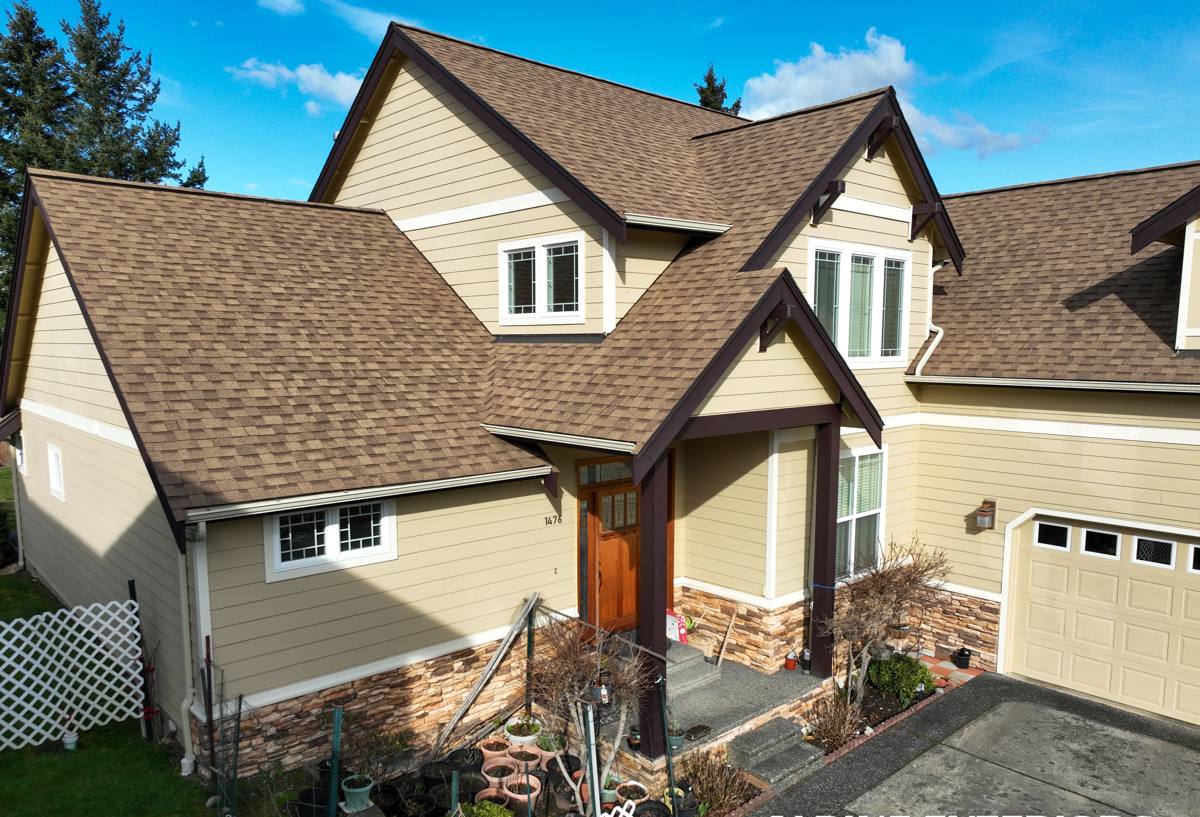
Why Asphalt Shingles Still Make Sense Here
There's a reason asphalt shingles remain the default roofing material across most of Whatcom County, including Ferndale. They're a proven, well-understood system — manufacturers have decades of data on how they perform in wet marine climates, installers know the details that matter, and repairs are straightforward when something does go wrong. That last point matters more than people realize: a roofing material that's easy to diagnose and patch is worth more over 20 years than one that looks slightly nicer but turns every small problem into a specialist job.
Asphalt shingles also give homeowners real flexibility. There's a wide range of shingle grades, from budget three-tab products to heavier architectural (laminated) shingles with deeper shadow lines and longer warranties. That range lets a roof match both the home's style and the household's budget without forcing a compromise on the underlying weatherproofing, which should never change regardless of which shingle tier is chosen.
What Local Weather Actually Does to a Roof
It helps to be specific about the mechanisms, not just the general idea that "it rains a lot here."
- Driving rain pushed sideways by wind finds any gap in flashing, valleys, or shingle overlap — not just gaps at the surface, but weaknesses several courses deep that only show up under wind-driven conditions, not a calm test with a hose.
- Moss and algae take hold wherever shade and moisture linger, especially on north- and east-facing slopes shaded by trees. Moss holds water against the shingle surface far longer than open sun-exposed areas dry out in, and its root structure lifts shingle edges over time.
- Salt air, even well inland from the water, accelerates corrosion on exposed metal — nails, flashing, vents, and fasteners — faster than a dry-climate roof would ever experience. Corroded fasteners are one of the more common hidden causes of leaks that seem to appear "out of nowhere."
- Freeze-thaw cycles, while less extreme here than in the mountains or eastern Washington, still happen enough overnight in winter to stress water that's found its way into a seam or crack.
None of these forces are dramatic on their own. The damage they do is cumulative and slow, which is exactly why so many roof problems in this region are installation or material issues that took years to surface, rather than sudden storm damage.
Choosing a Shingle for This Climate
Not every asphalt shingle product is built the same way, and in a wet, moss-prone climate those differences matter more than they would somewhere dry. The table below is a general comparison of common shingle categories — actual product lines and warranties vary by manufacturer, and we'll go over specific options during an estimate.
| Shingle Type | Typical Lifespan | Moss/Algae Resistance | Best Fit |
|---|---|---|---|
| Standard 3-tab | 15–20 years | Standard, no built-in resistance | Budget-conscious re-roofs, simple roof shapes |
| Architectural (laminated) | 25–30+ years | Often available with algae-resistant granules | Most Ferndale homes; better wind and impact performance |
| Algae-resistant (AR) shingles | Same as base product | Copper- or zinc-infused granules slow moss/algae growth | Shaded roofs, north-facing slopes, tree-heavy lots |
| Impact-rated shingles | Same or longer, insurance discounts possible | Varies by product | Homes wanting extra durability against debris and hail |
For most Ferndale homes, we lean toward architectural shingles with algae-resistant granules as the baseline recommendation, especially on any slope that sits in shade for part of the day. The upcharge over standard three-tab is modest relative to the years of moss resistance it buys back.
What a Correct Installation Actually Involves
The shingle itself is often the least important variable in how long a roof lasts. What's underneath it and how it's detailed at the edges, valleys, and penetrations is what determines whether water stays out. A correct asphalt shingle installation in this climate includes:
Underlayment and Water Barriers
A synthetic underlayment across the full roof deck, with self-adhered ice-and-water membrane at the eaves, valleys, and around any penetration (chimneys, skylights, vent stacks). In a rain-heavy climate like Whatcom County's, this membrane is the backup system that catches wind-driven water before it reaches the deck — it's not optional, and it's one of the first things worth confirming a contractor is actually installing, not just quoting.
Flashing
New metal flashing at every roof-to-wall transition, valley, and chimney, not reused flashing from the old roof. Reusing old flashing to save time or cost is one of the most common shortcuts we see on roofs that fail early, because corroded or bent flashing rarely seals the same way twice.
Ventilation
Balanced intake (soffit) and exhaust (ridge or roof vents) airflow. Poor ventilation traps moisture in the attic, which condenses on the underside of the deck and accelerates rot from the inside — a problem that has nothing to do with the shingles themselves but gets blamed on them anyway.
Nailing and Fastening
Correct nail placement, count, and penetration depth per the shingle manufacturer's specification. Under- or over-driven nails, or nails placed outside the manufacturer's nailing zone, are a leading cause of shingles that blow off or lift in wind well before their rated lifespan — and they can void the manufacturer's warranty even when the shingle itself is fine.
Deck Condition
Sheathing inspected and replaced where soft, delaminated, or water-stained before any new material goes down. Roofing over a compromised deck is a cosmetic fix, not a structural one.
What Drives Cost on a Ferndale Re-Roof
We don't publish flat pricing because every roof is different, but the factors that move a project up or down in cost are consistent. Understanding them helps you evaluate any quote you get, from us or anyone else.
| Factor | Effect on Cost |
|---|---|
| Roof pitch and access | Steep or high roofs require more safety equipment and time, raising labor cost |
| Number of existing layers | Full tear-off of multiple old layers costs more than a single-layer strip |
| Deck condition | Rotten or delaminated sheathing adds material and labor to replace |
| Roof complexity | Valleys, dormers, and multiple planes take more time than a simple gable roof |
| Shingle tier chosen | Architectural and algae-resistant products cost more per square than standard 3-tab |
| Ventilation upgrades | Adding or correcting intake/exhaust venting is worth the modest added cost |
As a general rule, a straightforward, single-story, single-layer tear-off costs less than a steep, multi-plane roof with an old deck that needs partial replacement. We'll walk through where your specific roof falls on that range during the estimate, with the reasoning shown, not just a number.
How Our Process Works
We keep the process the same on every Ferndale roof, whether it's a straightforward re-roof or one with complications waiting under the old shingles.
- On-site inspection. We get on the roof, not just look at it from the ground, and check the deck, flashing, ventilation, and any problem areas before quoting anything.
- Written estimate. A clear scope of work — tear-off, deck repair allowance, underlayment, flashing, shingle product, ventilation — so you know exactly what's included, not a vague lump sum.
- Material delivery and staging. Materials are staged to protect landscaping and driveways, and we plan for weather rather than hoping it cooperates.
- Tear-off and deck inspection. Old material comes off down to the deck, which is then inspected in person — this is when hidden rot or damage actually gets found, not guessed at.
- Installation. Underlayment, flashing, ventilation, and shingles installed to manufacturer specification, in the sequence that actually keeps water out.
- Cleanup and final walkthrough. Magnetic sweep for nails, debris removal, and a walkthrough so you can see the finished work and ask questions before we consider the job done.
Maintenance That Actually Extends a Ferndale Roof's Life
A well-installed asphalt shingle roof still benefits from basic upkeep in this climate — moss and clogged drainage do more cumulative damage than almost anything else we see.
- Keep gutters and downspouts clear, especially going into fall when leaf debris peaks and rain volume increases.
- Have moss and algae growth treated or removed before it spreads — don't wait until it's visibly thick, since the damage starts at the root level long before that.
- Trim back tree branches that keep a section of roof shaded and damp longer than the rest.
- Check attic ventilation isn't blocked by insulation or debris, since blocked vents trap moisture year-round, not just in winter.
- After any major windstorm, do a visual check (or have one done) for lifted or missing shingles rather than waiting for a leak to show up inside.
- Address small leaks immediately — a stain on a ceiling is usually evidence of a problem that's been developing for a while, not a brand-new event.
Signs Your Roof Needs a Look
Most roofs don't fail all at once. They give warning signs first, and catching them early is usually the difference between a repair and a full replacement.
- Granules collecting in gutters or at downspout outlets, which signals shingle surface wear.
- Shingles that look cupped, curled, or cracked, particularly on sun-exposed south and west slopes.
- Visible moss mats, especially on shaded north-facing sections.
- Dark streaking, which is typically algae rather than dirt, and spreads over time if untreated.
- Soft spots underfoot when walked (by a professional — this isn't a DIY check on a roof).
- Daylight visible through the attic roof deck, or damp insulation.
Why It Matters That We Already Work Ferndale
Roofing knowledge doesn't transfer perfectly from one climate to another, and it doesn't even transfer perfectly across Whatcom County. A crew that regularly works Ferndale roofs already knows which slopes in this area tend to hold moss longest, how local wind patterns off the water tend to drive rain into valleys and roof-to-wall transitions, and what tends to go wrong on the roof styles and ages common in this community. That's not something you get from a general contractor bidding a Ferndale job as a one-off — it comes from doing this work here, repeatedly, and paying attention to what holds up and what doesn't.
It also matters for permitting and coordination. Local familiarity means fewer surprises with inspection requirements and a better sense of realistic scheduling around this region's weather windows, rather than optimistic timelines that get blown up by the first wet week.
If you're in Ferndale and thinking about your roof — whether it's showing early wear, due for replacement, or you just want an honest read on its condition — we're happy to take a look. Reach out for a free, no-pressure estimate using the form below.