 Semiahmoo Exterior
 Siding Repair in Ferndale: Fixing It So It Actually Stays Fixed
Not every siding problem in Ferndale calls for tearing a whole wall down to the studs. Storm damage to a section of wall, rot that's isolated around a window or corner, or trim that's failed after years of coastal weather can often be repaired without replacing siding that's still doing its job everywhere else. But repair work in this climate has a way of exposing whether a contractor understands what's actually happening behind the wall, or is just patching the visible symptom and hoping it holds until the next wet season.
Ferndale sits close enough to the water and the open Nooksack lowlands that its homes take a specific combination of punishment: salt-tinged air drifting in off the Sound, wind-driven rain that hits walls sideways instead of falling straight down, and a moss season that can run most of the year on shaded or north-facing exposures. A repair that doesn't account for all three tends to fail again, often faster than the original damage took to show up. This page is about what a siding repair actually needs to involve here, how we decide between repairing and replacing, and what to expect from the process.
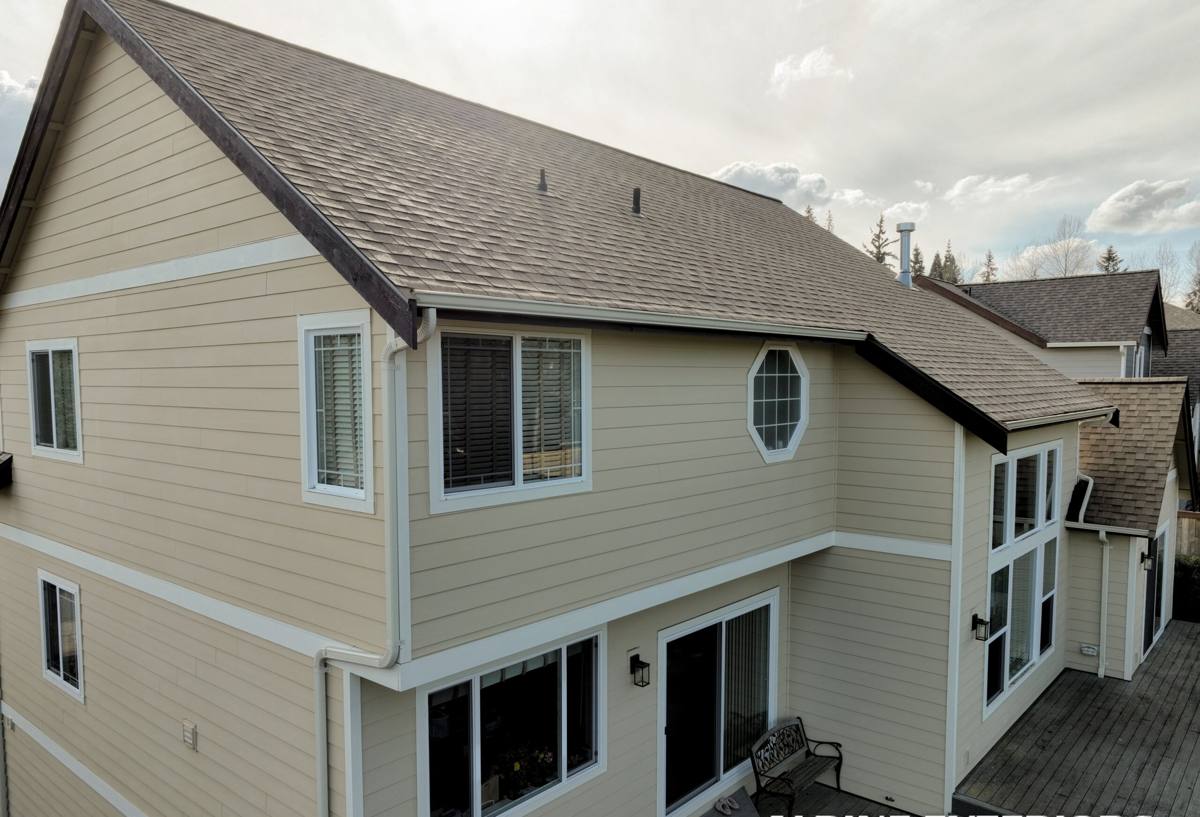
Common Siding Repair Needs We See in Ferndale
Repair calls in this area tend to fall into a handful of recurring categories, and the right fix looks different for each one.
Storm and Impact Damage
Wind events off the water can crack, dent, or knock loose individual siding panels, especially on exposed walls and around corners. This is usually the most straightforward repair category, since the damage is visible, localized, and doesn't necessarily mean anything is wrong with the wall assembly behind it.
Rot and Moisture Damage at Trim and Corners
Corner boards, window and door trim, and butt joints are where water intrusion shows up first, because they're the places where two materials meet and a gap or failed seal gives water a way in. By the time rot is visible at the surface, it's often been developing behind the siding for a while, which means a proper repair has to address what's underneath, not just what's showing.
Failed Caulking and Flashing
Caulk joints and flashing details have a service life, and in a climate with this much sustained moisture and salt exposure, they tend to fail sooner than manufacturers' general guidance assumes. Cracked or missing caulk and undersized or misaligned flashing let water track behind the siding well before any siding board itself looks damaged.
Delamination and Cupping on Older Wood-Based Siding
On homes with cedar, primed wood, or engineered wood siding, repeated wet-dry cycling causes boards to swell, cup, and delaminate at cut edges and joints. These repairs often reveal that the underlying material issue is the siding itself, not an installation defect, which becomes part of the repair-or-replace conversation below.
Loose or Improperly Fastened Panels
Corroded fasteners, undersized nails, or panels that were never fastened to spec can work loose over time, particularly with salt air accelerating corrosion in exposed hardware. Loose panels are a moisture entry point even before they look visibly damaged.
Repair or Replace? How We Make That Call
Homeowners understandably want to know whether a repair is really the right move or just a delay before a bigger job. We don't default to whichever answer is more profitable for us — we look at three specific things.
How Much of the Wall Is Actually Affected
A single damaged panel, a section around one window, or trim on one corner is a genuine repair scope. Damage scattered across multiple walls, or concentrated heavily on the sides that take the worst weather exposure, is often a sign the whole siding system is reaching the end of its useful life rather than having one localized problem.
What's Happening Behind the Siding
Surface damage is only part of the picture. When we pull damaged siding to assess a repair, we're checking the sheathing, framing, and water-resistive barrier underneath for signs of ongoing moisture intrusion. If that inspection turns up soft or rotted sheathing beyond the immediate repair area, patching the visible siding without addressing the substrate just hides the problem for another season.
Age and Condition of the Existing Material
Repairing a section of siding that's a few years old and otherwise sound is a different situation than trying to patch a wall where the rest of the siding is already showing its age. On older wood-based or vinyl siding nearing the end of its practical service life, a repair can end up costing real money for a fix that only buys a short amount of time before more of the same wall needs attention.
What a Correct Siding Repair Actually Involves
A repair that only replaces the visibly damaged board and re-caulks the seam is a cosmetic fix, not a real one. Done correctly, a siding repair in this climate includes:
- Removing enough surrounding material to fully expose and assess the damage, not just the section that looks bad
- Inspecting and repairing the water-resistive barrier and sheathing underneath before any new siding goes back on
- Correcting the flashing or caulk detail that allowed water in, so the same failure doesn't repeat in the same spot
- Using fasteners appropriate for coastal, salt-air exposure rather than whatever standard hardware happens to be on the truck
- Matching the replacement material's profile, exposure, and color as closely as the original allows
That last point matters more with James Hardie siding than homeowners usually expect. Hardie's ColorPlus finishes are factory-applied in specific color runs, and older colors are periodically retired from the current lineup. A repair on a home with older Hardie siding sometimes means matching to the closest current color rather than an exact one, which we'll walk through honestly during the estimate rather than promising a perfect match we can't guarantee.
Our Siding Repair Process
- On-site inspection: We look at the visible damage and the surrounding wall area, not just the specific spot that prompted the call, since related problems are often close by.
- Diagnosing the extent: Where moisture damage is suspected, we probe and, where needed, remove a section of siding to check the sheathing and water-resistive barrier before finalizing scope.
- Honest scope and quote: We tell you plainly whether what we found supports a repair or points toward a larger replacement, and price the work accordingly rather than defaulting to the bigger job.
- The repair itself: Matched material goes in, flashing and drainage details are corrected where they contributed to the original failure, and fasteners and sealants are chosen for this climate specifically.
- Final check: We walk the completed repair with you so you can see exactly what was done and why, including anything found behind the siding that wasn't visible before we started.
Siding Repair Cost Factors in Ferndale
| Factor | What It Affects | Why It Matters Here |
|---|---|---|
| Extent of hidden moisture damage | Whether sheathing or framing repair is needed | Ferndale's sustained moisture exposure means hidden rot is more common than the visible damage suggests |
| Material and color matching | Availability of matching siding material | Retired ColorPlus color runs on older Hardie siding can require a close match rather than an exact one |
| Location on the house | Access and labor time | Repairs on exposed, weather-facing walls or upper stories take longer to stage safely |
| Number and spread of repair areas | Total labor and material cost | Scattered damage across multiple walls can approach the cost of a partial re-side |
| Flashing or drainage correction needed | Scope beyond the siding itself | Fixing the actual water entry point, not just the board, prevents the same repair from recurring |
Because repair scope often isn't fully clear until damaged material is removed, we walk the property and, where needed, open up a section before committing to a final number rather than quoting blind off a phone description.
Signs Your Ferndale Home Needs Siding Repair Now
- A cracked, split, or missing siding panel after a wind or storm event
- Soft or spongy siding when pressed, especially near the bottom of the wall or around trim
- Paint peeling, bubbling, or a board visibly cupping or warping
- Caulk that's cracked, shrunk away from the joint, or missing entirely at corners and trim
- Moss or dark staining that comes back quickly after cleaning on a specific section of wall
- A musty smell or soft drywall on an interior wall that shares space with damaged exterior siding
Catching these early is almost always cheaper than waiting. A small, localized repair now is a fraction of the cost of the sheathing and framing repair that a neglected leak can turn into after another wet season.
Why a Ferndale-Experienced Crew Matters for Repair Work
Repair work rewards local experience more than new installation does, because diagnosing why a specific spot failed takes knowing how this climate actually behaves on real houses. A crew that works across Whatcom County regularly knows which wall orientations take the worst wind-driven rain, where moss holds moisture longest, and which trim details tend to fail first on homes of a given age. That background shapes a repair that addresses the actual cause rather than just replacing the board that happened to crack. We also handle roofing, windows, and decks, so if a repair points to water entering from a roof valley or a window flashing rather than the siding itself, we can identify that instead of fixing the symptom and missing the source.
Get a Free, No-Pressure Estimate
If you've got storm damage, a soft or discolored section of siding, or trim that's starting to fail on your Ferndale home, we're happy to take a look and give you an honest read on what it actually needs. Reach out using the form below to schedule a free estimate, no pressure and no upsell script.