 Semiahmoo Exterior
 Window Replacement Built for Sumas Weather
Sumas sits in a part of Whatcom County that takes weather seriously. Winters bring long stretches of driving rain, humidity lingers most of the year, and anything shaded or north-facing spends months growing moss before anyone notices. Add in the marine-influenced air that moves through the whole county, and you've got a climate that finds every weak spot in a window opening: worn weatherstripping, a cracked seal, flashing that was never installed correctly in the first place. Window replacement here isn't just a cosmetic upgrade. It's one of the more effective ways to stop water, drafts, and slow rot from working their way into a house.
We do this work throughout the Semiahmoo area and into Sumas on a regular basis, which matters more than it sounds. A window that's correctly detailed for a drier climate can still fail here within a few years if the flashing and drainage aren't handled with this specific rain pattern in mind.
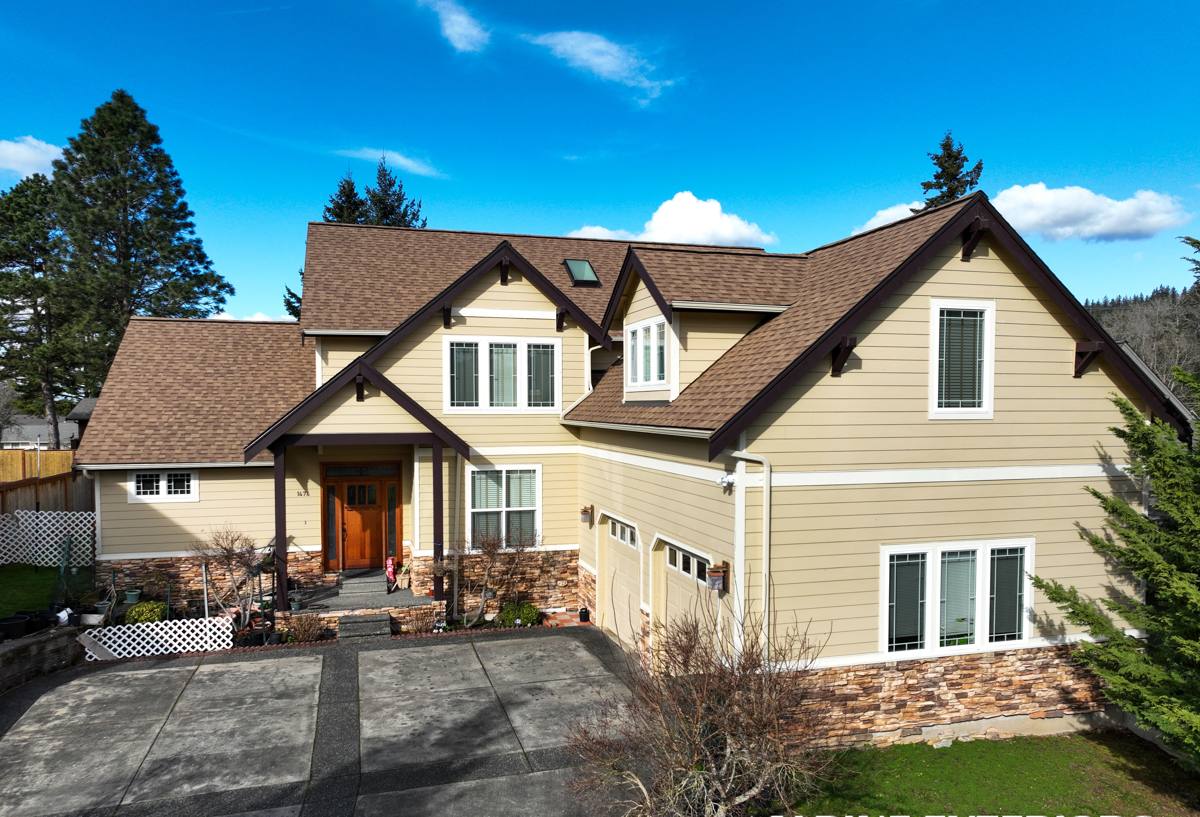
Signs a Sumas Home Needs New Windows
Most homeowners don't replace windows because they woke up wanting new ones — they replace them because something is already going wrong. In this climate, the warning signs tend to show up in predictable places.
- Fogging or a permanent haze between the panes of a double-pane window (the seal has failed and the gas fill is gone)
- Soft or discolored wood at the sill or the bottom corners of the frame
- Visible moss or dark streaking on the exterior trim around the window
- A draft you can feel standing next to the window on a windy, rainy day
- Windows that are difficult to open, close, or lock — frames can swell and warp with repeated moisture exposure
- Condensation forming on the inside of the glass regularly through fall and winter
- Paint that keeps failing on the exterior casing no matter how often it's redone
Any one of these on its own might just need a repair. Several of them together, especially on the same wall or elevation, usually mean the window and its surrounding flashing have been letting moisture in for a while.
What a Correct Window Replacement Job Actually Involves
Removal and Inspection
The old window comes out carefully, and the opening gets inspected before anything new goes in. This is the step that gets skipped by crews trying to move fast, and it's the one that matters most. If there's rot in the sill or framing behind the old window, that has to be addressed now — sealing a new window over damaged wood just hides the problem for a couple more years.
Flashing and Weatherproofing
This is where most window failures in this climate actually start. Proper flashing directs water that gets behind the siding down and out, away from the framing, instead of letting it pool at the sill. It needs to be layered correctly — building paper, flashing tape, and the window's own nailing flange — so water always has somewhere to go. Rushed or missing flashing is the single most common cause of the rot and staining we get called out to fix on older installs.
Installation and Sealing
The window gets set plumb, level, and square, shimmed correctly so it isn't relying on the screws alone to hold its shape, and insulated around the frame without overpacking it (too much spray foam can actually bow a frame inward). Exterior sealant goes on last, in the right locations — sealing every gap isn't correct practice, since some gaps are there intentionally to let trapped moisture escape.
Choosing the Right Window Type for This Climate
There's no single "best" window for every house. The right choice depends on the wall it's going into, how much direct weather that side of the house takes, and what the homeowner wants to maintain over time. Here's how the common frame materials generally compare for a Whatcom County home:
| Frame Material | Moisture Performance | Maintenance | Typical Lifespan |
|---|---|---|---|
| Vinyl | Good — won't rot, handles humidity well | Low; occasional cleaning | 20–30 years |
| Fiberglass | Very good — dimensionally stable in wet/dry cycles | Low | 30–40+ years |
| Aluminum | Fair — prone to condensation without a thermal break | Low, but seals need checking | 20–30 years |
| Wood (clad exterior) | Good if the cladding is intact; vulnerable where it's damaged | Higher; exposed wood needs upkeep | 20–30 years, condition-dependent |
| Solid wood, unclad | Poor in this climate without diligent upkeep | High; repainting and sealing on a regular schedule | Varies widely with maintenance |
We steer most Sumas homeowners toward vinyl or fiberglass for straightforward, low-maintenance performance in a wet climate. Wood-clad windows can look great and hold up fine, but they come with a maintenance commitment that's worth being honest about up front — if the cladding gets damaged and isn't repaired, moisture finds its way to the wood underneath and the clock starts running.
What Drives the Cost of a Window Replacement
Every job is different, but the same handful of factors tend to move the price up or down. Being upfront about these helps homeowners understand their estimate instead of just seeing a number.
| Factor | Why It Matters |
|---|---|
| Number of windows | Per-unit cost drops somewhat on larger jobs due to setup and material efficiency |
| Frame material and glass package | Vinyl, fiberglass, and upgraded low-E or triple-pane glass all carry different price points |
| Condition behind the old window | Rot or framing repair adds labor and material that can't be known until the old unit is out |
| Size and configuration | Large picture windows, bays, and custom shapes cost more than standard operable sizes |
| Access and story height | Second-story or hard-to-reach windows take more time and equipment |
| Retrofit vs. full-frame replacement | Full-frame (removing exterior trim to redo flashing) costs more but is often the right call on an older home |
We'd rather quote a full-frame replacement when the flashing or framing needs it, even if the number is higher, than quote a cheaper retrofit that leaves a known moisture problem in the wall. That's a conversation we have honestly during the estimate, not a surprise after the work starts.
Our Process, Start to Finish
- On-site assessment — we look at each window from both sides, check for existing moisture or rot, and talk through what you actually need versus what you might be tempted to over-buy
- Written estimate — clear pricing broken out by window, with material options explained in plain terms
- Scheduling — we plan around the weather where we can, since flashing and sealants need dry conditions to be installed correctly
- Removal and framing check — old windows come out, framing gets inspected, and any needed repair is flagged before installation continues
- Installation — new units are set, flashed, insulated, and sealed following manufacturer specs and our own standards for this climate
- Final walkthrough — every window is opened, closed, and checked for a proper seal before we consider the job done
Manufacturers and Products We Stand Behind
We work with a small number of established window manufacturers rather than the cheapest option available on a given week. That's a deliberate standard, not a sales pitch. Cheaper window lines often cut corners in the parts you can't see — thinner frame walls, weaker seal systems, hardware that wears out early — and those shortcuts show up as problems in exactly the climate we're working in. We're also selective about which specialty products we install; some low-cost composite and vinyl-clad options have known long-term moisture behavior issues in wet climates, and we'd rather steer a homeowner toward a proven product with a solid warranty structure than install something that looks similar on the showroom floor but performs differently after five Whatcom County winters.
Why a Local Crew Matters for This Job
Window replacement looks similar on paper everywhere in the country, but the details that make it hold up are regional. A crew that mostly works drier inland climates may not think twice about flashing sequence or drainage gaps, because where they work, a small mistake doesn't get tested by months of rain every year. Here, it does. We work in and around Sumas regularly, so the flashing details, sealant choices, and drainage planning we use are shaped by what actually happens to a window opening on this side of the state over a full wet season — not a generic install method.
Keeping New Windows Performing Long-Term
A correct installation does most of the work, but a little seasonal attention keeps windows performing for their full lifespan:
- Clear debris and moss from window sills and adjacent trim before it holds moisture against the frame
- Check exterior caulking once a year and touch it up where it's cracked or pulled away
- Keep gutters and downspouts clear so overflow isn't running down the wall near window openings
- Operate each window a few times through the year so weatherstripping and hardware don't seize up
- Watch for condensation between panes, which signals a failed seal even on newer units
None of this is complicated, but skipping it is how a well-installed window still ends up with problems a decade in.
If your windows in Sumas are drafty, fogging, or showing moisture damage, we're glad to take a look and give you a straightforward, no-pressure estimate — no obligation, just an honest read on what's actually going on and what it would take to fix it. The form below is the easiest way to get started.