 Semiahmoo Exterior
 Siding That Has to Work in Whatcom County Weather
Wiser Lake sits inland from the Strait of Georgia, but it still lives inside the same marine-influenced weather pattern that shapes exterior work across Whatcom County. Homes here go through long stretches of driving rain in the fall and winter, humid air off the surrounding wetlands and farmland, and a moss and algae season that can stretch well past what homeowners in drier climates ever deal with. Wood-adjacent siding products in this environment are fighting an uphill battle from the day they're installed. Fiber cement doesn't have that problem, which is the main reason we've standardized on James Hardie products for every siding project we take on, including the ones around Wiser Lake.
None of this means Wiser Lake homes need anything exotic. It means the siding, the trim details, and the installation sequence all need to be chosen and executed with moisture as the primary design constraint, not an afterthought.
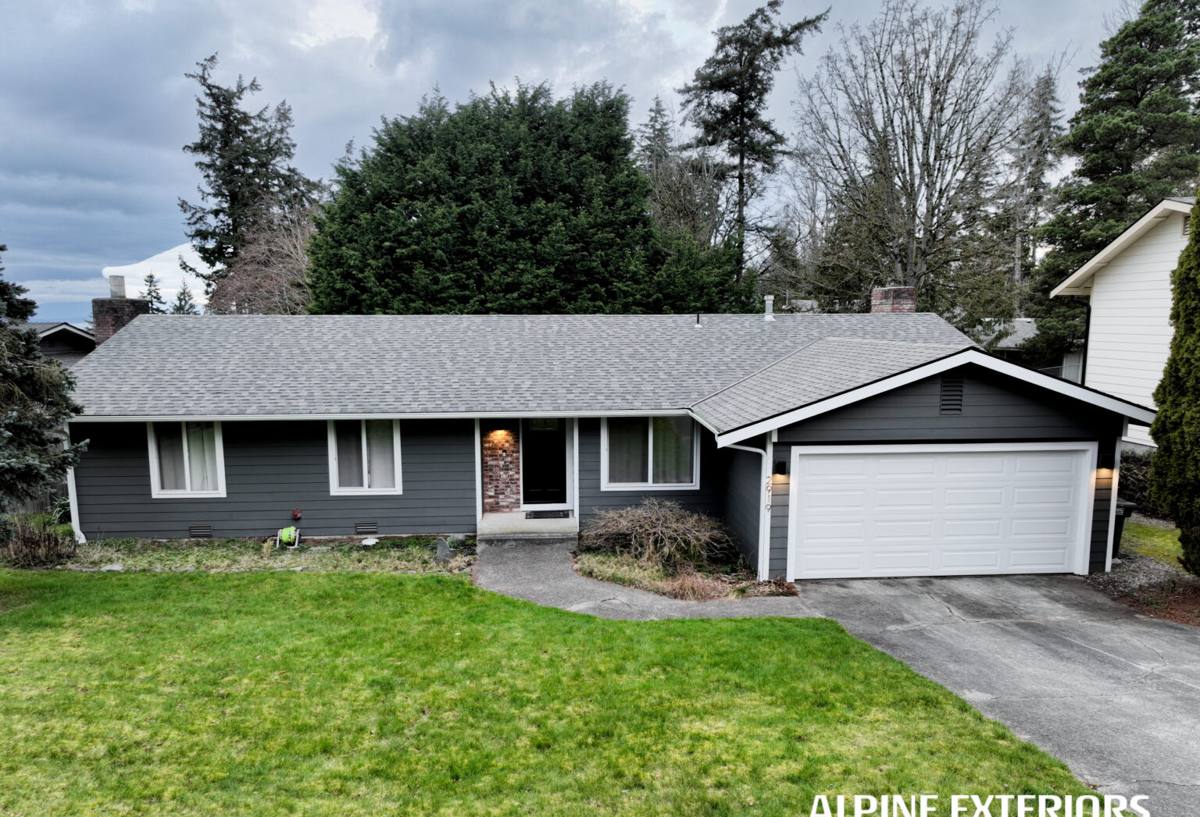
Why We Only Install James Hardie
We don't install vinyl siding, LP SmartSide, Cemplank, Allura, primed spruce, or cedar. That's not a marketing position — it's a decision we made after years of seeing how different siding materials actually hold up once they're on a house in this climate rather than in a showroom.
Where the alternatives fall short here
- Vinyl expands and contracts with temperature swings, can crack in cold snaps, and doesn't hold paint if a homeowner ever wants to change the color.
- LP SmartSide and other engineered wood products are wood-based at the core — meaning any sustained moisture intrusion at a seam, fastener, or cut edge can lead to swelling or rot over time.
- Primed spruce and cedar require ongoing repainting and caulking to stay sealed, which is a maintenance commitment a lot of homeowners don't want to sign up for indefinitely.
James Hardie fiber cement is non-combustible, dimensionally stable, and engineered specifically for climate zones like ours. It doesn't rot, it resists moss and mildew far better than wood-based sidings, and the ColorPlus factory finish holds its color without the repaint cycle other materials demand.
What James Hardie Offers Wiser Lake Homes Specifically
HZ5 engineered for the Pacific Northwest
James Hardie manufactures its siding in different HZ (HardieZone) formulations matched to regional climate demands. The Pacific Northwest falls under the HZ5 zone, which is engineered for moisture exposure, freeze-thaw cycling, and the kind of sustained damp conditions Whatcom County sees for a good chunk of the year. That's the formulation we install — not a generic national product.
ColorPlus factory finish
Rather than field-painting siding after installation, ColorPlus siding is finished at the factory with a baked-on, multi-coat finish designed to resist fading and chipping. In an area with a long wet season, that matters — field-applied paint is only as good as the weather conditions it was applied in, and factory finishing removes that variable entirely.
Product lines we typically use
| Product | Typical Use | Why It Fits Wiser Lake |
|---|---|---|
| HardiePlank lap siding | Most common exterior wall siding | Traditional look, proven moisture resistance, wide ColorPlus palette |
| HardiePanel | Modern vertical or board-and-batten styling | Clean lines for contemporary remodels, same fiber cement durability |
| HardieTrim | Fascia, corners, window/door surrounds | Matches siding durability so trim doesn't become the weak point |
| HardieSoffit | Eaves and overhangs | Resists moisture buildup in an area with heavy rainfall and shaded, damp overhangs |
What a Correct Installation Actually Involves
James Hardie siding performs the way it's supposed to only when it's installed to the manufacturer's specifications. A rushed or incorrect install can undercut even the best material, and in a wet climate the consequences show up faster than they would somewhere dry.
Moisture management behind the siding
Correct installation starts with a weather-resistive barrier and a proper rainscreen or drainage gap where conditions call for it, so any moisture that gets past the siding can drain and dry instead of sitting against the wall sheathing. This is especially important on north-facing and shaded walls, which stay damp longer after Whatcom County's frequent rain.
Clearances and gaps
Hardie's specifications call for minimum clearances from grade, roof lines, decks, and other siding terminations, plus specific gap widths at butt joints and around penetrations. Skipping these clearances is one of the most common ways we see fiber cement siding fail prematurely — not because the material was wrong, but because it was installed too tight.
Fastening
Fasteners need to be the correct type and length, driven flush (not overdriven), and placed at the manufacturer's specified spacing. Overdriven or misplaced fasteners can crack the board or create entry points for moisture over time.
Flashing and trim details
Windows, doors, and any horizontal trim need proper flashing integrated with the water-resistive barrier — not just caulk. Caulk is a maintenance item, not a waterproofing strategy, and relying on it as the primary defense is where a lot of siding problems in this climate start.
What We Often Find on Older or Poorly Sided Wiser Lake Homes
When we're called out to look at an existing home's siding, a handful of issues show up repeatedly in this area:
- Moss and algae staining concentrated on north- and west-facing walls that stay shaded and damp longest
- Caulk-dependent seams that have failed, letting moisture behind the siding
- Missing or inadequate rainscreen gaps, trapping moisture against the sheathing
- Wood trim or fascia that has softened or rotted while the siding field itself still looks fine
- Siding installed too close to grade, decks, or roof lines, wicking moisture from below
Most of these are installation issues, not material failures — which is exactly why we treat the installation process as seriously as the product choice.
Our Process for a Wiser Lake Siding Project
- On-site assessment: we walk the exterior, check existing siding and sheathing condition, and note drainage, shading, and moisture patterns specific to the lot.
- Scope and product selection: we recommend the Hardie products and profile that fit the home's style and exposure, and walk through the ColorPlus color options.
- Written estimate: a clear scope covering removal, any sheathing repair, water-resistive barrier, siding, trim, and cleanup.
- Prep and tear-off: old siding removed, sheathing inspected and repaired as needed before anything new goes up.
- Barrier and drainage plane installation: the moisture-management layer goes in correctly before the first piece of siding is hung.
- Siding, trim, and flashing installation: installed to Hardie spec — clearances, fastening, and flashing detail by detail.
- Final walkthrough: we review the finished work with the homeowner before calling the job done.
Cost Factors for Wiser Lake Homeowners
Every project is different, but the same handful of factors drive most of the cost variation we see on Hardie siding jobs in this area:
| Factor | Why It Matters |
|---|---|
| Existing sheathing condition | Rot or moisture damage found during tear-off adds repair scope before new siding can go on |
| Home size and wall complexity | More corners, gables, and dormers mean more cutting, trim, and labor time |
| Siding profile chosen | Lap, panel, and shingle-style profiles differ in material and labor cost |
| Trim and accessory scope | Full trim, soffit, and fascia replacement adds cost but improves the whole system's durability |
| Access and site conditions | Slopes, landscaping, and setbacks common on rural Wiser Lake lots can affect staging and labor |
We give straightforward written estimates and won't upsell scope you don't need — but we also won't quote around an installation shortcut just to hit a lower number, since that's the kind of shortcut that causes problems down the road.
Why Hiring a Crew That Already Works This Area Matters
Siding installed to spec on paper still needs to be installed by people who understand how the local conditions actually behave — which walls stay wet longest, how moss establishes itself, where drainage tends to be a problem on the kind of lots common around Wiser Lake and the wider Whatcom County area. A crew that only occasionally works in this climate is more likely to treat moisture management as a checklist item instead of the core reason the details exist. We install James Hardie siding as our only siding product because we've seen what holds up here and what doesn't, and we build every project around that.
Ongoing upkeep is minimal with Hardie, but a little attention keeps any siding system performing well over the long run:
- Rinse off accumulated moss, pollen, or grime once or twice a year, especially on shaded walls
- Keep gutters clear so overflow isn't running down the siding face
- Trim back vegetation and landscaping that holds moisture against the wall
- Check caulking at trim joints periodically and have it touched up if it starts to fail
- Have any impact damage or cracked boards repaired promptly rather than left exposed
If you're planning a siding project in Wiser Lake, we're happy to take a look at your home, talk through what James Hardie's product lines offer, and put together a straightforward, no-pressure estimate using the form below.