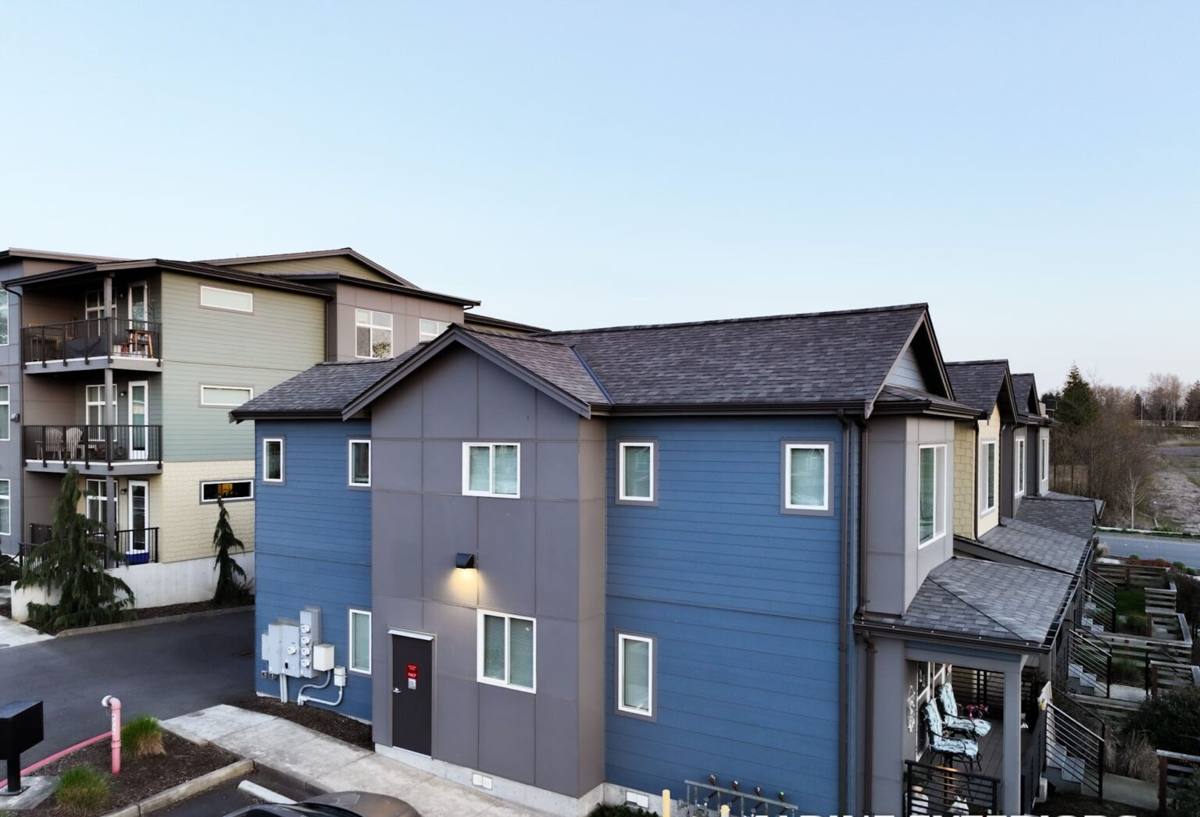
 Semiahmoo Exterior
 Blaine's Climate Is Hard on Windows
Homes in Blaine sit right where the Strait of Georgia meets Semiahmoo Bay and Drayton Harbor, and that location comes with a specific set of problems for windows. Salt-laden air moves inland on a regular basis, driving rain comes in sideways during winter storms, and the region goes through a long stretch of damp, low-sun months every year where moss and algae get a foothold on anything that stays wet. None of this is dramatic on its own, but window systems take a slow, steady beating from it. Seals fail earlier than the manufacturer's rating suggests. Aluminum frames pit and corrode. Wood sills that would last decades in a dry climate start showing soft spots in half that time. Whatcom County's marine climate isn't unusually harsh compared to the rest of the coast, but it is consistent, and consistency is what wears a window system down.
A window replacement done for a Blaine home needs to account for this from the start — not as an upgrade, but as the baseline. That means paying close attention to flashing, drainage, and material selection in ways that matter less in a drier, more sheltered part of the state.
Signs It's Time to Replace, Not Repair
Not every window problem calls for full replacement. Sometimes a failed weatherstrip or a stuck balance can be fixed. But there's a point where repair is just delaying the inevitable and spending money that would be better put toward new units. Common signs we see on Blaine homes include:
- Fogging or a milky haze between the panes of a double-pane window — this means the seal has failed and the gas fill is gone
- Persistent drafts you can feel even with the window latched and locked
- Soft, discolored, or crumbling wood at the sill or lower frame corners
- Aluminum frames with visible white, chalky corrosion or pitting
- Windows that are difficult to open, close, or lock without extra effort
- Green or black staining on the frame or sill that keeps coming back after cleaning
- A noticeable jump in heating costs with no other explanation
- Condensation forming on the inside of the glass regularly, even in mild weather
If you're seeing two or more of these on the same window, replacement is usually the more cost-effective path over the next several years.
What a Correct Window Replacement Job Involves
The window unit itself gets most of the attention, but in a climate like Blaine's, the installation details around the window matter just as much — arguably more, since a good window installed poorly will leak long before it ages out on its own.
Flashing and Water Management
Every opening needs to be flashed so that any water that gets past the exterior siding or trim is directed back out and down, never behind the wall assembly. This means properly lapped flashing tape at the sill, jambs, and head, a sloped sill pan to move water outward instead of letting it pool, and integration with the home's existing weather-resistive barrier. Skipping or rushing this step is the single most common cause of hidden rot behind window openings, and it's invisible until the damage is already done.
Insulation and Air Sealing
The gap between the new window frame and the rough opening needs to be filled with a material that stays flexible and doesn't compress or crack over time — not stuffed with fiberglass batting, which does nothing to stop air movement. Done right, this step is what actually delivers the draft reduction and energy savings homeowners are hoping for.
Trim, Caulking, and Exterior Finish
Exterior caulking and trim work has to hold up to driving rain and salt exposure, which means using sealants rated for exterior marine-climate conditions and finishing details that shed water rather than trap it against the frame.
Choosing Window Materials for Salt Air and Driving Rain
Material choice matters more here than in a dry inland climate. Here's how the common options hold up under Blaine's conditions:
| Material | Salt Air / Moisture Performance | Maintenance | General Cost Position |
|---|---|---|---|
| Vinyl | Does not corrode or rot; performs consistently in coastal air | Low — occasional cleaning | Lower to mid-range |
| Fiberglass | Excellent — very stable, resists warping and corrosion | Low | Mid to upper range |
| Aluminum-clad wood | Good exterior protection, but any breach in the cladding exposes wood to rot | Moderate — cladding seams need periodic inspection | Upper range |
| Bare wood | Poor without diligent upkeep — direct exposure to salt and rain accelerates rot | High — regular repainting and sealing | Varies widely |
We steer most Blaine homeowners toward vinyl or fiberglass frames for anything facing prevailing weather, not because wood or clad-wood windows are bad products, but because they demand a level of upkeep that most homeowners underestimate in this climate. If you want the look of painted wood trim, that can still be achieved with the interior finish while the exterior frame does the heavy lifting against the weather.
Full-Frame Replacement vs. Pocket (Insert) Replacement
There are two main approaches to replacing a window, and the right one depends on the condition of what's already there.
Pocket (Insert) Replacement
The new window is installed inside the existing frame, which stays in place. This is faster and less invasive, and it works well when the existing frame is still structurally sound and properly flashed. It's not the right call if there's already hidden moisture damage, because you'd be sealing a problem inside the wall instead of fixing it.
Full-Frame Replacement
The old frame is removed entirely, exposing the rough opening so it can be inspected, repaired if needed, and reflashed from scratch. This is more labor-intensive but is the only real option when there's rot, corrosion, or a flashing failure — all of which show up more often in coastal Whatcom County homes than in drier parts of the state.
| Factor | Pocket / Insert | Full-Frame |
|---|---|---|
| Typical timeline per window | Faster | Longer |
| Best suited for | Sound, dry existing frames | Frames with rot, corrosion, or water intrusion history |
| Ability to inspect/repair sheathing | Limited | Full access |
| Relative cost | Lower | Higher |
We'll tell you honestly which approach your windows need after a hands-on look — not just which one is easier to sell.
Our Window Replacement Process
The process is the same whether you're replacing one window or a whole home's worth:
1. On-Site Assessment
We look at each opening individually — frame condition, evidence of past water intrusion, sill condition, and how exposed that particular window is to prevailing wind and rain. Not every window on a house faces the same conditions.
2. Recommendation and Straight Answers
We'll tell you whether pocket replacement is appropriate or whether full-frame is the more honest recommendation, along with material options that make sense for your budget and exposure.
3. Removal and Prep
Old units come out carefully, with attention to protecting interior and exterior finishes. Any rot or damage found during removal gets flagged before we move forward, not discovered as a surprise change order.
4. Installation
New sill pans, flashing, and air sealing go in first, then the window unit, shimmed and leveled correctly so it operates smoothly for years rather than just at handoff.
5. Final Weatherproofing and Walkthrough
Exterior caulking, trim, and finish work get completed, and we walk the job with you so you know exactly what was done and how to maintain it.
Why a Crew That Already Works in Blaine Matters
Window replacement isn't a one-size-fits-all trade. A crew that mostly works drier, inland areas doesn't always plan for what a coastal marine climate does to flashing, caulk, and metal hardware over time. Working regularly in and around Blaine and the Semiahmoo area means we're used to the exposure patterns specific to this stretch of Whatcom County — which sides of a house typically take the worst of the wind-driven rain, how salt spray behaves depending on distance from the water, and how older housing stock in this area was originally built and where it tends to develop problems first. Many homes here still have original aluminum-frame single-pane windows from decades ago, and knowing what's typically behind those openings before we ever remove one saves time and avoids surprises.
Local familiarity also means straightforward scheduling and a crew that isn't guessing at permitting or code requirements specific to the county.
Maintaining Your New Windows in a Moss and Salt-Air Climate
A correctly installed window still benefits from a little seasonal attention in this environment:
- Rinse frames and glass periodically to clear salt residue, especially on sides of the house facing open water or prevailing wind
- Keep weep holes at the base of the frame clear of debris so water can drain out as designed
- Check exterior caulking once a year and touch up any spots that have cracked or pulled away
- Clear moss or algae buildup on nearby siding, trim, and gutters before it spreads onto window frames and sills
- Operate each window a few times a season so hardware doesn't seize from disuse
None of this is labor-intensive, but skipping it is how a good installation loses years off its lifespan.
If your windows are drafty, fogged, or showing wear that matches what's described above, we're happy to take a look and give you a straight assessment — no pressure, no obligation. Fill out the form below to schedule a free estimate for your Blaine home.