 Semiahmoo Exterior
 Blaine Harbor Roofs Take a Different Kind of Beating
Blaine Harbor sits right where Semiahmoo's shoreline meets the open water of the Strait of Georgia, and that location shapes everything about how roofs age here. Salt-laden air off the water works its way into fasteners, flashing, and exposed metal year-round, not just during storms. Add in the wind-driven rain that blows sideways off the harbor during winter frontal systems, and you get a roof that's under more sustained stress than a home even a few miles inland in Whatcom County.
Then there's moss. The long, wet, mild-temperature season here — often stretching from October through May — is close to ideal growing conditions for moss and algae on north-facing and shaded roof slopes. Moss holds moisture against shingles and underlayment far longer than open air would, and it works its way under shingle tabs and around fasteners over time. None of this means Blaine Harbor roofs fail faster than others by design — it means storm damage here often lands on a roof that already has some age-related weak points, and a proper repair has to account for both the fresh damage and what the salt air and moss already softened up.
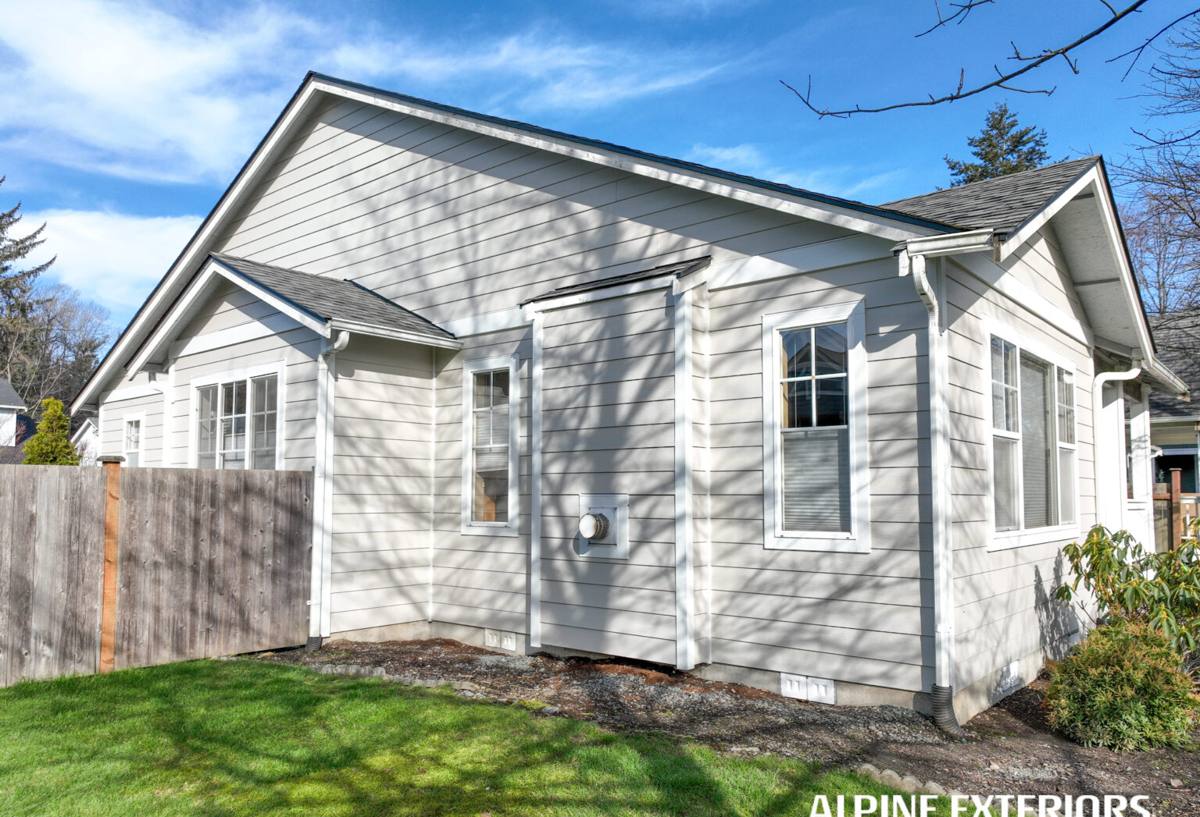
What Actually Counts as Storm Damage
Homeowners often aren't sure whether what they're looking at is storm damage or just ordinary wear that a storm exposed. The distinction matters for both the repair approach and for insurance. Storm damage typically shows up as:
- Shingles that are torn, creased, or missing entirely after a windstorm
- Lifted or curled shingle tabs along ridges and edges where wind uplift is strongest
- Flashing pulled loose around chimneys, skylights, or vent pipes
- Granule loss concentrated in one area (often from wind-driven debris or hail)
- Active leaks that appeared suddenly, rather than a slow stain that's been growing for months
- Damaged or dented gutters and downspouts from wind-thrown branches
What's usually not storm damage — even though it looks similar — is moss-related shingle lifting, granule loss from age, or slow leaks around old flashing that's simply reached the end of its service life. We point out this difference honestly during an inspection, because it affects whether a repair is a straightforward patch or whether the storm just accelerated a problem that was already there.
Our Inspection and Repair Process
1. Ground and roof-level assessment
We start with a visual walk of the property and, where it's safe to do so, a roof-level inspection. We're looking for the storm's actual damage pattern first — which slope faces the prevailing wind and rain, where debris landed, and where flashing or ridge caps show fresh separation versus old wear.
2. Temporary protection
If there's an active leak or exposed decking, our first priority is stopping water intrusion — tarping, temporary flashing, or sealing exposed areas before we scope the permanent repair. This isn't billed as the final fix; it's there to protect the interior and the roof deck while we plan the real repair.
3. Scope and documentation
We photograph and document the damage clearly enough to support an insurance claim if you're filing one, and we give you a written scope that separates storm-caused damage from any pre-existing condition we found. We'd rather flag that distinction up front than have it become a surprise during a claims review.
4. The repair itself
Depending on scope, this means replacing damaged shingles and matching the existing course lines, resealing or replacing flashing at penetrations, securing ridge and hip caps, and checking underlayment in the affected area for water intrusion before closing it back up. We don't cover over soft decking or saturated underlayment — replacing what's underneath is part of doing the repair correctly, not an upsell.
Repair Approaches: What Differs by Damage Type
| Damage Type | Typical Repair | Key Consideration in Blaine Harbor |
|---|---|---|
| Wind-lifted or torn shingles | Section replacement, re-nail adjacent tabs | Salt air corrodes exposed nail heads faster — we re-seal, not just re-nail |
| Flashing separation | Remove and reset flashing with fresh sealant | Coastal humidity breaks down cheap sealants faster than inland climates |
| Granule loss / hail bruising | Spot shingle replacement or full slope assessment | Often overlaps with existing moss-softened areas needing closer inspection |
| Gutter and downspout damage | Reattach, straighten, or replace sections | Poor drainage compounds moss growth on the roof edge above |
| Moss-related shingle lift found during repair | Treat and clear moss, assess shingle integrity | Not storm damage — flagged separately from the insurance scope |
Insurance Claims: What Homeowners Should Know
Most storm damage repairs on the Washington coast involve an insurance claim, and a few honest points are worth knowing before you call your adjuster. First, insurers distinguish clearly between sudden storm damage and gradual deterioration — a roof with moss damage or age-related wear mixed into the same slope as storm damage may get a partial approval, not a full one, and that's the carrier's call, not ours. Second, documentation matters: photos taken before any temporary repair, and a clear written scope, make the claims process faster and reduce back-and-forth. Third, we work for you, not the insurance company — we'll give you our honest read on what's storm-caused, but the adjuster makes the coverage decision.
We're happy to meet an adjuster on-site or provide our documentation directly to a claims adjuster if that's useful, but we don't inflate scopes to maximize a claim payout. That approach causes problems down the line and isn't how we want to be known in this community.
Why a Crew That Already Works Blaine Harbor Matters
Storm response timing matters more here than it might elsewhere. When a winter system rolls through Whatcom County, harbor-adjacent properties like those in Blaine Harbor are often among the hardest hit because there's nothing between the roof and the open water to slow the wind down. A crew that already knows the area can respond faster because we're not learning the neighborhood's exposure patterns for the first time — we already know which slopes on harbor-facing homes tend to take the worst of it, and which older flashing details common to homes in this area are worth a closer look during a storm repair.
There's also a materials-and-methods argument for local familiarity. Fasteners, sealants, and flashing details that hold up fine forty miles inland can underperform here because of the sustained salt exposure. We choose corrosion-resistant fasteners and sealants suited to a marine-influenced climate as a standard practice on Blaine Harbor jobs, not as an add-on.
Right after a storm: a practical checklist
- Check attic or top-floor ceilings for new water stains — even small ones — within 24 hours of a storm
- From the ground, look for shingles or shingle pieces in the yard or gutters
- Check gutters and downspouts for dents, separation, or debris blockage
- Photograph anything visible from the ground before you have repairs made — useful for insurance
- Get a temporary tarp or seal on any active leak before the next rain, rather than waiting for a full repair
- Avoid climbing onto a wet or storm-damaged roof yourself — let an inspection catch what's not visible from the ground
Cost Factors Homeowners Should Expect
Storm damage repair costs vary widely depending on scope, so we won't quote a number without seeing the roof. What we can tell you is what tends to move the price:
| Factor | Effect on Cost |
|---|---|
| Size of the affected area (spot repair vs. full slope) | Largest single driver of cost |
| Roof pitch and access | Steeper or harder-to-access roofs take more time and safety setup |
| Underlayment or decking condition once opened up | Can add cost if water reached the decking before repair |
| Flashing complexity (chimneys, skylights, multiple penetrations) | More detail work than a simple shingle field repair |
| Whether moss remediation is needed alongside the repair | Separate line item, not part of the storm repair itself |
Maintenance That Reduces Future Storm Risk
A roof that's already in good shape handles the next storm better than one that isn't. For Blaine Harbor homes specifically, that means keeping gutters clear so wind-driven rain has somewhere to go, addressing moss before it works its way under shingle tabs, and having flashing and sealant checked every couple of years given how much faster coastal air breaks sealants down compared to inland exposure. None of this prevents storm damage outright — no maintenance schedule stops a strong windstorm — but it does mean less pre-existing weakness for a storm to exploit, and often a smaller repair scope when something does happen.
If a recent storm left you with missing shingles, a new leak, or damaged flashing on a Blaine Harbor property, we're glad to come take an honest look. The estimate is free, there's no pressure to move forward, and you'll get a straight answer about what's storm damage, what isn't, and what it will actually take to fix it right — just use the form below to get started.