 Semiahmoo Exterior
 Asphalt Shingle Roofing in Semiahmoo Resort
Semiahmoo Resort sits right on the water at the edge of Semiahmoo Bay, and that location shapes everything about how a roof ages here. Homes in this area take a steady dose of salt-laden air, wind-driven rain off the Strait of Georgia, and a long stretch of wet, shaded months that give moss and algae plenty of time to take hold. An asphalt shingle roof that's installed and maintained with those conditions in mind will last for decades. One that isn't will show problems early — curling edges, granule loss, moss creeping up from the eaves, and soft spots where water has been sitting longer than it should.
This page covers what asphalt shingle roofing work actually looks like for homes in Semiahmoo Resort specifically: what the climate demands, what a properly built roof system includes, how we approach the job, and what to ask before you hire anyone to work on your roof out here.
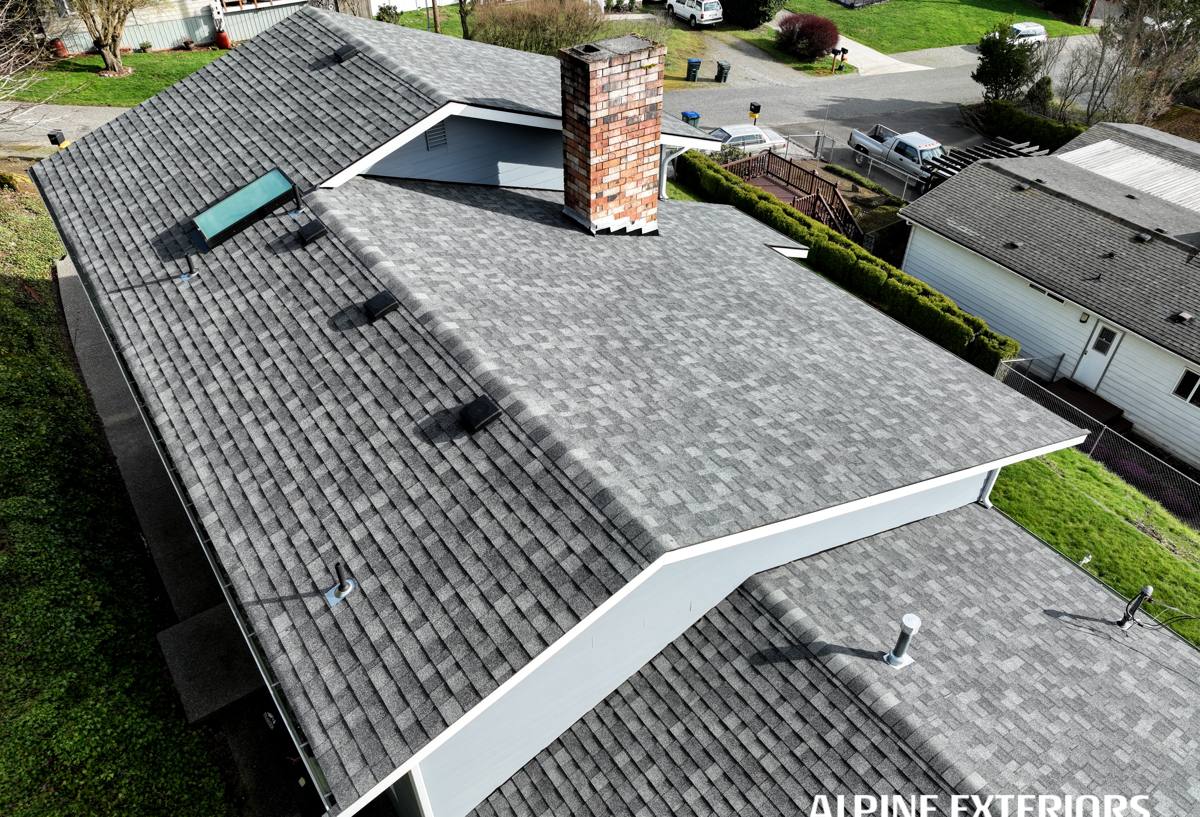
Why Semiahmoo's Climate Is Hard on Roofs
Salt Air
Waterfront exposure means airborne salt settles on every exterior surface, including roofing. Salt itself doesn't destroy asphalt shingles the way it corrodes bare metal, but it does accelerate wear on fasteners, flashing, and any exposed metal components if they're not rated for coastal use. Over time, unprotected metal near the roofline — vent caps, drip edge, nail heads — can start to corrode faster than it would a few miles inland.
Driving Rain
Storms coming off the water don't just fall straight down — wind pushes rain sideways and up under shingle edges, into vents, and around chimney and skylight flashing. A roof that would hold up fine in a calmer inland setting can leak at Semiahmoo Resort if the underlayment, flashing, and shingle overlap weren't installed with wind-driven rain specifically in mind.
Moss Season
Whatcom County's wet season runs long, and shaded, north-facing roof sections in Semiahmoo Resort — especially those under tree cover — can stay damp for weeks at a stretch. That's exactly the environment moss needs to establish. Once moss gets a foothold at shingle edges and in valleys, it holds moisture against the roof surface, lifts shingle tabs, and slowly works its way under the shingle line, which is where the real damage starts.
What a Correct Asphalt Shingle Job Includes Here
A roof built for this stretch of coastline needs more than good shingles laid in a straight line. The system underneath and around the shingles matters just as much.
- Ice-and-water shield at vulnerable points — eaves, valleys, and around any roof penetration, to back up the shingles where wind-driven rain is most likely to find a way in.
- Synthetic underlayment rated for extended wet exposure, since felt paper alone doesn't hold up as well through a long Whatcom County wet season.
- Corrosion-resistant flashing and fasteners around chimneys, skylights, and roof-to-wall transitions, given the salt exposure this close to the bay.
- Proper nailing pattern and shingle exposure, matched to the wind zone rather than just the shingle manufacturer's minimum spec.
- Balanced attic ventilation so moisture from inside the home doesn't condense against the roof deck and add to the moisture load from outside.
- Drip edge and starter strip detailing at eaves and rakes, which is where wind-driven rain and moss both tend to cause the first problems.
Skip any one of these and the shingles themselves — even a good product — end up doing more work than they were designed for.
Shingle Grade Matters More on the Coast
Not every asphalt shingle is built the same. For a property in Semiahmoo Resort, we generally steer homeowners toward algae-resistant shingles (rated with copper or zinc granules that discourage algae and moss growth) and a higher wind rating than the bare code minimum. It costs a bit more up front, but it directly addresses the two things that wear roofs down fastest in this location — biological growth and wind-driven rain.
Our Process for Semiahmoo Resort Roofs
1. Inspection and Assessment
We start by walking the roof and the attic, not just looking from the ground. We're checking shingle condition, granule loss, flashing condition around penetrations, signs of moss or algae staking a claim, and — from inside the attic — signs of moisture, staining, or ventilation issues that don't show from outside.
2. Honest Scope: Repair, Partial, or Full Replacement
Not every roof with moss or a few damaged shingles needs full replacement. If the roof deck and underlayment are sound and the damage is localized, a repair or partial re-roof can be the right call. If the shingles are past their service life or the underlying system has failed in multiple spots, we'll tell you that plainly and explain why, rather than either overselling a full tear-off or patching something that needs to be replaced.
3. Tear-Off and Deck Check
For a full replacement, we remove the old roofing down to the deck and check the sheathing for soft spots or water damage before anything new goes down. Water damage found and fixed at this stage is far cheaper to deal with than water damage found later.
4. Install with Coastal Detailing
Underlayment, flashing, and shingles go down in that order, with extra attention at eaves, valleys, and penetrations — the spots most exposed to wind-driven rain off the bay.
5. Walkthrough and Cleanup
We walk the finished roof with you, cover what was done and why, and clean the property thoroughly, including a magnetic sweep for stray fasteners.
Repair, Partial Re-Roof, or Full Replacement: How to Tell
| Situation | Likely Approach | Why |
|---|---|---|
| A few cracked or missing shingles, roof otherwise under 10 years old | Spot repair | Isolated damage on a roof with plenty of service life left doesn't justify a full replacement |
| Moss buildup on a north-facing slope, shingles otherwise intact | Cleaning plus targeted repair | Moss removal done correctly can extend the roof's life without disturbing sound shingles |
| Granule loss, curling, or brittleness across most of the roof | Full replacement | Shingles nearing the end of their service life across the board rarely make sense to patch piecemeal |
| Recurring leaks at flashing points despite past repairs | Full replacement with upgraded flashing detail | Repeated failures at the same points usually mean the underlying system, not just the shingles, needs to be redone |
| Roof 20+ years old with visible wear | Full replacement | Asphalt shingle roofs in this climate typically don't get meaningfully past this range without escalating problems |
What Homeowners Can Watch For Between Inspections
- Dark streaking or green tinge on shaded roof sections — early algae or moss growth
- Granules collecting in gutters or at downspout outlets
- Shingle tabs that look lifted, curled, or cupped, especially after a windy storm
- Soft or discolored ceiling patches, particularly after heavy rain
- Visible daylight or staining in the attic around chimneys, vents, or skylights
- Moss visibly bridging between shingle edges, not just sitting on the surface
Catching any of these early usually means a smaller, cheaper fix. Waiting on them usually means the opposite.
Why It Matters That We Already Work in Semiahmoo Resort
A roofing crew that mainly works drier, inland areas can still install a technically correct roof — but they're less likely to instinctively account for salt exposure on fasteners, the wind patterns specific to waterfront lots, or how aggressively moss establishes itself on shaded slopes this close to the bay. Working regularly in Semiahmoo and the surrounding Whatcom County coastline means we're not guessing at these factors; we're building them into the spec by default. That shows up in the small decisions — which flashing to use, how tight to run the nailing pattern, where to add extra underlayment — that don't get noticed until years later, when they're the difference between a roof that's still tight and one that isn't.
Maintenance That Actually Extends Roof Life Here
Asphalt shingle roofs in Semiahmoo Resort benefit from periodic moss and debris removal, especially on shaded or north-facing slopes, along with keeping gutters clear so water isn't backing up under the shingle edge. An occasional inspection after major storms — checking for lifted shingles or displaced flashing — catches problems while they're still small. None of this needs to be elaborate, but skipping it on a coastal roof tends to shorten its life more than skipping it would on a roof further inland.
If you're dealing with an aging roof, storm damage, or just want an honest read on where your roof stands, we're happy to take a look. The estimate is free, there's no pressure, and you'll get a straight answer about whether you need a repair, a partial re-roof, or a full replacement — use the form below to get started.